What Is Tesla Dog Mode and Why the Screen Matters
If you've ever walked past a parked Tesla and noticed a large, friendly message on the touchscreen telling passersby that the dog inside is comfortable, you've seen Tesla's Dog Mode in action. The feature, first rolled out in 2019 and refined through successive software updates, is one of the most visible examples of how an EV's always-on thermal management system can do things a gas car simply cannot.
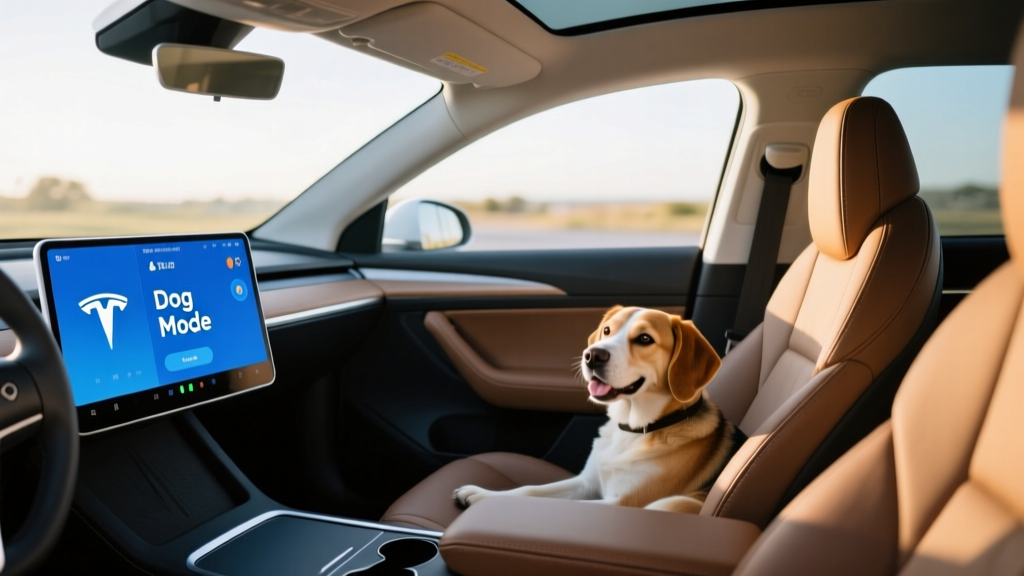
Dog Mode keeps the cabin climate-controlled while you step away from the vehicle. The Tesla Dog Mode screen displays the current cabin temperature in large, easy-to-read text along with a message reassuring onlookers that the pet is safe and the climate system is running. This isn't just a convenience feature — it's a safety tool that prevents well-meaning bystanders from breaking a window to "rescue" a pet that is, in fact, perfectly comfortable at 70°F.
Because a Tesla's battery pack powers the HVAC compressor directly (no idling engine required), Dog Mode can run for hours with minimal energy draw. But how much range does it actually cost, which models support it, and what are the full ownership specs of the Teslas that offer it? This guide covers the feature in depth and profiles the 2026 Tesla lineup that includes it.
How Tesla Dog Mode Works: Screen Display, Energy Use, and Safety
Activating Dog Mode is straightforward. When you exit the vehicle, you tap the fan icon on the bottom of the touchscreen, select "Dog" from the climate-keeping options (alongside "Camp" and "Off"), and walk away. The cabin remains at your set temperature, and the Tesla Dog Mode screen takes over the center display with the following information:
- Current cabin temperature shown in large digits
- A reassuring message: "My owner will be back soon. Don't worry! The A/C is on and it's [XX]°F in here."
- No access to vehicle controls — the screen is locked to prevent tampering
You can monitor the cabin temperature remotely through the Tesla mobile app, which also sends you a push notification if the battery drops below 20% State of Charge (SoC) while Dog Mode is active. At that threshold, the system will alert you but will continue running climate control as long as possible.
Real-World Energy Consumption
Based on owner reports and thermal modeling, Dog Mode draws approximately 200–400 watts depending on outside temperature and cabin size. On a mild 75°F day, expect the lower end of that range. On a 95°F afternoon in Phoenix with a Model X's larger cabin to cool, you'll see the higher end.
Translated to range impact: running Dog Mode for one hour in moderate conditions will use roughly 0.3–0.5 kWh, which equates to about 1–2 miles of range on a Model 3 or Model Y. Even on a hot day, an hour of Dog Mode rarely costs more than 3 miles of EPA-estimated range. For a vehicle with 300+ miles of range, this is negligible for most errands.
Camp Mode vs. Dog Mode
Tesla also offers Camp Mode, which keeps climate control running but does not display the pet-safety message on screen. Camp Mode also enables continuous USB power and keeps the touchscreen available for media playback. Choose Dog Mode when leaving a pet; choose Camp Mode when you're sleeping in the vehicle or need the screen active.
2026 Tesla Model 3: Specs, Range, and Charging
The Model 3 is Tesla's most affordable sedan and the most common vehicle where you'll see Dog Mode in use. For 2026, the refreshed "Highland" body style continues with minor software and efficiency updates.
| Spec | RWD (Standard) | Long Range AWD | Performance |
|---|---|---|---|
| EPA Range | 272 mi | 341 mi | 315 mi |
| Battery (usable) | ~57.5 kWh (LFP) | ~75 kWh (NMC) | ~75 kWh (NMC) |
| Efficiency | 132 MPGe / 25 kWh/100mi | 134 MPGe / 25 kWh/100mi | 123 MPGe / 27 kWh/100mi |
| 0–60 mph | 5.8 sec | 4.2 sec | 2.9 sec |
| Horsepower | 271 hp | 346 hp | 510 hp |
| Drivetrain | RWD | Dual-Motor AWD | Dual-Motor AWD |
| Max DC Fast Charge | 170 kW | 250 kW | 250 kW |
| 10–80% DC Time | ~30 min | ~25 min | ~25 min |
| Level 2 Home Charge | 7.6 kW (~30 mi/hr) | 11.5 kW (~44 mi/hr) | 11.5 kW (~44 mi/hr) |
| Base MSRP | $38,990 | $45,990 | $53,990 |
| Cargo (trunk + frunk) | 23 cu ft | 23 cu ft | 23 cu ft |
| Rear Legroom | 35.2 in | 35.2 in | 35.2 in |
Source: EPA Fuel Economy — Tesla Model 3
2026 Tesla Model Y: The Family SUV With Dog Mode
The Model Y is Tesla's best-selling vehicle globally and the one most likely to have a dog in the back. The 2025 "Juniper" refresh brought a redesigned interior, ambient lighting, ventilated front seats, and a quieter cabin. For 2026, Tesla continues this updated platform.
| Spec | RWD | Long Range AWD | Performance |
|---|---|---|---|
| EPA Range | 277 mi | 320 mi | 295 mi |
| Battery (usable) | ~57.5 kWh (LFP) | ~75 kWh (NMC) | ~75 kWh (NMC) |
| Efficiency | 128 MPGe / 26 kWh/100mi | 125 MPGe / 27 kWh/100mi | 118 MPGe / 29 kWh/100mi |
| 0–60 mph | 6.2 sec | 4.8 sec | 3.5 sec |
| Horsepower | 271 hp | 384 hp | 456 hp |
| Drivetrain | RWD | Dual-Motor AWD | Dual-Motor AWD |
| Max DC Fast Charge | 170 kW | 250 kW | 250 kW |
| 10–80% DC Time | ~30 min | ~25 min | ~25 min |
| Level 2 Home Charge | 7.6 kW (~28 mi/hr) | 11.5 kW (~42 mi/hr) | 11.5 kW (~42 mi/hr) |
| Base MSRP | $44,990 | $49,990 | $54,990 |
| Cargo (behind 2nd row) | 30 cu ft | 30 cu ft | 30 cu ft |
| Cargo (max, seats folded) | 72 cu ft | 72 cu ft | 72 cu ft |
| Rear Legroom | 38.0 in | 38.0 in | 38.0 in |
Charging Speeds Explained: DC Fast, Level 2, and Dog Mode Impact
Dog Mode's energy draw only matters if you understand how quickly you can replenish the battery. Here's how Tesla's charging ecosystem breaks down for 2026:
| Charging Level | Power | Miles of Range Added Per Hour | Typical Use Case |
|---|---|---|---|
| Level 1 (120V outlet) | 1.0–1.5 kW | 3–5 mi/hr | Overnight trickle, emergency top-up |
| Level 2 (240V home) | 7.6–11.5 kW | 28–44 mi/hr | Daily home charging, full overnight refill |
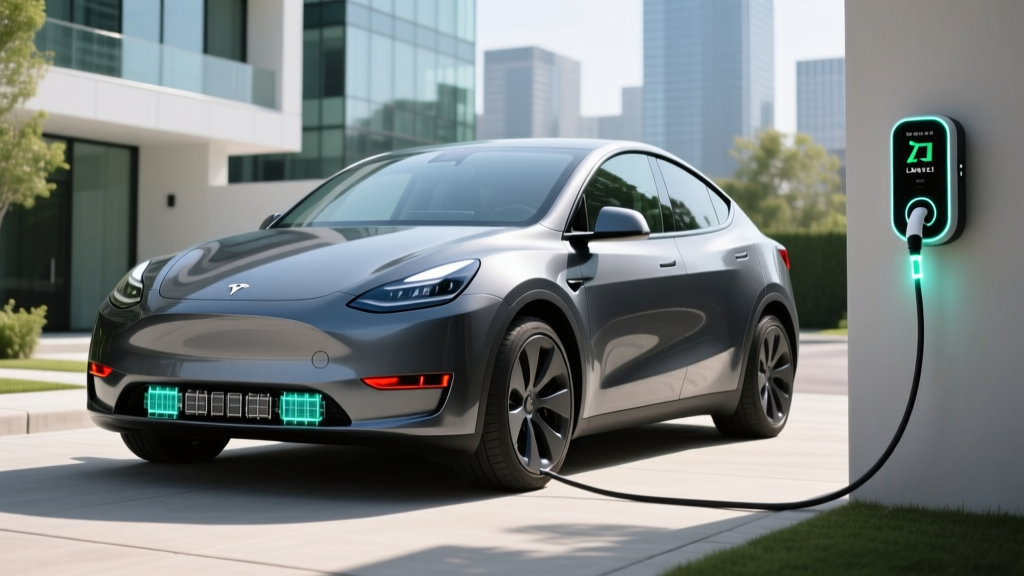
| DC Fast (Supercharger V2) | 150 kW peak | ~200 mi in 30 min | Road trips, older Supercharger stalls |
| DC Fast (Supercharger V4) | 250 kW peak | ~200 mi in 15 min | Road trips, current network standard |
Charging curve reality check: Tesla's peak 250 kW rate only applies between roughly 10–30% SoC on NMC batteries. Above 50%, the rate tapers significantly. By 80%, you're typically at 50–80 kW. The published 10–80% times of 25 minutes account for this taper. If you're charging from 50–100%, expect the session to take considerably longer per mile added.
For Dog Mode specifically: if you park at a Supercharger with 40% battery and activate Dog Mode while you grab lunch, the vehicle can simultaneously charge and run climate control. The HVAC draw is negligible compared to the DC fast-charge input.
Tax Credit Eligibility and Pricing After Incentives
Federal EV tax credit rules under IRS §30D have specific requirements that affect which Tesla models qualify and for how much. As of 2026, the rules include:
- MSRP cap: Sedans (Model 3) must be under $55,000; SUVs (Model Y) under $80,000
- Buyer income cap: Modified AGI cannot exceed $150,000 (single), $225,000 (head of household), or $300,000 (joint)
- Battery sourcing: Critical minerals and battery components must meet phased-in domestic/content thresholds that increase annually
- Point-of-sale transfer: Eligible buyers can apply the credit as a down-payment reduction at purchase rather than waiting for tax filing
| Model / Trim | Base MSRP | Est. Credit | Effective Price | Notes |
|---|---|---|---|---|
| Model 3 RWD | $38,990 | $3,750–$7,500 | $31,490–$35,240 | Battery sourcing determines half or full credit |
| Model 3 Long Range AWD | $45,990 | $3,750–$7,500 | $38,490–$42,240 | Under $55K sedan cap |
| Model 3 Performance | $53,990 | $0–$7,500 | $46,490–$53,990 | Near sedan cap; options can push over $55K |
| Model Y RWD | $44,990 | $3,750–$7,500 | $37,490–$41,240 | SUV cap is $80K — comfortably under |
| Model Y Long Range AWD | $49,990 | $3,750–$7,500 | $42,490–$46,240 | Most popular trim; strong credit eligibility |
| Model Y Performance | $54,990 | $3,750–$7,500 | $47,490–$51,240 | Well under SUV cap |
Warranty, Driver Assistance, and Standout Technology
Warranty Coverage
Tesla's warranty structure is straightforward but worth understanding in detail:
- Basic Vehicle: 4 years / 50,000 miles
- Battery & Drive Unit (Model 3 RWD, LFP): 8 years / 100,000 miles, 70% minimum capacity retention
- Battery & Drive Unit (Long Range / Performance, NMC): 8 years / 120,000 miles, 70% minimum capacity retention
The 70% retention threshold is standard across the industry. If your battery degrades below 70% of original capacity within the warranty period, Tesla will repair or replace it. In practice, Tesla batteries show approximately 5–8% degradation over the first 50,000 miles, then the curve flattens significantly.
Autopilot and FSD (Supervised)
All 2026 Teslas include Basic Autopilot (lane centering + adaptive cruise control) as standard. Enhanced Autopilot ($6,000) adds auto lane change, navigate on Autopilot, auto park, and Summon. Full Self-Driving (Supervised) ($8,000 or $99/month) adds traffic light/stop sign recognition and city-street autosteer.
Standout Tech Beyond Dog Mode
- Sentry Mode: Records video from all cameras when the car detects a threat — pairs well with Dog Mode for monitoring your pet remotely
- Tesla app cabin camera: View the interior camera feed live from your phone while Dog Mode is active (Model 3/Y with interior camera)
- HEPA air filtration (Model Y): Bioweapon Defense Mode uses a hospital-grade HEPA filter — excellent for pets with respiratory sensitivity
- Over-the-air updates: Tesla regularly adds features; Dog Mode itself was added via OTA and has been updated multiple times
Who Should Buy a Tesla With Dog Mode?
Dog Mode is available on all current Tesla models (Model 3, Model Y, Model S, Model X, Cybertruck). Here's who benefits most:
- Dog owners who run errands: Vet visits, grocery stops, and outdoor shopping centers where you need 15–60 minutes away from the car
- Outdoor enthusiasts: Trailhead parking in hot weather; your dog stays cool while you hike
- Model Y families: The SUV's 30 cu ft cargo area and 38 inches of rear legroom give larger dogs room to sprawl
- Frequent travelers: Combined with Tesla's Supercharger network, you can charge while your pet rests in a climate-controlled cabin
- You need a truck bed for hauling (look at the Rivian R1T or Ford F-150 Lightning)
- You want a third row for seven passengers without the Model X's $80K+ price tag
- You prefer physical buttons and traditional instrument clusters over Tesla's minimalist, screen-centric interior
- You live in an area with limited Supercharger or public DC fast-charging infrastructure
Pros and Cons at a Glance
Pros
- Dog Mode is best-in-class pet safety feature with clear screen messaging
- Extensive Supercharger network (20,000+ stalls in North America)
- OTA updates continuously improve features
- Low energy cost for Dog Mode (~1–2 miles range per hour)
- Strong efficiency (25–29 kWh/100mi across trims)
- Over-the-air cabin camera monitoring via app
- HEPA filtration available on Model Y
Cons
- No physical buttons — all controls on touchscreen
- Rear visibility is limited in Model 3; Model Y is better
- Insurance premiums often 15–25% higher than comparable non-Tesla EVs
- Repair costs and wait times can be high post-collision
- FSD (Supervised) name is misleading — still requires full driver attention
- LFP batteries (RWD trims) have lower energy density and range
- Tax credit amount varies based on battery sourcing — not guaranteed $7,500
Frequently Asked Questions
Does Dog Mode drain the Tesla battery significantly?
No. Dog Mode typically draws 200–400 watts, which translates to roughly 0.3–0.5 kWh per hour. On a Model Y Long Range with 75 kWh of usable battery, you could theoretically run Dog Mode for over 100 hours before depleting the pack. In practice, the vehicle alerts you via the Tesla app when SoC drops below 20%.
Can I set a custom temperature for Dog Mode?
Yes. Dog Mode maintains whatever temperature you set before exiting the vehicle. Most owners set it between 68–72°F. The system will actively heat or cool to maintain that setpoint regardless of outside conditions.
Does Dog Mode work if the car is locked?
Yes. Dog Mode works with the vehicle locked. The touchscreen displays the climate message to anyone outside, and the doors remain locked to prevent unauthorized entry. You can unlock remotely via the app if needed.
Is Dog Mode available on all Tesla models?
Dog Mode is available on all current-production Tesla vehicles: Model 3, Model Y, Model S, Model X, and Cybertruck. It requires a software version from 2019 or later, which all 2026 models ship with.
How does Dog Mode compare to climate features in other EVs?
Hyundai/Kia offer a similar "pet mode" on the Ioniq 5 and EV6, and some Ford EVs have a pet-monitoring feature. However, Tesla's implementation is the most visible thanks to the large exterior-facing screen message and the integrated app-based cabin camera monitoring. No other automaker pairs the external screen message with live interior video feed access as seamlessly.
Does the Tesla Model 3 or Model Y qualify for the federal EV tax credit in 2026?
Most Model 3 and Model Y trims qualify for either $3,750 or the full $7,500 under IRS §30D, depending on battery-sourcing compliance at the time of purchase. Both models fall under their respective MSRP caps ($55,000 for sedans, $80,000 for SUVs). Buyer income limits apply: $150K single / $300K joint. Verify current eligibility on fueleconomy.gov before purchasing, as sourcing requirements phase in annually.
What happens if my Tesla's battery runs out while Dog Mode is on?
Tesla sends push notifications when SoC drops below 20%. If the battery reaches critically low levels (around 5%), the vehicle will begin shutting down non-essential systems. Climate control is one of the last systems to be disabled, but it will eventually shut off to protect the 12V auxiliary system. Never leave a pet unattended for extended periods without monitoring via the app.