Quick Verdict: Tesla Dog Mode Explained
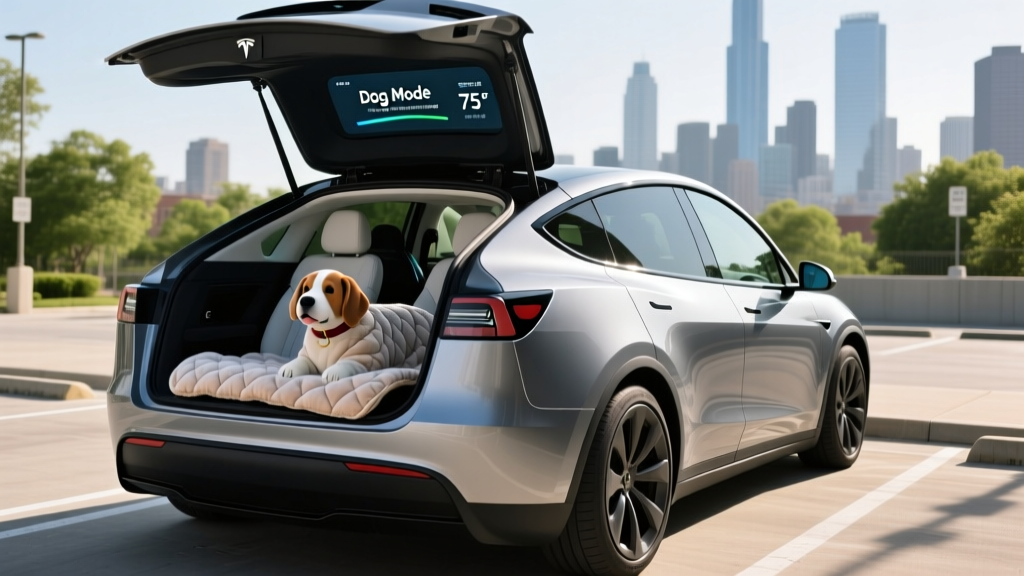
If you've searched "what is tesla drug" online, you likely meant Tesla Dog Mode — one of the most practical and frequently misunderstood climate features in the EV world. Dog Mode is a Tesla software feature that keeps the cabin at a safe, set temperature while you step away from the vehicle, displaying a message on the touchscreen so passersby know your pet is comfortable and the climate system is intentionally running.
First introduced in 2019 via a software update, Dog Mode has evolved significantly by the 2026 model year. It now integrates with Tesla's Sentry Mode camera system, offers remote monitoring through the Tesla mobile app, and works across the entire current lineup — Model 3, Model Y, Model S, Model X, and the Cybertruck. For EV owners who travel with pets, it's arguably the single most compelling reason to choose a Tesla over competing electric vehicles that lack an equivalent feature.
In this guide, we'll break down exactly how Dog Mode works, what it costs in battery consumption, which models support it, and how it compares to climate-hold features from Hyundai, Ford, and Rivian.
How Tesla Dog Mode Actually Works
Dog Mode is not a separate hardware system — it's a software configuration of Tesla's existing thermal management hardware, including the heat pump (standard on all 2026 Teslas) and the cabin HVAC compressor. When activated, it does three things simultaneously:
- Maintains a set cabin temperature (default 72°F / 22°C, adjustable between 60°F–90°F).
- Displays a full-screen message on the center touchscreen: "My owner will be back soon. Don't worry! The cabin temperature is being maintained at XX°F."
- Disables walk-away door locking and prevents the vehicle from powering down, ensuring continuous climate operation.
Because Tesla's heat pump is highly efficient — drawing as little as 0.5–1.5 kW in moderate ambient temperatures — the energy cost of running Dog Mode is surprisingly low. In 75°F weather, expect roughly 1–2% battery drain per hour on a Model Y Long Range (75 kWh usable battery). In extreme heat (100°F+) or extreme cold (below 20°F), consumption can climb to 2–4% per hour as the compressor or resistance heater works harder.
| Ambient Temp | Avg. Power Draw | Drain/Hour (75 kWh pack) | 8-Hour Loss |
|---|---|---|---|
| 60–80°F | ~0.8 kW | ~1.1% | ~9% |
| 80–95°F | ~1.5 kW | ~2.0% | ~16% |
| 95–110°F | ~2.5 kW | ~3.3% | ~27% |
| Below 20°F | ~3.0 kW | ~4.0% | ~32% |
Estimates based on real-world owner data and Tesla's heat pump efficiency. Actual drain varies by solar load, cabin size, and set temperature.
Which 2026 Tesla Models Support Dog Mode?
Dog Mode is available on every Tesla sold in the 2026 model year. Here's how it pairs with each vehicle's battery, range, and cabin size — all factors that affect how long you can safely leave a pet inside:
| Model | Battery (kWh usable) | Chemistry | EPA Range | 0–60 mph | Base MSRP |
|---|---|---|---|---|---|
| Model 3 RWD | 57.5 | LFP | 272 mi | 5.8s | $38,990 |
| Model 3 Long Range AWD | 75 | NMC | 341 mi | 4.2s | $44,990 |
| Model Y Long Range AWD | 75 | NMC | 320 mi | 4.8s | $44,990 |
| Model S Long Range | 95 | NMC | 402 mi | 3.1s | $74,990 |
| Model X Long Range | 95 | NMC | 348 mi | 3.8s | $79,990 |
| Cybertruck AWD | 123 | NMC | 340 mi | 4.1s | $79,990 |
Source: fueleconomy.gov and Tesla.com 2026 specifications. MSRP excludes destination fee.
Charging Specs: Getting Back on the Road Fast
Dog Mode's battery drain is manageable precisely because Tesla's DC fast-charging network makes topping up quick and painless. Here's what to expect when you return to your vehicle and need to recharge:
| Model | Max DC Fast Charge | 10–80% Time | Level 2 Home (kW) | Level 2 Miles/Hr |
|---|---|---|---|---|
| Model 3 RWD (LFP) | 170 kW | ~25 min | 11.5 kW | ~37 mi/hr |
| Model 3 LR AWD | 250 kW | ~18 min | 11.5 kW | ~44 mi/hr |
| Model Y LR AWD | 250 kW | ~20 min | 11.5 kW | ~42 mi/hr |
| Model S / X | 250 kW | ~22 min | 11.5 kW | ~35 mi/hr |
| Cybertruck | 250 kW | ~28 min | 11.5 kW | ~30 mi/hr |
Understanding the charge curve: Tesla's 250 kW peak rate applies only between roughly 10–40% State of Charge (SoC). Above 50%, the rate tapers to ~120 kW, and above 80% it drops further to ~40–60 kW to protect battery longevity. This is why the 10–80% metric matters more than the peak kW number — it reflects the sustained, usable charging speed you'll experience at a Tesla Supercharger station.
All 2026 Teslas use the NACS (North American Charging Standard) connector natively. With the 2025–2026 industry-wide NACS adoption, Tesla owners can also use select Electrify America and EVgo stations equipped with NACS cables, though Supercharger reliability remains the gold standard.
Dog Mode vs. Competitor Climate Features
Tesla isn't the only automaker offering a pet-friendly climate hold, but its implementation remains the most mature. Here's how it compares to the closest alternatives in 2026:
| Feature | Tesla Dog Mode | Hyundai Pet Mode | Ford Pet Mode (BlueCruise vehicles) | Rivian Pet Camp |
|---|---|---|---|---|
| On-screen message | ✅ Yes | ✅ Yes | ✅ Yes | ✅ Yes |
| App-based cabin cam monitoring | ✅ Sentry Mode integration | ❌ | Partial (FordPass) | ✅ Camp mode camera |
| Auto SoC shutoff threshold | 20% (configurable) | 20% | 15% | 15% |
| Heat pump efficiency | ✅ Standard all models | ✅ Ioniq 5/6 | Optional (Mach-E) | ✅ Standard |
| Max runtime (approx.) | Until SoC threshold | Until SoC threshold | Until SoC threshold | Until SoC threshold |
Tesla's key differentiator in 2026 is the Sentry Mode camera integration. When Dog Mode is active, you can open the Tesla app and view live cabin camera footage — confirming your pet's comfort visually, not just by temperature readout. No other mainstream EV offers this level of remote pet monitoring as a standard, no-subscription feature.
Pricing, Tax Credits, and Total Cost for Pet Owners
For pet owners choosing a Tesla specifically for Dog Mode, the Model 3 RWD and Model Y Long Range are the most popular picks. Here's the pricing picture for 2026, including federal tax credit eligibility under IRS §30D:
| Model | Base MSRP | Under §30D MSRP Cap? | Potential Credit | Est. Net Price* |
|---|---|---|---|---|
| Model 3 RWD | $38,990 | ✅ Yes ($55K cap) | Up to $7,500 | ~$31,490 |
| Model 3 LR AWD | $44,990 | ✅ Yes | Up to $7,500 | ~$37,490 |
| Model Y LR AWD | $44,990 | ✅ Yes ($80K SUV cap) | Up to $7,500 | ~$37,490 |
| Model S | $74,990 | ❌ Exceeds $55K sedan cap | $0 | $74,990 |
| Model X | $79,990 | ✅ Yes ($80K SUV cap) | Up to $7,500 | ~$72,490 |
| Cybertruck AWD | $79,990 | ✅ Yes ($80K truck cap) | Up to $7,500 | ~$72,490 |
*Net price assumes full $7,500 credit. Actual eligibility depends on buyer income (AGI ≤ $150K single / $300K joint), battery critical-mineral and component sourcing requirements, and point-of-sale transfer election. Always verify with a tax professional and the IRS §30D guidance.
Battery Warranty and Longevity for Dog Mode Users
Frequent Dog Mode use does add thermal cycles to the battery, but Tesla's warranty provides strong protection. Here's the coverage breakdown:
- Model 3 RWD (LFP): 8 years / 100,000 miles, minimum 70% capacity retention
- Model 3 LR, Model Y, Model S, Model X, Cybertruck (NMC): 8 years / 120,000 miles (Model S/X: 150,000 miles), minimum 70% capacity retention
LFP (lithium iron phosphate) batteries in the Model 3 RWD tolerate frequent 100% charging and sustained climate loads better than NMC chemistry, making the RWD trim a pragmatic choice for heavy Dog Mode users who regularly leave the car running for extended periods. Tesla recommends charging LFP packs to 100% at least weekly, while NMC packs last longest with daily charges limited to 80%.
Pros, Cons, and Who Dog Mode Suits Best
✅ Pros
- Industry-best pet monitoring via Sentry Mode cameras + app
- Heat pump keeps energy draw under 1.5 kW in mild weather
- Clear touchscreen message prevents well-meaning bystander break-ins
- Available on every 2026 Tesla — no trim-level restriction
- Configurable SoC shutoff prevents battery damage
- Works with preconditioning for optimal return-to-car comfort
❌ Cons
- No dedicated pet camera hardware — relies on cabin-facing Sentry cam (resolution varies)
- Extreme heat/cold still drains 3–4% per hour — risky on long stops with low SoC
- No weight sensor or pet-movement alert (can't confirm pet is active)
- Model 3 sedan has limited cargo space (23 cu ft) for large breeds
- Sentry Mode + Dog Mode combined draw is higher than Dog Mode alone
- Not a substitute for proper ventilation in extreme conditions — always leave water
Who Should Buy a Tesla for Dog Mode?
Best for: Solo travelers with dogs who make frequent short stops (grocery runs, rest areas, quick meals). The Model Y Long Range offers the best balance of cabin space (76 cu ft cargo with seats folded), range (320 mi EPA), and Dog Mode runtime.
Also great for: Road-tripping families who need reliable Supercharger access and remote pet monitoring via the app.
Consider alternatives if: You need a vehicle with a dedicated pet climate system with independent sensors (some luxury SUVs offer this) or if your typical stop exceeds 4 hours in extreme temperatures.
Frequently Asked Questions
Is Tesla Dog Mode safe for all dog breeds?
Dog Mode maintains a set temperature, but it does not provide active ventilation or air exchange beyond the recirculated cabin air. Brachycephalic breeds (bulldogs, pugs) and very large dogs are more heat-sensitive. Always leave water available, park in shade when possible, and limit Dog Mode sessions to under 2 hours in temperatures above 90°F.
Does Dog Mode drain the battery if I'm gone all day?
Yes — but predictably. In moderate weather (70°F), a Model Y Long Range (75 kWh battery) will lose roughly 8–10% over an 8-hour workday. In extreme heat, that figure doubles. Tesla's configurable SoC threshold (default 20%) will shut off Dog Mode and send you an app alert before the battery drops to unsafe levels.
Can I use Dog Mode while Supercharging?
Yes. If you activate Dog Mode before plugging in at a Supercharger, the cabin climate continues running while the vehicle charges. This is useful for keeping pets comfortable during a 20–30 minute charging stop.
Does Dog Mode qualify my Tesla for any insurance discount?
Not directly. However, some insurers (including Tesla Insurance in eligible states) offer discounts for vehicles with active safety and monitoring features. Check with your provider — Sentry Mode integration may qualify as an anti-theft or monitoring feature.
What happens if the Tesla loses connectivity while Dog Mode is active?
Dog Mode operates locally on the vehicle's systems and does not require cellular connectivity to maintain cabin temperature. However, you will lose remote app monitoring (camera feed, temperature readout) if the car is in an area with no cell signal. The touchscreen message and climate system continue functioning regardless.
How do I activate Dog Mode in a 2026 Tesla?
Tap the fan icon at the bottom of the touchscreen, then select "Dog" from the climate mode options (alongside Keep and Camp). Set your desired temperature, and exit the vehicle. The screen will display the Dog Mode message within seconds. You can also activate it remotely via the Tesla app under Climate controls.