The Real State of Tesla Discounts in 2026
Tesla doesn't do traditional dealer negotiations — there are no haggling sessions, no "manager specials," and no end-of-month blowout events. But that doesn't mean you can't save thousands on a new Tesla. Between aggressive MSRP reductions Tesla has enacted since late 2024, the federal §30D tax credit (now available as a point-of-sale transfer), state rebates, referral programs, and strategic lease offers, the effective price of a Tesla in 2026 can be significantly lower than the sticker suggests.
This guide breaks down every legitimate Tesla discount available right now, applies them to each current model, and shows you the real out-of-pocket cost. We'll also cover the specs that matter — range, charging speed, battery chemistry — so you know exactly what you're getting at the discounted price.
Current Tesla Model Lineup: Pricing After Discounts
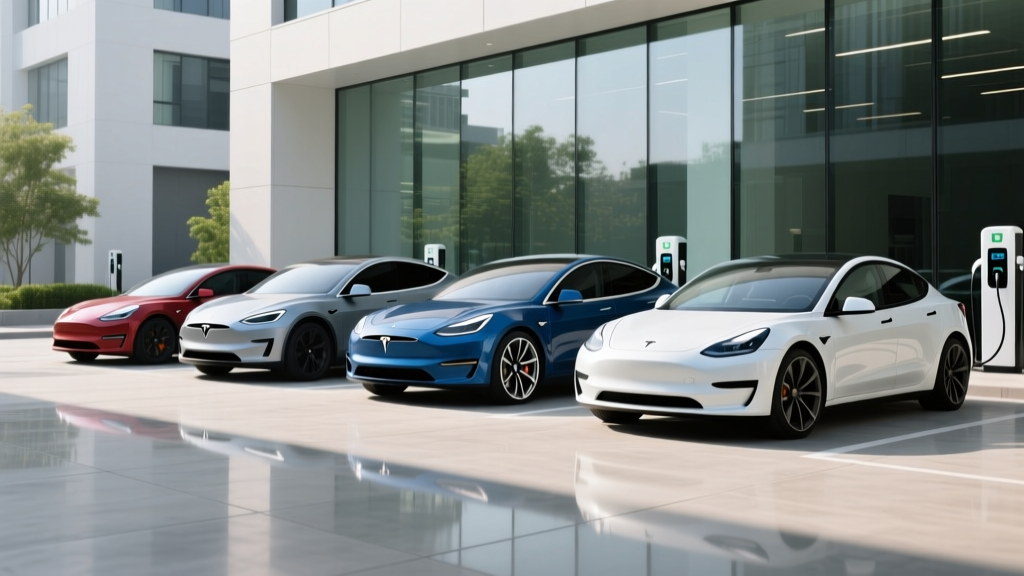
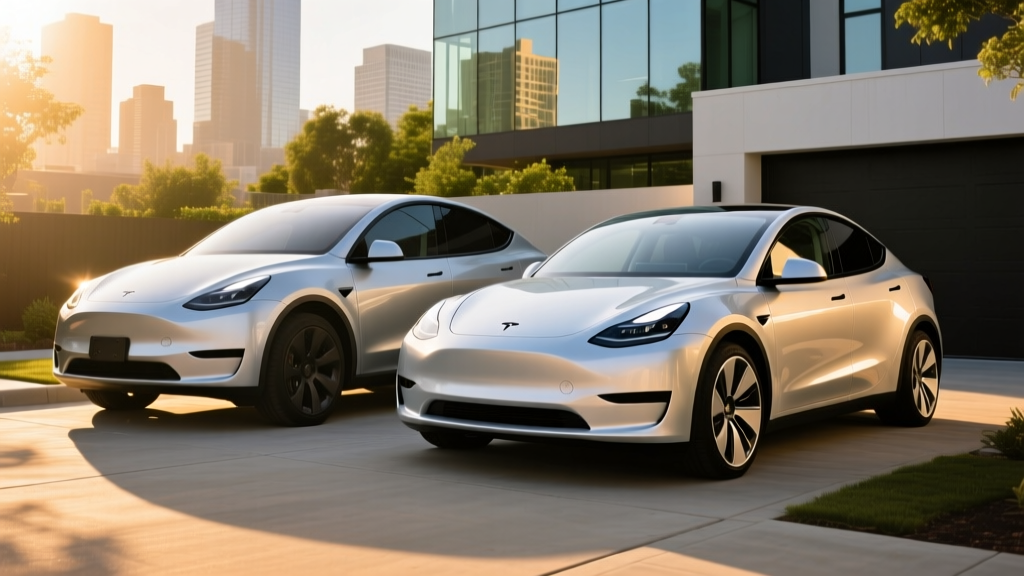
Tesla's 2026 lineup includes four consumer vehicles: the refreshed Model 3 ("Highland" and updated variants), the Juniper-refreshed Model Y, and the carryover Model S and Model X. Here's what each costs before and after the most common discount stack.
| Model / Trim | Base MSRP | §30D Credit | Est. State Rebate | Effective Price |
|---|---|---|---|---|
| Model 3 RWD | $38,990 | $7,500 | $0–$2,000 | ~$29,490–$31,490 |
| Model 3 Long Range AWD | $44,990 | $7,500 | $0–$2,000 | ~$35,490–$37,490 |
| Model 3 Performance | $52,990 | $7,500 | $0–$2,000 | ~$43,490–$45,490 |
| Model Y Long Range AWD | $44,990 | $7,500 | $0–$2,000 | ~$35,490–$37,490 |
| Model Y Performance | $48,990 | $7,500 | $0–$2,000 | ~$39,490–$41,490 |
| Model S Dual Motor | $79,990 | $0 (MSRP cap) | $0–$2,000 | ~$77,990–$79,990 |
| Model X Dual Motor | $84,990 | $0 (MSRP cap) | $0–$2,000 | ~$82,990–$84,990 |
Source: Tesla.com pricing as of early 2026; IRS §30D clean vehicle credit rules. State rebates vary by jurisdiction — check your local energy agency or AFDC state incentive database for exact amounts. Model S and Model X exceed the §30D MSRP cap of $55,000 for sedans / $80,000 for SUVs and do not qualify for the federal credit.
Federal Tax Credit: The $7,500 Tesla Discount Explained
The single largest Tesla discount available is the federal §30D clean vehicle credit. Since the Inflation Reduction Act restructured the credit, qualifying buyers can claim up to $7,500 — and as of 2024, this can be transferred to the dealer at point of sale, meaning it reduces your purchase price on the spot rather than waiting for a tax refund.
- Income caps: Modified AGI ≤ $150,000 (single), ≤ $225,000 (head of household), ≤ $300,000 (joint filers)
- MSRP caps: ≤ $55,000 for sedans (Model 3 qualifies); ≤ $80,000 for SUVs/trucks (Model Y qualifies; Model S/X do not)
- Battery sourcing: Critical minerals and battery components must meet phased-in domestic/free-trade-partner thresholds — Tesla's US-built LFP and NMC packs currently meet requirements for the full $7,500 on qualifying trims
- Point-of-sale transfer: You can elect to transfer the credit to Tesla at purchase, reducing your out-of-pocket cost immediately
- One credit per VIN: The vehicle must not have been previously titled or transferred with a credit claim
Rules are subject to change. Always verify current eligibility at IRS.gov and consult a tax professional for your specific situation.
Model 3 (2026): Range, Charging & Specs at the Discounted Price
The refreshed Model 3 remains Tesla's most affordable vehicle and the biggest beneficiary of the full discount stack. Here's what you're getting for the money.
| Spec | RWD | Long Range AWD | Performance |
|---|---|---|---|
| EPA Range | 272 mi | 363 mi | 315 mi |
| Battery (usable) | ~57.5 kWh (LFP) | ~75 kWh (NMC) | ~75 kWh (NMC) |
| Max DC Fast Charge | 170 kW | 250 kW | 250 kW |
| 10–80% DC Time | ~28 min | ~22 min | ~22 min |
| Level 2 Home Charge | 11.5 kW (~44 mi/hr) | 11.5 kW (~44 mi/hr) | 11.5 kW (~44 mi/hr) |
| 0–60 mph | 5.8 sec | 4.2 sec | 2.9 sec |
| Horsepower | 271 hp | 384 hp | 510 hp |
| Drivetrain | RWD | Dual-Motor AWD | Dual-Motor AWD |
| MPGe (combined) | 132 MPGe | 125 MPGe | 115 MPGe |
| Cargo Volume | 23 cu ft (trunk + frunk combined) | ||
| Rear Legroom | 35.3 in | ||
| Battery Warranty | 8 yr / 100,000 mi (RWD); 8 yr / 120,000 mi (LR/Perf) | ||
EPA Sticker: 272 mi (RWD) / 363 mi (Long Range) / 315 mi (Performance)
Expect in practice: Highway driving at 75 mph reduces range by roughly 10–15% vs. EPA — plan for ~230–245 mi (RWD) and ~305–325 mi (LR) on road trips. In cold weather (below 30°F), LFP batteries in the RWD model can see 20–30% temporary range reduction. Preconditioning while plugged in mitigates this significantly. The Long Range NMC pack handles cold somewhat better but still loses ~15–20% in deep winter.
Model Y (2026): The Best-Selling EV's Discount Picture
The Juniper-refreshed Model Y is Tesla's volume leader and qualifies for the full §30D credit under the $80,000 SUV cap. The refresh brought a quieter cabin, updated suspension, a rear-seat touchscreen, and improved efficiency.
| Spec | Long Range AWD | Performance |
|---|---|---|
| EPA Range | 320 mi | 285 mi |
| Battery (usable) | ~75 kWh (NMC) | ~75 kWh (NMC) |
| Max DC Fast Charge | 250 kW | 250 kW |
| 10–80% DC Time | ~22 min | ~22 min |
| Level 2 Home Charge | 11.5 kW (~37 mi/hr) | 11.5 kW (~37 mi/hr) |
| 0–60 mph | 4.8 sec | 3.5 sec |
| Horsepower | 384 hp | 510 hp |
| Drivetrain | Dual-Motor AWD | Dual-Motor AWD |
| MPGe (combined) | 117 MPGe | 111 MPGe |
| Cargo Volume | 76 cu ft (rear seats folded) / 30 cu ft (rear seats up) | |
| Rear Legroom | 40.5 in | |
| Battery Warranty | 8 yr / 120,000 mi | |
EPA Sticker: 320 mi (Long Range) / 285 mi (Performance)
Expect in practice: The Model Y's taller, boxier profile means more aerodynamic drag at highway speeds. Plan for ~270–290 mi on a 75-mph highway trip in the Long Range. Cold weather cuts are similar to the Model 3 LR — expect ~15–20% loss below freezing. The Performance trim's larger wheels and stickier tires further reduce real-world range to ~240–260 mi highway.
Charging Speed Breakdown: What "Fast" Actually Means
Tesla's Supercharger network remains the gold standard for public DC fast charging, but understanding the charge curve — not just the peak kW number — is critical for trip planning.
| Charging Level | Power | Typical Speed | Best Use Case |
|---|---|---|---|
| Level 1 (120V outlet) | 1.4 kW | ~3–5 mi/hr | Overnight top-up, emergencies |
| Level 2 (240V home, Wall Connector) | 11.5 kW | ~37–44 mi/hr | Daily home charging |
| DC Fast (V3 Supercharger) | Up to 250 kW | 10–80% in ~22 min | Road trips, quick stops |
| DC Fast (V4 Supercharger) | Up to 250 kW+ (vehicle-limited) | Similar to V3 for current Teslas | Future vehicles may see higher rates |
Charge curve reality: A Model Y Long Range peaking at 250 kW only sustains that rate from roughly 10–30% state of charge (SoC). The rate tapers to ~150 kW by 50% SoC and drops further to ~60 kW by 70% SoC. This is why the 10–80% time (~22 minutes) is the meaningful metric — not the peak number. Charging from 80–100% on DC fast charging can take an additional 15–20 minutes and is best avoided unless necessary, as it also accelerates battery wear on NMC chemistry.
LFP vs. NMC charging behavior: The Model 3 RWD uses an LFP (lithium iron phosphate) battery that Tesla recommends charging to 100% regularly — this helps the BMS calibrate and is beneficial for LFP chemistry. The NMC packs in Long Range and Performance models are best kept between 20–80% for daily use, charging to 100% only before long trips. LFP also charges slightly slower at peak but tolerates frequent full charges with less degradation.
Tech, Driver Assist & Interior: What You Get (and What You Don't)
Tesla's minimalist interior is polarizing, but the tech stack is among the most capable in the industry. Here's an honest assessment.
Tesla's Autopilot and Full Self-Driving (Supervised) are SAE Level 2 driver-assistance systems. This means the driver must remain fully engaged — eyes on the road, hands available to steer — at all times. Tesla's FSD (Supervised) is not "self-driving" despite its name. True Level 4 driverless operation is currently offered only by commercial robotaxi services like Waymo in limited geofenced areas. No consumer Tesla vehicle can drive itself without supervision.
Standard tech features (2026):
- 15.4-inch center touchscreen (Model 3/Y); 17-inch tilting screen (Model S/X)
- Over-the-air (OTA) software updates — Tesla pushes meaningful feature additions regularly
- Tesla app with remote climate control, charge monitoring, Sentry Mode alerts, and location tracking
- Basic Autopilot included: Traffic-Aware Cruise Control and Autosteer (lane centering)
- 8-camera surround vision system for Autopilot/FSD and parking visualization
- HEPA air filtration (Bioweapon Defense Mode) on Model Y, S, X
- Ventilated front seats and ambient lighting (refreshed Model 3/Y)
Notable drawbacks:
- No Apple CarPlay or Android Auto — Tesla's proprietary infotainment only
- No traditional instrument cluster — all info is on the center screen (and a smaller rear screen in Juniper Model Y)
- Turn signal stalks removed on refreshed Model 3 — signals are on the steering wheel (love it or hate it)
- FSD (Supervised) costs $8,000 upfront or $99/month — and its value proposition remains debated among owners
- Panel gaps and paint quality have improved but still draw complaints from some buyers
- No physical buttons for climate, mirrors, or glovebox — everything routes through the touchscreen
Pros and Cons: The Honest Tesla Ownership Picture
- Access to the Supercharger network — still the most reliable, widespread DC fast-charging network in North America
- Class-leading efficiency (kWh/100mi) translates to more real-world miles per charge
- OTA updates add features post-purchase — genuine improvements, not just bug fixes
- Strong resale value relative to most EVs (though depreciation accelerated in 2024–2025)
- Model 3 RWD at ~$29,490 after federal credit is one of the cheapest ways into a new 270+ mile EV
- Extensive service center and mobile service network compared to EV startups
- Over-the-air diagnostics can resolve many issues remotely
- No Apple CarPlay/Android Auto is a dealbreaker for some buyers
- FSD (Supervised) is expensive and still requires full driver attention — Level 2 only
- Model S and Model X do not qualify for the $7,500 federal tax credit (MSRP cap)
- Minimalist interior and screen-only controls aren't for everyone
- Insurance costs tend to run 15–30% higher than comparable gas vehicles in many states
- Tesla's direct sales model means no dealer discounts or negotiation — price is the price
- LFP battery in RWD models is heavier and less cold-tolerant than NMC
Is a Discounted Tesla Worth It vs. Competitors?
With the §30D credit applied, a Model 3 RWD at roughly $29,490 competes with the Chevrolet Equinox EV, Hyundai Ioniq 6, and Nissan Leaf (discontinued after 2025 but still in inventory). The Model Y Long Range at ~$35,490 goes up against the Hyundai Ioniq 5, Kia EV6, Ford Mustang Mach-E, and Volkswagen ID.4.
- You want access to the Supercharger network without adapters (NACS is now the industry standard, but Tesla's native integration remains seamless)
- Efficiency and real-world range-per-kWh matter to you — Tesla's powertrain efficiency is still benchmark-level
- You value OTA software updates and a strong app ecosystem
- You're buying the Model 3 RWD and want the lowest effective price for 270+ miles of range
- You need Apple CarPlay/Android Auto (Hyundai, Kia, Ford all offer it)
- You prefer physical buttons and a traditional instrument cluster
- You want 800V charging architecture for faster DC sessions (Hyundai Ioniq 5/6 and Kia EV6 charge 10–80% in ~18 minutes)
- You're shopping for a luxury EV and want more interior refinement (BMW i4, Genesis GV60)
- Towing capacity matters — the Ford F-150 Lightning or Rivian R1S significantly out-tow any Tesla
Additional Tesla Discount Strategies
Beyond the federal tax credit, here are legitimate ways to reduce your Tesla purchase cost in 2026:
- Referral program: Tesla periodically offers referral credits (typically $500–$1,000 off) when purchasing through an existing owner's referral link. Availability varies — check Tesla's current referral terms at purchase time.
- Inventory/loaner vehicles: Tesla occasionally lists "inventory" or demo vehicles at reduced prices on its website. These are already-built cars (sometimes with a few hundred miles) that can save $1,000–$3,000 vs. custom orders.
- Lease deals: Tesla's lease offers on Model 3 and Model Y have been competitive in recent quarters, with effective monthly costs sometimes lower than financing after accounting for the lessor claiming the §30D credit and passing savings through. Compare lease vs. buy carefully — you won't own the vehicle at the end, and early termination fees apply.
- State and utility rebates: Many states, municipalities, and electric utilities offer rebates of $500–$4,000 for new EV purchases, plus additional rebates for home charger installation. Check the AFDC state incentive database for your area.
- Home charging credit: Tesla sometimes includes a Wall Connector or charging credit with vehicle purchase during promotional periods. Even without a promotion, the residential clean energy credit covers 30% of home charger equipment and installation costs (up to $1,000).
Who Should Buy a Tesla in 2026?
The Tesla discount stack makes the most sense for:
- Daily commuters with home Level 2 charging access — the Model 3 RWD at ~$29,500 after credit is an exceptional value for a 272-mile EV with low running costs (roughly $0.04–$0.06/mile on residential electricity vs. $0.12–$0.18/mile for a 30 MPG gas car).
- Small families who need cargo space — the Model Y offers 76 cu ft with seats folded, qualifies for the full credit, and the Supercharger network makes road trips practical.
- Tech-forward buyers who value OTA updates, app integration, and a minimalist cabin over traditional luxury materials.
- Existing solar owners who can charge essentially for free and maximize the total-cost-of-ownership advantage.
Look elsewhere if: you need three rows of seating (Tesla doesn't offer a 3-row SUV — consider the Kia EV9), you tow heavy loads regularly, or you want a traditional luxury interior with physical controls.
Frequently Asked Questions
Does Tesla negotiate on price?
No. Tesla uses a fixed-price direct sales model — the price on Tesla.com is the price you pay. There are no dealer markups, but also no dealer discounts. Savings come from federal/state incentives, referral credits, and inventory/demo vehicle pricing.
Does the Tesla Model Y qualify for the $7,500 federal tax credit?
Yes, as of 2026, the Model Y qualifies for the full $7,500 §30D credit because its MSRP is under the $80,000 SUV cap, it's assembled in North America, and its battery meets critical mineral and component sourcing requirements. Buyer income caps still apply ($150K single / $300K joint). Verify at IRS.gov before purchasing.
Does the Tesla Model S or Model X qualify for the federal credit?
No. The Model S (sedan, MSRP cap $55,000) and Model X (SUV, MSRP cap $80,000) both exceed their respective price caps and are ineligible for the §30D new clean vehicle credit.
What is the real-world range of the Tesla Model 3?
The EPA rates the Model 3 RWD at 272 miles and the Long Range at 363 miles. In real-world highway driving at 75 mph, expect roughly 230–245 miles (RWD) and 305–325 miles (LR). Cold weather below 30°F can reduce range by 20–30% on the LFP-equipped RWD and 15–20% on the NMC Long Range. Preconditioning while plugged in significantly reduces cold-weather losses.
How fast does a Tesla charge at home?
Using a Tesla Wall Connector on a 240V/48A circuit, all 2026 Tesla models charge at up to 11.5 kW (Level 2). This adds roughly 37–44 miles of range per hour, meaning a full charge from 20–80% takes about 4–5 hours — easily accomplished overnight. Installation costs typically range from $500–$2,500 depending on your electrical panel capacity and run distance.
Is Tesla's FSD worth the extra cost?
FSD (Supervised) costs $8,000 or $99/month and adds automatic lane changes, traffic light/stop sign recognition, and navigate-on-autopilot features. However, it remains an SAE Level 2 system requiring constant driver supervision. Most owners find basic Autopilot (included) sufficient for highway cruising. FSD's value is subjective and debated — test it during the trial period before committing.
What's the best Tesla discount strategy in 2026?
Stack the $7,500 federal credit (via point-of-sale transfer) with any available state rebate, check for referral credits, and look at inventory/demo vehicles for additional savings. For the lowest effective price, the Model 3 RWD at ~$29,490 after the federal credit is the value leader in Tesla's lineup.