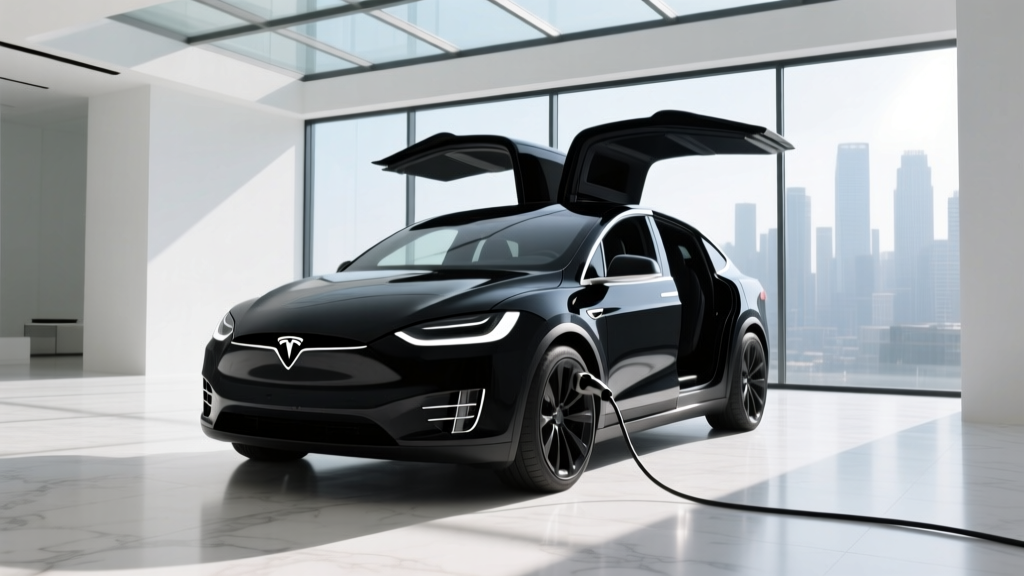
Search "why is Tesla discontinuing Model X" and you'll find a tangle of forum speculation, outdated blog posts, and AI-generated clickbait. The short answer: Tesla has not officially discontinued the Model X as of early 2026. But the question persists for good reason. The Model X occupies an increasingly awkward position in Tesla's lineup — a $80,000+ flagship SUV selling in low volumes while the refreshed Model Y and Cybertruck siphon buyer attention. Let's separate verifiable fact from rumor, then put the current Model X under the microscope to see if it still earns its place in your garage.
The Discontinuation Rumor: Where It Came From and What's Real
The "Tesla is killing the Model X" narrative has three factual pillars:
- Plummeting sales volume. Tesla stopped breaking out Model S/X deliveries separately in 2023, lumping them into "Other Models." Industry analysts estimate combined S/X deliveries fell below 50,000 units globally in 2025 — a fraction of Model Y's 800,000+ pace.
- Fremont production line sharing. The Model X shares its Fremont assembly line with the Model S. Tesla has periodically reduced shifts on this line to prioritize other vehicles, feeding speculation about a phase-out.
- Delayed Juniper-style refresh. The Model 3 got its "Highland" refresh in 2024; the Model Y received "Juniper" in 2025. The Model X and S have received comparatively minor updates, leading analysts to question whether Tesla will invest in a ground-up redesign for a low-volume nameplate.
However, Tesla's own website still lists the Model X as available for order in multiple configurations. CEO Elon Musk has periodically referenced future updates to the S/X platform, though without firm timelines. Until Tesla issues an official discontinuation notice, the Model X remains a current-production vehicle — just one with an uncertain long-term future.
2026 Tesla Model X: Specs at a Glance
| Specification | Long Range AWD | Plaid (Tri-Motor) |
|---|---|---|
| EPA Range | 335 miles | 326 miles |
| Battery (usable) | ~100 kWh (NMC) | ~100 kWh (NMC) |
| Drivetrain | Dual-Motor AWD | Tri-Motor AWD |
| Horsepower | 670 hp | 1,020 hp |
| 0–60 mph | 3.8 sec | 2.5 sec |
| Top Speed | 155 mph | 163 mph |
| Max DC Fast Charge | 250 kW | 250 kW |
| 10–80% DC Charge | ~30 min | ~30 min |
| Level 2 Home Charge | 11.5 kW (~34 mi/hr) | 11.5 kW (~34 mi/hr) |
| MPGe (combined) | 102 MPGe | 98 MPGe |
| Energy Consumption | ~33 kWh/100 mi | ~34 kWh/100 mi |
| Seating | 5, 6, or 7 passengers | 5, 6, or 7 passengers |
| Cargo (behind 3rd row) | ~15 cu ft | ~15 cu ft |
| Cargo (max, seats folded) | ~88 cu ft | ~88 cu ft |
| Towing Capacity | 5,000 lbs | 5,000 lbs |
| Base MSRP | $79,990 | $94,990 |
| Battery/Drive Unit Warranty | 8 yr / 150,000 mi | 8 yr / 150,000 mi |
Sources: EPA fueleconomy.gov, Tesla Model X configurator. Pricing reflects MSRP before destination; specs subject to mid-year adjustments.
Real-World Range: What the EPA Number Doesn't Tell You
EPA Estimate: 335 miles (Long Range) / 326 miles (Plaid)
Real-world highway (70 mph, moderate temps): ~270–290 miles
Real-world cold weather (below 32°F, mixed driving): ~220–260 miles
Real-world city/regenerative driving: ~300–320 miles
The Model X's ~100 kWh NMC (nickel manganese cobalt) battery pack provides substantial energy capacity, but the vehicle's 5,185-pound curb weight and boxy aerodynamic profile (drag coefficient ~0.24 Cd) work against efficiency. On fueleconomy.gov, the Long Range AWD achieves 102 MPGe combined — respectable for a three-row SUV but notably lower than the Model Y Long Range's 122 MPGe.
In practice, highway driving at 75+ mph pushes consumption to 36–38 kWh/100 mi, cutting effective range to roughly 260–280 miles. Cold weather compounds this: NMC batteries lose roughly 15–30% of usable capacity in sub-freezing temperatures without preconditioning, and the Model X's cabin heating load is significant given its interior volume. Tesla's heat pump (standard on current models) mitigates this but doesn't eliminate it. If your commute is 60 miles round-trip in Minnesota winters, you'll still have ample buffer — but a 300-mile road trip in January will require a charging stop.
Charging Speed and Infrastructure: 250 kW Peak, But Read the Fine Print
| Charging Level | Power / Rate | Miles Added per Hour | Notes |
|---|---|---|---|
| Level 1 (120V household) | ~1.4 kW | ~4 mi/hr | Emergency/top-up only |
| Level 2 (240V, 48A Wall Connector) | 11.5 kW | ~34 mi/hr | Full charge in ~9 hrs |
| DC Fast Charge (V3 Supercharger) | Up to 250 kW peak | ~175 mi in 15 min (peak) | 10–80% in ~30 min |
| DC Fast Charge (V4 Supercharger) | Up to 250 kW (Model X limited) | Similar to V3 | V4's 350+ kW capability requires newer architecture |
The Model X peaks at 250 kW on Tesla's V3 Superchargers, but — critically — this peak is not sustained. The charging curve tapers significantly above 50% state of charge (SoC), dropping to ~100 kW by 60% and below 50 kW by 80%. This is normal for NMC chemistry, but it means the "30-minute 10–80%" claim assumes ideal battery preconditioning (navigating to a Supercharger via the car's nav system activates this automatically).
Arriving at a Supercharger without preconditioning — for instance, driving to a third-party charger or a Supercharger not set as your nav destination — can add 5–10 minutes to your session as the battery warms to optimal charging temperature. For home charging, Tesla's Wall Connector at 48 amps delivers 11.5 kW, recovering roughly 34 miles of range per hour. A full 0–100% charge takes approximately 9 hours, making overnight charging practical for daily use.
The Model X uses Tesla's proprietary NACS connector natively, granting full access to the Supercharger network (17,000+ stalls in North America). With the industry's shift to NACS as the standard, adapters are unnecessary for the growing number of non-Tesla chargers adopting the connector.
Performance, Tech, and the Ownership Experience
The Model X Plaid's 2.5-second 0–60 mph time remains one of the quickest production SUVs on the planet — a 5,185-pound vehicle outrunning a Porsche 911 Carrera to 60. Even the Long Range's 3.8 seconds is sports-car territory. Dual- and tri-motor all-wheel drive provides excellent traction, and the adaptive air suspension adjusts ride height for highway efficiency or rough-road clearance.
Standout Tech Features
- 17-inch center touchscreen (tilting "cinematic" display) with integrated navigation, media, and vehicle controls
- Second-row 8-inch touchscreen for rear-seat climate and entertainment
- Autopilot standard (SAE Level 2 driver assist); Full Self-Driving (Supervised) available as a $8,000 add-on or subscription
- Falcon Wing rear doors — dramatic, useful in tight parking spaces, but mechanically complex
- HEPA air filtration with "Bioweapon Defense Mode" — genuinely impressive particulate filtration
- Over-the-air updates that periodically add features and refine performance
Notable Drawbacks
- Falcon Wing doors can be slow to open/close in rain and have historically been a reliability concern
- Panel gap inconsistency remains a Tesla hallmark — better than 2020-era build quality but still below German luxury standards
- Yoke steering (now optional alongside a round wheel) is polarizing and offers no practical advantage for street driving
- No Apple CarPlay or Android Auto — Tesla's proprietary infotainment is capable but a closed ecosystem
- Insurance costs run 20–40% higher than comparable non-Tesla SUVs due to repair complexity and parts pricing
Tesla Autopilot and Full Self-Driving (Supervised) are SAE Level 2 driver-assistance systems. The driver must remain fully attentive, keep hands on the wheel (or demonstrate engagement via the cabin camera), and be prepared to take over instantly. These systems are not self-driving. Only Level 4 services like Waymo operate without a human driver in defined geographic zones.
Pricing, Tax Credits, and Total Cost of Ownership
| Cost Factor | Long Range AWD | Plaid |
|---|---|---|
| Base MSRP | $79,990 | $94,990 |
| Destination Fee | $1,990 | $1,990 |
| FSD (Supervised) Add-On | +$8,000 | +$8,000 |
| Federal §30D Tax Credit | Not eligible (MSRP cap exceeded) | Not eligible (MSRP cap exceeded) |
| Estimated As-Tested Price | ~$88,000–$92,000 | ~$103,000–$108,000 |
Tax credit details per IRS §30D guidelines. The federal EV tax credit caps SUV eligibility at $80,000 MSRP. Both Model X trims exceed this threshold and do not qualify for the $7,500 credit. Buyer income limits ($300K joint / $150K single) and battery critical-mineral sourcing requirements apply to eligible vehicles. Consult a tax professional for your specific situation.
5-Year Ownership Cost Snapshot
Compared to a BMW X5 xDrive40i (base ~$67,000, 24 MPG combined):
- Fuel/Energy: Model X at $0.13/kWh national average and 33 kWh/100 mi = ~$4.29/100 mi vs. X5 at $3.50/gal and 24 MPG = ~$14.58/100 mi. Over 60,000 miles: ~$2,574 vs. ~$8,750 — a $6,176 savings.
- Maintenance: No oil changes, fewer brake replacements (regen braking), no transmission fluid. Estimated 5-year maintenance: ~$1,800 (Model X) vs. ~$4,500 (X5).
- Insurance: Model X averages ~$3,200/year vs. X5 at ~$2,100/year — a 5-year delta of +$5,500 for the Tesla.
- Depreciation: Tesla resale values have been volatile. The Model X historically depreciates 45–55% over 5 years; the X5 approximately 50–55%.
Net 5-year cost advantage for the Model X: roughly break-even to slightly favorable, depending on your electricity rates, insurance profile, and how long you hold the vehicle. The fuel savings are real but partially offset by insurance premiums and the higher purchase price.
Model X vs. the Competition: Is It Still Worth It?
The three-row electric SUV market has expanded dramatically. Here's how the Model X stacks up against key 2026 rivals:
| Vehicle | EPA Range | 0–60 | Max DC Charge | Base MSRP | §30D Eligible? |
|---|---|---|---|---|---|
| Tesla Model X LR AWD | 335 mi | 3.8s | 250 kW | $79,990 | No (MSRP cap) |
| Rivian R1S (Dual-Motor) | ~340 mi | 4.5s | 220 kW | $75,900 | Varies by config |
| Kia EV9 GT-Line AWD | 270 mi | 5.0s | 236 kW | $63,900 | Yes (if sourced compliant) |
| BMW iX xDrive50 | 324 mi | 4.4s | 195 kW | $87,250 | No (MSRP cap) |
| Mercedes EQS SUV 450 4MATIC | 305 mi | 5.7s | 200 kW | $105,550 | No (MSRP cap) |
The Model X's advantages remain its Supercharger network access (the most reliable DC charging network in North America), its performance (especially Plaid), and its tech-forward interior. Its disadvantages are price, the absence of a tax credit, aging platform design (the basic architecture dates to 2015), and the uncertainty surrounding its future.
Choose the Model X if: You need three rows, prioritize Supercharger access for road trips, want sports-car acceleration in an SUV, and are comfortable paying $80K+ without a federal tax credit.
Choose the Rivian R1S if: You want off-road capability, a more rugged aesthetic, and potential tax credit eligibility depending on configuration and sourcing.
Choose the Kia EV9 if: Budget is a priority, you want three rows under $65K, and you can access CCS or NACS-adapted charging in your area.
Wait if: You're concerned about long-term parts support and resale value for a potentially discontinued nameplate. A refreshed Model X (or its successor) could arrive within 12–18 months.
Who Should Buy the Model X in 2026?
The Model X is best suited for:
- Families needing three rows who regularly use all six or seven seats and want electric powertrain benefits
- Frequent road-trippers who value Tesla's Supercharger network reliability over competitors' CCS-dependent routes
- Performance enthusiasts who want supercar-rivaling acceleration in a practical daily driver
- Tech-forward buyers who prefer Tesla's software ecosystem and OTA update cadence over traditional luxury OEM interfaces
It's a tougher sell for:
- Budget-conscious buyers — the Kia EV9 or a used Model X offers similar utility at lower cost
- Tax-credit seekers — the MSRP cap disqualifies the Model X entirely
- Off-road oriented families — the Rivian R1S offers genuine trail capability the Model X lacks
- Buyers worried about depreciation — discontinuation risk (even if unconfirmed) could accelerate value loss
Frequently Asked Questions
Has Tesla officially announced it is discontinuing the Model X?
No. As of early 2026, Tesla has made no official announcement discontinuing the Model X. The vehicle remains available for order on Tesla's website. However, declining sales volumes and the absence of a major platform refresh have fueled persistent speculation. Tesla's product roadmap communication is characteristically opaque, so a future discontinuation or consolidation cannot be ruled out.
What is the real-world range of the Tesla Model X?
The EPA rates the Long Range AWD at 335 miles and the Plaid at 326 miles. In real-world highway driving at 70–75 mph, expect 270–290 miles. In cold weather (below freezing), range can drop to 220–260 miles depending on cabin heating use and whether the battery is preconditioned. City driving with regenerative braking recovers more energy and can approach or slightly exceed the EPA estimate.
How fast does the Model X charge at home and on the road?
At home on a Level 2 Tesla Wall Connector (48A, 240V), the Model X charges at 11.5 kW, adding roughly 34 miles of range per hour. A full charge takes about 9 hours. On a V3 Supercharger, it peaks at 250 kW DC, achieving a 10–80% charge in approximately 30 minutes with battery preconditioning. The charge curve tapers significantly above 50% SoC — don't expect sustained 250 kW rates.
Does the Tesla Model X qualify for the federal EV tax credit?
No. Under current IRS §30D rules, SUVs must have an MSRP at or below $80,000 to be eligible for the $7,500 federal tax credit. Both the Model X Long Range ($79,990 base + $1,990 destination = $81,980) and Plaid ($94,990) exceed this cap when destination is included. Additionally, buyer income limits ($300,000 joint / $150,000 single) and battery critical-mineral sourcing requirements apply. Always verify current rules on irs.gov and consult a tax professional.
Is the Model X worth buying over the Rivian R1S or Kia EV9?
It depends on your priorities. The Model X wins on Supercharger access, raw performance (especially Plaid), and Tesla's software ecosystem. The Rivian R1S offers better off-road capability, a more distinctive design, and potential tax credit eligibility. The Kia EV9 delivers three-row utility at a significantly lower price with tax credit eligibility. If Supercharger reliability and acceleration are your top criteria, the Model X holds up. If value or tax incentives matter more, look at the competition.
What are the biggest pros and cons of the 2026 Model X?
Pros: Supercharger network access, 335-mile EPA range, 2.5s 0–60 (Plaid), spacious three-row interior, HEPA air filtration, OTA updates, 5,000-lb towing, 8-year/150,000-mile battery warranty.
Cons: $80K+ MSRP with no federal tax credit, Falcon Wing door reliability concerns, aging platform architecture, higher insurance costs, panel gap inconsistency, discontinuation uncertainty affecting resale value.
Should I wait for a refreshed Model X or buy now?
If Tesla follows its pattern with the Model 3 (Highland) and Model Y (Juniper), a significant Model X refresh is overdue. However, Tesla has not confirmed timing or details. Buying now means getting a proven, if aging, vehicle with immediate availability. Waiting could yield a more modern interior, faster charging architecture, and updated styling — but there's no guarantee of when (or whether) a refresh will arrive, and pricing will likely increase.