If you're shopping the Tesla lineup in 2026 and wondering what models did Tesla discontinue, you're not alone. Over the past several years, Tesla has quietly retired some of its most iconic vehicles while reshaping its remaining models around new battery chemistries, the North American Charging Standard (NACS), and revised pricing. This guide breaks down exactly which Teslas are gone, which remain, and what the current specs, pricing, and federal tax credit landscape look like for each surviving model.
The Short Answer: Tesla's Discontinued Models
Tesla has officially ended production of several vehicles that once defined the brand. Here's the definitive list of discontinued models as of early 2026:
- Model S (sedan) — Production wound down in late 2025. The original flagship that put Tesla on the map is no longer orderable new.
- Model X (SUV) — Discontinued alongside Model S. Falcon-wing doors and all, the large luxury SUV has exited the lineup.
- Original Roadster (2008–2012) — Tesla's very first production car, based on the Lotus Elise chassis, has long been out of production.
- Roadster 2.0 (announced 2017) — Repeatedly delayed; as of 2026, it remains unproduced and is not available for order.
- Model S Plaid+ and Model X Plaid tri-motor variants — These extreme-performance trims were cancelled before broad delivery.
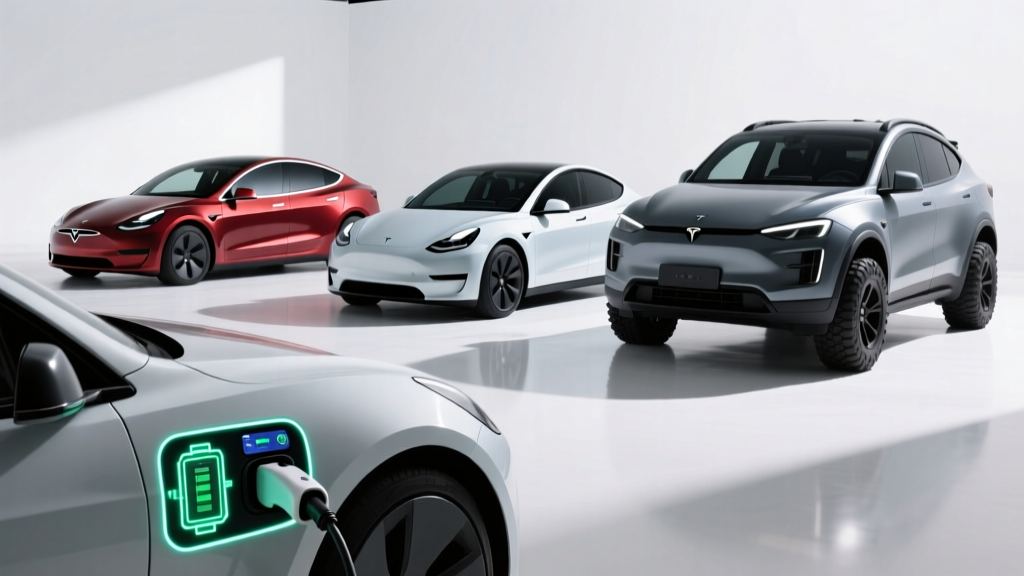
That leaves Tesla's 2026 new-vehicle lineup focused on four core products: Model 3, Model Y, Cybertruck, and Semi (fleet-only). Below, we profile each current model with the exact data you need to decide whether to buy — and compare them against the competitors filling the gaps Tesla left behind.
Current Tesla Lineup at a Glance (2026)
| Spec | Model 3 | Model Y | Cybertruck |
|---|---|---|---|
| Body Style | Sedan | Crossover SUV | Pickup Truck |
| EPA Range (max trim) | 363 mi (Long Range RWD) | 320 mi (Long Range AWD) | 340 mi (AWD) |
| Battery (usable, est.) | ~60 kWh (RWD LFP) / ~79 kWh (LR NMC) | ~79 kWh (NMC) | ~123 kWh (NMC) |
| Max DC Fast Charge | 250 kW (LR) / 170 kW (RWD) | 250 kW | 250 kW (350 kW capable at V4 stalls) |
| 10–80% DCFC Time | ~25 min (LR) / ~30 min (RWD) | ~25 min | ~28 min |
| Level 2 Home Charging | 11.5 kW (~44 mi/hr) | 11.5 kW (~44 mi/hr) | 11.5 kW (~37 mi/hr) |
| 0–60 mph | 5.8s (RWD) / 4.2s (LR AWD) | 5.0s (LR AWD) / 3.5s (Performance) | 3.9s (AWD) / 2.6s (Cyberbeast) |
| Horsepower | 283 hp (RWD) / 440 hp (LR AWD) | 384 hp (LR) / 480 hp (Perf) | 600 hp (AWD) / 845 hp (Cyberbeast) |
| Drivetrain | RWD or Dual-Motor AWD | Dual-Motor AWD | Tri-Motor AWD (Cyberbeast) / Dual-Motor |
| MPGe (combined) | 132 MPGe (RWD) | 117 MPGe (LR AWD) | 72 MPGe (AWD) |
| Cargo Volume | 23 cu ft (trunk) + frunk | 76 cu ft (rear seats folded) | ~74 cu ft (vault + bed) |
| Base MSRP | $38,990 (RWD) | $44,990 (LR AWD) | $79,990 (AWD) |
| Battery/Drive Unit Warranty | 8 yr / 100,000 mi (RWD) or 120,000 mi (LR) | 8 yr / 120,000 mi | 8 yr / 150,000 mi |
Sources: fueleconomy.gov, Tesla.com (2026 model year specifications). Real-world range and charging times may vary based on conditions.
2026 Tesla Model 3: The Entry Point
The refreshed Model 3 (internally called "Highland") remains Tesla's most affordable vehicle and the default recommendation for first-time EV buyers. It's available in two main configurations for 2026: a Rear-Wheel Drive (RWD) base model with an LFP (lithium iron phosphate) battery, and a Long Range AWD variant with an NMC (nickel manganese cobalt) pack.
Charging the Model 3
At a Tesla V3 Supercharger (250 kW), the Long Range Model 3 peaks near its maximum rate and sustains strong speeds through the mid-SoC range. The 10–80% charge takes approximately 25 minutes under ideal preconditioned conditions. The RWD model, limited to around 170 kW peak due to its smaller LFP pack, takes closer to 30 minutes for the same 10–80% session.
At home on a Level 2 (240V) Wall Connector, both versions accept up to 11.5 kW, adding roughly 44 miles of range per hour of charging. A full overnight charge easily replenishes even the Long Range pack.
Pricing and Federal Tax Credit
| Trim | MSRP | §30D Credit Eligibility | Effective Price (if eligible) |
|---|---|---|---|
| RWD (LFP) | $38,990 | Up to $3,750 (critical minerals sourcing partial) | ~$35,240 |
| Long Range AWD (NMC) | $45,240 | Up to $7,500 (subject to battery component + mineral rules) | ~$37,740 |
Important §30D caveats: The federal EV tax credit under IRS rules requires the buyer to meet income caps ($150K single / $300K joint AGI), the vehicle MSRP must be at or below $55,000 for sedans, and battery components and critical minerals must meet phased domestic-sourcing thresholds. The credit can now be transferred at the point of sale as a price reduction. Tesla's LFP cells (largely sourced from CATL in China) may reduce the RWD model's credit amount. Always verify current-year eligibility on the IRS website before purchasing.
Who the Model 3 Suits Best
The Model 3 is ideal for daily commuters, apartment-dwellers with workplace charging access, and buyers seeking maximum range per dollar. It's less suited for families needing rear-seat cargo flexibility — that's where the Model Y takes over.
2026 Tesla Model Y: The Volume Leader
The Model Y received its "Juniper" refresh and continues as Tesla's best-selling vehicle globally. For 2026, it's offered exclusively with dual-motor AWD in Long Range and Performance trims. The Long Range AWD delivers a 320-mile EPA rating, while the Performance variant sacrifices roughly 20 miles of range for sharper acceleration and track-tuned suspension.
Charging the Model Y
The Model Y Long Range accepts up to 250 kW at V3 Superchargers, with a 10–80% session taking approximately 25 minutes when the battery is properly preconditioned via the car's navigation-routed warm-up. Home Level 2 charging at 11.5 kW adds about 44 miles per hour, meaning a typical overnight session (8 hours) restores roughly 350 miles — more than the full pack.
Interior, Cargo, and Practicality
With 76 cubic feet of cargo space (rear seats folded), the Model Y competes directly with midsize crossovers. Rear legroom measures 41.6 inches, making it genuinely comfortable for adults on longer trips. The front trunk (frunk) adds 4.1 cu ft of secure storage for charging cables or a small bag.
Pricing and Tax Credit
The Model Y Long Range AWD starts at $44,990, and the Performance trim at $48,990. Both fall under the $80,000 SUV MSRP cap for the §30D credit. Depending on battery-sourcing compliance, buyers may qualify for up to $7,500 — bringing the Long Range to an effective price near $37,490. Income caps apply: modified AGI must not exceed $150,000 (single) or $300,000 (married filing jointly).
Who the Model Y Suits Best
Families, road-trippers, and buyers who need crossover versatility without stepping up to a truck. It's the default Tesla recommendation for anyone who finds the Model 3's trunk too limiting.
2026 Tesla Cybertruck: The Polarizing Pickup
Cybertruck remains in production in three configurations: a base Rear-Wheel Drive (limited availability), Dual-Motor AWD, and the tri-motor Cyberbeast. At $79,990 for the AWD and $99,990 for the Cyberbeast, it occupies a premium position in the electric truck segment.
Charging and Efficiency
Cybertruck's massive ~123 kWh battery and 800V architecture allow peak charging at up to 350 kW at Tesla's newer V4 Supercharger stalls, though most existing V3 stations cap it at 250 kW. A 10–80% session takes approximately 28 minutes at a V4 stall. Efficiency is its weak point: at 72 MPGe combined, it consumes roughly 48 kWh per 100 miles — nearly double the Model 3's consumption.
Who the Cybertruck Suits Best
Buyers who need truck capability (towing, off-road, bed utility) and want the Tesla Supercharger network. It's less practical as a daily commuter due to its size, efficiency penalty, and premium price. The Ford F-150 Lightning and Rivian R1T remain strong alternatives for buyers wanting a more conventional or adventure-focused truck, respectively.
Why Tesla Discontinued Model S and Model X
The Model S and Model X were engineering triumphs when they launched, but by 2025 they faced compounding challenges: aging platform architecture, declining sales volumes relative to Model 3/Y, and fierce competition from the Lucid Air, BMW i7, Mercedes EQS, and Rivian R1S. Maintaining two low-volume production lines at the Fremont factory became difficult to justify as Tesla redirected capital toward the next-generation compact platform and Semi production ramp.
If you were considering a used Model S or X, they remain solid vehicles with strong Supercharger access, but be aware that long-term parts availability and software support may gradually diminish as the fleet ages.
Competitors Filling the Gap
With Model S and X gone, here's where buyers are turning:
| Discontinued Tesla | Key Competitor Alternatives | Starting MSRP |
|---|---|---|
| Model S (luxury sedan) | Lucid Air Pure, BMW i5, Mercedes EQE | $69,900 / $66,800 / $74,900 |
| Model X (3-row SUV) | Rivian R1S, Kia EV9, BMW iX | $74,900 / $54,900 / $87,250 |
Pros and Cons of Buying Tesla in 2026
Pros
- Best-in-class Supercharger network reliability (17,000+ stalls in North America)
- Industry-leading efficiency (Model 3 LR at 363 mi EPA from a ~79 kWh pack)
- Over-the-air updates continuously add features
- Point-of-sale tax credit transfer reduces upfront cost
- Strong resale value relative to most EV competitors
Cons
- Minimalist interior not for everyone (no instrument cluster, limited physical controls)
- FSD (Supervised) remains SAE Level 2 — requires full driver attention at all times
- Service center wait times can stretch weeks in some metro areas
- Panel-gap and build-quality inconsistencies still reported by some owners
- No luxury sedan or 3-row SUV option now that S/X are discontinued
Frequently Asked Questions
What models did Tesla discontinue most recently?
The Model S sedan and Model X SUV were the most recent discontinuations, with production ending in late 2025. The original Roadster was discontinued in 2012, and the Roadster 2.0 announced in 2017 has never entered production.
Can I still buy a new Tesla Model S or Model X?
No. As of 2026, Tesla no longer accepts new orders for Model S or Model X. Certified pre-owned and third-party used inventory remains available, but new production has ceased.
What is the real-world range of the cheapest current Tesla?
The Model 3 RWD (base MSRP $38,990) carries a 272-mile EPA rating. In real-world mixed driving, expect 230–250 miles. Highway-only driving at 75 mph may yield as little as 210–220 miles, and cold-weather conditions can push range below 200 miles.
How fast does the 2026 Model Y charge at home?
On a Level 2 (240V) Tesla Wall Connector or equivalent, the Model Y charges at up to 11.5 kW, adding approximately 44 miles of range per hour. A full charge from 10% takes about 7–8 hours.
Does the Tesla Model 3 qualify for the full $7,500 federal tax credit?
It depends on the trim and your income. The Long Range AWD variant may qualify for up to $7,500 if battery-sourcing requirements are met and your AGI falls within IRS caps. The RWD (LFP battery) may only qualify for a partial credit ($3,750) due to critical-mineral sourcing. Always verify on IRS.gov before purchasing.
Is Tesla's FSD actually self-driving?
No. Tesla's Full Self-Driving (Supervised) is an SAE Level 2 driver-assistance system. It requires the driver to remain fully attentive, keep hands ready to intervene, and take responsibility for all driving actions. It is not autonomous. Only Level 4 services like Waymo operate without a human driver in defined areas.
What's the best Tesla alternative now that Model S and X are gone?
For luxury sedan buyers, the Lucid Air Pure (419 mi EPA, from $69,900) and BMW i5 are top picks. For 3-row SUV shoppers, the Rivian R1S and Kia EV9 offer compelling alternatives with different trade-offs in range, charging speed, and price.