Why Tesla Keeps Retiring Models and Trims
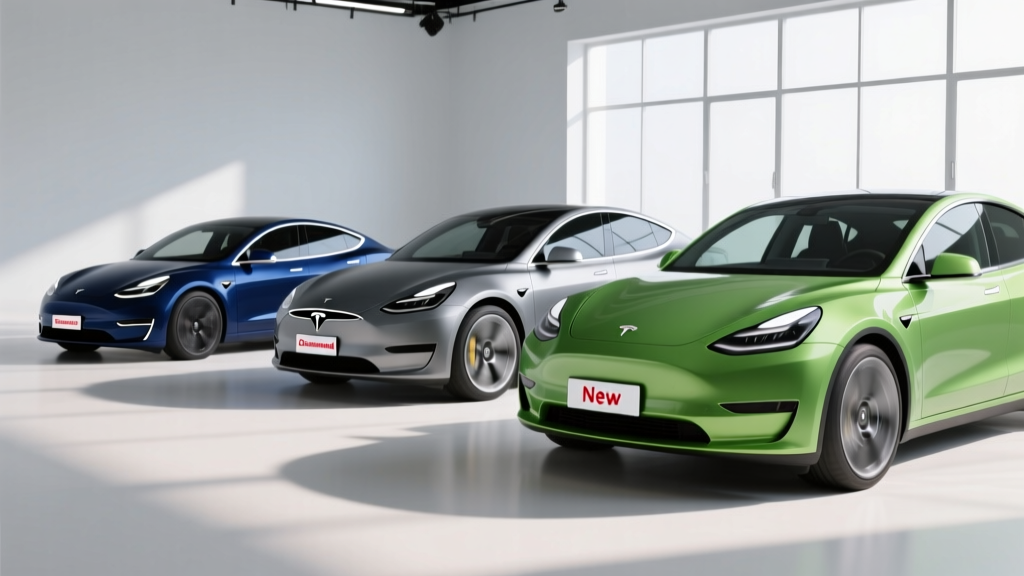
Tesla has never been shy about pruning its lineup. Unlike legacy automakers that carry nameplates for decades, Tesla treats vehicle variants more like software releases: when a platform ages out of its strategic value, it gets sunsetted. As of early 2026, several once-iconic Tesla models and trims have been officially discontinued or quietly removed from the new-vehicle configurator. Understanding which Teslas are gone — and what replaced them — is essential whether you are shopping the used market, weighing a trade-in, or simply tracking the brand's evolution.
This guide catalogs the major Tesla discontinued models and legacy configurations, provides their final production specs, and explains what current or upcoming vehicles fill the gaps they left behind.
The Major Tesla Discontinued Models
Below is a summary of the most significant Tesla models and trims no longer available as new vehicles in 2026.
| Model | Production Run | Final EPA Range | Battery (kWh / Chemistry) | Peak DC Charge kW | 0–60 mph | Status in 2026 |
|---|---|---|---|---|---|---|
| Original Roadster | 2008–2012 | 244 mi (EPA equivalent) | ~53 kWh / NMC | N/A (AC charging only) | 3.7 s | Discontinued; collector market only |
| Model S (pre-2023 refresh) | 2012–2023 (multiple refreshes) | 405 mi (Long Range, 2023) | ~100 kWh / NMC | 250 kW | 3.1 s (LR) / 1.99 s (Plaid) | Discontinued; replaced by refreshed platform |
| Model X (pre-2023 refresh) | 2015–2023 | 348 mi (Long Range, 2023) | ~100 kWh / NMC | 250 kW | 3.8 s (LR) / 2.5 s (Plaid) | Discontinued; replaced by refreshed platform |
| Model S 60 / 75 / Standard Range | 2016–2019 (various trims) | 210–270 mi depending on year | 60–75 kWh / NMC | 120–140 kW | 4.2–5.5 s | Discontinued; base trims eliminated |
| Model 3 Standard Range (non-Plus) | 2019–2021 | 220 mi (2019 EPA) | ~50 kWh / NMC (later LFP) | 170 kW | 5.3 s | Discontinued; replaced by RWD with LFP |
Sources: EPA fueleconomy.gov, Tesla historical press releases.
Original Tesla Roadster (2008–2012): The EV Pioneer That Started It All
The original Roadster was built on a Lotus Elise chassis and proved that a battery-electric car could deliver sports-car performance. Only about 2,450 units were produced worldwide.
Real-World Expectation: Expect 180–210 miles in mixed driving; significantly less (140–160 mi) at sustained highway speeds or in cold weather. Battery degradation on 12+ year-old packs is substantial — many surviving Roadsters have had battery replacements or operate at 60–70% original capacity.
The Roadster used a 53 kWh (usable) NMC battery and charged exclusively via AC — there was no DC fast-charging capability. A full Level 2 charge took roughly 3.5 hours at 16.8 kW using Tesla's proprietary High Power Connector. Performance remains impressive even by 2026 standards: 288 hp and a 3.7-second 0–60 time.
Who it suits: Collectors and EV-history enthusiasts only. It is not a practical daily driver in 2026 — parts scarcity, aging battery packs, and zero DC fast-charging make it a garage showpiece.
Pre-Refresh Model S and Model X: The Sedans and SUVs That Built Tesla
The Model S launched in 2012 and the Model X in 2015. Both underwent multiple battery and drivetrain updates over the years, but the pre-2023 versions — with their original body-in-white architecture — have been fully superseded by the current-generation platforms that debuted with the 2023 refresh.
Model S Long Range (Final Pre-Refresh, 2023)
| EPA Range | 405 miles |
| Real-World Highway | ~320–350 mi (75 mph); ~280–310 mi in freezing temps |
| Battery | ~100 kWh usable, NMC (2170 cells) |
| Peak DC Fast Charge | 250 kW (V3 Supercharger) |
| 10–80% DC Time | ~30 minutes |
| Level 2 Home Charging | 11.5 kW (~34 mi/hr) |
| 0–60 mph | 3.1 seconds |
| Horsepower | 670 hp (dual-motor AWD) |
| Efficiency | 120 MPGe / 28 kWh/100 mi |
| Cargo Volume | 28 cu ft (rear) + frunk |
| Warranty | 8 yr / 150,000 mi battery & drive unit |
Model X Long Range (Final Pre-Refresh, 2023)
The Model X offered similar powertrain technology in a three-row SUV package with falcon-wing rear doors. EPA range was 348 miles, with real-world highway expectations of 270–300 miles and cold-weather figures closer to 230–260 miles. Towing capacity was rated at 5,000 lbs. Cargo volume reached 88 cu ft with both rear rows folded.
Discontinued Model 3 and Model Y Trims
Beyond full model discontinuations, Tesla has aggressively trimmed its configurations. The original Model 3 Standard Range (220 mi EPA, 2019) was replaced first by the Standard Range Plus, then by the current RWD variant using a CATL-sourced LFP (lithium iron phosphate) battery. LFP chemistry trades some energy density for lower cost, longer cycle life, and the ability to charge routinely to 100% without degradation concerns.
Similarly, the Model 3 Performance trim was temporarily removed and restructured multiple times between 2023 and 2025 before reappearing with updated specs. Buyers of used Model 3s should verify the exact battery chemistry (NMC vs. LFP) as it materially affects charging habits, cold-weather performance, and long-term degradation behavior.
What Replaced the Discontinued Teslas?
Tesla's current 2026 lineup fills most gaps left by discontinued models:
- Model S/X Refresh (2023+): Updated interior, yoke or round steering wheel options, improved thermal management with heat pump standard, and 405/348 mi EPA ranges respectively.
- Model 3 Highland (2024+): Redesigned exterior, quieter cabin, ventilated seats, and LFP battery in the RWD trim with 272 mi EPA range.
- Model Y Juniper (2025+): Refreshed styling, updated suspension, and improved efficiency pushing EPA range above 320 mi in Long Range AWD.
- Cybertruck (2024+): Fills the truck/utility segment Tesla previously had no entry in, with up to 340 mi EPA range in the AWD variant.
- Next-Gen Roadster (announced): Repeatedly delayed since its 2017 unveiling; as of 2026, it remains in "announced" status with no confirmed production date. Tesla lists preliminary specs of 620+ mi range and a sub-2.0 second 0–60, but these are unverified.
Should You Buy a Discontinued Tesla on the Used Market?
Used pre-refresh Model S and X vehicles have depreciated heavily, making them tempting buys. A 2020 Model S Long Range Plus (402 mi EPA when new) can be found in the $35,000–$45,000 range — a steep discount from its original $79,990 MSRP. However, buyers must weigh several factors:
Pros of Buying a Discontinued Tesla Used
- Significant depreciation discount — often 40–60% below original MSRP
- Still access to the Supercharger network (NACS connector native)
- Over-the-air updates continue for most 2018+ vehicles
- Proven powertrain durability on dual-motor variants
- Strong performance even on older trims
Cons and Risks
- Battery degradation: expect 10–20% capacity loss on 4–8 year-old NMC packs
- Out-of-warranty battery replacement costs $12,000–$20,000+
- Older MCU1 (pre-2018) infotainment is sluggish; upgrade costs ~$1,500–$2,500
- No federal §30D tax credit on most used EVs unless purchased from a dealer for under $25,000 (used-EV credit, max $4,000)
- Suspension, door handle, and MCU failures are common on pre-2020 Model S/X
Federal Tax Credit Eligibility for Used Discontinued Teslas
The IRS §25E used-EV credit offers up to $4,000 (or 30% of the sale price, whichever is less) on qualifying pre-owned EVs. Key requirements:
- Sale price must be $25,000 or less
- Vehicle must be at least two model years old
- Buyer income caps: $75,000 single / $112,500 head of household / $150,000 joint
- Must purchase from a licensed dealer (private-party sales do not qualify)
- Credit is non-refundable unless transferred at point of sale
Many used Model S and X examples now fall under the $25,000 threshold, making them eligible. However, older Model 3 variants (2018–2020) may or may not qualify depending on dealer pricing. Always verify eligibility with your tax professional and confirm the dealer is registered with the IRS for point-of-sale credit transfers.
Verdict: Are Discontinued Teslas Still Worth It in 2026?
For bargain hunters willing to accept the risks of out-of-warranty ownership, a used pre-refresh Model S or Model X offers extraordinary value — premium electric sedans and SUVs with 300+ miles of range and Supercharger access at prices rivaling new compact EVs. The original Roadster is a collector piece, not a practical vehicle.
For buyers who prioritize warranty coverage, the latest battery chemistry, and current-gen software features, Tesla's 2026 lineup (Model 3 Highland, Model Y Juniper, refreshed S/X) is the better choice, with the Model 3 RWD starting around $38,990 and eligible for the full $7,500 §30D credit for qualifying buyers.
What Tesla models have been discontinued?
The original Roadster (2008–2012), pre-refresh Model S and Model X (superseded by 2023+ redesigned versions), and several specific trims including the Model S 60/75 and original Model 3 Standard Range have been discontinued. The current Model S, Model X, Model 3, Model Y, and Cybertruck remain in production.
Can I still get a discontinued Tesla serviced?
Yes. Tesla continues to service all previously sold vehicles through its service center network and mobile rangers. However, parts availability for the original Roadster is extremely limited, and wait times for Model S/X body panels and proprietary components can be lengthy.
Do discontinued Teslas still get software updates?
Most Tesla vehicles from 2018 onward (those with MCU2 or later hardware) continue to receive over-the-air software updates, including new features and security patches. Vehicles with the original MCU1 hardware (mostly pre-March 2018 Model S/X) receive limited updates unless the infotainment computer is upgraded.
Is the Tesla Roadster 2.0 still coming?
As of 2026, the next-generation Roadster remains in announced status with no firm production date. Tesla has repeatedly postponed it, most recently suggesting a potential 2027 timeline. All published specs (620+ mi range, sub-2.0s 0–60) are preliminary and unverified.
What is the best discontinued Tesla to buy used?
The 2020–2022 Model 3 Long Range AWD offers the best combination of range (322–358 mi EPA), performance (4.2s 0–60), modern HW3 Autopilot hardware, and depreciation value. A well-maintained example in the $25,000–$32,000 range is difficult to beat for an all-electric daily driver.