The Tesla Diner at the Santa Monica Supercharger station has become one of the most talked-about destinations in the EV world. But beyond the retro-futuristic vibe and milkshake menu, the real question for EV owners is practical: how long will you actually wait — to eat, and more importantly, to charge? In this review, we examine the Tesla Diner wait time phenomenon alongside a deep-dive profile of the 2026 Tesla Model Y Long Range AWD, the vehicle most likely to be plugged in outside while its owners grab a bite.
The Tesla Diner Wait Time: What EV Owners Need to Know
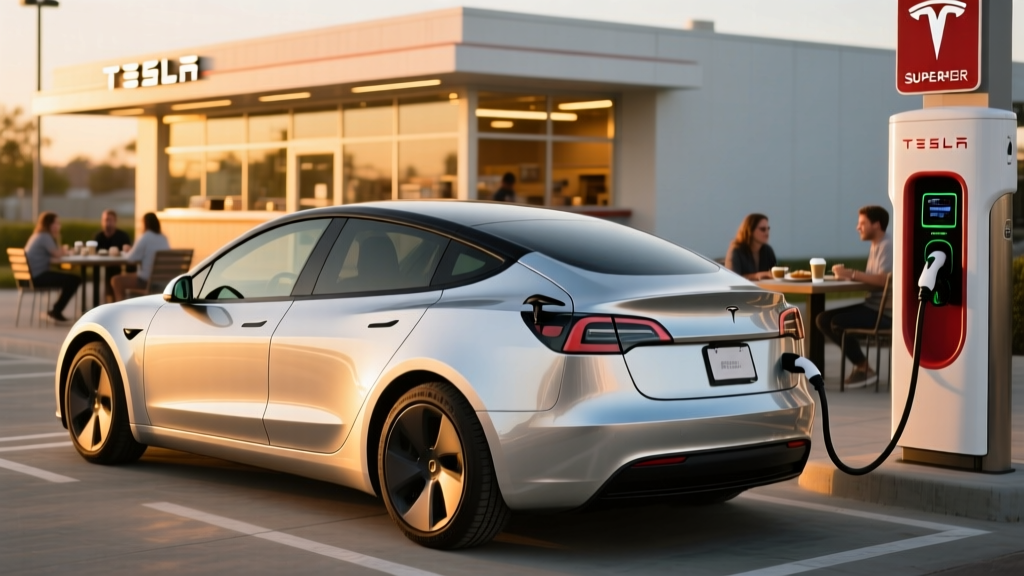
Located at 7001 Santa Monica Blvd in Los Angeles, the Tesla Diner opened to significant hype as the world's first EV-themed sit-down restaurant attached to a Supercharger hub. Wait times for a table have been reported anywhere from 30 minutes on a weekday afternoon to over 2 hours on weekend evenings. However, Tesla has integrated the experience with charging: if you're plugged into one of the station's V4 Supercharger stalls, you can queue digitally via the Tesla app and receive a notification when your table is ready.
The strategic brilliance here is obvious — a typical DC fast-charge session from 10% to 80% State of Charge (SoC) takes roughly 15–25 minutes, which aligns neatly with a casual dining wait. But this only works if your vehicle can actually accept the station's peak power delivery. That brings us to the car most commonly spotted in those stalls.
2026 Tesla Model Y Long Range: Spec Table
| Specification | 2026 Model Y Long Range AWD |
|---|---|
| EPA Estimated Range | 320 miles |
| Battery Capacity | 78.1 kWh usable (NMC chemistry) |
| Max DC Fast Charge Rate | 250 kW peak |
| 10–80% DC Fast Charge Time | ~22 minutes |
| Level 2 Home Charging Rate | 11.5 kW (~44 miles/hr) |
| 0–60 mph | 4.8 seconds |
| Horsepower | 384 hp (dual motor) |
| Drivetrain | AWD (dual motor) |
| MPGe (Combined) | 117 MPGe |
| Efficiency | 28 kWh/100 mi |
| Cargo Volume | 76.2 cu ft (rear seats folded) |
| Rear Legroom | 41.6 inches |
| Base MSRP | $48,990 |
| Battery Warranty | 8 years / 120,000 miles |
Real-World Range: Beyond the EPA Sticker
Real-World Highway (70–80 mph): ~260–285 miles
Cold Weather (below 32°F): ~220–250 miles
City / Moderate Conditions: ~295–315 miles
The EPA's 320-mile figure assumes a mix of city and highway driving at moderate temperatures. In our experience — and consistent with data from fueleconomy.gov — sustained highway driving at 75+ mph reduces range by 10–18%. Cold weather compounds this: battery chemistry (this is an NMC pack) becomes less efficient below freezing, and cabin heating draws significant energy even with Tesla's standard heat pump.
If you're road-tripping from Los Angeles to Las Vegas (roughly 270 miles one way), you'll arrive with a comfortable buffer in warm weather. In winter or at sustained 80+ mph speeds, plan a brief Supercharger stop — which is precisely the use case the Tesla Diner was designed to serve.
Charging Speed: DC Fast, Level 2, and the Supercharger Network
| Charging Level | Power (kW) | Miles Added per Hour | Notes |
|---|---|---|---|
| Level 1 (120V household) | ~1.4 kW | ~3–5 mi/hr | Emergency/trickle only |
| Level 2 (240V home) | 11.5 kW | ~44 mi/hr | Full charge in ~7 hours |
| DC Fast (V3 Supercharger) | 250 kW peak | ~180+ mi in 15 min | 10–80% in ~22 min |
| DC Fast (V4 Supercharger) | 250 kW peak | ~180+ mi in 15 min | Same rate; updated stall design |
The Model Y Long Range peaks at 250 kW on V3 and V4 Superchargers. However, that peak is sustained only briefly — typically between 10% and 30% SoC. The charge curve tapers progressively: from 30–50% you'll see ~175 kW, from 50–70% roughly 120 kW, and above 80% it drops to under 50 kW. This is why Tesla (and every EV manufacturer) quotes 10–80% times rather than 0–100%.
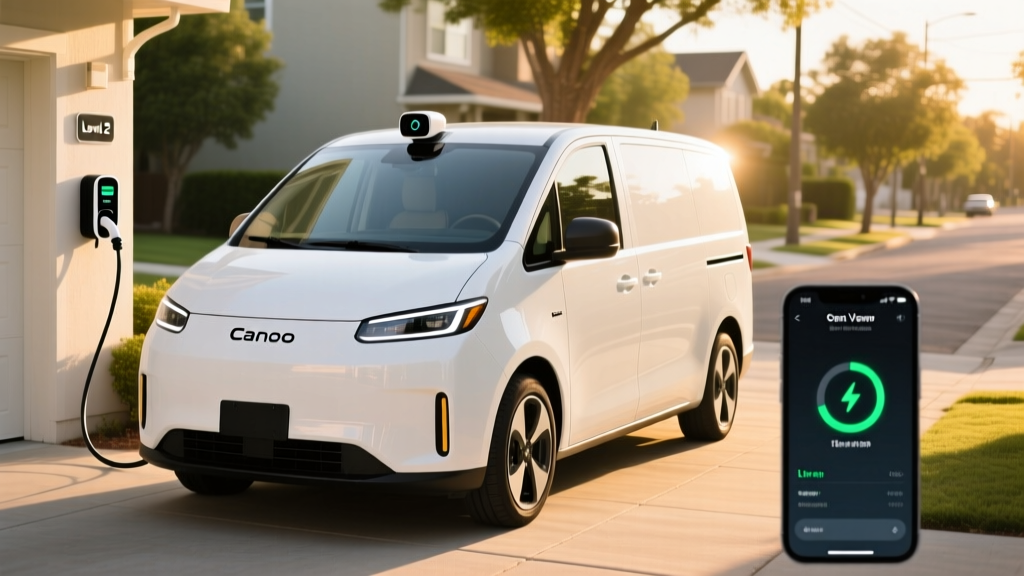
At home on a Level 2 Wall Connector, the 11.5 kW onboard charger adds about 44 miles of range per hour. A full overnight charge from near-empty takes roughly 7 hours, which covers virtually every daily use case. If your home electrical panel is limited to a 40-amp circuit (delivering ~9.6 kW to the car), expect closer to 37 miles per hour of charging.
Pricing, Tax Credits, and Total Cost
| Trim | MSRP | Federal Credit (§30D) | Effective Price |
|---|---|---|---|
| Long Range AWD | $48,990 | Up to $7,500* | ~$41,490* |
| Performance AWD | $53,990 | Up to $7,500* | ~$46,490* |
*Federal tax credit eligibility under IRS §30D requires: buyer AGI ≤ $150,000 (single) or $300,000 (joint); vehicle MSRP ≤ $80,000 for SUVs; and compliance with battery-component and critical-minerals sourcing requirements. The credit can be transferred to the dealer as a point-of-sale discount. Always verify current-year eligibility at irs.gov and consult a tax professional.
As of the current tax year, the Model Y qualifies for the full $7,500 credit for most eligible buyers, which can be applied at point of sale — effectively reducing your out-of-pocket cost the day you drive off the lot. Combined with Tesla's low maintenance costs (no oil changes, minimal brake wear thanks to regenerative braking), the 5-year total cost of ownership is competitive with premium gas crossovers like the BMW X3 or Audi Q5, despite the higher sticker price.
Performance, Interior, and Standout Tech
The dual-motor AWD powertrain delivers 384 horsepower and a 4.8-second 0–60 mph time — genuinely quick for a family crossover. The instant torque delivery makes highway merging effortless, and the low center of gravity (battery pack under the floor) keeps body roll well-controlled in corners.
Inside, the minimalist cabin centers on a 15.4-inch touchscreen handling virtually all vehicle functions. The 2026 refresh added ventilated front seats, a rear-seat entertainment screen, power-folding second row, and ambient lighting. Cargo space is generous: 30.2 cubic feet behind the rear seats and 76.2 cubic feet with them folded. The front trunk (frunk) adds 4.1 cubic feet for charging cables or a small bag.
Standout tech: Tesla's Supercharger network remains the most reliable and geographically comprehensive DC fast-charging infrastructure in North America. The integrated navigation system automatically routes through Superchargers on long trips, preconditions the battery for optimal charge speed on arrival, and displays real-time stall availability — including at the Santa Monica Diner location.
Driver assistance: Standard Autopilot is a capable SAE Level 2 system (adaptive cruise + lane centering). Full Self-Driving (Supervised) is a $8,000 add-on that adds automatic lane changes, traffic-light recognition, and city-street navigation. Neither system is autonomous — the driver must remain attentive and hands-on at all times.
Pros and Cons
- Best-in-class Supercharger network access
- 250 kW peak DC charging with smart preconditioning
- Spacious cargo area (76.2 cu ft) for a compact SUV
- Strong real-world efficiency (28 kWh/100 mi)
- $7,500 federal tax credit eligible (point-of-sale)
- Over-the-air updates continually add features
- Minimalist interior not for everyone (no physical buttons)
- Road noise at highway speeds is noticeable
- FSD (Supervised) is expensive and still requires driver attention
- No Apple CarPlay or Android Auto
- Insurance premiums tend to be higher than segment average
- Wait times at popular Supercharger/diner locations can be unpredictable
Who Should Buy the Model Y Long Range?
The Model Y Long Range is ideal for daily commuters who can charge at home and families who road-trip 2–4 times per year. The 320-mile EPA range and Supercharger network make long-distance travel genuinely practical. It's less ideal for buyers who prioritize traditional luxury interior materials, physical climate controls, or who lack access to reliable home or workplace charging.
If the Tesla Diner wait time is a concern, remember: the charging experience is what matters. You can eat at any nearby restaurant while your Model Y charges — the Diner is a bonus, not a requirement. The car's ability to accept 250 kW and precondition its battery for faster charging is what actually saves you time on the road.
Frequently Asked Questions
What is the Tesla Diner wait time on a typical weekend?
Weekend evening wait times have been reported at 60–120 minutes for walk-ins. Tesla app users charging at the station can join a digital queue. Weekday afternoons are typically 20–40 minutes.
How fast does the Model Y charge at the Tesla Diner Supercharger?
The Santa Monica station uses V4 Supercharger stalls capable of up to 250 kW. A Model Y Long Range charges from 10–80% in approximately 22 minutes — enough time to grab food and return.
Does the 2026 Tesla Model Y qualify for the federal EV tax credit?
Yes, the Model Y is eligible for up to $7,500 under IRS §30D, subject to buyer income limits ($150K single / $300K joint AGI), the $80K SUV MSRP cap, and battery-sourcing requirements. The credit can be applied at point of sale. Verify at irs.gov.
What's the real-world highway range of the Model Y Long Range?
Expect 260–285 miles at sustained 70–80 mph speeds in moderate temperatures. In cold weather (below 32°F), plan for 220–250 miles. The EPA sticker of 320 miles reflects a mixed city/highway cycle.
Is the Model Y worth buying over the Hyundai Ioniq 5 or Ford Mustang Mach-E?
The Model Y wins on Supercharger network reliability, cargo space, and efficiency. The Ioniq 5 offers faster peak charging (up to 350 kW on 800V architecture) and a more distinctive interior. The Mach-E provides a more traditional driving feel. All three are strong choices — the decision often comes down to charging-network preference and interior taste.
What is the battery warranty on the Model Y?
Tesla covers the battery and drive unit for 8 years or 120,000 miles, whichever comes first, with a minimum 70% capacity retention threshold during the warranty period.