Why Tesla Built a Diner Around a Supercharger Station
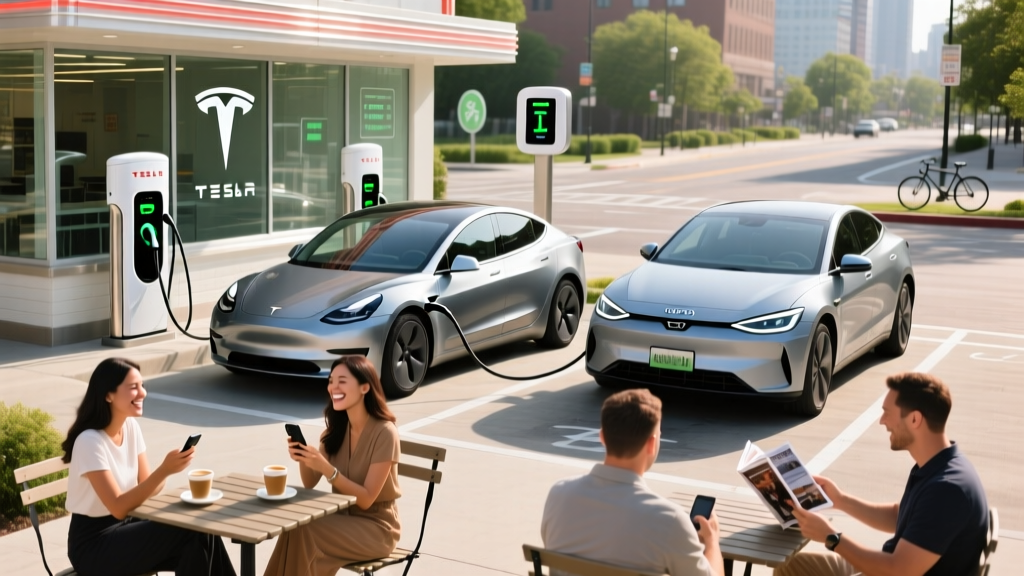
For years, Tesla owners have charged in strip-mall parking lots, grocery-store garages, and highway rest stops. In 2025, Tesla flipped the script by opening its first Supercharger Diner in Hollywood, California — a retro-futuristic destination that pairs V4 Superchargers with a full-service restaurant, outdoor seating, and dedicated EV parking. The concept merges two pain points for EV road-trippers: finding reliable fast charging and finding somewhere decent to eat while you wait.
While the diner itself isn't a vehicle, it represents a shift in how Tesla thinks about the charging experience — and it raises practical questions for Tesla owners and non-Tesla drivers alike. What chargers are actually on-site? How fast can you top off your Model Y or Model 3 while grabbing a meal? Is the parking free, and does the food justify the stop?
This guide covers the Tesla Supercharger Diner from an EV-owner perspective: the charging hardware, what it means for your real-world range recovery, parking logistics, and how Tesla's broader 2026 lineup benefits from destination-style charging infrastructure.
Charging Hardware at the Tesla Diner: V4 Superchargers Explained
The Hollywood Supercharger Diner is equipped with V4 Supercharger stalls, Tesla's latest-generation DC fast-charging architecture. Here's what that means in practical terms:
| Spec | Detail |
|---|---|
| Charger Type | V4 Supercharger (DC Fast) |
| Peak Output | Up to 350 kW (cabinet-level); vehicle-limited |
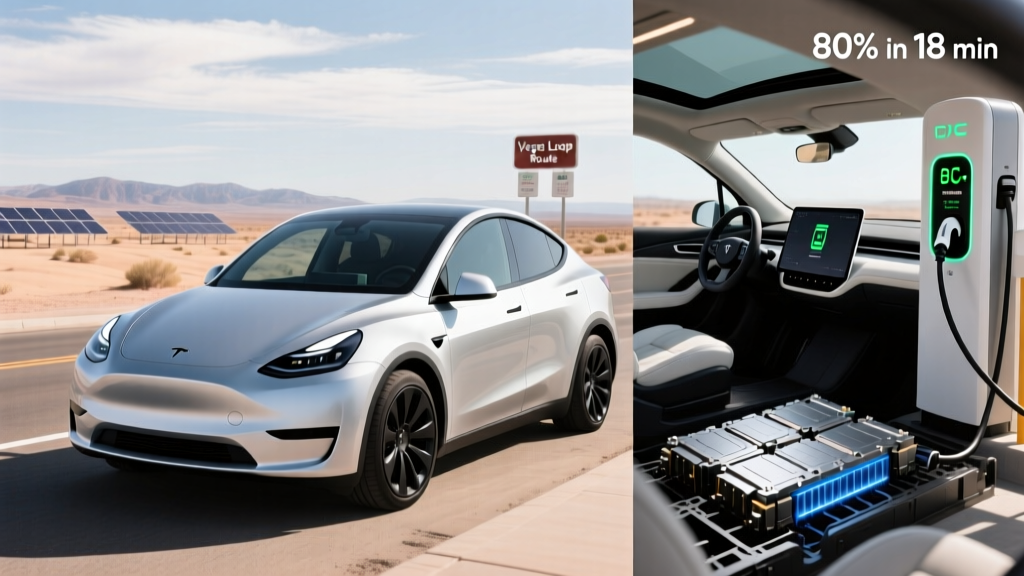
| Typical Vehicle Charge (Model Y LR) | ~250 kW peak, 10–80% in ~18–20 min |
| Typical Vehicle Charge (Model 3 LR) | ~250 kW peak, 10–80% in ~15–18 min |
| Connector | NACS (native Tesla); CCS1 via adapter for non-Tesla EVs |
| Non-Tesla Access | Yes — Magic Dock or bring-your-own NACS adapter (2025+ NACS-equipped vehicles) |
| Stall Count | ~80 V4 stalls at Hollywood location |
The V4 cabinet can deliver up to 350 kW, but no current Tesla vehicle can accept that full rate. The Model Y Long Range peaks around 250 kW, and the refreshed Model 3 Long Range hits a similar ceiling. The real advantage of V4 is sustained throughput: where older V3 stalls might taper aggressively after 60% SoC, V4 maintains higher average power deeper into the charge curve, shaving minutes off a 10–80% session.
Real-World Range Recovery: What a Diner Stop Actually Gets You
The point of a Supercharger Diner isn't just charging — it's making the charging time productive. A typical sit-down meal takes 25–40 minutes, which maps almost perfectly to a 10–80% charge session for most Tesla models.
EPA Estimated Range: 320 miles
Real-World Highway (75 mph, moderate temps): ~265–285 miles
Real-World Cold Weather (30°F, highway): ~220–245 miles
A 20-minute V4 Supercharger session (10–80%) recovers roughly 180–200 real-world highway miles — enough to extend a road-trip leg by 2.5+ hours.
For context, here's what a 20-minute meal stop at the Diner yields across the 2026 Tesla lineup:
| Model | EPA Range | Battery (kWh usable) | ~Miles Added in 20 Min |
|---|---|---|---|
| Model 3 Long Range AWD | 363 mi | ~75 kWh (NMC) | ~195–215 mi |
| Model 3 RWD | 272 mi | ~57.5 kWh (LFP) | ~140–160 mi |
| Model Y Long Range AWD | 320 mi | ~75 kWh (NMC) | ~180–200 mi |
| Model Y Performance | 285 mi | ~75 kWh (NMC) | ~170–190 mi |
| Cybertruck AWD | 340 mi | ~123 kWh (NMC) | ~160–185 mi |
The LFP-equipped Model 3 RWD charges slightly slower (peak ~170 kW) but can safely be charged to 100% daily without degradation concerns — a trade-off worth understanding if you own the base trim.
Parking, Access, and the Diner Experience
The Hollywood location at 7001 W. Santa Monica Blvd was designed by Tesla with EV parking as a core feature, not an afterthought. Key logistics:
- Dedicated EV Parking: All ~80 charging stalls are in pull-through or wide-angle configurations, reducing the awkward backing-in that plagues many urban Supercharger sites.
- Idle Fees: Tesla's standard idle fee structure applies — $1.00/minute if your car remains plugged in after charging completes and the station is at 50%+ capacity, doubling to $2.00/minute at full capacity. Eat efficiently.
- Non-Tesla Access: As of 2025, Tesla opened select Superchargers to non-Tesla EVs via the Magic Dock (built-in CCS1 adapter at the stall) or the driver's own NACS adapter. The Hollywood Diner is an open-access site, meaning Ford F-150 Lightning, Hyundai Ioniq 5, and other NACS-equipped or adapted vehicles can charge here.
- Diner Access: The restaurant features a rooftop patio, drive-in-style ordering, and a retro aesthetic with dual movie screens visible from outdoor seating. Expect premium pricing — this is a destination experience, not a budget stop.
For Tesla owners on a road trip, the Diner solves the "where do I eat while I charge" problem more elegantly than any third-party app could. For local LA-area Tesla owners, it's a novelty destination that doubles as a convenient top-up spot.
2026 Tesla Lineup: Which Models Benefit Most from Destination Charging?
The Supercharger Diner concept works best when paired with vehicles that can accept high charge rates and have enough range to make road-trip stops infrequent but meaningful. Here's how the current lineup stacks up:
| Model / Trim | EPA Range | Battery | Peak DC kW | 10–80% Time | 0–60 mph | HP | Base MSRP |
|---|---|---|---|---|---|---|---|
| Model 3 RWD | 272 mi | 57.5 kWh, LFP | ~170 kW | ~25 min | 5.8s | 271 | $38,990 |
| Model 3 LR AWD | 363 mi | ~75 kWh, NMC | ~250 kW | ~18 min | 4.2s | 346 | $42,490 |
| Model Y LR AWD | 320 mi | ~75 kWh, NMC | ~250 kW | ~20 min | 4.8s | 384 | $44,990 |
| Model Y Perf. | 285 mi | ~75 kWh, NMC | ~250 kW | ~20 min | 3.5s | 456 | $48,990 |
| Cybertruck AWD | 340 mi | ~123 kWh, NMC | ~250 kW | ~28 min | 4.1s | 600 | $79,990 |
The Model 3 Long Range is the sweet spot for Diner-style stops: 363 miles of EPA range means fewer total stops, and its ~250 kW peak charge rate means a meal-length session gets you back on the road with 200+ miles of buffer. The Model Y Long Range is the family road-trip choice, with 76 cu ft of cargo space (rear seats folded) and enough room for a family of five.
Federal Tax Credit Eligibility for 2026 Tesla Models
Under current IRS §30D rules, Tesla models face a complex eligibility landscape. Here's the framework:
- MSRP Cap: SUVs/pickups (Model Y, Cybertruck) must be ≤$80,000. Sedans (Model 3) must be ≤$55,000.
- Buyer Income Cap: AGI ≤$150,000 (single), ≤$225,000 (head of household), ≤$300,000 (joint).
- Battery Sourcing: Critical minerals and battery components must meet phased-in domestic/free-trade sourcing thresholds — these tighten annually and vary by build date.
- Point-of-Sale Transfer: Eligible buyers can transfer the credit to the dealer at purchase, reducing the upfront cost immediately.
| Model | MSRP Cap Met? | Est. Credit (if sourcing rules met) | After-Credit Price (base) |
|---|---|---|---|
| Model 3 RWD ($38,990) | Yes (≤$55K sedan) | Up to $7,500 | ~$31,490 |
| Model 3 LR ($42,490) | Yes (≤$55K sedan) | Up to $7,500 | ~$34,990 |
| Model Y LR ($44,990) | Yes (≤$80K SUV) | Up to $7,500 | ~$37,490 |
| Cybertruck ($79,990) | Yes (≤$80K pickup) | Varies — sourcing rules tight | ~$72,490 (if eligible) |
Critical caveat: Battery-sourcing requirements are the wildcard. Tesla's supply chain shifts frequently, and a model eligible in January may lose partial or full credit eligibility by mid-year. Always verify current eligibility on fueleconomy.gov before purchasing. Consult a tax professional for your specific situation.
Pros and Cons of the Supercharger Diner Model
Pros
- V4 Superchargers with sustained high throughput — not just peak numbers
- Pull-through stalls accommodate trucks and trailers
- Dining makes 20-minute charge sessions productive
- Open to non-Tesla EVs (NACS-equipped or Magic Dock)
- Well-lit, safe, urban location vs. isolated highway chargers
- Rooftop seating and dual screens for entertainment
Cons
- Only one location (Hollywood) — not a national network yet
- Premium food pricing — not a budget-friendly meal stop
- Idle fees apply if you linger after charging completes
- Urban LA traffic makes access slow during peak hours
- No overnight parking or camping — purely a charge-and-dine stop
- Non-Tesla EVs may face Magic Dock availability issues at peak times
Warranty and Ownership Considerations
Whether you're charging at the Diner or any other Supercharger, Tesla's warranty coverage is relevant to long-term ownership:
- Basic Vehicle Warranty: 4 years / 50,000 miles
- Battery & Drive Unit Warranty: 8 years / 100,000 miles (Model 3 RWD); 8 years / 120,000 miles (Long Range and Performance variants)
- Battery Capacity Guarantee: Tesla warrants a minimum of 70% capacity retention over the warranty period. In practice, Tesla's own impact data shows average degradation of ~12% at 200,000 miles across the fleet.
DC fast charging at high kW rates does accelerate degradation slightly compared to Level 2 home charging, but Tesla's thermal management system actively conditions the battery during navigation-routed Supercharger sessions, mitigating most of the impact. The recommendation remains: charge at home on Level 2 for daily use, and use Superchargers (including the Diner) for road trips.
Who Should Care About Tesla's Diner-Parking Concept?
Choose to visit the Supercharger Diner if:
- You're a Tesla owner in the LA area looking for a premium, reliable charge-and-dine experience
- You're on a California road trip and want a guaranteed high-speed V4 stop with real food
- You drive a non-Tesla EV with NACS access and want to experience Tesla's charging ecosystem
- You value safety, lighting, and amenities over the cheapest possible kWh rate
Look elsewhere if:
- You're outside Southern California — this is currently a single-location concept
- You want budget charging — grocery-store Electrify America or home Level 2 will always be cheaper
- You need overnight parking — the Diner is designed for 30–60 minute stops
Frequently Asked Questions
Is the Tesla Supercharger Diner open to non-Tesla EVs?
Yes. The Hollywood location supports non-Tesla vehicles via Tesla's Magic Dock (a built-in CCS1 adapter at select stalls) or the driver's own NACS adapter. Vehicles like the Ford F-150 Lightning, Rivian R1T (2025+ with NACS), and Hyundai Ioniq 5 (2025+ NACS port) can charge here. Download the Tesla app and create an account to activate non-Tesla charging.
How much does it cost to charge at the Tesla Diner?
Tesla's Supercharger pricing varies by location and time of day. In the LA area, expect $0.35–$0.55/kWh for Tesla vehicles and slightly higher rates for non-Tesla access. A 10–80% session on a Model Y LR (~55 kWh added) costs roughly $19–$30. That's on par with other urban Superchargers — you're not paying a "diner premium" on the electricity itself.
Can I park at the Tesla Diner without charging?
The parking is primarily intended for active charging customers. Tesla's idle fee structure discourages occupying a stall without drawing power. If you want to visit the diner without charging, check for adjacent non-charger parking — but the site is designed around the charge-and-dine experience.
Will Tesla open more Supercharger Diners?
Tesla has announced plans for additional Supercharger Diner locations, but as of early 2026, the Hollywood site remains the only operational one. The concept is likely to expand to high-traffic corridors if the pilot proves profitable, but no confirmed timeline exists for a second location.
Does frequent Supercharging hurt my Tesla's battery?
Exclusive DC fast charging does accelerate degradation compared to Level 2 home charging, but the effect is moderated by Tesla's active thermal management. Fleet data suggests ~12% degradation at 200,000 miles with mixed charging habits. Best practice: daily home Level 2 charging at 80% max, with Supercharger use reserved for road trips. The Diner's V4 stalls won't meaningfully change this calculus.
What is the real-world range of the Tesla Model Y at highway speeds?
The 2026 Model Y Long Range AWD carries a 320-mile EPA estimate. In real-world highway driving at 75 mph in moderate temperatures, expect 265–285 miles. In cold weather (below freezing), that drops to approximately 220–245 miles due to cabin heating demand and increased battery resistance. The heat pump on current Model Y trims helps, but physics is physics.