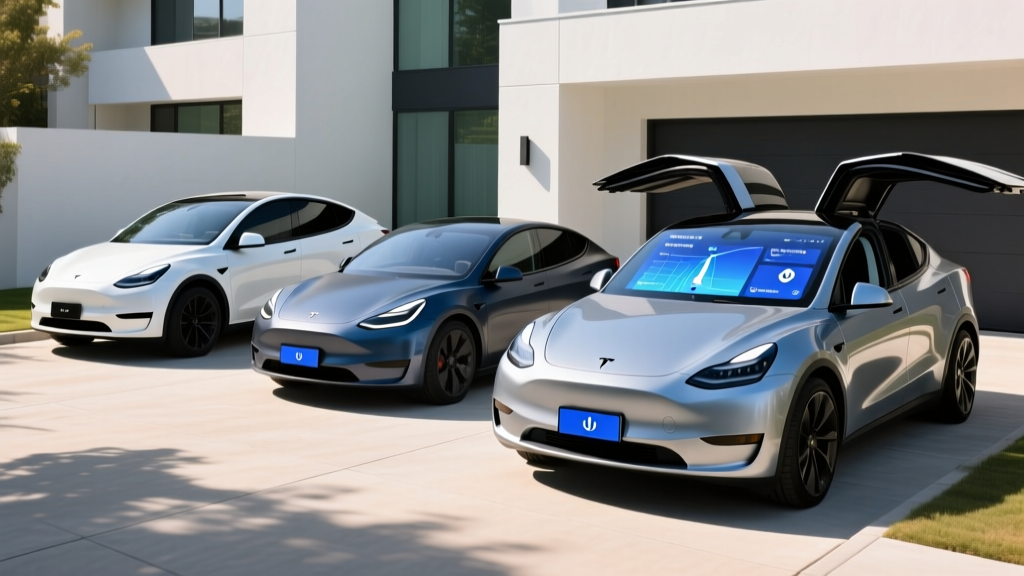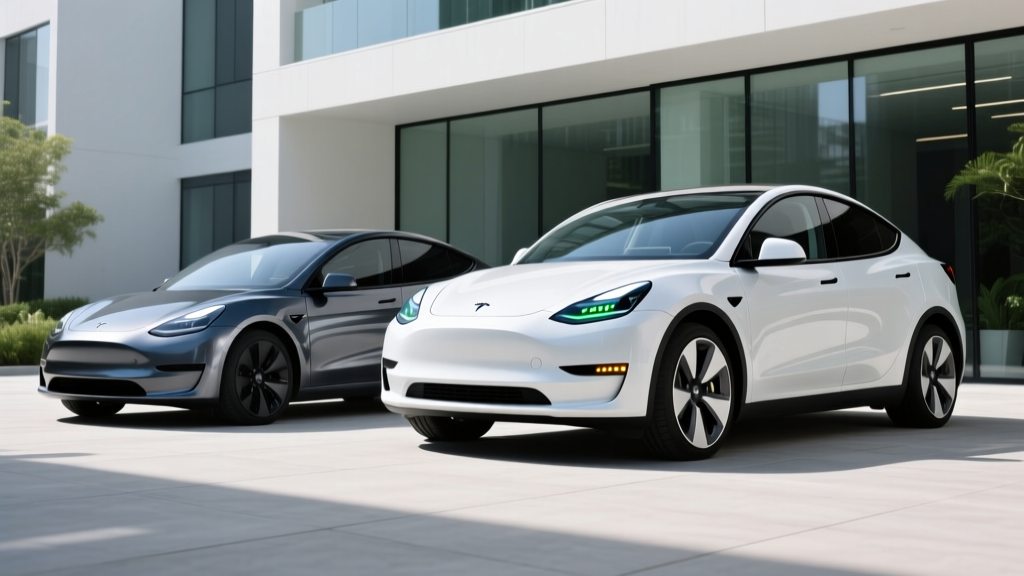
If you're shopping Tesla's two highest-volume vehicles, the first question after price is usually physical fit: Will it park in my garage? Will the kids' hockey bags fit? Can I sleep in the back on a road trip? This guide breaks down every critical 2026 Tesla dimensions data point for the refreshed Model 3 and Model Y, pairing exterior measurements with interior volume, battery specs, charging speeds, and real-world ownership economics.
We'll also address the numbers Tesla doesn't put on the window sticker — actual highway range, cold-weather losses, DC fast-charging taper curves, and whether each model still qualifies for the federal §30D tax credit under current IRS rules.
Exterior Tesla Dimensions: Model 3 vs Model Y at a Glance
The Model 3 sedan and Model Y crossover share Tesla's unibody platform but diverge significantly in height, cargo volume, and ground clearance. Below are the official 2026 measurements Tesla publishes, cross-referenced against EPA and manufacturer data.
| Dimension | Model 3 (Refreshed) | Model Y (Juniper) |
|---|---|---|
| Length | 189.8 in | 188.6 in |
| Width (mirrors folded) | 77.3 in | 77.9 in |
| Height | 56.8 in | 63.9 in |
| Wheelbase | 113.2 in | 113.8 in |
| Ground Clearance | 5.5 in | 6.6 in |
| Curb Weight (RWD / AWD) | 3,862 / 4,034 lb | 4,189 / 4,398 lb |
| Frunk Volume | 3.1 cu ft | 4.1 cu ft |
| Total Cargo (rear seats down) | 23 cu ft | 72 cu ft |
Garage-fit reality check: A standard US single-car garage opening is roughly 96 inches wide and 84 inches tall. Both vehicles clear width with mirrors folded, but the Model Y's 63.9-inch height leaves less margin if your garage has a low header or overhead storage racks. Measure your door frame — not just the floor space — before committing.
Interior Volume: Legroom, Headroom, and Real-World Passenger Comfort
Exterior dimensions only tell half the story. The Model Y's crossover roofline translates directly into more headroom and a dramatically more usable cargo area, while the Model 3's sedan proportions keep it lighter and more aerodynamic.
| Measurement | Model 3 | Model Y |
|---|---|---|
| Front Headroom | 40.3 in | 41.0 in |
| Rear Headroom | 37.6 in | 39.4 in |
| Front Legroom | 42.7 in | 41.8 in |
| Rear Legroom | 35.2 in | 37.0 in |
| Rear Cargo (seats up) | 21 cu ft | 30 cu ft |
| Max Cargo (seats folded) | 23 cu ft | 72 cu ft |
| Seating Capacity | 5 | 5 (7 optional) |
The Model Y's 72 cu ft maximum cargo volume with seats folded rivals compact SUVs like the Honda CR-V. The optional third-row seat in the Model Y is best suited for children — adults will find the 28.4-inch third-row legroom tight for anything beyond short trips. For family hauling with rear-facing car seats, the Model Y's wider rear door opening and taller roof make installation meaningfully easier than in the Model 3.
Range, Battery, and Efficiency: What the EPA Sticker Doesn't Tell You
Tesla's EPA range estimates are among the most accurate in the industry, but real-world results still vary with speed, temperature, and terrain. Here's how each 2026 trim stacks up.
Model 3 Long Range AWD: EPA 341 miles | 78 kWh usable (NMC) | 132 MPGe combined
Real-world expectation: ~290–310 miles at sustained 75 mph highway speeds; ~240–260 miles in sub-30°F winter conditions without preconditioning.
Model Y Long Range AWD: EPA 320 miles | 78 kWh usable (NMC) | 125 MPGe combined
Real-world expectation: ~270–290 miles highway; ~220–245 miles in cold weather. The Model Y's taller, boxier profile costs it roughly 5–7% efficiency vs the Model 3 on the highway.
Model 3 RWD: EPA 272 miles | 60 kWh usable (LFP) | 132 MPGe combined
Real-world expectation: ~230–250 miles highway. LFP chemistry tolerates 100% daily charging, partially offsetting the smaller battery.
Why chemistry matters here: The RWD trims use lithium iron phosphate (LFP) batteries, which are heavier and less energy-dense than the nickel manganese cobalt (NMC) packs in Long Range and Performance trims. The trade-off: LFP degrades more slowly over time, can be charged to 100% daily without accelerated wear, and avoids the cobalt-sourcing concerns that affect §30D tax credit eligibility. NMC packs deliver more range per kilogram but Tesla recommends charging to 80% for daily use to preserve longevity.
Charging Speed: DC Fast Charge, Home Level 2, and the Taper Curve
Charging speed is where Tesla's Supercharger network advantage is most tangible. But peak kW numbers only tell part of the story — sustained charge rate and the taper above 80% State of Charge (SoC) determine your actual road-trip stop times.
| Charge Method | Model 3 LR / Perf | Model Y LR / Perf | Model 3 / Y RWD (LFP) |
|---|---|---|---|
| Max DC Fast Charge | 250 kW (peak) | 250 kW (peak) | 170 kW (peak) |
| 10–80% DCFC Time | ~25 min | ~27 min | ~30 min |
| Sustained Rate (10–50%) | ~190–210 kW avg | ~180–200 kW avg | ~130–145 kW avg |
| Level 2 Home (11.5 kW) | ~44 mi/hr | ~40 mi/hr | ~33 mi/hr |
| Level 2 Home (7.7 kW) | ~30 mi/hr | ~28 mi/hr | ~22 mi/hr |
| Charge Port | NACS (native) | NACS (native) | NACS (native) |
The taper reality: At a V3 Supercharger (250 kW capable), the Long Range models will pull close to peak rate from roughly 10–45% SoC, then taper progressively. From 80–100%, the rate drops to under 40 kW. This is why Tesla's navigation routes you to chargers to arrive at ~10–15% SoC — it maximizes time in the fast-charging window. For LFP RWD models, the lower 170 kW peak means road-trip stops run about 5–8 minutes longer for a 10–80% session.
Home charging note: Tesla's Wall Connector delivers up to 11.5 kW on a 60-amp circuit (48-amp continuous). Most homes with a 200-amp electrical panel can support this without an upgrade, but older homes with 100-amp service may need a panel upgrade — budget $1,500–$3,000 for that work, per Energy.gov home charging guidelines. The mobile connector included with the vehicle delivers only 3 kW on a standard 120V outlet — adequate for overnight top-ups under ~40 miles, but not for daily full recharges.
Performance and Drivetrain: 0-60, Horsepower, and Towing
| Trim | Drivetrain | 0-60 mph | Peak HP | Towing Capacity |
|---|---|---|---|---|
| Model 3 RWD | Rear-Wheel Drive | 5.8 sec | 283 hp | N/A |
| Model 3 Long Range AWD | Dual Motor AWD | 4.2 sec | 346 hp | N/A |
| Model 3 Performance | Dual Motor AWD | 2.9 sec | 510 hp | N/A |
| Model Y RWD | Rear-Wheel Drive | 6.6 sec | 295 hp | 3,500 lb |
| Model Y Long Range AWD | Dual Motor AWD | 4.8 sec | 384 hp | 3,500 lb |
| Model Y Performance | Dual Motor AWD | 3.5 sec | 456 hp | 3,500 lb |
The Model 3 Performance remains one of the quickest production sedans under $60,000. But for most buyers, the Long Range AWD's 4.2-second 0-60 and dual-motor traction in rain and snow are more than sufficient. The Model Y's 3,500-lb towing capacity is adequate for a small boat or light utility trailer, but expect a 30–40% range reduction when towing at highway speeds — plan charging stops accordingly.
Pricing, Trims, and Federal Tax Credit Eligibility
Tesla adjusts pricing frequently. Below are the base MSRPs as of early 2026, before destination charges or options. The federal §30D tax credit adds complexity — eligibility depends on your income, the vehicle's MSRP, and battery-component/critical-mineral sourcing requirements.
| Trim | Base MSRP | §30D Credit (Est.) | Effective Price |
|---|---|---|---|
| Model 3 RWD | $38,990 | Up to $7,500* | ~$31,490* |
| Model 3 Long Range AWD | $44,990 | Up to $7,500* | ~$37,490* |
| Model 3 Performance | $52,990 | Up to $7,500* | ~$45,490* |
| Model Y RWD | $39,990 | Up to $7,500* | ~$32,490* |
| Model Y Long Range AWD | $44,990 | Up to $7,500* | ~$37,490* |
| Model Y Performance | $51,490 | Up to $7,500* | ~$43,990* |
*Critical §30D caveats (per IRS §30D guidelines):
- Income caps: Modified AGI must not exceed $150,000 (single), $225,000 (head of household), or $300,000 (joint).
- MSRP caps: Sedans (Model 3) must be under $55,000; SUVs/trucks (Model Y) under $80,000. All current trims qualify.
- Battery sourcing: The credit is split into two $3,750 halves — one for battery-component manufacturing (North America), one for critical-mineral sourcing (US or FTA partners). Tesla's supply chain has shifted significantly, and the credit amount varies by build quarter. Verify your specific VIN's eligibility at purchase.
- Point-of-sale transfer: You can transfer the credit to the dealer at purchase to reduce your out-of-pocket cost, rather than waiting to claim it on your tax return.
Tech, Driver Assistance, and Warranty
Both vehicles ship with Tesla's 15.4-inch center touchscreen running the latest Tesla OS, which handles navigation, media, climate, and vehicle settings without physical buttons. The Juniper-refreshed Model Y now features ventilated front seats, ambient lighting, a rear-seat touchscreen, and power-folding second-row seats — closing the interior-quality gap that previously favored the refreshed Model 3.
Driver assistance: Basic Autopilot (Traffic-Aware Cruise Control + Autosteer) is standard. Full Self-Driving (Supervised) remains an $8,000 option or $99/month subscription.
SAE Automation Level: Level 2. Despite the "Full Self-Driving" name, FSD (Supervised) is a Level 2 driver-assist system per SAE classification. You must keep your hands on the wheel and eyes on the road at all times. The system does not make the vehicle autonomous. Tesla's camera-only vision stack handles highway lane-keeping and city intersections competently in clear conditions but can struggle with construction zones, faded lane markings, and heavy rain. Treat it as an advanced cruise system, not a chauffeur.
Warranty coverage:
- Basic vehicle: 4 years / 50,000 miles
- Battery & drive unit (RWD/LFP): 8 years / 100,000 miles (70% minimum capacity retention)
- Battery & drive unit (Long Range/Performance/NMC): 8 years / 120,000 miles (70% minimum capacity retention)
The 70% capacity threshold is important: Tesla will only replace or repair the battery under warranty if it degrades below 70% of original capacity within the warranty period. Based on fleet data from sources like fueleconomy.gov and long-term owner tracking, most Tesla NMC packs retain 85–90% capacity at 100,000 miles, with LFP packs showing even slower degradation curves.
Pros, Cons, and Who Each Model Suits Best
Model 3 — Pros
- Best efficiency in the lineup (132 MPGe, lowest cost per mile)
- Lower curb weight = better handling and ride refinement
- Smaller footprint for urban parking and tight garages
- LFP RWD offers 100% daily charging without battery wear concern
- Lowest entry price after tax credit (~$31,500)
Model 3 — Cons
- Only 23 cu ft max cargo — tight for bulky gear
- Rear headroom limits tall passengers (37.6 in)
- No towing capability
- Sedan trunk opening restricts loading large items
Model Y — Pros
- 72 cu ft max cargo — genuine SUV utility
- Higher seating position and better outward visibility
- 3,500-lb towing on all trims
- Optional 7-seat configuration for growing families
- Taller rear doors make car-seat installation easier
Model Y — Cons
- ~20 miles less EPA range than equivalent Model 3
- Heavier curb weight reduces efficiency (125 MPGe vs 132)
- Third-row seat is children-only
- Higher starting price across all trims
Choose the Model 3 if: You commute solo or as a couple, prioritize maximum range and efficiency, park in a compact garage, and don't need cargo volume beyond weekend-trip luggage.
Choose the Model Y if: You have children (especially rear-facing car seats), need to haul bulky gear or tow a light trailer, prefer a commanding driving position, or want the flexibility of a 7-seat option for occasional use.
Frequently Asked Questions
What is the real-world range of the 2026 Tesla Model 3 and Model Y?
Expect roughly 10–15% below the EPA sticker at sustained highway speeds (70–80 mph), and 20–30% below in sub-freezing winter conditions without preconditioning. The Model 3 Long Range delivers ~290–310 real highway miles; the Model Y Long Range delivers ~270–290. Preconditioning the battery via the Tesla app or scheduled departure before driving recovers a meaningful portion of cold-weather losses.
How fast do the Model 3 and Model Y charge at home and on the road?
On DC fast chargers (Superchargers), Long Range models peak at 250 kW and charge 10–80% in roughly 25–27 minutes. LFP RWD models peak at 170 kW, taking ~30 minutes. At home on a Level 2 Wall Connector (11.5 kW), expect 33–44 miles of range added per hour — a full overnight session easily replenishes a day's driving for most owners.
How much does a Tesla cost after the federal tax credit?
If you meet all §30D requirements (income caps, MSRP caps, and your VIN's battery sourcing qualifies), the effective price drops by up to $7,500. A Model 3 RWD starts around $31,490 after credit; a Model Y Long Range around $37,490. Always verify your specific vehicle's credit eligibility before purchase — the critical-mineral and battery-component rules change as supply chains shift.
Does the Tesla Model 3 or Model Y qualify for the full $7,500 federal EV tax credit?
Both models fall under their respective MSRP caps ($55K for sedans, $80K for SUVs) and are assembled in the US. However, the $7,500 credit is split into two $3,750 halves tied to battery-component and critical-mineral sourcing. Depending on when your vehicle is built and delivered, you may qualify for the full $7,500, a partial $3,750, or — as sourcing rules tighten — potentially less. Check the latest eligibility on IRS.gov or confirm with your Tesla advisor at order time.
Is the Model 3 or Model Y worth buying vs competitors like the Hyundai Ioniq 5 or Ford Mustang Mach-E?
Tesla's advantages remain Supercharger network access (now opening to other brands but still most reliable with native NACS), class-leading efficiency, and strong resale value. The Ioniq 5 offers faster 800V charging architecture (~18 min 10–80% at 350 kW chargers) and a more distinctive design. The Mach-E provides a more traditional interior layout and competitive range. If you road-trip frequently and value charging infrastructure above all, Tesla still holds an edge. If you prioritize interior design variety or faster peak charging on non-Tesla networks, cross-shop aggressively.
Will the Tesla Model Y fit in a standard garage?
Yes, in most cases. At 188.6 inches long and 77.9 inches wide (mirrors folded), the Model Y fits a standard single-car garage. The critical constraint is height: at 63.9 inches, it clears a typical 7-foot (84-inch) garage door, but measure your actual opening if you have a low header, overhead door mechanism, or storage racks. The Model 3 at 56.8 inches tall has considerably more vertical margin.