Search for "tesla differential" and you'll land in a rabbit hole of forum threads, service videos, and confused buyers wondering whether Tesla even uses a traditional differential. The short answer: yes, every Tesla has one — but the way Tesla integrates its differential(s) into the drive unit is fundamentally different from a conventional internal-combustion car, and understanding that difference reshapes how you think about range, performance, traction, and long-term maintenance.
This guide breaks down the engineering behind Tesla's differential design, maps it to the current 2025 Model 3 and Model Y lineup, and translates the drivetrain specs into the numbers that actually matter to buyers: EPA range, real-world highway efficiency, 0-60 times, DC fast-charge curves, and total cost after federal tax credits.
What a Differential Actually Does in a Tesla
In any driven axle, the left and right wheels need to rotate at different speeds when the car corners — the outside wheel travels a longer arc. A differential is the gearset that allows this speed difference while still transmitting torque to both wheels. Teslas use a single-speed reduction gear with an integrated open differential inside each drive unit.
Key engineering distinctions versus a conventional car:
- No multi-speed transmission. Tesla's single-speed reduction gear (~9:1 ratio) eliminates shift events and the mechanical losses that come with them.
- No mechanical link between front and rear axles on dual-motor cars. A traditional AWD system uses a center differential or transfer case. Tesla's dual-motor AWD has two independent drive units — one front, one rear — each with its own differential. Torque split is controlled entirely by software, updated hundreds of times per second.
- Traction control via brake-based torque vectoring. Because the differential is open (not a limited-slip), Tesla manages wheelspin by braking the slipping wheel, which redirects torque to the wheel with grip. On Performance trims, the rear drive unit's inverter can modulate torque delivery with finer granularity than a mechanical LSD.
The practical upshot: fewer moving parts than an ICE drivetrain (no driveshaft, no center diff, no transfer-case fluid), but a system whose behavior is heavily software-defined. That's why an over-the-air update can measurably change how a Tesla feels in the snow.
2025 Tesla Lineup: Drivetrain and Differential Layout at a Glance
| Model / Trim | Drive Units | Differential(s) | Drivetrain | Horsepower | 0-60 mph |
|---|---|---|---|---|---|
| Model 3 RWD | 1 (rear) | 1 rear open diff | RWD | 271 hp | 5.8 s |
| Model 3 Long Range AWD | 2 (front + rear) | 2 open diffs | Dual-motor AWD | 346 hp | 4.2 s |
| Model 3 Performance | 2 (front + rear) | 2 open diffs | Dual-motor AWD | 510 hp | 2.9 s |
| Model Y Long Range AWD | 2 (front + rear) | 2 open diffs | Dual-motor AWD | 384 hp | 4.8 s |
| Model Y Performance | 2 (front + rear) | 2 open diffs | Dual-motor AWD | 510 hp | 3.5 s |
Notice that no current Tesla uses a locking or limited-slip differential. Traction management is handled through the open diff plus brake-based torque vectoring and inverter-level torque control. This keeps weight and part count down but means traction recovery in deep snow or sand depends heavily on the stability-control software.
Range and Efficiency: How Drivetrain Choice Hits the EPA Sticker
Every additional drive unit adds mass (~45-65 lb for the front induction motor assembly on dual-motor trims), rolling parasitic loss, and a second differential with its own gear-mesh losses. Tesla mitigates this by using a front induction motor on dual-motor trims that can freewheel with zero drag when not needed — the inverter simply stops energizing it, and the open differential allows the ring gear to spin without resistance.
Real-World Range Reality Check
Model 3 Long Range AWD — EPA 363 miles (66 kWh usable LFP/NMC pack depending on build month). Expect 290-320 miles on a 75°F highway trip at 70 mph; 240-270 miles in 25°F winter conditions with cabin heat. The RWD trim's EPA 363 miles translates to ~310-340 highway, because RWD avoids the front drive unit's mass and drag entirely.
Model Y Long Range AWD — EPA 320 miles (75 kWh usable NMC). Highway real-world: 260-290 miles; winter: 220-250 miles. The taller, heavier crossover body costs ~40 miles versus the sedan on the same platform.
Efficiency figures from fueleconomy.gov:
- Model 3 RWD: 132 MPGe combined / 25 kWh/100mi
- Model 3 LR AWD: 134 MPGe combined / 25 kWh/100mi
- Model Y LR AWD: 122 MPGe combined / 28 kWh/100mi
The near-identical MPGe between RWD and LR AWD sedans is a testament to Tesla's freewheeling front motor strategy. On the highway in warm weather, the front drive unit is effectively dormant most of the time, and the dual-motor car behaves like a RWD car with extra weight.
Charging Speeds: DC Fast, Level 2, and the Differential's Non-Role
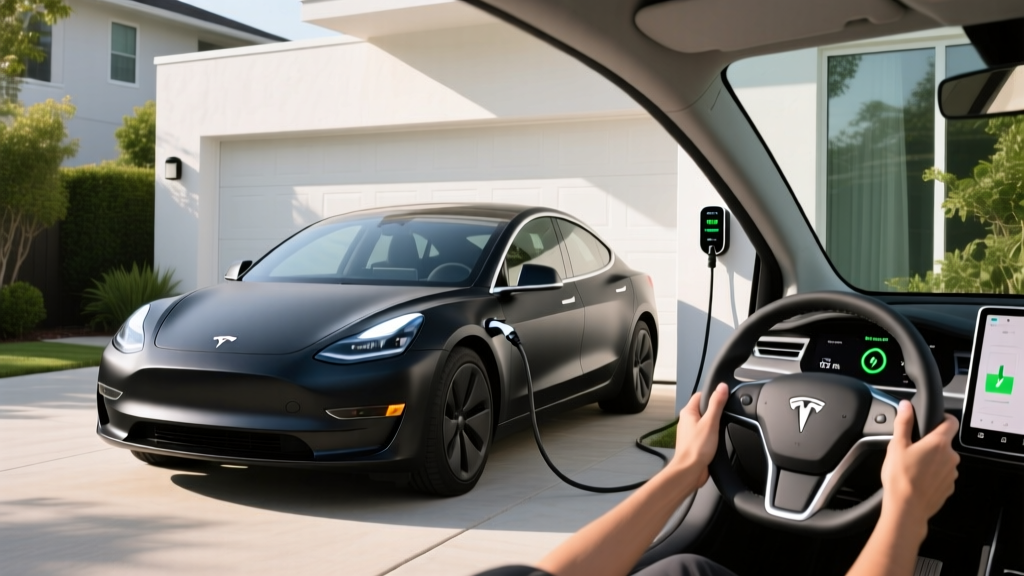
The differential has no direct effect on charge rate — that's governed by pack chemistry, thermal management, and the BMS charge curve. But because buyers cross-shop trims, here are the numbers that matter.
| Trim | Max DC Fast Charge | 10-80% Time | Level 2 (240V / 48A) | Level 1 (120V) |
|---|---|---|---|---|
| Model 3 RWD (LFP) | 170 kW peak | ~25 min | ~30 mi/hr (11.5 kW) | ~3-4 mi/hr |
| Model 3 LR AWD (NMC) | 250 kW peak | ~18 min | ~44 mi/hr (11.5 kW) | ~4-5 mi/hr |
| Model 3 Performance (NMC) | 250 kW peak | ~18 min | ~44 mi/hr (11.5 kW) | ~4-5 mi/hr |
| Model Y LR AWD (NMC) | 250 kW peak | ~22 min | ~37 mi/hr (11.5 kW) | ~3-4 mi/hr |
| Model Y Performance (NMC) | 250 kW peak | ~22 min | ~37 mi/hr (11.5 kW) | ~3-4 mi/hr |
Charge-curve reality: The "250 kW peak" applies only between roughly 10-30% State of Charge on a preconditioned NMC pack at a V3 Supercharger. Above 50% SoC, rate tapers to ~100 kW; above 80%, it drops below 50 kW. That's why Tesla's 10-80% metric is the honest one — the last 20% can take as long as the first 70%. LFP packs on the RWD tolerate regular 100% charging (which helps with cell balancing) but charge more slowly overall because of the chemistry's flatter voltage curve.
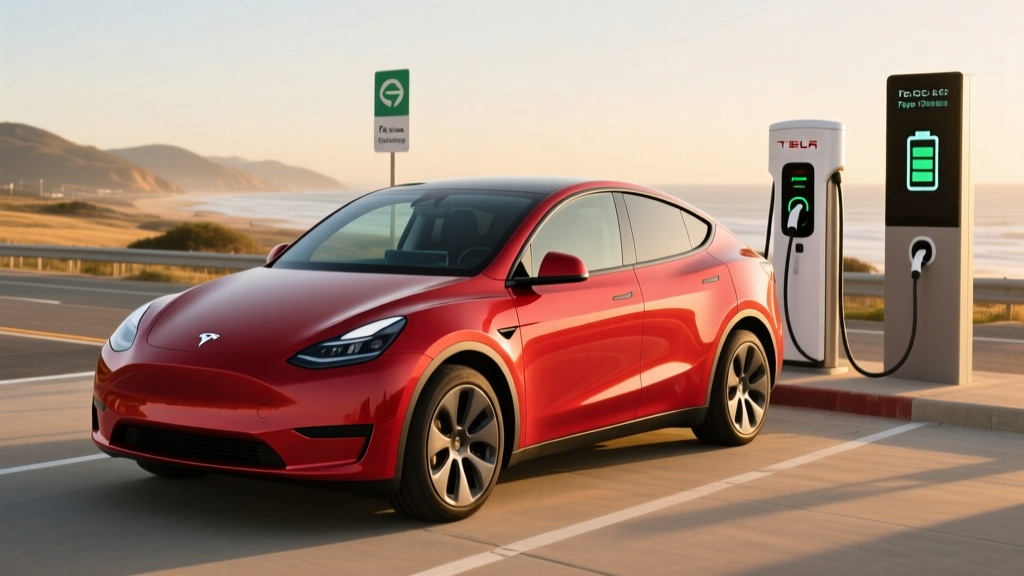
All current Teslas ship with the NACS connector natively, which now grants access to the full Supercharger network plus an expanding list of third-party stations (Electrify America, EVgo, and others adding NACS cables through 2025-2026). No adapter needed.
Pricing, Trims, and Federal Tax Credit Eligibility
Tesla's pricing shifts frequently, so treat these as baseline MSRPs for the 2025 model year. The IRS §30D clean vehicle credit applies up to $7,500, subject to MSRP caps, buyer income limits, and battery critical-mineral and component sourcing rules that tighten each year.
| Trim | Base MSRP | MSRP Cap for §30D | Est. Federal Credit* | Effective Price |
|---|---|---|---|---|
| Model 3 RWD | $38,990 | $55,000 (sedan) | Up to $7,500 | ~$31,490 |
| Model 3 LR AWD | $45,240 | $55,000 (sedan) | Up to $7,500 | ~$37,740 |
| Model 3 Performance | $52,990 | $55,000 (sedan) | Up to $7,500 | ~$45,490 |
| Model Y LR AWD | $44,990 | $80,000 (SUV) | Up to $7,500 | ~$37,490 |
| Model Y Performance | $48,990 | $80,000 (SUV) | Up to $7,500 | ~$41,490 |
*Eligibility requires buyer AGI ≤ $150k single / $300k joint, vehicle final assembly in North America, and compliance with critical-mineral + battery-component sourcing thresholds that phase up annually. Point-of-sale transfer is available via registered dealers. Verify current-year rules at IRS.gov and confirm with a tax professional.
Interior, Cargo, and Daily-Use Practicality
The differential packaging has a real-world consequence Teslas exploit well: with no transmission tunnel, driveshaft, or center differential hump, the cabin floor is flat, and the front trunk ("frunk") is genuinely usable.
- Model 3: 23 cu ft trunk + 3 cu ft frunk; 35.3 in rear legroom; 5 adults rated, but the rear middle seat is best for short trips.
- Model Y: 30 cu ft cargo behind second row (76 cu ft with seats folded) + 4 cu ft frunk; 40.5 in rear legroom; optional 7-seat layout (third row is child-only).
Infotainment runs on a 15.4-inch center touchscreen with no physical instrument cluster — speed and navigation live in the upper-left corner of the main display. The 2025 refresh adds ventilated front seats, ambient lighting, rear-seat touchscreen, and a significantly quieter cabin thanks to acoustic glass. Apple CarPlay and Android Auto are still not supported natively; Tesla insists on its own interface.
Driver-Assist Tech: Autopilot and FSD (Supervised)
SAE Automation Level: Level 2
Tesla Autopilot and Full Self-Driving (Supervised) are SAE Level 2 driver-assist systems. The driver must remain attentive, hands on or near the wheel, and ready to take over instantly. They are not self-driving. Camera-only Tesla Vision handles lane centering, adaptive cruise, automatic lane changes, and traffic-light recognition — impressive on divided highways, occasionally hesitant in construction zones and unmapped intersections.
FSD (Supervised) costs $8,000 upfront or $99/month as of 2025. Whether it's worth the premium depends on your commute: frequent highway users see real fatigue reduction; city-only drivers rarely justify the cost versus standard Autopilot, which is included on every car.
Warranty, Battery Longevity, and Differential Service
- Basic vehicle warranty: 4 years / 50,000 miles
- Battery & drive unit warranty: 8 years / 100,000 miles (RWD) or 8 years / 120,000 miles (LR AWD and Performance), with a guaranteed minimum 70% capacity retention over that period.
The differential itself is sealed inside the drive unit and lubricated with gear oil that Tesla does not schedule for routine replacement. Real-world failure rates on the differential are low — most drive-unit warranty claims relate to the inverter or bearings, not the gearset. If the differential does require service, it's a drive-unit replacement rather than an in-place repair, which is why the 8-year/100k-120k-mile coverage matters.
LFP packs (used on the Model 3 RWD) degrade more slowly than NMC over calendar life and tolerate 100% daily charging, but they're heavier and less energy-dense — which is why LFP appears on the shorter-range RWD trim. NMC packs on LR and Performance trims deliver higher energy density and faster DC charging but benefit from being held at 80% for daily use and charged to 100% only before long trips.
Pros, Cons, and Who Should Buy Which Drivetrain
Why Choose RWD (Single Differential)
- Lowest purchase price and best efficiency
- LFP battery = slower degradation, 100% daily charging OK
- Lighter, slightly more cargo-friendly
- Adequate traction in rain and light snow with winter tires
Why Choose Dual-Motor AWD (Two Differentials)
- Significantly better traction in snow, ice, and mountain grades
- Faster 0-60 and stronger passing power
- NMC pack = faster DC charging on road trips
- Higher resale value in northern and mountain states
Choose RWD if
You live in a mild-climate metro area, commute under 60 miles daily, can charge at home, and want the lowest total cost of ownership. The single rear differential and LFP pack make this the lowest-maintenance Tesla you can buy.
Choose Dual-Motor AWD if
You regularly drive in snow or mountain passes, take road trips longer than 300 miles, need the quickest DC charge times, or simply value the traction safety net. The second differential and front drive unit cost you ~$5,000-7,000 upfront and 1-2 MPGe, but they're the right answer for anyone outside the Sun Belt who doesn't want to think about traction.
Frequently Asked Questions
Does a Tesla have a differential?
Yes. Every Tesla drive unit contains an integrated open differential inside the single-speed reduction gearbox. RWD models have one differential (rear); dual-motor AWD models have two (one front, one rear), with no mechanical connection between the axles.
Does Tesla use a limited-slip differential?
No. Tesla uses open differentials on all trims. Traction control and torque vectoring are handled by brake-based intervention on the slipping wheel and, on Performance trims, by inverter-level torque modulation of the rear drive unit. This is lighter and simpler than a mechanical LSD but more software-dependent.
How does Tesla's dual-motor AWD differ from traditional AWD?
Traditional AWD uses a center differential or transfer case linked by a driveshaft. Tesla's dual-motor AWD has two fully independent drive units — one per axle — each with its own differential. Torque split is controlled by software with no mechanical coupling, allowing response times measured in milliseconds rather than the mechanical lag of a clutch-based system.
Does the differential affect EV range?
Indirectly, yes. Each additional drive unit and differential adds weight and a small amount of gear-mesh parasitic loss. Tesla minimizes the loss by using a front induction motor that can freewheel when not needed. The range penalty of dual-motor AWD versus RWD is typically 1-3% on the EPA cycle when comparing otherwise similar trims.
What maintenance does a Tesla differential require?
Tesla does not publish a scheduled gear-oil change interval for the differential. The drive unit is sealed and designed to last the life of the vehicle. If a differential issue arises (rare), it's typically addressed under the 8-year/100,000-120,000-mile drive unit warranty via drive-unit replacement rather than in-place repair.
Is the Model 3 RWD or Long Range AWD the better buy?
For pure cost-per-mile and daily commuting in mild climates, the RWD wins: lower MSRP, LFP longevity, and near-identical MPGe. For anyone facing snow, mountain grades, or frequent 300+ mile road trips where the 250 kW NMC DC charge curve matters, the Long Range AWD justifies its ~$6,250 premium.
Understanding the Tesla differential isn't an academic exercise — it's the thread that connects drivetrain layout to range, charge speed, traction, and long-term cost. The single open diff per drive unit, combined with software-defined torque management, is one of the reasons Teslas have fewer moving parts than ICE cars while still delivering credible all-weather capability. Choose the number of diffs you actually need for your climate and driving, and you'll avoid paying for hardware your commute will never use.