The Tesla Motors Design Studio: Building Your 2026 Model Y
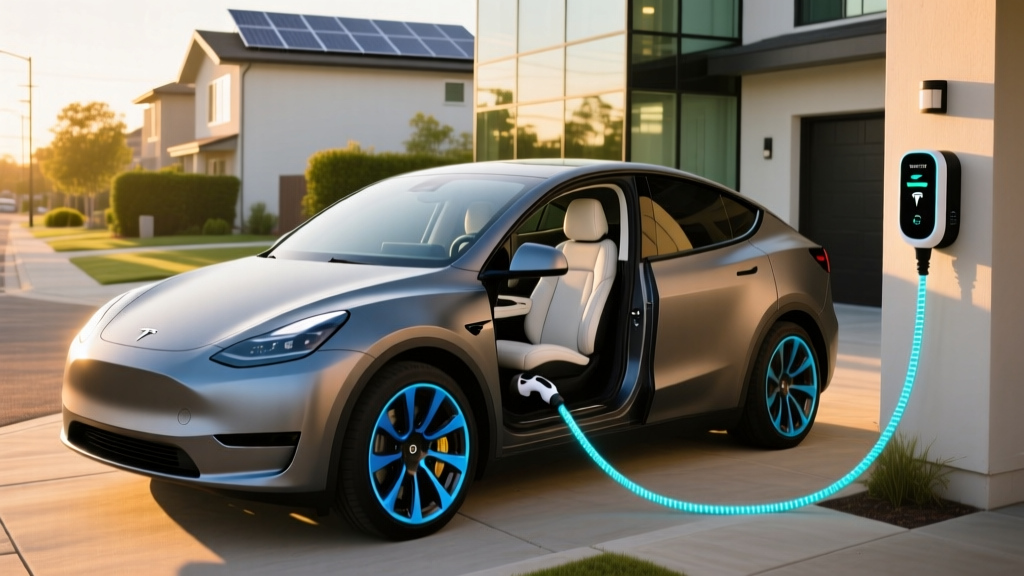
The Tesla Motors Design Studio is the company's online vehicle configurator, allowing buyers to select paint, wheels, interior, and drivetrain options while seeing real-time price updates and estimated delivery dates. For the 2026 Model Y—Tesla's best-selling electric SUV globally—the Design Studio is where critical decisions about range, performance, and tax-credit eligibility converge. This guide walks through every configuration available in the studio, pairs each with real-world ownership data, and answers the questions that matter before you click "Order."
| Spec | Long Range RWD | Long Range AWD | Performance AWD |
|---|---|---|---|
| EPA Range | 320 mi | 300 mi | 285 mi |
| Battery (usable) | ~75 kWh (NMC) | ~75 kWh (NMC) | ~75 kWh (NMC) |
| 0-60 mph | 5.8 sec | 4.8 sec | 3.5 sec |
| Horsepower | 346 hp | 384 hp | 456 hp |
| Drivetrain | RWD (single motor) | AWD (dual motor) | AWD (dual motor) |
| MPGe (combined) | 122 MPGe | 116 MPGe | 111 MPGe |
| Efficiency | 27 kWh/100 mi | 29 kWh/100 mi | 30 kWh/100 mi |
| Top Speed | 125 mph | 125 mph | 155 mph |
| Base MSRP | $44,990 | $47,990 | $51,490 |
Source: fueleconomy.gov and Tesla.com (2026 model year). Specs subject to change by production batch.
Real-World Range: What the EPA Sticker Doesn't Tell You
EPA Estimated: 320 miles (Long Range RWD) / 300 miles (Long Range AWD)
Real-World Expectation: 260–290 miles highway at 70 mph; 220–250 miles in sub-freezing temperatures.
The Model Y's EPA figures assume a mix of 55% city and 45% highway driving at moderate temperatures. In practice, highway-only trips at sustained 70–75 mph reduce range by roughly 10–15% compared to the sticker. Cold weather compounds this: LFP and NMC batteries alike lose efficiency below 40°F, and cabin heating draws significant energy. Tesla's heat pump (standard on all 2026 trims) recovers waste heat from the drivetrain, limiting cold-weather loss to roughly 20–25%—better than resistive heating but still meaningful on a 300-mile road trip in January.
If your commute is primarily city driving with regenerative braking opportunities, you'll likely match or slightly exceed EPA numbers. For road-trippers crossing the Rockies or driving northern winters, plan charging stops around a 250-mile working range to keep State of Charge (SoC) above 15%.
Charging Speed: DC Fast Charging and Home Level 2
| Charging Level | Max Rate | Speed (mi/hr added) | Notes |
|---|---|---|---|
| Level 1 (120V) | ~1.4 kW | ~4 mi/hr | Emergency/trickle only |
| Level 2 (240V, 48A) | 11.5 kW | ~37 mi/hr | Home Wall Connector or destination charger |
| DC Fast (V3 Supercharger) | 250 kW peak | ~1,000 mi/hr at peak | 10–80% in ~25 min; tapers above 60% |
| DC Fast (V4 Supercharger) | 250 kW peak | ~1,000 mi/hr at peak | Same curve; V4 cabinet, same vehicle-side limit |
The Model Y's peak DC fast-charge rate is 250 kW, but like all EVs, it doesn't sustain that rate for the full session. The charge curve peaks around 20–30% SoC, then tapers progressively. Expect a 10–80% session to take approximately 25 minutes at a V3 or V4 Supercharger. Above 80%, charging slows dramatically to protect battery longevity—plan to unplug at 80% on road trips unless you need the final stretch for a specific destination.
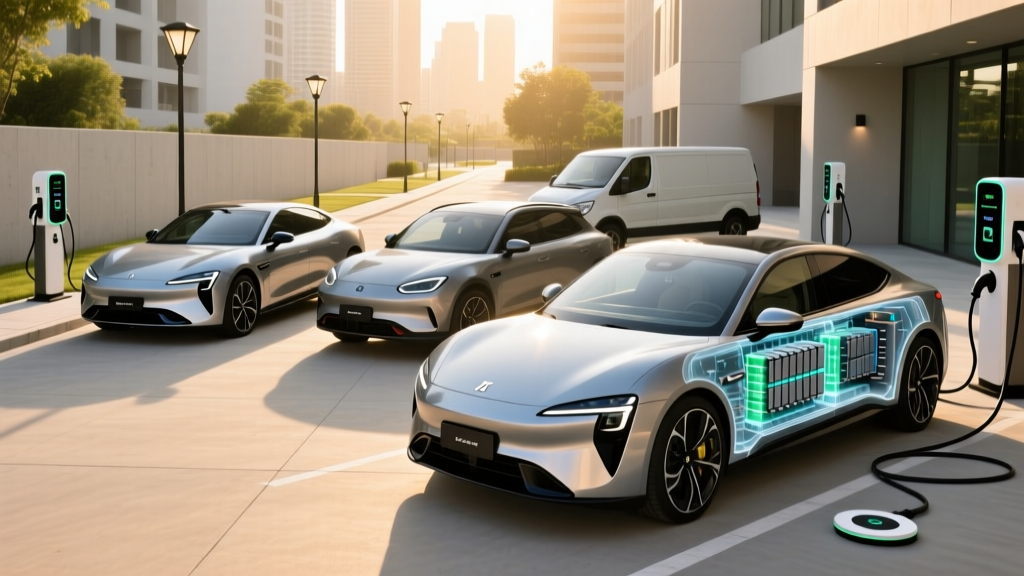
For home charging, Tesla's Gen 3 Wall Connector delivers up to 11.5 kW (48 amps) on a 60-amp circuit, adding roughly 37 miles of range per hour. A full overnight charge from 20% to 90% takes about 6–7 hours. Installation costs vary: expect $800–$2,000 for a straightforward install near your electrical panel, or $2,500–$4,500 if a panel upgrade (100A to 200A service) is needed. Always consult a licensed electrician for final specs.
Pricing, Trims, and Federal Tax Credit Eligibility
| Trim | Base MSRP | As-Tested (typical config) | §30D Credit Eligibility |
|---|---|---|---|
| Long Range RWD | $44,990 | $46,990 (w/ paint + wheels) | Up to $7,500 if income & sourcing rules met |
| Long Range AWD | $47,990 | $49,990 | Up to $7,500 if income & sourcing rules met |
| Performance AWD | $51,490 | $53,490 | Up to $7,500 if income & sourcing rules met |
All 2026 Model Y trims fall under the IRS §30D MSRP cap of $80,000 for SUVs, making them potentially eligible for the full $7,500 federal tax credit. However, eligibility depends on three factors that change periodically:
- Buyer income caps: Modified AGI must not exceed $150,000 (single), $225,000 (head of household), or $300,000 (joint filers).
- Battery sourcing requirements: A percentage of critical minerals and battery components must be sourced from the U.S. or free-trade-agreement countries. Tesla has worked to localize its supply chain, but exact eligibility varies by production batch.
- Point-of-sale transfer: As of 2024, buyers can transfer the credit to the dealer at purchase, reducing the upfront price rather than waiting for a tax refund. This option is available on Tesla.com at checkout.
Source: IRS.gov §30D. Confirm eligibility with a tax professional before ordering.
Interior, Cargo, and Practicality
The 2026 Model Y retains the minimalist interior introduced with the Juniper refresh: a single 15.4-inch touchscreen controls nearly all vehicle functions, with no physical instrument cluster. Build quality has improved noticeably over pre-2024 models, with tighter panel gaps and softer-touch materials on the dashboard and door panels.
- Cargo volume: 30.2 cu ft behind the second row; 72.1 cu ft with rear seats folded (includes front trunk/frunk).
- Front legroom: 41.8 inches.
- Rear legroom: 41.6 inches (class-leading for the compact SUV segment).
- Towing capacity: 3,500 lbs (AWD trims only; RWD not rated for towing).
The frunk (front trunk) adds roughly 4.1 cu ft of secure storage, useful for charging cables or groceries. Rear seats fold nearly flat, making the Model Y viable for camping or hauling furniture—though the sloping roofline limits vertical clearance for tall items compared to boxier competitors like the Hyundai Ioniq 5 or Ford Mustang Mach-E.
Technology, Autopilot, and Driver Assistance
SAE Automation Level: Tesla Autopilot and Full Self-Driving (Supervised) are Level 2 driver-assist systems. The driver must remain engaged, hands on or near the wheel, and eyes on the road at all times. These are not self-driving systems.
All 2026 Model Y trims include Tesla's basic Autopilot (traffic-aware cruise control and lane-keeping) at no extra cost. Full Self-Driving (Supervised) remains an $8,000 add-on or $99/month subscription, adding features like automatic lane changes, Navigate on Autopilot, and traffic-light recognition. Despite the name, FSD still requires active driver supervision and can disengage unexpectedly in construction zones, heavy rain, or unmapped areas.
The infotainment system runs Tesla's proprietary software with built-in navigation, streaming (Netflix, YouTube while parked), and a gaming engine capable of running titles like Cyberpunk 2077. There is no Apple CarPlay or Android Auto—a dealbreaker for some buyers accustomed to phone-mirroring interfaces. Over-the-air updates add features incrementally, though the pace of meaningful updates has slowed compared to 2020–2023.
Warranty and Long-Term Ownership
- Basic vehicle warranty: 4 years / 50,000 miles
- Battery and drive unit warranty: 8 years / 120,000 miles (Long Range AWD, Performance); 8 years / 100,000 miles (Long Range RWD)
- Battery degradation guarantee: Tesla warrants that the battery will retain at least 70% of its original capacity during the warranty period. Real-world data from Tesla's Impact Reports suggest average degradation of ~12% at 150,000 miles for NMC packs.
Battery replacement outside warranty is expensive: a Model Y pack replacement runs approximately $12,000–$16,000 including labor as of 2025. However, catastrophic failure before 150,000 miles is statistically rare. Most owners will sell or trade the vehicle before the battery becomes a concern.
Pros and Cons: The Honest Verdict
Pros
- Class-leading Supercharger network access (17,000+ stalls in North America)
- Strong efficiency (27–30 kWh/100 mi) reduces per-mile charging cost
- Spacious rear seat and cargo area for the segment
- Over-the-air updates add features post-purchase
- Competitive pricing after potential $7,500 tax credit
Cons
- No Apple CarPlay or Android Auto
- Minimalist interior frustrates some buyers (no physical buttons, no instrument cluster)
- FSD (Supervised) is expensive and still requires full driver attention
- Ride quality firm on 20-inch wheels; road noise noticeable at highway speed
- Insurance premiums 20–40% higher than comparable gas SUVs in most states
Who Should Buy the 2026 Model Y?
Choose the Model Y if: You want access to the most reliable DC fast-charging network (Superchargers), need a practical family SUV with strong cargo space, and can charge at home most nights. The Long Range AWD at ~$40,490 after the §30D credit is one of the best value propositions in the EV market.
Look elsewhere if: You require Apple CarPlay, prefer physical buttons and a traditional instrument cluster, or live in an area with limited Supercharger coverage and no home-charging option. Consider the Hyundai Ioniq 5, Kia EV6, or Ford Mustang Mach-E for comparable range with CarPlay support.
Frequently Asked Questions
What is the real-world range of the 2026 Model Y?
Expect 260–290 miles on highway trips at 70 mph for the Long Range AWD (EPA 300 mi). In cold weather below 30°F, plan for 220–250 miles. City driving with regen braking often matches or exceeds the EPA sticker.
How fast does the Model Y charge?
At a V3 or V4 Supercharger, the Model Y peaks at 250 kW and charges from 10–80% in approximately 25 minutes. At home on a 48-amp Level 2 charger, it adds ~37 miles per hour, fully charging overnight.
Does the 2026 Model Y qualify for the $7,500 federal tax credit?
All trims are under the $80,000 MSRP cap for SUVs and may qualify, but eligibility depends on your income (≤$300k joint), battery sourcing compliance, and point-of-sale transfer rules. Check IRS.gov and consult a tax professional.
Is the Model Y worth buying vs. the Hyundai Ioniq 5 or Ford Mach-E?
The Model Y wins on Supercharger network access, efficiency, and cargo space. The Ioniq 5 and Mach-E offer Apple CarPlay, more button-based interiors, and competitive range. Test-drive all three; the decision often comes down to charging access and UI preference.
What's the biggest drawback of owning a Model Y?
Insurance costs are the most common surprise—expect premiums 20–40% higher than a gas-powered compact SUV. The lack of Apple CarPlay and the all-touchscreen interface also frustrate some owners long-term.