Quick Verdict: Is Tesla Deep Blue Metallic Worth It?
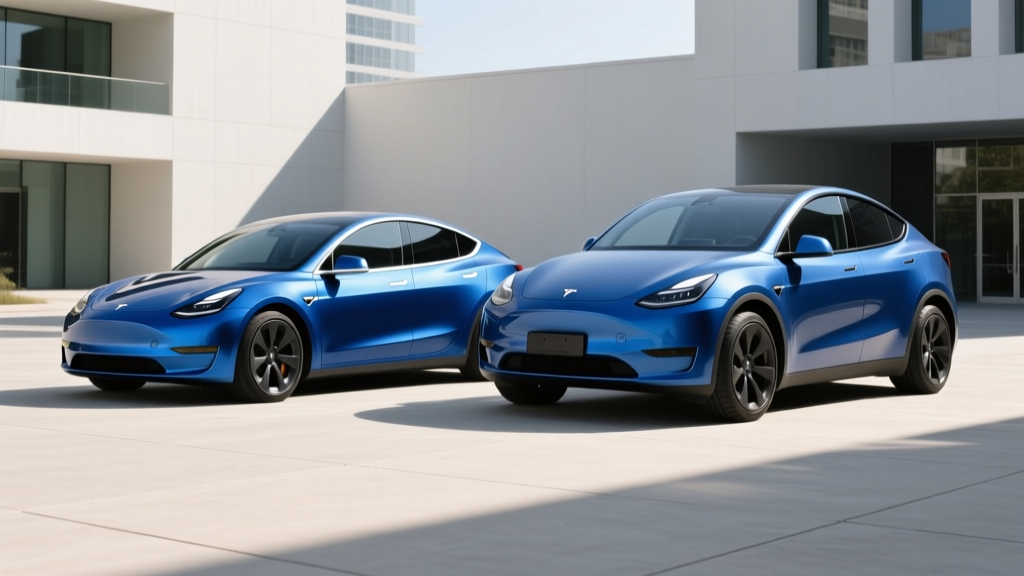
The Tesla Deep Blue Metallic paint option arrived as a premium color for the refreshed Model 3 (Highland) and the latest Model Y (Juniper) platform, replacing the outgoing Deep Blue with a richer, multi-layer mica finish that shifts between navy and near-black depending on light. For 2026, it remains a $1,500 add-on across both vehicles — a cosmetic choice that doesn't alter range, charging, or performance, but does affect resale appeal and curb presence.
This review covers the full ownership profile of the 2026 Model 3 Long Range AWD and Model Y Long Range AWD in Deep Blue Metallic: EPA range, real-world efficiency, DC fast-charging curves, Level 2 home charging, §30D tax-credit eligibility, and how both stack up against the Hyundai Ioniq 6, BMW i4, and Ford Mustang Mach-E.
2026 Tesla Model 3 & Model Y Deep Blue Metallic: Core Specs
| Spec | Model 3 LR AWD | Model Y LR AWD |
|---|---|---|
| EPA Range | 363 miles | 320 miles |
| Battery (usable) | ~79 kWh, NMC | ~79 kWh, NMC |
| Drivetrain | Dual-motor AWD | Dual-motor AWD |
| Horsepower | ~384 hp | ~384 hp |
| 0-60 mph | 4.1 sec | 4.8 sec |
| Peak DC Fast Charge | 250 kW | 250 kW |
| 10-80% DC Time | ~25 min | ~27 min |
| Level 2 (11.5 kW) | ~44 mi/hr | ~41 mi/hr |
| MPGe (combined) | 132 MPGe | 117 MPGe |
| Efficiency | 25 kWh/100 mi | 28 kWh/100 mi |
| Cargo (rear + frunk) | 23 + 3.1 cu ft | 34 + 4.1 cu ft |
| Base MSRP | $47,740 | $50,240 |
| Deep Blue Metallic Add-On | +$1,500 | +$1,500 |
| Battery Warranty | 8 yr / 120,000 mi | 8 yr / 120,000 mi |
Source: fueleconomy.gov and Tesla's official 2026 spec sheets. Figures reflect the Long Range AWD trim; RWD and Performance trims differ.
Real-World Range: What the EPA Sticker Doesn't Tell You
EPA Sticker: 363 mi (Model 3 LR AWD) / 320 mi (Model Y LR AWD)
Real-World Highway (70 mph, 70°F): ~305 mi (Model 3) / ~265 mi (Model Y)
Cold-Weather (30°F, mixed driving): ~255 mi (Model 3) / ~220 mi (Model Y)
Worst-Case (75 mph, 20°F, headwind): ~230 mi (Model 3)
Tesla's NMC pack and heat-pump thermal management give the Model 3 Long Range one of the best cold-weather retention rates in the segment — typically a 20-25% drop rather than the 30-40% seen in older EVs without heat pumps. Still, if your commute is a 280-mile round trip in January, plan around DC charging stops.
Highway efficiency is where the Model 3's aerodynamic drag coefficient (0.219 Cd) earns its keep. At 70 mph, expect roughly 3.8-4.0 mi/kWh; at 80 mph, that drops to around 3.3 mi/kWh. The Model Y's crossover profile (0.23 Cd) costs it roughly 35-40 miles of real-world highway range versus the sedan.
Charging Speed: DC Fast, Level 2, and the Curve Reality
| Charging Level | Power | Model 3 Rate | Notes |
|---|---|---|---|
| Level 1 (120V) | ~1.4 kW | ~5 mi/hr | Emergency/top-up only |
| Level 2 (240V, 48A) | 11.5 kW | ~44 mi/hr | Full charge in ~7-8 hr |
| DC Fast (V3 Supercharger) | 250 kW peak | 10-80% in ~25 min | Sustained ~170 kW avg |
| DC Fast (V4 Supercharger) | Up to 350 kW* | Model 3 capped at ~250 kW | *V4 cabinet, vehicle-limited |
The critical detail most spec sheets omit: the charge curve. Tesla's NMC pack ramps quickly to ~250 kW between 10-30% State of Charge (SoC), holds near-peak to ~50%, then tapers progressively. By 80% SoC, you're down to roughly 60-70 kW. This means the 10-80% average is closer to 170 kW sustained, not 250 kW.
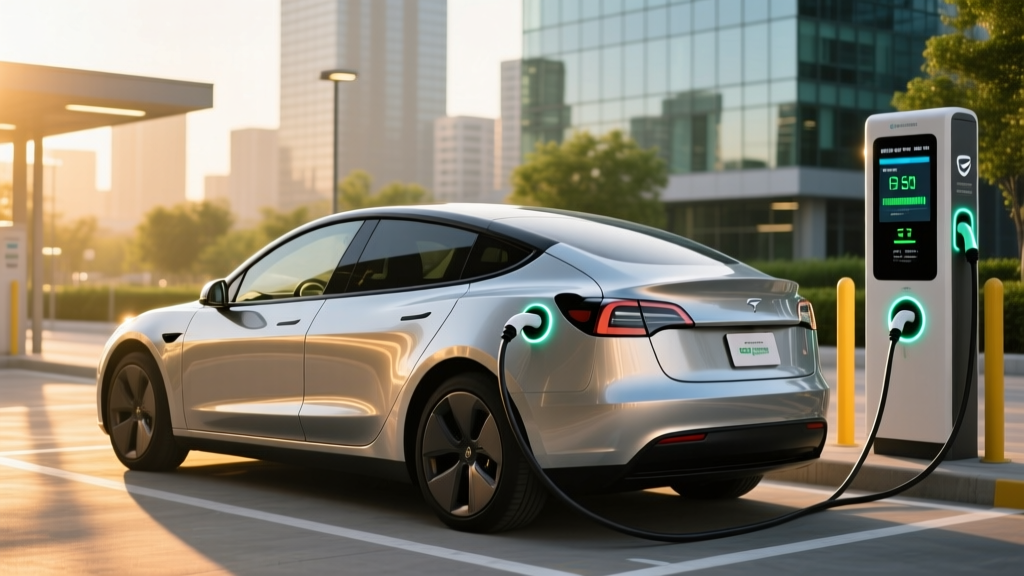
For road trips, that translates to roughly 175 miles added in 15 minutes at a V3 Supercharger when preconditioned. Preconditioning — warming the battery via navigation to a Supercharger — is essential; skip it and your peak rate may cap at 120-150 kW in cold weather.
At home, an 11.5 kW Level 2 wall connector on a 60A circuit delivers a full overnight charge. Installation typically runs $800-$2,000 depending on panel proximity, per Tesla's certified installer network.
Pricing, Trims, and Federal Tax Credit Eligibility
| Trim | MSRP | + Deep Blue | Est. §30D Credit | Net Price |
|---|---|---|---|---|
| Model 3 LR AWD | $47,740 | $49,240 | Up to $7,500 | ~$41,740 |
| Model 3 Performance | $54,990 | $56,490 | Up to $7,500 | ~$48,990 |
| Model Y LR AWD | $50,240 | $51,740 | Up to $7,500 | ~$44,240 |
| Model Y Performance | $55,490 | $56,990 | Up to $7,500 | ~$49,490 |
Tax credit caveats (2026 IRS §30D rules):
- MSRP Cap: Sedans (Model 3) must be under $55,000; SUVs/trucks (Model Y) under $80,000. All listed trims qualify.
- Income Cap: AGI ≤ $150,000 (single) / $300,000 (joint). Exceed this and you're ineligible.
- Battery Sourcing: The full $7,500 requires both critical-mineral AND battery-component sourcing thresholds. Tesla's shifting supply chain means the credit can split into $3,750 (one requirement met) or $7,500 (both). Check IRS.gov's current eligible vehicle list at purchase time.
- Point-of-Sale Transfer: As of 2024+, you can transfer the credit to the dealer for an upfront price reduction rather than waiting for tax filing.
The Deep Blue Metallic add-on does not affect tax-credit eligibility — it's a cosmetic option counted within the MSRP cap.
Interior, Tech, and Driver Assistance
The 2026 Model 3 Highland interior is dominated by a 15.4-inch center touchscreen with ventilated front seats, ambient lighting, and a rear 8-inch passenger display — all standard on Long Range. The Model Y Juniper refresh adds a power-folding second row and improved NVH (noise/vibration/harshness).
Driver Assistance — SAE Level 2 (not self-driving):
Autopilot (standard): SAE Level 2 — adaptive cruise + lane centering. Driver must remain engaged, hands on wheel.
Full Self-Driving Supervised ($8,000 option): Still SAE Level 2. Adds city-street navigation, traffic-light response, and autosteer on residential roads. Requires continuous driver supervision. Not autonomous.
Notable tech drawbacks: no Apple CarPlay/Android Auto (Tesla's proprietary stack only), no traditional instrument cluster, and turn-signal stalks have been replaced by steering-wheel buttons on the Model 3 Highland — a polarizing choice for new owners.
Competitor Comparison: Model 3 Deep Blue vs. the Field
| Attribute | Tesla Model 3 LR | Hyundai Ioniq 6 LR | BMW i4 eDrive40 |
|---|---|---|---|
| EPA Range | 363 mi | 361 mi | 307 mi |
| Battery | ~79 kWh NMC | 77.4 kWh NMC | 81.5 kWh NMC |
| Peak DC Charge | 250 kW | 240 kW (800V) | 205 kW |
| 10-80% Time | ~25 min | ~18 min | ~31 min |
| Base MSRP | $47,740 | $46,500 | $57,900 |
| Charging Network | Supercharger (NACS) | CCS (EA, etc.) | CCS (EA, etc.) |
The Ioniq 6's 800V architecture delivers a faster 10-80% charge, but Tesla's Supercharger network reliability remains a decisive advantage for road-trippers. The BMW i4 offers a more traditional luxury interior but at a significant price premium and with slower DC charging.
Pros
- Class-leading Supercharger network (17,000+ NA stalls)
- Excellent cold-weather efficiency via heat pump
- Deep Blue Metallic hides road grime better than white/silver
- Strong resale value — Tesla leads EV retention per Kelley Blue Book
- Over-the-air updates add features post-purchase
Cons
- No Apple CarPlay/Android Auto
- Turn-signal buttons (Model 3) frustrate many drivers
- Panel gaps and paint consistency still lag German/Japanese OEMs
- FSD Supervised is expensive ($8K) and still Level 2
- Insurance premiums 15-25% above segment average
Who Should Buy the Tesla Deep Blue Metallic?
Choose the Model 3 LR in Deep Blue if: You commute 40-80 miles daily, road-trip 4+ times per year, and want the lowest cost-per-mile in a premium sedan with reliable public charging.
Choose the Model Y LR in Deep Blue if: You need 34+ cu ft of cargo space, have kids or dogs, and prefer crossover ride height without sacrificing more than 40 miles of range.
Look elsewhere if: You insist on Apple CarPlay, prefer a traditional instrument cluster, or live in a region with sparse Supercharger coverage (parts of rural Midwest/Mountain West).
FAQ: Tesla Deep Blue Metallic Ownership
What is the real-world range of the Tesla Model 3 Deep Blue Metallic?
EPA-rated at 363 miles (LR AWD), expect roughly 305 miles at 70 mph highway speeds in mild weather, and ~255 miles in 30°F cold. The paint color has zero effect on range.
How fast does it charge at home and on the road?
On a 250 kW V3 Supercharger, 10-80% takes about 25 minutes with preconditioning. At home on an 11.5 kW Level 2 wall connector, you gain ~44 miles per hour, fully recharging overnight in 7-8 hours.
Does the Tesla Deep Blue Metallic qualify for the $7,500 federal tax credit?
Both Model 3 and Model Y trims fall under the §30D MSRP cap, but the full $7,500 depends on your AGI (≤$150K single / ≤$300K joint) and current battery-sourcing compliance. Verify at purchase on IRS.gov.
Is Deep Blue Metallic a new color for 2026?
It's a reformulated premium mica replacing the older Deep Blue, introduced with the Highland/Juniper refresh. It carries a $1,500 upcharge versus the no-cost Pearl White or Solid Black.
What's the biggest drawback of buying a Tesla in 2026?
Insurance costs remain above segment average (15-25% higher than comparable BMW/Hyundai EVs), and the lack of smartphone integration (no CarPlay) is a dealbreaker for some buyers.