Why Atlanta Is a Tesla Hotspot in 2026
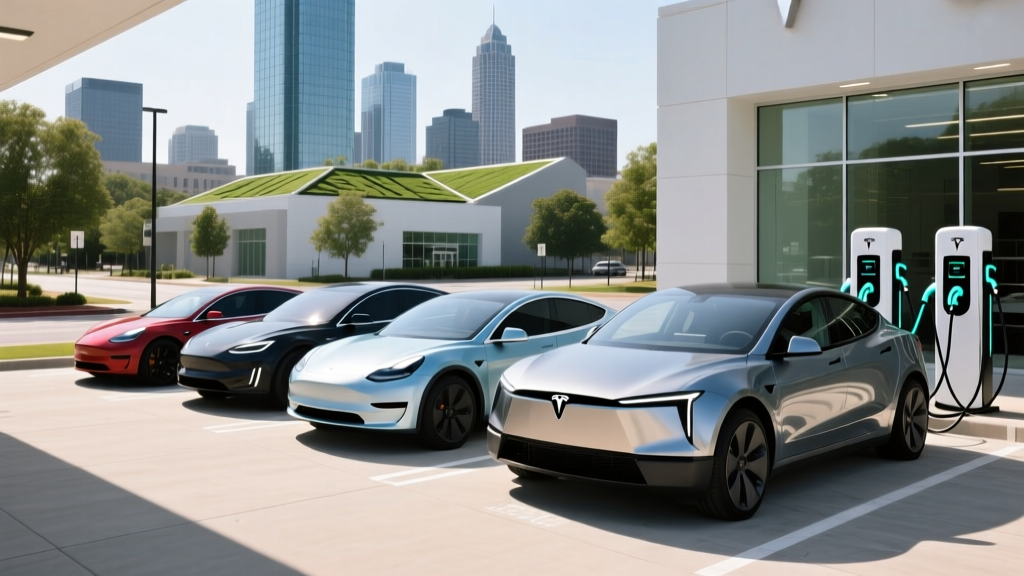
Atlanta ranks among the top U.S. metro areas for Tesla deliveries, and for good reason. Georgia's growing EV charging infrastructure — including a dense network of Superchargers along I-75, I-85, and I-20 — makes daily ownership practical. If you're searching for a Tesla dealership in Atlanta, Georgia, you should know that Tesla does not operate traditional franchised dealerships. Instead, the company uses a direct-to-consumer model with galleries, service centers, and mobile service across the metro area.
As of early 2026, Tesla maintains multiple locations in the Atlanta region, including the Tesla Service Center in Chamblee, the Tesla Store at Lenox Square, and additional service and delivery hubs in Marietta and Alpharetta. Buyers can also order online and schedule pickup at a local delivery center or opt for doorstep delivery.
This guide walks through every current Tesla model you can buy or order in Atlanta right now — with exact EPA range figures, charging speeds, pricing, tax credit status, and the real-world ownership insights that spec sheets leave out.
2026 Tesla Model Lineup: Quick Specs at a Glance
Below is a consolidated spec table for the four models currently available to Atlanta buyers. All figures reflect the latest 2026 model-year data as published by Tesla and the EPA.
| Spec | Model 3 RWD | Model Y Long Range AWD | Model S Long Range | Model X Long Range |
|---|---|---|---|---|
| EPA Range | 363 mi | 320 mi | 402 mi | 335 mi |
| Battery (usable, est.) | 60 kWh (LFP) | 78 kWh (NMC) | 95 kWh (NMC) | 95 kWh (NMC) |
| Drivetrain | RWD, single motor | AWD, dual motor | AWD, dual motor | AWD, dual motor |
| 0-60 mph | 5.8 sec | 4.8 sec | 3.1 sec | 3.8 sec |
| Horsepower | 271 hp | 384 hp | 670 hp | 670 hp |
| Efficiency (MPGe) | 132 MPGe combined | 122 MPGe combined | 120 MPGe combined | 109 MPGe combined |
| Max DC Fast Charge | 170 kW | 250 kW | 250 kW | 250 kW |
| 10-80% DCFC Time | ~30 min | ~27 min | ~30 min | ~32 min |
| Level 2 Home Rate | 11.5 kW (~44 mi/hr) | 11.5 kW (~44 mi/hr) | 11.5 kW (~44 mi/hr) | 11.5 kW (~44 mi/hr) |
| Cargo (rear seats up) | 23 cu ft | 30 cu ft | 28 cu ft | 44 cu ft (falcon-wing) |
| Base MSRP | $38,990 | $46,630 | $79,990 | $84,990 |
Real-World Range: What Atlanta Drivers Actually Get
EPA estimates are useful for comparison, but real-world range varies with driving style, climate, and terrain. Atlanta's mild winters help — you won't see the 25-30% range loss common in northern states — but highway driving at 75+ mph on I-285 or GA-400 still cuts into efficiency.
Model 3 RWD: EPA 363 mi. Expect 290-320 mi on highway road trips at 75 mph. In Atlanta's summer heat with A/C running, plan for ~310 mi. Winter loss is minimal in Georgia — roughly 5-8% in the low 30s°F.
Model Y Long Range AWD: EPA 320 mi. Real-world highway: 260-285 mi. City/suburban commuting in Buckhead or Midtown: 300-310 mi is realistic thanks to regenerative braking.
Model S Long Range: EPA 402 mi. Highway: 330-360 mi. This remains one of the longest-range EVs on sale and handles Atlanta-to-Florida drives with one short Supercharger stop.
Model X Long Range: EPA 335 mi. Highway: 275-300 mi. The heavier curb weight and larger frontal area reduce efficiency at speed.
The LFP (lithium iron phosphate) battery in the Model 3 RWD deserves a note: LFP chemistry tolerates daily 100% charging, so you can use the full 60 kWh without the 80% daily limit recommended for NMC packs. This narrows the practical range gap between the Model 3 RWD and the pricier Long Range variants for daily commuting.
Charging Speed and Atlanta's Supercharger Network
Charging speed is measured in kilowatts (kW) — the rate of power delivery — while battery capacity is measured in kilowatt-hours (kWh), the total energy stored. Confusing the two is the most common EV mistake. A 250 kW peak charge rate does not mean you charge at 250 kW the entire session; the rate tapers as the battery fills to protect cell health.
| Charging Level | Power | Model 3 RWD | Model Y LR | Model S/X LR |
|---|---|---|---|---|
| Level 1 (120V) | ~1.4 kW | ~3 mi/hr | ~3 mi/hr | ~3 mi/hr |
| Level 2 (240V, 48A) | 11.5 kW | ~44 mi/hr | ~44 mi/hr | ~44 mi/hr |
| DC Fast Charge | 170-250 kW | 170 kW peak | 250 kW peak | 250 kW peak |
| 10-80% DCFC | — | ~30 min | ~27 min | ~30-32 min |
Atlanta-area Tesla owners have access to a robust Supercharger network. V3 Superchargers (250 kW peak) are available at locations including Perimeter Mall, Atlantic Station, Mall of Georgia, and along major corridors heading to Savannah, Birmingham, and Chattanooga. V4 Supercharger cabinets with CCS compatibility for non-Tesla EVs have also begun appearing, though Tesla owners continue to use the native NACS connector.
Home charging reality: Most Atlanta homeowners installing a Level 2 Wall Connector will need a 60-amp circuit on a 200-amp panel. Budget $800-$2,000 for installation (electrician + permit + conduit run) on top of the $475 Wall Connector hardware. Homes in older neighborhoods like Virginia-Highland or Grant Park may require a panel upgrade ($2,000-$4,000 additional) if the existing panel is 100 amps or less.
Pricing, Trims, and the Federal EV Tax Credit in Georgia
Tesla's direct-sales model means the MSRP you see on tesla.com is the price — no dealer markups or haggling. However, federal tax credit eligibility under IRS §30D depends on MSRP caps, buyer income limits, and battery component/critical mineral sourcing requirements that shift yearly.
| Model | Base MSRP | §30D Eligible? | Est. After $7,500 Credit |
|---|---|---|---|
| Model 3 RWD | $38,990 | Likely eligible (verify sourcing on IRS list) | ~$31,490 |
| Model 3 Long Range AWD | $45,240 | Likely eligible | ~$37,740 |
| Model Y Long Range AWD | $46,630 | Likely eligible (SUV MSRP cap: $80K) | ~$39,130 |
| Model S Long Range | $79,990 | Not eligible (exceeds $55K sedan cap) | $79,990 |
| Model X Long Range | $84,990 | Not eligible (exceeds $80K SUV cap) | $84,990 |
Key §30D rules for 2026:
- Income caps: Modified AGI ≤ $150K (single), ≤ $225K (head of household), ≤ $300K (joint filers).
- MSRP caps: ≤ $55,000 for sedans (Model 3); ≤ $80,000 for SUVs/trucks (Model Y qualifies, Model X does not).
- Battery sourcing: Increasing percentages of critical minerals and battery components must be sourced from the U.S. or FTA partners. Tesla publishes sourcing info, but the final determination is on the fueleconomy.gov tax credit list — always verify the specific trim before purchase.
- Point-of-sale transfer: Eligible buyers can transfer the credit to the dealer (Tesla) at purchase, reducing the purchase price directly rather than waiting for a tax refund.
Georgia does not offer a state EV tax credit as of 2026, and EV owners pay an annual alternative fuel vehicle fee (~$214) at registration. Consult a tax professional for personal eligibility.
Performance, Tech, and Daily Ownership in Atlanta
All 2026 Teslas ship with Tesla's latest infotainment hardware, featuring a 15.4-inch center touchscreen (17-inch in Model S/X), wireless phone mirroring, over-the-air updates, and integrated navigation with real-time Supercharger routing. The Tesla app handles preconditioning, charge scheduling, and remote climate control — critical for Atlanta summers when you want the cabin cooled before you leave the office.
Autopilot and FSD (Supervised): Every Tesla includes basic Autopilot (lane centering + adaptive cruise). The $8,000 Full Self-Driving (Supervised) upgrade adds automated lane changes, traffic-light recognition, and city-street navigation.
Important — SAE Level 2: Autopilot and FSD (Supervised) are SAE Level 2 driver-assistance systems. The driver must remain fully attentive, hands on or near the wheel, and ready to intervene at any moment. These are not self-driving systems. Only Level 4 services like Waymo operate without a human driver.
Notable drawbacks:
- No physical instrument cluster — all info is on the center screen, which some drivers find distracting.
- Turn-signal stalks have been removed on Model 3 and Model Y refreshes; signals are now steering-wheel-mounted buttons, a learning curve for new owners.
- Model S/X pricing has climbed significantly, and the interior, while improved, still faces stiff competition from Lucid Air and BMW i7 in the luxury segment.
- Service center wait times in Atlanta can stretch to 2-3 weeks for non-urgent warranty work during peak delivery quarters.
Who Should Buy a Tesla in Atlanta?
Model 3 RWD — Best for: Budget-conscious commuters, single professionals, and couples without kids. At ~$31,490 after the federal credit, it's the value leader. The LFP battery's tolerance for daily 100% charging makes it ideal for predictable daily routes around the Perimeter.
Model Y Long Range AWD — Best for: Families needing cargo space (30 cu ft rear, ~72 cu ft with seats folded), road-trippers who regularly drive to the coast or mountains, and buyers who want dual-motor AWD for occasional rain/snow traction. It remains Tesla's best-seller nationally for good reason.
Model S Long Range — Best for: Buyers who prioritize range (402 mi EPA) and straight-line performance (3.1 sec 0-60) and who don't need the tax credit. Strong cross-shopper against the Lucid Air Pure and Mercedes EQS.
Model X Long Range — Best for: Families wanting three rows, falcon-wing doors for tight Atlanta parking-garage access, and towing capacity (5,000 lbs). The price premium over the Model Y is steep; most buyers are better served by the Y unless third-row seating is non-negotiable.
Tesla vs. Key Competitors in the Atlanta Market
The Atlanta EV market has grown considerably. Here's how Tesla stacks up against the most common cross-shops:
- Model 3 vs. Hyundai Ioniq 6: The Ioniq 6 SE Long Range offers 361 mi EPA and 800V charging (10-80% in ~18 min at 350 kW), outpacing the Model 3's 170 kW peak. However, Tesla's Supercharger network and software ecosystem remain unmatched for road-trip convenience.
- Model Y vs. Ford Mustang Mach-E: The Mach-E Extended Range AWD delivers ~312 mi EPA but charges slower at its peak. Tesla's cargo volume and efficiency edge out the Ford for family duty.
- Model S vs. Lucid Air Pure: The Lucid Air Pure offers ~419 mi EPA at a competitive price, with a more traditional luxury interior. Tesla counters with Supercharger access, faster OTA updates, and broader service infrastructure in Georgia.
Pros
- Class-leading Supercharger network reliability
- LFP battery on Model 3 allows daily 100% charging
- Over-the-air updates add features post-purchase
- Strong efficiency (kWh/mi) across the lineup
- Point-of-sale tax credit transfer simplifies purchase
- Robust Atlanta service and delivery infrastructure
Cons
- No instrument cluster; all controls via center screen
- Turn-signal buttons (no stalk) require adaptation
- Model S/X exceed federal tax credit MSRP caps
- DC fast-charge peak on Model 3 RWD lags 800V competitors
- Service wait times can stretch during peak quarters
- Georgia's annual EV registration fee (~$214) adds cost
How to Buy a Tesla in Atlanta: Step-by-Step
- Configure online at tesla.com. Select your model, trim, color, wheels, and interior. Tesla's inventory page also lists ready-to-deliver vehicles, which can shave weeks off wait times.
- Verify §30D eligibility. Cross-check the specific model and trim on fueleconomy.gov's credit list before finalizing.
- Choose delivery method. Atlanta-area buyers can pick up at the local delivery center or select home delivery within the metro area.
- Arrange home charging. Hire a licensed electrician to install a NEMA 14-50 outlet ($300-$600) or hardwired Tesla Wall Connector ($800-$2,000). Confirm your panel capacity first.
- Schedule a test drive. Tesla galleries at Lenox Square and other locations offer demo drives. Book online — walk-in availability is limited.
Frequently Asked Questions
What is the real-world range of a Tesla in Atlanta?
In Atlanta's moderate climate, expect 85-92% of EPA range for city/suburban driving. Highway driving at 75+ mph drops this to 75-85%. The Model 3 RWD delivers roughly 290-320 real-world miles on a full charge; the Model Y Long Range AWD delivers 260-310 mi depending on conditions.
How fast does a Tesla charge at home and on the road?
At home on a Level 2 Wall Connector (11.5 kW), all current Teslas add roughly 44 miles of range per hour — enough to fully replenish overnight. On DC fast chargers, the Model Y, S, and X peak at 250 kW (10-80% in ~27-32 minutes). The Model 3 RWD peaks at 170 kW (10-80% in ~30 minutes).
How much does a Tesla cost after the federal tax credit?
The Model 3 RWD starts at $38,990 and may drop to ~$31,490 after the $7,500 §30D credit (if eligible and income/MSRP/sourcing requirements are met). The Model Y Long Range AWD starts at $46,630, potentially ~$39,130 after credit. Model S and X do not qualify due to MSRP caps.
Does the Tesla Model Y qualify for the $7,500 federal EV tax credit?
The Model Y is classified as an SUV and falls under the $80,000 MSRP cap, making it potentially eligible. However, eligibility also depends on the buyer's modified adjusted gross income, battery component sourcing, and critical mineral requirements. Always verify on the IRS clean vehicle credits page before purchasing.
Is buying a Tesla worth it vs. competitors in 2026?
For Atlanta buyers who road-trip regularly, Tesla's Supercharger network is a decisive advantage. For pure value and fast charging, the Hyundai Ioniq 5/6 and Kia EV6 offer compelling 800V architectures. The Model 3 RWD after the federal credit remains one of the most affordable long-range EVs available, while the Model Y is the default family EV crossover unless you specifically need third-row seating.
Are there Tesla Superchargers in Atlanta?
Yes. Atlanta has numerous V3 Supercharger locations (250 kW) including Perimeter Mall, Atlantic Station, and along I-85 and I-75 corridors. Georgia's Supercharger coverage extends to Savannah, Macon, Augusta, and Columbus, making in-state road trips straightforward.