When Tesla owners hear the phrase Tesla data labeler, most picture a person clicking stop signs on a screen. The reality in 2026 is far more complex—and far more relevant to anyone driving a Model 3, Model Y, Model S, or Model X with Full Self-Driving (Supervised). The data labeler isn't a single tool or job title; it's an ecosystem of human annotators, auto-labeling neural networks, and shadow-mode fleet data that continuously retrains Tesla's vision-only FSD stack. Understanding how this pipeline works explains why your car's FSD behavior changes after each software update, what its current limitations are, and whether the $8,000 FSD purchase (or $99/month subscription) is worth it on today's hardware.
This guide breaks down the data-labeling architecture behind FSD, pairs it with hard vehicle specs for the current 2026 Tesla lineup, and answers the ownership questions that matter: real-world range, charging speed, tax-credit eligibility, and how FSD stacks up against Ford BlueCruise and GM Super Cruise.
What the Tesla Data Labeler Actually Does
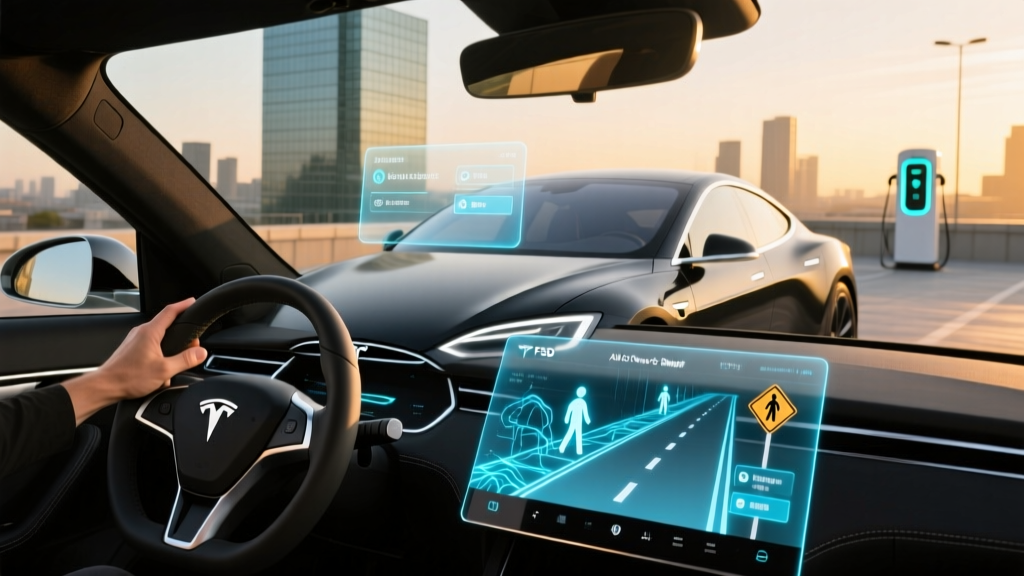
Tesla's FSD neural network doesn't learn from hand-coded rules—it learns from labeled video. Every Tesla on the road (over 6 million globally as of early 2026) runs a "shadow mode" that compares what the FSD stack would have done against what the human driver actually did. Discrepancies—hard braking events, disengagements, lane-change hesitations—are flagged, uploaded via Wi-Fi, and fed into the labeling pipeline.
The Tesla data labeler system has three layers:
- Auto-labeling models: Server-side neural networks pre-annotate 4D video clips (three cameras over time) with lane geometry, object bounding boxes, and drivable-space segmentation. According to Tesla's 2025 AI Day disclosures, auto-labelers now handle roughly 90% of annotation volume.
- Human annotators: A global workforce (Tesla employs labeling teams in Buffalo, NY; Austin, TX; and contracted teams overseas) reviews edge cases—construction zones, unusual road geometries, emergency vehicles, weather-degraded lane markings—and corrects auto-labels.
- Simulation and reconstruction: Labeled clips are converted into NeRF-based (neural radiance field) 3D reconstructions so the driving policy can be retrained in simulation against scenarios that are rare in real-world data.
The output is a new FSD model checkpoint, pushed over-the-air roughly every 3-6 weeks to vehicles running FSD (Supervised). That's why your car may handle a specific roundabout differently after a v13.x update: a data-labeler pipeline somewhere corrected thousands of similar clips and retrained the policy.
2026 Tesla Lineup: Specs That Shape the Data Pipeline
The data labeler's output is only as good as the sensors and compute it feeds. Every 2026 Tesla sold in the U.S. ships with Hardware 4 (HW4)—featuring higher-resolution cameras (5 MP vs. the 1.2 MP HW3 units) and an inference chip capable of roughly 2x the TOPS of its predecessor. Here's how the current lineup stacks up on the specs EV buyers actually cross-shop.
| Spec | Model 3 Long Range AWD | Model Y Long Range AWD | Model S Long Range |
|---|---|---|---|
| EPA Range | 363 mi | 320 mi | 402 mi |
| Battery (usable) | ~75 kWh, NMC | ~75 kWh, NMC | ~100 kWh, NMC |
| MPGe (combined) | 132 MPGe | 122 MPGe | 120 MPGe |
| Efficiency | 25 kWh/100 mi | 28 kWh/100 mi | 28 kWh/100 mi |
| 0-60 mph | 4.2 sec | 4.8 sec | 3.1 sec |
| Horsepower | ~346 hp | ~384 hp | ~670 hp |
| Drivetrain | Dual-Motor AWD | Dual-Motor AWD | Dual-Motor AWD |
| Peak DC Charge | 250 kW | 250 kW | 250 kW |
| 10-80% DC Time | ~25 min | ~27 min | ~38 min |
| Level 2 Home Rate | 11.5 kW (~44 mi/hr) | 11.5 kW (~44 mi/hr) | 11.5 kW (~44 mi/hr) |
| Cargo (rear seats up) | 23 cu ft | 30 cu ft | 28 cu ft |
| Rear Legroom | 35.3 in | 41.6 in | 35.4 in |
| Base MSRP | $47,240 | $48,240 | $79,990 |
Sources: fueleconomy.gov, Tesla spec sheets. Figures reflect 2026 model year; always verify at order time.
Real-World Range vs. the EPA Sticker
Tesla's heat pump (standard across the lineup) recovers waste heat from the drive units and battery to warm the cabin, cutting cold-weather range loss roughly in half versus resistive heaters. Preconditioning the battery while navigating to a Supercharger remains one of the single highest-impact habits for preserving real-world range and charge speed.
Charging Speed: Peak kW Isn't the Whole Story
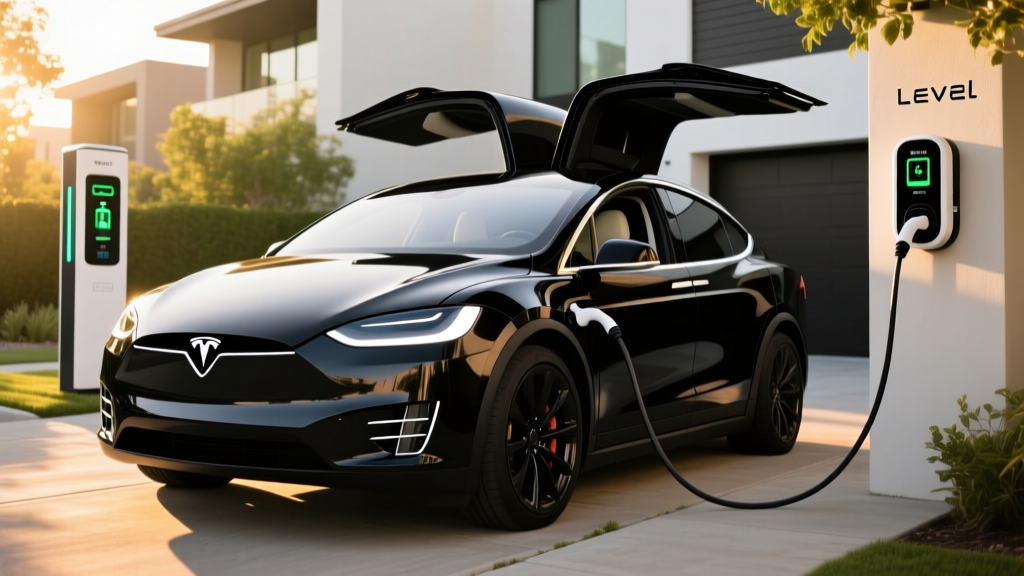
All 2026 Teslas use the NACS (J3400) connector natively—the industry standard that Ford, GM, Rivian, Hyundai, and most other OEMs have adopted. That gives Tesla owners first-party access to 25,000+ Superchargers in North America, still the most reliable DC network by uptime metrics.
| Charging Level | Power | Miles Added per Hour | Typical Use Case |
|---|---|---|---|
| Level 1 (120V) | ~1.4 kW | ~4-5 mi/hr | Overnight trickle; emergencies |
| Level 2 (240V, 48A) | 11.5 kW | ~44 mi/hr | Home Wall Connector; full overnight fill |
| DC Fast (V3 Supercharger) | Peak 250 kW | ~1,000 mi/hr at peak | Road trips; 10-80% in 25-27 min |
| DC Fast (V4 Supercharger) | Peak 350 kW* | Higher sustained curve | Currently limited by vehicle-side charge rate |
*V4 Supercharger cabinets can deliver 350 kW, but current Model 3/Y/S/X vehicle-side architecture caps intake near 250 kW. Future HW5 vehicles may unlock more.
Charge-curve reality check: The "250 kW peak" only holds between roughly 10-30% state of charge on the Model 3/Y Long Range. Above 50%, the curve tapers to ~120 kW; above 80%, it drops below 60 kW. That's why Tesla's navigation system routes you to arrive at ~10% SoC and why charging to 100% at a Supercharger is both slow and hard on long-term battery health. For daily use, Tesla recommends an 80% charge limit on NMC packs (LFP-equipped Standard Range models can and should be charged to 100% periodically for cell balancing).
FSD in 2026: Performance, Price, and the Data-Labeler Feedback Loop
Full Self-Driving (Supervised) currently costs $8,000 as a one-time purchase or $99/month as a subscription on 2026 models. It bundles Navigate on Autopilot, Auto Lane Change, Autopark, Summon, Smart Summon, and the end-to-end neural city/highway driving stack.
In independent testing and owner reports through late 2025 and early 2026, FSD v13.x demonstrates:
- Highway driving: Near-flawless on well-marked interstates; lane changes are smoother than earlier rule-based versions. Disengagements per 1,000 miles have improved roughly 10x since v11, per Tesla's internal safety reports.
- Urban streets: Handles most protected turns, stop signs, and traffic lights. Still struggles with complex unprotected lefts across heavy traffic, temporary construction zones with conflicting lane markings, and obscured signage in heavy rain or direct sun glare.
- Edge cases: Unusual road geometries (five-way intersections, diverging diamond interchanges) still trigger disengagements—precisely the scenarios the Tesla data labeler pipeline prioritizes for retraining.
Pricing, Trims, and the Federal EV Tax Credit
Tesla's 2026 U.S. pricing positions the Model 3 and Model Y just inside the critical $55,000 MSRP cap for SUVs/vans and the $55,000 cap for sedans under the IRS §30D Clean Vehicle Credit. However, eligibility is not automatic—it depends on battery-component and critical-mineral sourcing rules that shift annually, plus your personal income.
| Model / Trim | Base MSRP | As-Tested (common config) | Potential §30D Credit* | Effective Price |
|---|---|---|---|---|
| Model 3 RWD | $38,990 | $38,990 | Up to $7,500 | From ~$31,490 |
| Model 3 Long Range AWD | $47,240 | $49,240 (w/ paint) | Up to $7,500 | From ~$41,740 |
| Model Y Long Range AWD | $48,240 | $50,740 (w/ paint, wheels) | Up to $7,500 | From ~$43,240 |
| Model S Long Range | $79,990 | $84,990 | $0 (over MSRP cap) | $84,990 |
*Per IRS §30D rules. Eligibility requires: (1) buyer AGI ≤ $150K single / $300K joint, (2) MSRP within vehicle-class cap, (3) battery components and critical minerals meeting phased-in North American/sourcing thresholds. Credit amount phases based on sourcing percentages; verify with a tax professional and the IRS source-of-origin lists current at purchase. Point-of-sale transfer is available at participating dealers.
The Model S and Model X fall outside the MSRP cap entirely—no federal credit regardless of income. Buyers in those trims should investigate state-level incentives (California, Colorado, and several Northeast states offer separate rebates) but should not budget around §30D.
FSD vs. BlueCruise vs. Super Cruise: Which System Fits You?
The data labeler gives Tesla a scale advantage—billions of real-world miles—but competitors have carved out niches:
- GM Super Cruise / Ultra Cruise: LiDAR-mapped, hands-free on 750,000+ miles of divided highways. More geofenced than FSD but genuinely hands-off where enabled. No city-street capability.
- Ford BlueCruise 1.4: Hands-free on 130,000+ miles of pre-mapped highways; lane-change assist. Subscription-based (~$75/mo). Strong driver-monitoring camera.
- Tesla FSD (Supervised): Broadest geographic coverage (works on virtually any public road), but hands/eyes must remain engaged. Most ambitious feature set, most variable performance.
If your commute is a predictable interstate, Super Cruise or BlueCruise may feel more polished day-to-day. If you need assistance on surface streets, rural roads, or unmapped routes, FSD remains the only mass-market option.
Battery Warranty, Longevity, and Ownership Costs
Tesla's battery and drive-unit warranty on 2026 models:
- Model 3 / Model Y: 8 years or 120,000 miles, whichever comes first, with minimum 70% capacity retention.
- Model S / Model X: 8 years or 150,000 miles, minimum 70% retention.
Real-world degradation data from fleet aggregators like Recurrent Auto shows NMC packs in Teslas averaging ~8-10% capacity loss at 100,000 miles when owners avoid habitual 100% charges and frequent Supercharging. LFP-equipped Standard Range models degrade more slowly (~5-7% at equivalent mileage) and tolerate daily 100% charging.
Out-of-warranty battery replacement remains expensive—$12,000-$18,000 depending on pack size and labor—but the failure rate before 150,000 miles is low (well under 5% per industry data). The bigger ownership-cost variables are insurance (Teslas carry higher-than-average premiums due to repair costs and ADAS calibration) and tire wear (EV torque and vehicle weight accelerate tread loss ~20% vs. comparable ICE sedans).
Who Should Buy a Tesla in 2026 — and Who Shouldn't
Pros
- Access to the Supercharger network — still the gold standard for reliability and coverage
- Class-leading efficiency (MPGe) across the Model 3 and Model Y lineup
- Continuous OTA improvements driven by the data-labeler pipeline
- Strongest resale value retention in the EV segment (though narrowed since 2023)
- Best-in-class cargo space for the footprint (Model Y especially)
Cons
- FSD is a Level 2 system sold with Level 4-adjacent branding — buyer expectations often mismatch reality
- Minimalist interior and lack of physical controls (no stalks on refreshed Model 3) polarize buyers
- Service-center wait times in growing markets remain a pain point
- No Apple CarPlay / Android Auto — Tesla's infotainment is a closed ecosystem
- Insurance premiums above segment average
Best for: Tech-forward commuters, road-trippers who value Supercharger density, and buyers who want continuous feature updates. The Model Y Long Range AWD remains the default recommendation for two-child families who need cargo space and all-weather traction.
Look elsewhere if: You want a true hands-off highway driver (GM Ultra Cruise), prefer physical buttons and CarPlay (Hyundai Ioniq 5, BMW i4), need heavy towing (Rivian R1T, Ford F-150 Lightning), or want a sub-$35K entry price (Nissan Leaf, used EV market).
Frequently Asked Questions
What is Tesla's data labeler, in plain terms?
It's the combined system of auto-labeling AI, human annotators, and simulation pipelines that turn raw fleet video into training data for FSD. Every time your Tesla encounters an unusual road scenario, that clip may flow through the data labeler and influence the next over-the-air update.
Does FSD improve automatically over time?
Yes, via OTA updates roughly every 3-6 weeks. Improvements are not linear—some updates prioritize safety constraints over assertiveness—but the long-term trajectory has been toward fewer disengagements per 1,000 miles.
What is the real-world range of a 2026 Model 3 Long Range?
EPA rates it at 363 miles. Expect ~290-310 miles on a 75-mph highway trip in mild weather, and ~240-270 miles in freezing temperatures with cabin heat active.
How fast does a Tesla charge at home and on the road?
On a Level 2 Wall Connector (11.5 kW), you add ~44 miles per hour—enough to refill overnight. On a V3 Supercharger, expect 10-80% in ~25-27 minutes, with a peak of 250 kW tapering significantly above 50% SoC.
Do 2026 Teslas qualify for the $7,500 federal tax credit?
Model 3 and Model Y trims under the MSRP cap can qualify, but only if the buyer's AGI is within limits (≤$300K joint / $150K single) and the vehicle's battery sourcing meets the current-year §30D critical-mineral and component thresholds. Always verify on irs.gov and with a tax professional before ordering. Model S and Model X do not qualify due to the MSRP cap.
Is FSD worth $8,000 or $99/month?
For daily commuters on varied roads who want the most capable Level 2 system available—and who accept the supervision requirement—the subscription is a reasonable trial. Outright purchase only makes sense if you plan to keep the vehicle 5+ years and value potential feature upside. For pure highway commuters, BlueCruise or Super Cruise may deliver more predictable hands-free value at lower cost.
Does Tesla still use radar or ultrasonic sensors?
No. Since 2022-2023, all new Teslas are "Tesla Vision" only—camera-based perception with no radar or ultrasonic sensors. The data labeler pipeline is specifically optimized for vision-only training.