The Tesla Data Breach 2025: What We Know So Far
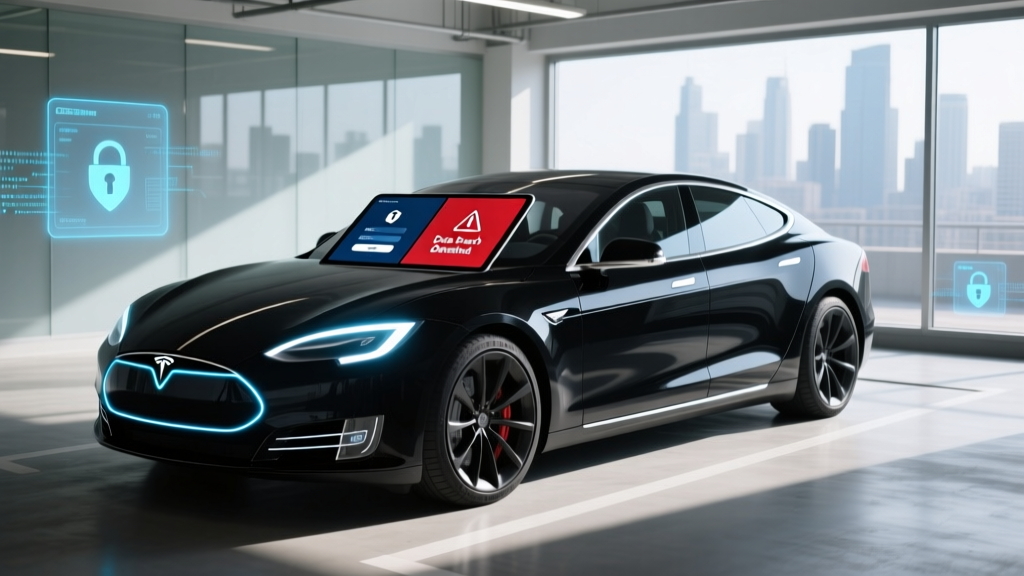
In early 2025, a data breach involving Tesla's internal systems drew widespread attention after reports surfaced that sensitive employee and customer information had been accessed. Unlike a vehicle recall or a software OTA update, a data breach doesn't affect your car's range or charging speed—but it does raise serious questions about digital privacy for Tesla owners who rely on the company's app, Sentry Mode cloud clips, and connected services.
This guide breaks down what the 2025 incident involved, which Tesla models and services were implicated, and what practical steps current owners should take. We'll also cover the vehicles themselves—because if you're shopping for a Tesla in 2026, understanding both the cybersecurity posture and the hardware is essential.
What Happened in the Tesla Data Breach?
The 2025 incident, as reported by major outlets including Reuters and Bloomberg, involved unauthorized access to an internal Tesla database. The breach reportedly exposed:
- Employee records, including names, contact information, and internal IDs
- Customer email addresses and account identifiers linked to the Tesla app
- Vehicle identification numbers (VINs) associated with service records
- Internal communications related to Autopilot and FSD (Supervised) development logs
Tesla confirmed the breach in a regulatory filing and stated that no payment information, Social Security numbers, or real-time vehicle location data was compromised. The company attributed the incident to a misconfigured internal access control, not an external hack of vehicles themselves.
What was NOT compromised: Tesla confirmed that vehicle control systems (steering, braking, acceleration), charging credentials, and live GPS location were not accessible through the breached database. Your car cannot be remotely unlocked or started through this vector.
Which Tesla Models and Services Are Affected?
The breach impacted data associated with all current-production Tesla vehicles that use the Tesla app and connected services. This includes:
| Model | Model Years Affected | Connected Services at Risk |
|---|---|---|
| Model 3 (Highland refresh) | 2024–2026 | App remote access, Sentry Mode clips, service history |
| Model Y (Juniper refresh) | 2025–2026 | App remote access, Sentry Mode clips, service history |
| Model S / Model X | 2021–2026 (Plaid/refresh) | App remote access, Sentry Mode clips, service history |
| Cybertruck | 2024–2026 | App remote access, Sentry Mode clips, service history |
If you own any of these vehicles and use the Tesla app for remote climate control, charging management, or Sentry Mode viewer, your account metadata was potentially part of the exposed dataset.
Immediate Steps Tesla Owners Should Take
Based on guidance from cybersecurity firms and Tesla's own post-breach communications, here is the recommended action plan:
- Change your Tesla account password immediately. Use a unique, 16+ character password not reused elsewhere.
- Enable two-factor authentication (2FA) in the Tesla app under Security settings. This adds a TOTP code requirement for logins.
- Review Sentry Mode clip storage. If you use cloud-based Sentry Mode viewer, consider downloading and deleting older clips you no longer need.
- Monitor for phishing attempts. Be skeptical of emails or texts claiming to be from Tesla support asking for account verification.
- Check if your data was exposed via Tesla's official breach notification portal or services like Have I Been Pwned.
Tesla's Cybersecurity Track Record and Vehicle Architecture
It's worth distinguishing between Tesla's data infrastructure (where this breach occurred) and the vehicle's operational cybersecurity. Tesla vehicles run on a separate, isolated vehicle network that does not share authentication with the consumer app database. The company has a public bug bounty program and has addressed vehicle-level vulnerabilities in the past through OTA patches.
However, the 2025 incident highlights a recurring tension in connected EVs: the more services you link to your car—remote start, location sharing, service scheduling—the larger the attack surface for data exposure. This is not unique to Tesla; Ford, GM, and Hyundai have all faced data incidents related to connected services in recent years.
2026 Tesla Lineup: What You're Buying Beyond the Data Risk
If you're weighing a Tesla purchase in 2026, the data breach should be one factor among many. Here's a quick-reference spec table for the current lineup:
| Spec | Model 3 Long Range AWD | Model Y Long Range AWD | Model S Plaid |
|---|---|---|---|
| EPA Range | 341 mi | 320 mi | 396 mi |
| Battery (usable) | ~75 kWh (NMC) | ~75 kWh (NMC) | ~95 kWh (NMC) |
| Max DC Charge | 250 kW | 250 kW | 250 kW |
| 10–80% Time | ~25 min | ~27 min | ~30 min |
| Level 2 Home Rate | 11.5 kW (~44 mi/hr) | 11.5 kW (~44 mi/hr) | 11.5 kW (~34 mi/hr) |
| 0–60 mph | 4.2 sec | 4.8 sec | 1.99 sec |
| Horsepower | 346 hp | 384 hp | 1,020 hp |
| Drivetrain | Dual Motor AWD | Dual Motor AWD | Tri-Motor AWD |
| MPGe (combined) | 132 MPGe | 122 MPGe | 120 MPGe |
| Cargo Volume | 23 cu ft (rear) + 3 cu ft (frunk) | 76 cu ft (rear folded) + 4 cu ft (frunk) | 28 cu ft (rear) + 3 cu ft (frunk) |
| Base MSRP | $47,740 | $48,990 | $89,990 |
| Battery Warranty | 8 yr / 120,000 mi | 8 yr / 120,000 mi | 8 yr / 150,000 mi |
Real-world range reality: EPA figures assume a mix of city and highway driving at moderate temperatures. Expect ~15–20% range loss on sustained highway trips above 70 mph, and up to 30% loss in sub-freezing winter conditions. A Model 3 LR rated at 341 mi EPA will typically deliver 270–290 mi on a warm-weather road trip and 240–260 mi in cold weather.
Federal Tax Credit Eligibility (IRS §30D)
As of 2026, Tesla models may qualify for up to $7,500 in federal EV tax credits under IRS §30D, but eligibility depends on multiple factors:
- MSRP caps: Sedans (Model 3) must be under $55,000; SUVs/trucks (Model Y, Cybertruck) under $80,000.
- Buyer income limits: AGI must not exceed $150,000 (single), $225,000 (head of household), or $300,000 (joint).
- Battery sourcing: Critical minerals and battery components must meet phased-in domestic content thresholds.
- Point-of-sale transfer: Eligible buyers can apply the credit as a down payment reduction at purchase.
Tesla's Model 3 and Model Y have historically qualified for the full $7,500, but battery sourcing rules tighten annually. Always verify current eligibility at IRS.gov before purchasing.
Should the Data Breach Change Your Buying Decision?
The 2025 breach is a legitimate concern for privacy-conscious buyers, but it should be weighed against Tesla's strengths: the Supercharger network (now open to other brands but still the most reliable), industry-leading efficiency (kWh/100mi), and continuous OTA improvements. Competitors like the Hyundai Ioniq 6, BMW i4, and Ford Mustang Mach-E have not been immune to data incidents either.
If digital privacy is a top priority, consider:
- Limiting app permissions (disable location sharing when not needed)
- Using a dedicated email for your Tesla account
- Opting out of data-sharing programs in vehicle settings
Frequently Asked Questions
Was my car's driving data or location exposed in the breach?
No. Tesla confirmed that real-time GPS location, driving history, and vehicle control systems were not part of the breached database. The exposure was limited to account metadata, service records, and internal documents.
Do I need to change my Tesla password?
Yes. Tesla recommended all users change passwords and enable 2FA following the incident. This is standard practice after any data breach.
Does this breach affect Tesla's Autopilot or FSD safety?
No. Autopilot and FSD (Supervised) operate on the vehicle's local compute hardware and do not rely on the breached database. SAE Level 2 driver-assist functionality is unaffected.
Can I opt out of Tesla's connected services entirely?
You can disable data sharing in Settings > Safety & Security > Data Sharing, but this will limit features like remote climate control, Sentry Mode viewer, and navigation traffic updates.
How does Tesla's data security compare to other EV makers?
Most connected EVs collect similar data. Ford, GM, and Hyundai have all experienced data incidents. Tesla's vehicle-level isolation is robust, but the 2025 breach shows that backend infrastructure remains a risk across the industry.