Why Every Tesla Buyer Should Care About the Built-In Dashcam
Most shoppers research EPA range, charging speed, and tax-credit eligibility before choosing an electric vehicle. Fewer realize that every new Tesla — from the base Model 3 Rear-Wheel Drive to the Model X Plaid — ships with a multi-camera recording system that functions as both a dashcam and a parked-vehicle security monitor. Tesla calls these features Dashcam (while driving) and Sentry Mode (while parked), and together they eliminate the need for a third-party dashcam in most scenarios.
This guide explains exactly how Tesla's dashcam system works, what you need to set it up, its limitations, and how it integrates with the full spec profile of each 2026 Tesla model. We will also cover real-world range, charging curves, tax-credit eligibility under current IRS §30D rules, and which Tesla model best fits your use case.
How Tesla Dashcam and Sentry Mode Actually Work
Tesla vehicles use their existing Autopilot camera array — typically eight exterior cameras providing 360-degree coverage — to record video clips. There is no separate dashcam hardware to buy or mount on your windshield.
Dashcam (Driving Mode)
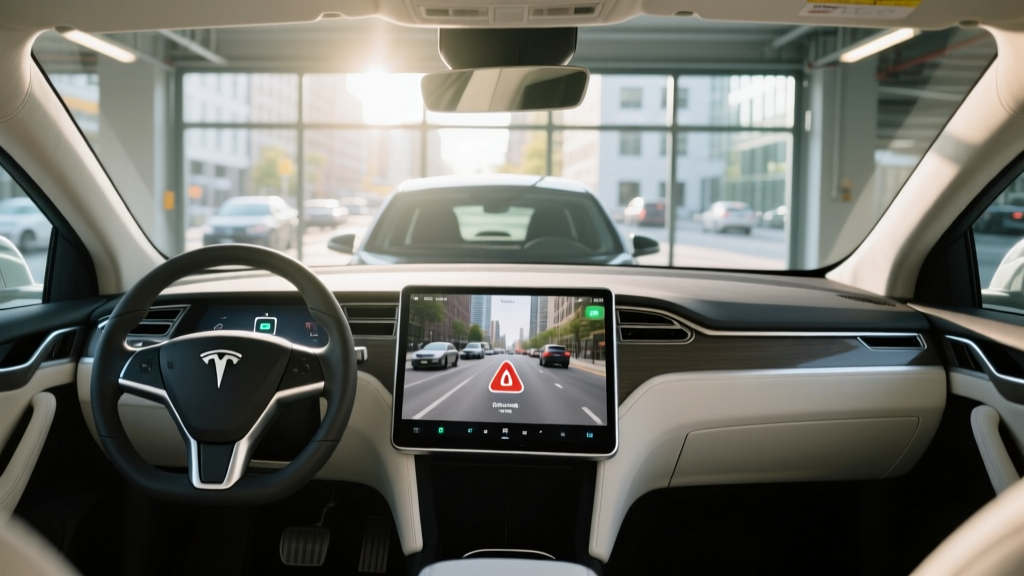
When enabled, Dashcam continuously records from the front, rear, left-repeater, and right-repeater cameras. Footage is saved in 1-minute rolling segments to a USB drive (or glovebox SSD on newer builds). When you tap the Dashcam icon on the touchscreen or honk the horn (if auto-save is enabled), the system saves the previous 10 minutes of footage across all four camera angles.
Sentry Mode (Parked Security)
When the vehicle is parked and locked, Sentry Mode keeps the camera system in a low-power standby state. If the car detects a threat — someone leaning on it, a shopping cart rolling into the door, or a break-in attempt — it escalates through three stages:
- Standby: Cameras monitor the surroundings; no recording yet.
- Alert: A threat is detected; the touchscreen flashes a recording indicator and the car saves footage from the previous 10 minutes.
- Alarm: A significant event (glass break, forced entry) triggers the car alarm, sends a push notification to your phone, and saves the event clip.
What You Need
You must insert a properly formatted USB drive into the glovebox port (2021+ vehicles) or a front console port (older models). Tesla recommends a high-endurance microSD card in a USB adapter, rated for continuous write cycles. A 128 GB card typically stores several days of Sentry Mode events. Format it as exFAT directly from the vehicle's touchscreen under Controls → Safety → Dashcam → Format USB Drive.
Full 2026 Tesla Lineup: Specs, Range, and Pricing
The dashcam and Sentry Mode features are standard across every Tesla model. Here is how the vehicles themselves compare on the metrics that matter most to EV buyers.
| Spec | Model 3 RWD | Model 3 Long Range AWD | Model Y Long Range AWD | Model S LR | Model X LR | Cybertruck AWD |
|---|---|---|---|---|---|---|
| EPA Range | 363 mi | 342 mi | 320 mi | 402 mi | 335 mi | 325 mi |
| Battery (usable kWh) | ~60 kWh (LFP) | ~75 kWh (NMC) | ~75 kWh (NMC) | ~95 kWh (NMC) | ~95 kWh (NMC) | ~123 kWh (NMC) |
| 0–60 mph | 5.8 sec | 4.2 sec | 4.8 sec | 3.1 sec | 3.8 sec | 4.1 sec |
| Horsepower | 271 hp | 384 hp | 384 hp | 670 hp | 670 hp | 600 hp |
| Drivetrain | RWD | Dual-Motor AWD | Dual-Motor AWD | Dual-Motor AWD | Dual-Motor AWD | Dual-Motor AWD |
| MPGe (combined) | 132 MPGe | 125 MPGe | 120 MPGe | 120 MPGe | 111 MPGe | 87 MPGe |
| Cargo Volume | 23 cu ft | 23 cu ft | 72 cu ft | 28 cu ft | 88 cu ft | ~67 cu ft (bed + frunk) |
| Base MSRP | $38,990 | $45,990 | $47,990 | $74,990 | $79,990 | $79,990 |
Source: fueleconomy.gov and Tesla's official specifications page. Pricing reflects base MSRP before destination fees and options. Verify current pricing at tesla.com.
Real-World Range: What the EPA Sticker Doesn't Tell You
EPA vs. Reality: The Model 3 Long Range AWD carries a 342-mile EPA estimate. In real-world highway driving at 70–75 mph, expect roughly 280–300 miles. In freezing temperatures (below 32°F), range can drop 20–30%, bringing effective range to 230–270 miles. The LFP-equipped Model 3 RWD is less susceptible to cold degradation than NMC variants but has a lower total capacity to begin with.
Tesla's thermal management system is among the best in the industry, using a heat pump (standard on all current models) to minimize cold-weather cabin-heating energy draw. Still, physics dictates that battery chemistry slows in cold temperatures, increasing internal resistance and reducing usable capacity temporarily. Preconditioning the battery while plugged in — easily scheduled through the Tesla app — recovers a significant portion of this loss.
Charging Speed: DC Fast Charge and Home Level 2
Charging speed is where Tesla's Supercharger network advantage becomes tangible. Here is what to expect at each charging level across the lineup.
| Charging Level | Model 3 / Model Y | Model S / Model X | Cybertruck |
|---|---|---|---|
| Level 1 (120V, 1.4 kW) | ~3–5 mi/hr | ~3–5 mi/hr | ~3–4 mi/hr |
| Level 2 (240V, 11.5 kW) | ~44 mi/hr | ~34 mi/hr | ~30 mi/hr |
| DC Fast Charge (peak kW) | 250 kW | 250 kW | 350 kW (800V arch.) |
| 10–80% DCFC Time | ~25–28 min | ~30–35 min | ~15–18 min |
Charging curve reality check: Peak kW rates are not sustained throughout the session. A Model 3 Long Range at a V3 Supercharger will peak near 250 kW between roughly 10–30% state of charge, then taper progressively. The average power across a 10–80% session is closer to 140–160 kW. The Cybertruck's 800-volt architecture allows it to sustain higher power for longer, but 350 kW peaks only occur at V4 Supercharger stalls equipped with the CCS-integrated NACS cable. Always precondition your battery by navigating to a Supercharger in the Tesla navigation system — this warms the pack and unlocks the full charge curve.
Federal Tax Credit: Who Qualifies Under §30D
The IRS §30D federal EV tax credit can reduce your effective purchase price by up to $7,500, but eligibility depends on a matrix of requirements that change periodically. Here is the current framework:
- MSRP Cap: Sedans (Model 3, Model S) must have an MSRP at or below $55,000. SUVs, pickups, and vans (Model Y, Model X, Cybertruck) must be at or below $80,000.
- Income Cap: Modified adjusted gross income (MAGI) must not exceed $150,000 (single), $225,000 (head of household), or $300,000 (joint filers).
- Battery Sourcing: The credit is split into two halves — $3,750 for critical-minerals sourcing and $3,750 for battery-component manufacturing. Both thresholds tighten annually. Verify current-year sourcing compliance on the IRS qualified vehicles list.
- Point-of-Sale Transfer: As of 2024, you can transfer the credit to the dealer at purchase, reducing your out-of-pocket cost immediately rather than waiting to claim it on your tax return.
| Model | Base MSRP | Max §30D Credit | Effective Price | Credit Eligibility Notes |
|---|---|---|---|---|
| Model 3 RWD | $38,990 | Up to $7,500 | ~$31,490 | Under $55K cap; verify battery sourcing |
| Model 3 LR AWD | $45,990 | Up to $7,500 | ~$38,490 | Under $55K cap; verify battery sourcing |
| Model Y LR AWD | $47,990 | Up to $7,500 | ~$40,490 | SUV classification; under $80K cap |
| Model S LR | $74,990 | $0 | $74,990 | Exceeds $55K sedan MSRP cap |
| Model X LR | $79,990 | Up to $7,500 | ~$72,490 | SUV cap applies; borderline — confirm MSRP |
| Cybertruck AWD | $79,990 | Up to $7,500 | ~$72,490 | Pickup classification; under $80K cap |
Always confirm eligibility at irs.gov and consult a tax professional. Battery-sourcing requirements tighten annually, and a model that qualifies in January may not qualify by December if supply chains shift.
Warranty, Ownership Costs, and Efficiency
Tesla provides a straightforward warranty structure:
- Basic Vehicle: 4 years / 50,000 miles (whichever comes first)
- Battery & Drive Unit: 8 years / 100,000 miles for Model 3 RWD (LFP); 8 years / 120,000 miles for Model 3 LR, Model Y, Model S, and Model X
- Capacity Retention Threshold: Tesla warrants a minimum of 70% battery capacity retention during the warranty period
The LFP (lithium iron phosphate) battery in the Model 3 RWD offers a longer cycle life and tolerates regular charging to 100% without the degradation concerns of NMC chemistry. Tesla explicitly recommends charging LFP vehicles to 100% at least once per week for accurate state-of-charge calibration. NMC vehicles should be kept at 80% for daily use and charged to 100% only before long trips.
On efficiency, the Model 3 RWD leads the lineup at 132 MPGe combined — roughly 25 kWh per 100 miles. At the national average electricity rate of ~$0.16/kWh, that translates to about $4.00 per 100 miles driven, compared to roughly $12–14 per 100 miles for a 28 MPG gas sedan at $3.50/gallon.
Pros and Cons: The Honest Assessment
Pros
- Built-in dashcam with 4-camera coverage — no aftermarket hardware needed
- Sentry Mode provides 360° parked surveillance with phone alerts
- Supercharger network remains the most reliable DC fast-charging ecosystem in North America
- Over-the-air updates continuously add features (recent: improved Dashcam viewer, Sentry clip export to phone)
- Model 3 and Model Y remain among the most efficient EVs in their segments
- LFP option on Model 3 RWD allows worry-free 100% daily charging
Cons
- Sentry Mode increases idle power consumption — expect 15–30 miles of range loss per 24 hours when active
- Dashcam footage requires manual USB retrieval; no built-in cloud upload for clips (unlike some competitors)
- Model S and Model X exceed the §30D MSRP cap for sedans, disqualifying them from the federal credit
- No Apple CarPlay or Android Auto — Tesla's infotainment is proprietary
- Insurance premiums can be 20–40% higher than comparable non-Tesla EVs due to repair-cost data
- FSD (Supervised) remains SAE Level 2 — full driver attention is required at all times
Who Should Buy a Tesla — and Which Model?
Choose the Model 3 RWD if: You are a daily commuter covering under 60 miles round-trip, want the lowest entry price, and can charge at home. The LFP battery is ideal if you prefer charging to 100% daily without degradation worry. At ~$31,490 after the federal credit, it is one of the most affordable new EVs available.
Choose the Model 3 Long Range AWD if: You regularly drive 200+ miles between charges, live in a cold climate where AWD and NMC range buffer matter, or want the dual-motor performance upgrade without stepping to a larger vehicle.
Choose the Model Y Long Range AWD if: You need family-friendly cargo space (72 cu ft with seats folded), prefer a crossover ride height, and want the same powertrain efficiency as the Model 3 LR in a more practical package. This is the best-selling Tesla for a reason.
Choose the Model S or Model X if: Budget is flexible, you want 400+ mile range (Model S) or three-row seating (Model X), and you accept that the §30D credit likely will not apply. These are premium vehicles with premium pricing.
Choose the Cybertruck if: You need a pickup bed, want 800V fast-charging architecture, and are comfortable with polarizing styling and a stainless-steel exoskeleton that limits traditional body-shop repair options.
Tesla Dashcam vs. Aftermarket Alternatives
For drivers considering a third-party dashcam alongside or instead of Tesla's built-in system, here is a practical comparison:
- Camera coverage: Tesla records from 4 cameras simultaneously. Most aftermarket units cover 1–2 (front and optionally rear). Tesla wins on breadth.
- Video quality: Tesla's cameras are optimized for Autopilot computer vision, not cinematography. Resolution is adequate for incident documentation but lower than a dedicated 4K dashcam like a BlackVue or Thinkware.
- Cloud features: Aftermarket dashcams from BlackVue and Garmin offer automatic cloud upload over LTE. Tesla requires you to physically remove the USB drive or export clips via the in-car viewer to your phone over Wi-Fi.
- Integration: Tesla's system is deeply integrated — Sentry Mode escalates alerts, the horn triggers auto-save, and the touchscreen viewer lets you scrub through footage without a laptop. No aftermarket system matches this integration.
For most Tesla owners, the built-in system is sufficient. Add a dedicated dashcam only if you need higher resolution, cloud backup, or cabin-interior recording (Tesla's cabin camera is used for driver monitoring but is not user-accessible for dashcam clips).
Frequently Asked Questions
Does Tesla Dashcam record while the car is parked?
No — that is Sentry Mode's function. Dashcam records while driving; Sentry Mode monitors and records when the vehicle is parked and locked. Both save footage to the same USB drive. You can enable both simultaneously.
How much range does Sentry Mode consume?
Sentry Mode draws roughly 1–2 kW of continuous power for camera standby and processing. Over 24 hours, expect a range loss of 15–30 miles depending on how many alert events trigger. Tesla allows you to exclude specific locations (home, work) from Sentry Mode to preserve range when parked in safe areas.
Does the Tesla Dashcam work without a USB drive?
No. You must insert a formatted USB drive (or SSD) into the appropriate port. Without it, neither Dashcam nor Sentry Mode will record or save clips. Tesla's touchscreen will prompt you to format a newly inserted drive.
Can I view Tesla Dashcam footage on my phone?
Yes. You can view recent clips directly on the vehicle's touchscreen and export them to your phone over the car's Wi-Fi hotspot. However, there is no automatic cloud upload — you must be near the vehicle to retrieve footage wirelessly.
Is Autopilot or FSD required to use the dashcam?
No. Dashcam and Sentry Mode are standard features on every Tesla, regardless of whether you purchase Autopilot, Enhanced Autopilot, or FSD (Supervised). The cameras are always present as part of the vehicle's hardware suite.
Does the Tesla dashcam qualify as evidence in an insurance claim?
Yes, dashcam footage from any source — including Tesla's built-in system — is generally accepted as evidence by insurance companies and law enforcement. The multi-angle coverage can be particularly useful for documenting side-impact collisions and parking-lot incidents.
What size USB drive do I need for Tesla Dashcam?
Tesla recommends a minimum of 64 GB. A 128 GB or 256 GB high-endurance microSD card (Samsung PRO Endurance, SanDisk High Endurance) in a USB-C adapter provides ample storage for weeks of driving footage and hundreds of Sentry Mode events.