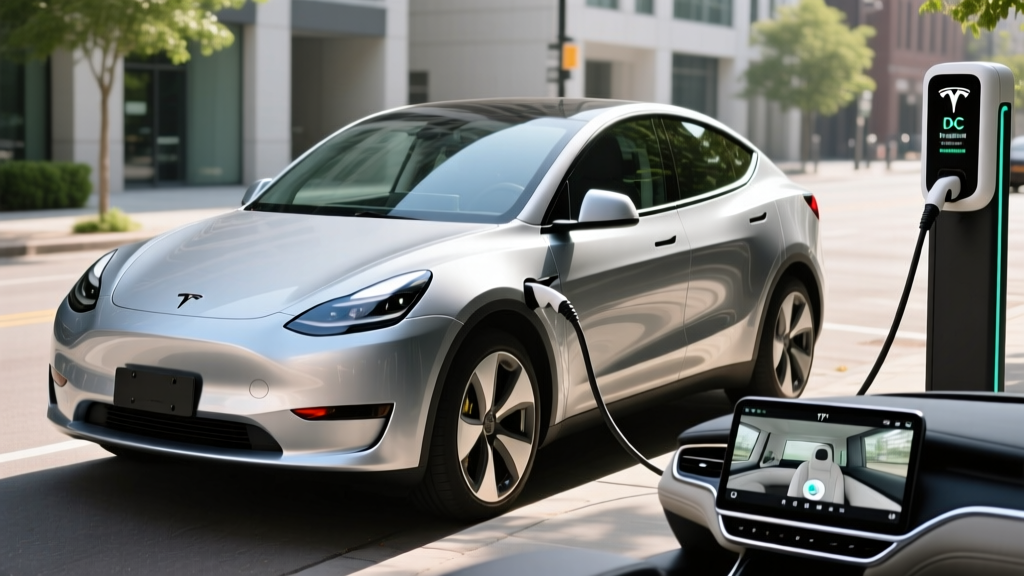
If you've just taken delivery of a Tesla or are researching one, you've probably asked: does Tesla have a dash cam? The short answer is yes. Every current Tesla model ships with an integrated dash cam system called Dashcam, plus an always-on parking surveillance feature known as Sentry Mode. Neither requires you to mount an aftermarket camera on your windshield or run cables through your cabin — Tesla bakes the hardware right into the vehicle's Autopilot camera suite.
But how well does it actually work compared to a dedicated $150 dash cam? What does it cost in terms of battery and range? And how do you set it up correctly so footage is there when you need it? This guide walks through Tesla's built-in camera recording system, the real-world trade-offs, and pairs that with a full 2026 Tesla ownership profile — because the dash cam question rarely exists in isolation from the broader buying decision.
How Tesla's Built-In Dash Cam Works
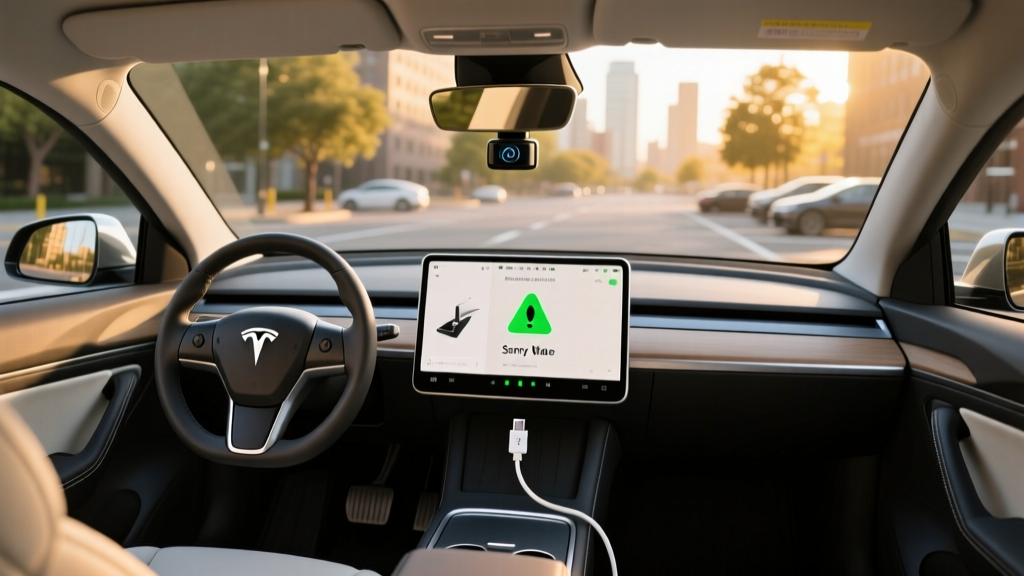
Tesla's Dashcam feature leverages the same external cameras used for Autopilot and FSD (Supervised). When enabled, the system continuously records video from up to four angles — front, rear, left repeater, and right repeater — and writes the most recent 10 minutes to a USB drive whenever you tap the Dashcam icon on the touchscreen or when a collision or airbag deployment is detected.
Sentry Mode extends this to parked surveillance. When the car is locked and parked, the cameras monitor the surroundings. If a threat is detected (someone leaning on the car, an impact, a break-in attempt), the system saves the surrounding 10 minutes of footage and alerts you via the Tesla app. On 2025–2026 models with Hardware 4 (HW4), Sentry Mode can also record to the glovebox USB-C port at higher resolution than earlier hardware.
What you need to make it work
- A USB-C flash drive (or SSD) — 64 GB minimum, 128 GB+ recommended. Tesla formats it with a dedicated
TeslaCamfolder structure. - Glovebox USB-C port — on 2021+ models, Tesla routes the recording port to the glovebox for theft resistance. Earlier models use a center-console port.
- Correct formatting — exFAT or MS-DOS (FAT32 for older firmware). The car will prompt you to format the drive on first insertion.
- Enabled in settings — Controls > Safety > Dashcam must be toggled on. Sentry Mode has its own toggle under Safety > Sentry Mode with location exclusions (e.g., disable at home).
Limitations versus a dedicated dash cam
Tesla's system is convenient but not perfect. The cameras prioritize driving-assist fields of view, not optimized dash-cam framing. Nighttime footage, especially from the side repeaters, can be grainy compared to a Sony STARVIS-equipped aftermarket unit. The system also does not record cabin interior by default (cabin camera is reserved for driver monitoring). And critically: if the 12V battery dies or the car loses main battery power completely, recording stops — a dedicated hardwired dash cam with its own capacitor may survive longer in edge cases.
Real-World Range Impact of Sentry Mode
This is where the dash cam question becomes an EV-ownership question. Sentry Mode is not free. It keeps the vehicle's computers and cameras awake, drawing continuous power from the high-voltage battery.
Tesla introduced an "Exclude Home" and "Exclude Favorites" setting so Sentry Mode only activates at unfamiliar locations. Most owners use this to eliminate overnight phantom drain in their garage. On a 2026 Model Y Long Range with ~310 miles EPA, disabling Sentry Mode at home typically reduces overnight phantom drain from ~8 miles to ~2 miles.
2026 Tesla Lineup: Dash Cam Across the Fleet
Every new Tesla sold in 2026 includes Dashcam and Sentry Mode as standard features — no subscription, no premium package required. Here's how the feature lives inside the current fleet, alongside the specs that matter for ownership.
| Model / Trim | EPA Range | Battery (kWh / Chemistry) | 0–60 mph | Drivetrain | Base MSRP |
|---|---|---|---|---|---|
| Model 3 RWD | 272 mi | ~60 kWh / LFP | 5.8 s | RWD, single motor | $38,990 |
| Model 3 Long Range AWD | 363 mi | ~79 kWh / NMC | 4.2 s | Dual-motor AWD | $45,740 |
| Model 3 Performance | 315 mi | ~79 kWh / NMC | 2.9 s | Dual-motor AWD | $52,990 |
| Model Y Long Range AWD | 320 mi | ~79 kWh / NMC | 4.8 s | Dual-motor AWD | $46,630 |
| Model Y Performance | 293 mi | ~79 kWh / NMC | 3.5 s | Dual-motor AWD | $51,490 |
Sources: fueleconomy.gov, Tesla.com. EPA figures; real-world highway range typically 10–15% lower, with additional 15–30% loss in sub-freezing temperatures.
Charging Speed & Home Setup
Dash cam ownership is a minor footnote compared to charging logistics — the real make-or-break of EV life. Current Teslas on the NACS (North American Charging Standard) connector charge across three tiers:
| Level | Power / Rate | 10–80% Time | Miles Added per Hour |
|---|---|---|---|
| Level 1 (120V household) | ~1.4 kW | N/A (overnight top-up) | ~3–5 mi/hr |
| Level 2 (240V, Wall Connector) | 11.5 kW (48A) | ~7–9 hours (full) | ~35–44 mi/hr |
| DC Fast (V3/V4 Supercharger) | Up to 250 kW peak | ~25–30 min | ~1,000+ mi/hr (peak) |
A few real-world caveats: the 250 kW peak is only sustained between roughly 10–30% state of charge. Above 50%, the charge curve tapers hard — expect ~60 kW by 80% and slower still past 90%. Preconditioning the battery (triggered automatically when you navigate to a Supercharger) is essential to hit peak rates; arriving cold can double your 10–80% time.
Federal Tax Credit Eligibility (§30D)
Tesla's pricing puts most trims under the IRS §30D MSRP cap ($55,000 for sedans, $80,000 for SUVs/vans/pickups), but eligibility is not automatic. Current-year rules impose three hard gates:
- Buyer income cap: AGI ≤ $150,000 single / $225,000 head of household / $300,000 joint.
- MSRP cap: Vehicle base + options must fall under the category threshold.
- Battery sourcing: Critical minerals and battery components must meet escalating domestic/free-trade-agreement percentages — a moving target that shifts each calendar year.
The Model 3 RWD (LFP battery sourced partly from CATL) has seen its credit eligibility fluctuate quarter to quarter. The Long Range and Performance trims with NMC packs have more consistently qualified. Always verify on the IRS Clean Vehicle Credit page before purchasing, and note the credit can now be transferred to the dealer at point of sale as a purchase-price reduction rather than claimed at tax time.
| Model | MSRP | Max Credit | Effective Price |
|---|---|---|---|
| Model 3 RWD | $38,990 | $7,500 | ~$31,490* |
| Model 3 Long Range | $45,740 | $7,500 | ~$38,240* |
| Model Y Long Range | $46,630 | $7,500 | ~$39,130* |
*Assumes full §30D eligibility. Buyer must meet income, MSRP, and battery-sourcing requirements. Verify at irs.gov before purchase.
Pros, Cons, and the Verdict
Pros
- Integrated dash cam + Sentry Mode — no aftermarket hardware
- Best-in-class Supercharger network access (18,000+ stalls in North America)
- Over-the-air updates continuously improve features
- Low running costs — electricity vs. gas savings substantial
- Strong resale demand, especially Long Range trims
Cons
- Sentry Mode range drain meaningful on long airport parks
- Nighttime camera quality trails dedicated dash cams
- No physical instrument cluster — everything on center screen
- Repair costs and insurance premiums higher than segment average
- FSD (Supervised) remains SAE Level 2 — driver must stay engaged
Verdict: Tesla's built-in dash cam is good enough for 90% of owners — it's free, integrated, and covers four angles. Dash-cam purists who need crystal-clear nighttime plates or interior recording should supplement with a dedicated unit. The bigger ownership decision remains range, charging access, and whether the §30D credit lines up in your purchase year.
Who Should Buy a Tesla in 2026?
The Tesla buyer profile has sharpened. Commuters with home Level 2 charging get the most value — daily driving within 80% of EPA range with overnight top-ups is the ideal use case. Families gravitate to Model Y for its 76 cu-ft max cargo volume and optional third row. Road trippers benefit from Supercharger density but should plan around Sentry Mode parasitic drain at hotels. Towing buyers should note the Model Y's 3,500-lb rating is usable but reduces range by 30–40%.
Frequently Asked Questions
Does Tesla have a dash cam built in?
Yes. Every 2026 Tesla includes Dashcam (records while driving) and Sentry Mode (records while parked) using the vehicle's external Autopilot cameras. You just need to supply a USB-C flash drive.
Does Sentry Mode drain the battery significantly?
Expect 1–2 miles of range lost per hour of Sentry Mode activation. Over a full day parked, that's 24–48 miles. Most owners use location exclusions to disable it at home and work.
What size USB drive do I need for Tesla Dashcam?
Tesla recommends 64 GB minimum. A 128 GB or 256 GB USB-C SSD provides more buffer for Sentry Mode events and handles the write cycles better than cheap thumb drives.
Does Tesla record interior cabin footage?
No, not by default. The cabin camera is reserved for driver-monitoring (attention alerts when Autopilot is engaged). Dashcam and Sentry Mode record exterior views only.
Is Tesla's dash cam footage admissible in insurance claims?
Generally yes — footage saved to the USB drive is treated like any other dash cam video. Keep the drive in a safe location after an incident and back footage up promptly; the system overwrites older clips on a rolling basis.
Does a 2026 Tesla qualify for the $7,500 federal tax credit?
It depends on the trim, your AGI, and current battery-sourcing rules. Most Model 3 and Model Y trims fall under the MSRP cap, but LFP battery sourcing has caused quarter-to-quarter eligibility changes. Verify on irs.gov before signing.
Ownership data referenced from fueleconomy.gov, Tesla.com, and the IRS Clean Vehicle Credit guidance. Specs reflect 2026 model year; verify with your local Tesla advisor at time of purchase.