If you've searched for "Tesla dash cam" wondering whether you need to buy an aftermarket unit for your Model 3, the answer is no — Tesla builds one directly into every vehicle. But the built-in system has quirks, storage limitations, and specific setup requirements that most owners don't discover until they need footage most. This review covers the 2026 Tesla Model 3 Long Range AWD as a complete EV profile while giving you an owner-level walkthrough of Tesla's Dashcam and Sentry Mode systems.
2026 Tesla Model 3 Long Range AWD: Core EV Specs
| Spec | Value |
|---|---|
| EPA Estimated Range | 363 miles |
| Battery Capacity (Usable) | ~79 kWh (NMC chemistry) |
| Drivetrain | Dual-Motor AWD |
| Horsepower | 346 hp (combined) |
| 0–60 mph | 4.2 seconds |
| Peak DC Fast-Charge Rate | 250 kW (V3 Supercharger) |
| 10–80% DC Charge Time | ~27 minutes |
| Level 2 Home Charge Rate | 11.5 kW (~44 mi/hr) |
| EPA Efficiency | 132 MPGe combined / 25 kWh/100 mi |
| Cargo Volume | 23 cu ft (rear trunk + frunk) |
| Rear Legroom | 35.3 inches |
| Battery & Drive Unit Warranty | 8 years / 120,000 miles |
| Base MSRP (Long Range AWD) | $47,740 (before destination) |
Tesla Dash Cam: How the Built-In System Works
Every Tesla vehicle — including the 2026 Model 3 — ships with a built-in dash cam system called Dashcam. It uses the same forward-facing Autopilot camera (mounted behind the rearview mirror) plus available side and rear cameras to continuously record video while you drive. No aftermarket hardware required.
What Tesla Dashcam Records
- Continuous loop recording: The system records the last 10 minutes of driving footage in a rolling buffer. When you tap the Dashcam icon on the touchscreen or press the horn (if configured), it saves the most recent 10 minutes to a "Saved" folder that won't be overwritten.
- Camera coverage: Front-facing camera is standard. Depending on your HW4 (Hardware 4) configuration, side repeater cameras and the rear-view camera may also be available for multi-angle recording.
- Automatic incident capture: If the vehicle detects a collision or airbag deployment, footage is automatically saved to the "Saved" folder.
Storage Requirements and Setup
Tesla's Dashcam requires a USB drive (or the optional glovebox SSD) formatted in exFAT with a folder named TeslaCam at the root directory. Tesla now offers a 128 GB USB drive in the Tesla Shop for around $35, but any quality USB 3.0+ drive works. A 128 GB drive stores roughly 2–3 hours of multi-camera footage before overwriting the oldest clips.
Key limitation: The built-in dash cam does not record audio. If you need audio capture for rideshare or incident documentation, you'll still need an aftermarket unit.
Sentry Mode: Dash Cam While Parked
Sentry Mode extends Tesla's camera system to parked-vehicle surveillance. When enabled, the cameras remain active in a low-power standby state. If a threat is detected (someone approaching closely, a bump, or a break-in attempt), the system escalates through three states:
- Standby: Cameras monitor the environment; minimal battery draw.
- Alert: A warning appears on the touchscreen; recording begins.
- Alarm: The car alarm activates, lights flash, the owner receives a push notification, and footage is saved to the USB drive.
Viewing and Exporting Dashcam Footage
You can view saved clips directly on the car's touchscreen through the Dashcam Viewer app. For exporting, remove the USB drive and plug it into a computer — clips are organized by date and camera angle in subfolders. Each clip is an .mp4 file, typically 1 minute in length. Front-camera footage is recorded at 1280×960 resolution, which is adequate for license plate identification at moderate distances but not true 4K quality.
Charging Performance: Supercharger Network and Home Setup
| Charging Level | Power (kW) | Miles Added per Hour | Notes |
|---|---|---|---|
| Level 1 (120V outlet) | ~1.4 kW | ~5 mi/hr | Emergency/trickle only |
| Level 2 (240V, 48A) | 11.5 kW | ~44 mi/hr | Full charge in ~7–8 hours |
| DC Fast (V3 Supercharger) | Peak 250 kW | Up to 175 mi in 15 min | 10–80% in ~27 min; tapers above 80% |
| DC Fast (V4 Supercharger) | Peak 250+ kW | Similar to V3 for Model 3 | Wider availability expanding in 2026 |
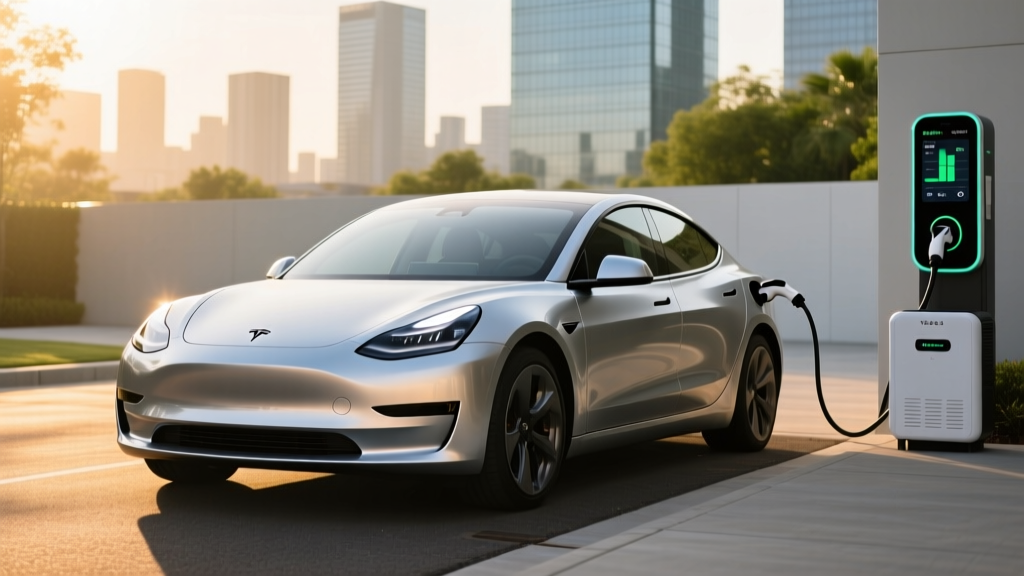
The Model 3 Long Range uses a NACS (North American Charging Standard) connector natively — the same port Tesla has used for years, now adopted by Ford, GM, Rivian, and most major automakers. This gives you seamless access to the entire Supercharger network (over 20,000 stalls in North America as of 2026) without an adapter.
Charging curve reality: The 250 kW peak rate only holds between roughly 10–40% SoC. Above 60%, the rate tapers significantly — expect 80–100 kW in the 60–80% range, and below 50 kW above 90%. This is standard lithium-ion behavior, not a flaw. For road trips, charging from 10% to 80% and driving on is faster than waiting for a full charge.
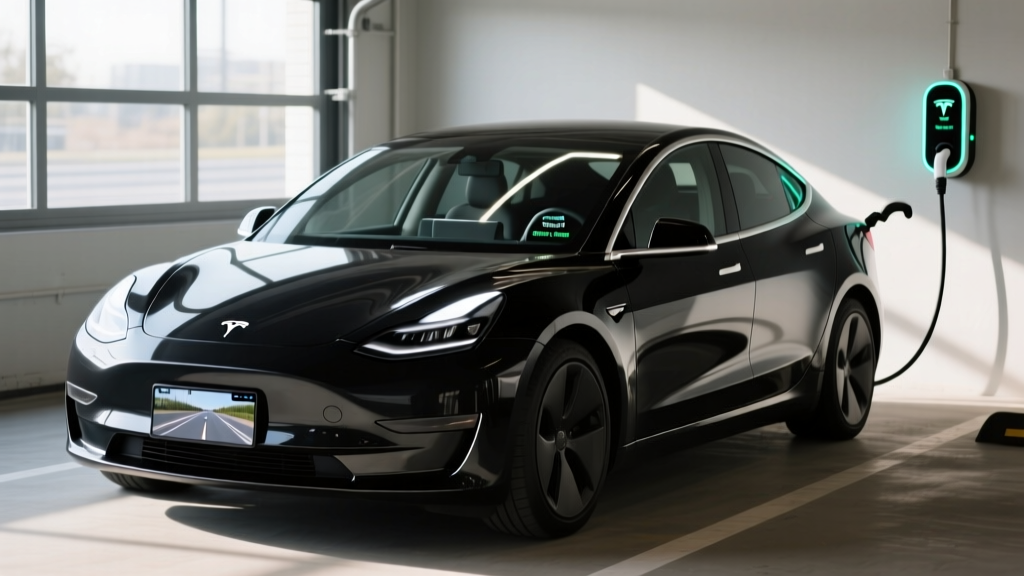
For home Level 2 charging, the Tesla Wall Connector (hardwired, 60A circuit) delivers the full 11.5 kW / 44 mi/hr rate. Installation typically costs $800–$2,000 depending on your electrical panel capacity and run distance. If your panel is at capacity, a 200A service upgrade may add $1,500–$3,000. Always get a quote from a licensed electrician before purchasing equipment.
Pricing, Trim Levels, and Federal Tax Credit Eligibility
| Trim | Base MSRP | Est. After §30D Credit | Drivetrain |
|---|---|---|---|
| Model 3 RWD | $38,990 | ~$31,490* | Rear-Wheel Drive |
| Model 3 Long Range AWD | $47,740 | ~$40,240* | Dual-Motor AWD |
| Model 3 Performance | $54,990 | ~$47,490* | Dual-Motor AWD |
*Estimated prices assume full $7,500 federal tax credit eligibility. Actual credit depends on individual circumstances.
- Buyer income caps: Modified AGI must not exceed $150,000 (single), $225,000 (head of household), or $300,000 (joint filers).
- MSRP cap: Sedans and hatchbacks must have an MSRP at or below $55,000. The Model 3 RWD and Long Range qualify; the Performance trim at $54,990 also qualifies but leaves little room for added options.
- Battery sourcing requirements: Critical minerals and battery components must meet phased-in domestic/free-trade-partner sourcing thresholds. Tesla's supply chain has been adjusting to these requirements — confirm current-year eligibility on IRS.gov before purchasing.
- Point-of-sale transfer: As of 2024, buyers can transfer the credit to the dealer at purchase, reducing the upfront price rather than waiting for a tax refund. Tesla supports this at checkout.
Always consult a tax professional to confirm your personal eligibility. Rules can change, and state-level incentives vary separately from federal credits.
Interior, Cargo, and Technology Overview
The refreshed Model 3 (internally called "Highland" and continuing into 2026 with minor updates) features a minimalist interior dominated by a 15.4-inch center touchscreen. Notable changes from the pre-2024 design include ventilated front seats, ambient lighting, a rear 8-inch touchscreen for passengers, and improved sound insulation that makes the cabin noticeably quieter at highway speeds.
Cargo capacity: 23 cubic feet total (21 cu ft rear trunk + 2 cu ft frunk). The rear trunk opening is narrower than a crossover's liftgate, which limits bulky-item loading. If cargo versatility is a priority, the Model Y offers 76 cu ft with seats folded.
Infotainment: Tesla's proprietary system includes native navigation with real-time Supercharger routing, Spotify/Apple Music integration, Netflix/YouTube/Disney+ for parked viewing, and over-the-air software updates that regularly add features. There is no Apple CarPlay or Android Auto — a dealbreaker for some buyers.
Driver Assistance: Autopilot and FSD (Supervised)
Every Model 3 includes Basic Autopilot (Traffic-Aware Cruise Control and Autosteer on marked highways). The optional Full Self-Driving (Supervised) package ($8,000 one-time or $99/month as of 2026) adds automatic lane changes, Navigate on Autopilot, traffic light and stop sign control, and Autopark.
Who the 2026 Model 3 Suits Best
- Tech-forward commuters who value OTA updates, Supercharger access, and the built-in dash cam/Sentry ecosystem.
- Solo drivers or couples who don't need SUV cargo space.
- Rideshare drivers who benefit from Sentry Mode's parked surveillance (though note the lack of audio recording).
- Road-trippers who rely on the Supercharger network's reliability and route planning.
- You need family SUV space (look at Model Y, Hyundai Ioniq 5, or Kia EV6).
- You require Apple CarPlay/Android Auto.
- You want a traditional dealership experience with local service centers.
- You need towing capacity — the Model 3 is not rated for towing.
Biggest Pros and Cons
Pros
- Best-in-class efficiency (132 MPGe combined)
- Supercharger network — the most reliable DC fast-charging ecosystem in North America
- Built-in dash cam + Sentry Mode eliminate aftermarket hardware needs
- Over-the-air updates continuously improve the vehicle
- Strong resale value relative to non-Tesla EVs
- 363-mile EPA range covers most commutes for a full week without charging
Cons
- No Apple CarPlay or Android Auto
- Dash cam lacks audio recording and is limited to ~720p-equivalent resolution per camera
- Sentry Mode's battery drain (~200–400 Wh/hr) is significant for multi-day parking
- Minimalist interior controls (no physical stalks — turn signals are steering-wheel buttons) take adjustment
- Service center availability varies widely by region
- FSD (Supervised) remains Level 2 despite the "Full Self-Driving" branding
Frequently Asked Questions
Does the Tesla Model 3 come with a dash cam built in?
Yes. Every Model 3 includes Tesla's Dashcam system, which uses the Autopilot cameras to record driving footage. You'll need to supply a USB drive (or purchase Tesla's official 128 GB drive) and create a TeslaCam folder to activate it.
Can Tesla dash cam record while parked?
Yes, through Sentry Mode. When enabled, the cameras monitor the surroundings and save footage if a threat is detected. However, Sentry Mode draws 200–400 Wh per hour, which can reduce range by 20–40 miles over a full day.
Does Tesla dash cam record audio?
No. Tesla's built-in dash cam records video only. If you need audio (for rideshare documentation or incident recording), you'll need a dedicated aftermarket dash cam.
What is the real-world range of the 2026 Model 3 Long Range?
The EPA rates it at 363 miles. Real-world highway driving at 70–75 mph typically yields 290–310 miles. In freezing temperatures, expect 240–270 miles. The onboard heat pump helps but cannot eliminate cold-weather battery losses entirely.
How fast does the Model 3 charge on a Supercharger?
At a V3 Supercharger, the Model 3 Long Range peaks at 250 kW and charges from 10–80% in approximately 27 minutes. The charge rate tapers significantly above 80% — plan to unplug at 80% for the fastest road-trip turnaround.
Does the 2026 Model 3 qualify for the $7,500 federal EV tax credit?
The Model 3 RWD and Long Range AWD trims fall under the $55,000 MSRP cap for sedans and are generally eligible. However, buyer income limits ($150K single / $300K joint), battery-sourcing requirements, and point-of-sale transfer rules all apply. Verify current eligibility on IRS.gov and consult a tax professional.
Is the Model 3 worth buying over the Hyundai Ioniq 6 or BMW i4?
The Model 3 wins on charging infrastructure (Supercharger access), efficiency, and software integration. The Ioniq 6 offers more rear-seat space and CarPlay; the BMW i4 provides a more traditional luxury interior. If the Tesla ecosystem and built-in dash cam/Sentry Mode matter to you, the Model 3 remains the segment benchmark. Cross-shop based on your specific priorities using fueleconomy.gov for efficiency comparisons.
How do I access Tesla dash cam footage?
Tap the Dashcam icon on the touchscreen to view saved clips in the car. To export, remove the USB drive from the glovebox and plug it into a computer. Footage is organized in folders by date, with subfolders for each camera angle (Front, Left Repeater, Right Repeater, Rear).