Why the Tesla Cybertruck Windshield Wiper Gets So Much Attention
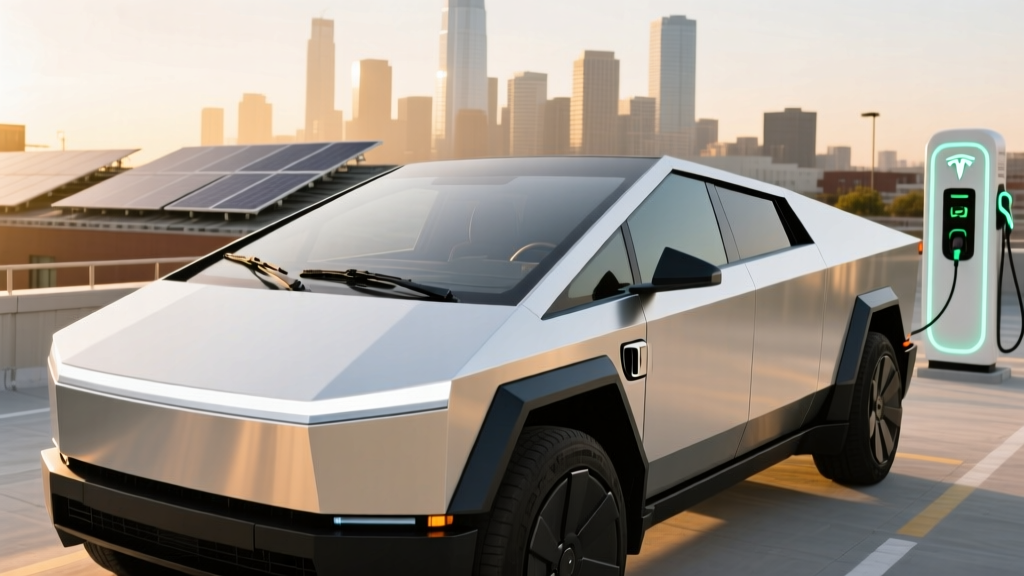
The Tesla Cybertruck's single, massive windshield wiper blade is one of the most debated design choices on any modern vehicle. Spanning nearly the full width of the windshield, the oversized mono-wiper is unlike anything on the road — and it's become shorthand for both the Cybertruck's bold engineering and its polarizing compromises. But beyond the memes and the YouTube deep-dives, how does this electric pickup actually perform where it counts: range, charging speed, towing utility, and day-to-day ownership?
This profile covers every spec a buyer needs to evaluate the 2026 Tesla Cybertruck lineup, from the rear-wheel-drive base model to the tri-motor Cyberbeast, with honest real-world context on what the EPA stickers actually mean on the highway.
Cybertruck Specs at a Glance: Range, Battery, Charging, and Performance
| Spec | RWD (Base) | AWD (Dual-Motor) | Cyberbeast (Tri-Motor) |
|---|---|---|---|
| EPA Range | 250 mi (est.) | 340 mi | 320 mi |
| Battery Capacity | ~100 kWh (est.) | 123 kWh usable (NMC) | 123 kWh usable (NMC) |
| Max DC Fast Charge | ~200 kW | 250 kW (V3 Supercharger) | 250 kW (V3 Supercharger) |
| 10-80% DCFC Time | ~35 min | ~28 min | ~28 min |
| Level 2 Home Charging | 11.5 kW / ~34 mi/hr | 11.5 kW / ~34 mi/hr | 11.5 kW / ~34 mi/hr |
| 0-60 mph | 6.5 sec (est.) | 4.1 sec | 2.6 sec |
| Horsepower | ~315 hp (est.) | 600 hp | 845 hp |
| Drivetrain | RWD single-motor | AWD dual-motor | AWD tri-motor |
| Efficiency | ~2.0 kWh/mi (est.) | 2.0 kWh/mi (66 MPGe) | 2.1 kWh/mi (63 MPGe) |
| Towing Capacity | 7,500 lbs | 11,000 lbs | 11,000 lbs |
| Payload Capacity | 2,500 lbs | 2,500 lbs | 2,500 lbs |
Sources: fueleconomy.gov, Tesla Cybertruck specs. RWD figures are estimates based on pre-delivery data; AWD and Cyberbeast reflect delivered-vehicle EPA testing.
Real-World Range: What the EPA Sticker Doesn't Tell You
The AWD Cybertruck carries a 340-mile EPA range rating, and the Cyberbeast is rated at 320 miles. In real-world driving, expect 270–300 miles on the AWD at highway speeds (70-75 mph) in moderate temperatures. The Cyberbeast's heavier tri-motor setup and more aggressive power delivery typically yield 250–280 highway miles.
Cold-weather impact: In sub-30°F conditions, plan for 20-30% range reduction. The stainless steel exoskeleton offers no thermal insulation benefit, and the large frontal area increases HVAC energy draw. Preconditioning the battery via the Tesla app before departure is essential — it warms the pack and recovers charging speed and range.
Towing penalty: When towing near the 11,000-lb max, range drops dramatically — expect roughly 100-140 miles depending on trailer aerodynamics and terrain. This is the single biggest ownership reality for Cybertruck buyers planning to tow.
Charging Speed: DC Fast Charging and Home Level 2 Setup
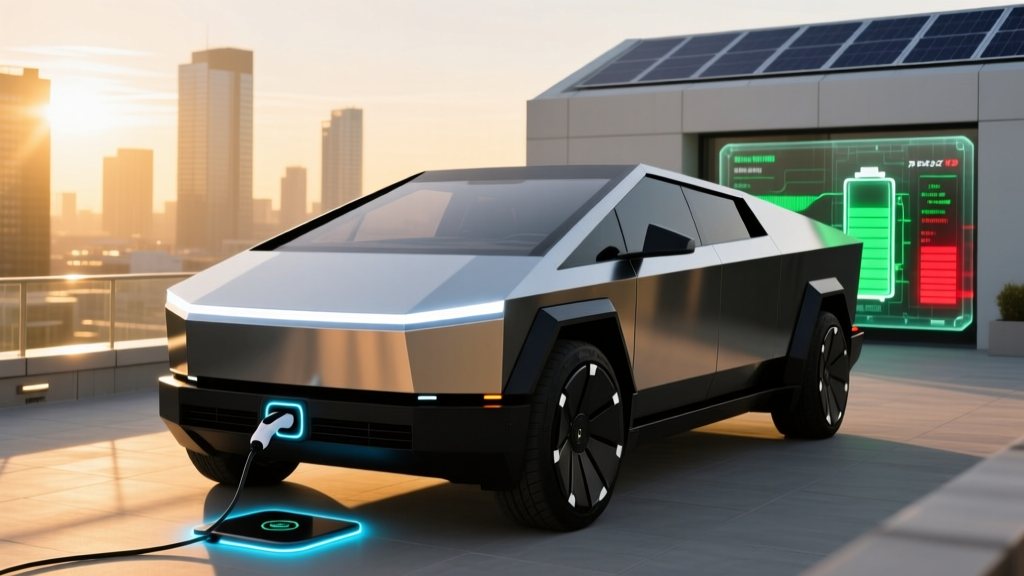
The Cybertruck uses Tesla's NACS (North American Charging Standard) connector natively, giving it seamless access to the Tesla Supercharger network — the most reliable public DC fast-charging infrastructure in the U.S., with over 30,000 stalls nationwide as of 2026.
| Charging Level | Power | Speed (AWD) | Notes |
|---|---|---|---|
| Level 1 (120V outlet) | 1.4 kW | ~4 mi/hr | Emergency/trickle only |
| Level 2 (240V home) | 11.5 kW | ~34 mi/hr | Full charge in ~11 hours; requires 60A circuit |
| DC Fast (V3 Supercharger) | 250 kW peak | 10-80% in ~28 min | Peak rate not sustained; tapers above 60% SoC |
| DC Fast (V4 Supercharger) | Up to 350 kW | 10-80% in ~22 min (est.) | Available at select new stations; Cybertruck may not accept full 350 kW |
Charging curve reality: The 250 kW peak rate applies only between roughly 10-40% state of charge. Above 60%, the rate drops significantly — often below 100 kW. A 10-80% session takes about 28 minutes, but 10-95% will take closer to 50 minutes. This taper is a function of battery chemistry and thermal management, not a Cybertruck-specific flaw, but it matters for road trip planning.
Home charging: Tesla's Wall Connector ($420) on a dedicated 60-amp circuit delivers the full 11.5 kW. Installation typically costs $800–$2,500 depending on panel proximity and whether a 200-amp service upgrade is needed. Always get a quote from a licensed electrician before purchasing equipment.
Pricing, Trims, and Federal Tax Credit Eligibility
| Trim | Base MSRP | As-Tested (typical) | Federal Tax Credit (§30D) |
|---|---|---|---|
| RWD (Base) | $60,990 | $62,490 | Eligibility varies — see below |
| AWD (Dual-Motor) | $79,990 | $84,990 | $0 — exceeds $80K MSRP cap for trucks |
| Cyberbeast (Tri-Motor) | $99,990 | $104,990 | $0 — exceeds $80K MSRP cap for trucks |
Tax credit reality check: Under IRS §30D rules for 2026, the Cybertruck qualifies as a pickup truck, which has an $80,000 MSRP cap for credit eligibility. The AWD at $79,990 sits right at the threshold — but any options, destination charges, or paint upgrades that push the MSRP above $80,000 disqualify it. The Cyberbeast at $99,990 is categorically ineligible.
Additionally, §30D requires:
- Buyer income caps: $150,000 single / $300,000 joint modified AGI
- Battery sourcing: Critical minerals and battery components must meet escalating domestic-content percentages (80% critical minerals, 100% battery components for 2026 model year)
- Point-of-sale transfer: Eligible buyers can apply the credit as a discount at purchase rather than waiting for tax filing
The base RWD model at $60,990 is the most likely candidate for the credit, but battery sourcing compliance for 2026 production runs must be confirmed at time of purchase. Always verify current eligibility on IRS.gov before committing.
Cargo, Passenger Space, and the Windshield Wiper Design
The Cybertruck's dimensions are unconventional, and that extends to the cabin and bed:
- Bed length: 6 feet (72 inches) with the tonneau cover closed; the vault-style bed is fully enclosed
- Bed volume: 67 cu ft
- Frunk (front trunk): ~7 cu ft — small but useful for charging cables and groceries
- Front legroom: 41.5 inches
- Rear legroom: 38.0 inches — adequate for adults on shorter trips, tight for long hauls
- Seating: 6-passenger (bench front seat in some trims) or 5-passenger (bucket seats)
The windshield wiper: The single oversized blade sweeps the enormous glass area in one pass. Tesla's rationale is aerodynamic efficiency and simplicity — fewer moving parts, less drag. In practice, it clears the windshield effectively in rain, though some owners report streaking at the outer edges during heavy downpours. Replacement blades are proprietary and must be sourced through Tesla, which adds cost and limits third-party options. The wiper's size also makes it a visual focal point that draws attention — for better or worse.
Driver Assistance, Tech, and What the Cybertruck Can't Do
Tesla's Autopilot and Full Self-Driving (Supervised) are SAE Level 2 driver-assistance systems. The driver must remain attentive, keep hands on the steering yoke, and be prepared to take over at any moment. The Cybertruck is not autonomous. Only Level 4 services like Waymo operate without a driver engaged.
Infotainment: The 18.5-inch center touchscreen controls virtually every vehicle function — climate, navigation, media, vehicle settings, and even a built-in gaming system. There is no traditional instrument cluster; all driving information is displayed on the center screen. The rear passengers get a dedicated 9.4-inch touchscreen for climate and entertainment.
Notable tech features:
- Steer-by-wire system (no mechanical connection between yoke and wheels) with variable ratio
- 48-volt electrical architecture — a first for a production vehicle at this scale
- Stainless steel exoskeleton with no paint (clear-coated raw steel)
- Adaptive air suspension with up to 16 inches of ground clearance
- Bioweapon Defense Mode (HEPA air filtration)
- Steer-by-wire requires an adjustment period — some drivers find the yoke unintuitive at low speeds
- No Apple CarPlay or Android Auto — Tesla's proprietary OS only
- Build quality variability remains a concern; panel gaps and trim alignment have improved but aren't class-leading
- The stainless steel body shows fingerprints and water spots readily
- Insurance premiums are significantly higher than comparable pickups (often 40-60% above F-150 Lightning)
Who Should Buy the Cybertruck — and Who Shouldn't
Best for: Tech-forward buyers who want a statement vehicle with genuine truck utility, strong Supercharger network access for road trips, and the performance of a sports car in a pickup body. The AWD trim offers the best balance of range, capability, and price.
Think twice if: You need maximum towing range (the Ford F-150 Lightning and Rivian R1T offer better tow-range profiles), you prefer traditional controls and physical buttons, you need a conventional truck bed for commercial use, or your budget can't absorb the insurance premium.
Frequently Asked Questions
What is the real-world range of the Tesla Cybertruck?
The AWD delivers roughly 270–300 highway miles in moderate weather, compared to its 340-mile EPA rating. Cold weather and towing cut range substantially — plan for 200-220 miles in winter highway driving and 100-140 miles when towing heavy loads.
How fast does the Cybertruck charge at home and on the road?
On a Level 2 home charger (11.5 kW), expect about 34 miles of range per hour, with a full charge taking roughly 11 hours. On a V3 Supercharger at 250 kW peak, a 10-80% session takes about 28 minutes, though the rate tapers significantly above 60% state of charge.
Does the Cybertruck qualify for the $7,500 federal EV tax credit?
Only the base RWD model at $60,990 MSRP is clearly eligible, and only if the buyer meets income caps ($150K single / $300K joint), the battery meets 2026 sourcing requirements, and the vehicle is purchased new. The AWD at $79,990 is borderline — any options that push MSRP above $80,000 disqualify it. The Cyberbeast at $99,990 is ineligible due to the truck MSRP cap. Verify on IRS.gov before purchasing.
Is the Cybertruck worth buying over the Ford F-150 Lightning or Rivian R1T?
It depends on priorities. The F-150 Lightning offers a more conventional truck experience, better towing range, and lower insurance costs. The Rivian R1T provides superior off-road capability and a more refined interior. The Cybertruck wins on Supercharger network access, raw performance (2.6-sec 0-60 in Cyberbeast), and head-turning design — but sacrifices traditional usability and comes with higher ownership costs.
What are the biggest pros and cons of owning a Cybertruck?
Pros: Supercharger access, tri-motor performance, stainless steel durability, 48V architecture, distinctive design, strong over-the-air update cadence.
Cons: High insurance premiums, polarizing ergonomics (yoke, no instrument cluster), limited towing range, proprietary wiper and parts, build quality inconsistency, no CarPlay/Android Auto.
How does the oversized windshield wiper perform?
The single mono-wiper clears the massive windshield adequately in normal rain. In heavy downpours, some owners note streaking at the outer sweep edges. Replacement blades are Tesla-proprietary, which means higher cost and no auto-parts-store convenience. It's a functional design choice, but one that adds to the Cybertruck's maintenance uniqueness.