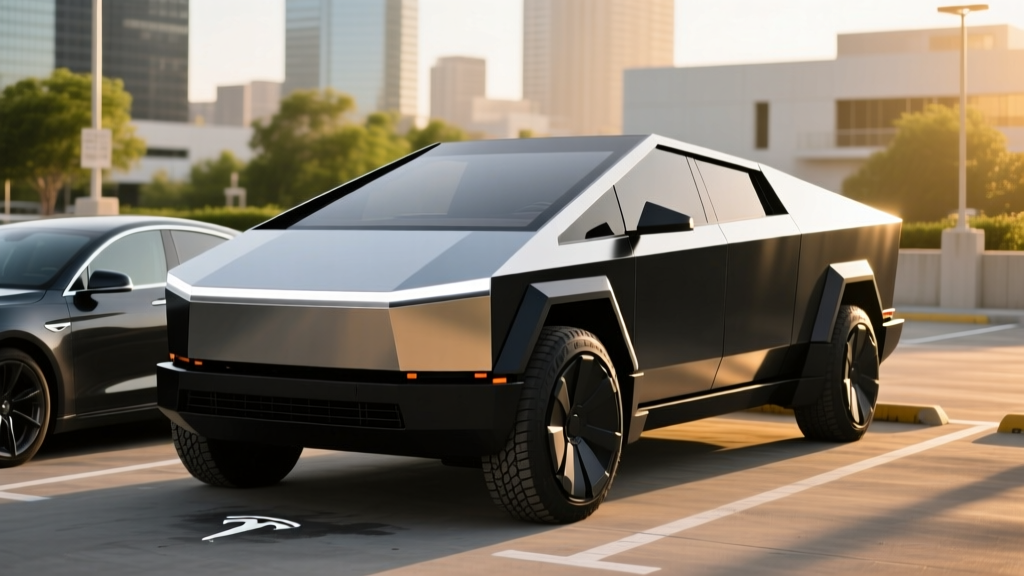
The Tesla Cybertruck is one of the most polarizing vehicles on the road, but beneath the stainless-steel exoskeleton lies a serious engineering challenge: mass. If you've been asking how heavy is a Cybertruck, the answer has real implications for range, tire wear, charging times, and even which tax credits you can claim. This review unpacks the curb weight of every current Cybertruck trim and explains exactly what that weight means for your daily driving, road trips, and wallet in the 2025 model year.
Cybertruck Curb Weight by Trim: The Numbers
Tesla offers the Cybertruck in three configurations for 2025, and weight varies significantly depending on the powertrain. Here's how they stack up on the scale:
| Trim | Drivetrain | Curb Weight (lbs) | GVWR (lbs) | Payload Capacity |
|---|---|---|---|---|
| Rear-Wheel Drive (RWD) | Single Motor | ~6,603 | ~8,500 | ~1,897 |
| All-Wheel Drive (AWD) | Dual Motor | ~6,843 | ~8,800 | ~1,957 |
| Cyberbeast | Tri-Motor AWD | ~6,887 | ~8,900 | ~2,013 |
For context, a Ford F-150 Lightning Extended Range weighs roughly 6,370 lbs, and a Rivian R1T Dual-Motor Large Pack comes in around 7,148 lbs. The Cybertruck sits squarely in the heavy-duty EV truck segment, though its angular, cold-rolled stainless-steel body panels contribute more to its curb weight than you might expect compared to aluminum-bodied competitors.
Why does this matter? Mass is the enemy of efficiency. Every additional pound requires more energy to accelerate, more energy to sustain highway speeds, and more energy to stop. The Cybertruck's weight directly shapes its EPA range, its MPGe rating, and how quickly it burns through charge on a road trip.
EPA Range vs. Real-World Expectations
Cybertruck AWD: EPA est. 340 miles | Real-world highway: ~280–300 miles | Cold-weather (below 32°F): ~230–260 miles
Cyberbeast: EPA est. 320 miles | Real-world highway: ~260–285 miles | Cold-weather: ~215–245 miles
RWD (est.): EPA est. ~350+ miles (when available) | Real-world highway: ~290–315 miles
The Cybertruck's battery pack is estimated at approximately 123 kWh usable (roughly 130 kWh gross), using Tesla's latest NMC (nickel manganese cobalt) 4680 cells manufactured at Giga Texas. The large pack is necessary to move nearly 7,000 lbs of vehicle, and efficiency reflects that.
On the EPA's fueleconomy.gov listings, the AWD Cybertruck achieves a combined 79 MPGe, which translates to roughly 42–44 kWh per 100 miles. That is significantly thirstier than a Tesla Model Y Long Range (~28 kWh/100mi) or even the Ford F-150 Lightning (~41 kWh/100mi combined). The Cybertruck's brick-like aerodynamic profile — a drag coefficient estimated around 0.34–0.38 — compounds the weight penalty at highway speeds above 65 mph.
If you live in a cold climate, expect a 20–30% reduction from EPA range during winter months. The stainless-steel body doesn't insulate as well as traditional steel or aluminum, and while the heat pump helps, the sheer energy demand of heating a large cabin and warming the battery pack takes a toll.
Charging Speed: DC Fast and Home Level 2
Charging a 123 kWh battery is a time commitment. Here's what Cybertruck owners should actually expect:
| Charging Method | Power (kW) | Speed | Notes |
|---|---|---|---|
| DC Fast Charge (Peak) | ~250 kW | 10–80% in ~35 min | Peak only sustained briefly; tapers above 60% SoC |
| Tesla Supercharger V4 | ~350 kW (capable) | 10–80% in ~28–32 min | Cybertruck currently limited to ~250 kW acceptance |
| Home Level 2 (Wall Connector) | 11.5 kW (48A) | ~37 miles/hr of charge | Full charge in ~11–12 hours |
| Home Level 2 (40A circuit) | 9.6 kW | ~31 miles/hr of charge | Common for older installations |
| Level 1 (120V outlet) | ~1.4 kW | ~4–5 miles/hr of charge | Emergency/trickle only |
The Cybertruck supports the NACS (North American Charging Standard) connector natively — it is a Tesla, after all — so it accesses the full Supercharger network without adapters. The 4680 cells accept a peak charge rate around 250 kW, though the charge curve tapers aggressively past 60% state of charge. On a road trip, plan for 25–30 minute stops at Superchargers when arriving at 10–15% SoC.
At home, Tesla's Wall Connector on a 60-amp circuit delivers up to 11.5 kW, which adds roughly 37 miles of range per hour. A full overnight charge from 20% to 100% takes about 10–11 hours — adequate for daily commuting but something to plan for if you're returning from a long trip with a depleted pack.
Pro tip: Set your daily charge limit to 80% to preserve long-term battery health with NMC chemistry. Only charge to 100% before road trips. Unlike LFP batteries, NMC cells degrade faster when held at full state of charge for extended periods.
Performance: 0-60, Horsepower, and Drivetrain
| Trim | Horsepower | Torque (lb-ft) | 0-60 mph | Top Speed | Towing Capacity |
|---|---|---|---|---|---|
| RWD | ~315 hp | ~420 | ~6.5 sec (est.) | 112 mph | 7,500 lbs |
| AWD | ~600 hp | ~740 | 3.9 sec | 130 mph | 11,000 lbs |
| Cyberbeast | ~845 hp | ~740 | 2.6 sec | 130 mph | 11,000 lbs |
The Cyberbeast's 2.6-second 0-60 time is staggering for a vehicle weighing nearly 6,900 lbs — that's supercar territory in a truck body. The tri-motor setup uses two rear motors and one front motor with torque vectoring for the rear axle. The AWD dual-motor is the volume seller and offers more than enough performance for real-world use while preserving slightly better range.
All trims feature an adaptive air suspension with up to 12 inches of ground clearance in Off-Road mode (standard ride height is approximately 9.5 inches). The steer-by-wire system — a production first for a US-market vehicle — eliminates the mechanical connection between the steering yoke and the wheels, offering variable steering ratios that reduce lock-to-lock turns at low speeds.
Interior, Cargo, and Tech
The Cybertruck's cabin is minimal and futuristic, anchored by an 18.5-inch touchscreen that controls virtually all vehicle functions. A rear 9.4-inch touchscreen serves second-row passengers. The yoke-style steering wheel takes genuine adaptation — plan for a learning curve of at least a week of daily driving.
Dimensions and space:
- Bed length: 6 feet (with tailgate closed); ~7 feet with tailgate down
- Cargo bed volume: ~67 cu ft (bed) + ~14 cu ft (frunk)
- Front legroom: ~41.3 inches
- Rear legroom: ~38.2 inches
- Seating: 5 passengers (bench-style front with fold-down center armrest)
The motorized tonneau cover is lockable and supports up to 300 lbs of distributed weight. The 120V and 240V bed outlets (up to 9.6 kW of exportable power) make the Cybertruck a legitimate mobile generator for job sites or camping — a feature Tesla calls "Powershare."
Driver assistance: The Cybertruck ships with Tesla's basic Autopilot (adaptive cruise, lane centering) and offers Full Self-Driving (Supervised) as a $8,000 option or $99/month subscription. FSD remains an SAE Level 2 system — you must keep your hands on the yoke and eyes on the road at all times. It is not autonomous driving.
Pricing, Trims, and Federal Tax Credit Eligibility
| Trim | Base MSRP | As-Tested (Typical) | Federal Credit Eligible? |
|---|---|---|---|
| RWD (est. 2025–2026) | ~$60,990 | ~$62,000 | Likely — under $80K MSRP cap* |
| AWD | $79,990 | $85,000–$92,000 | Borderline — MSRP under cap, options may push over |
| Cyberbeast | $99,990 | $105,000–$115,000 | No — exceeds $80,000 truck MSRP cap |
The IRS §30D federal tax credit offers up to $7,500 for qualifying new EVs, but the rules are strict for trucks:
- MSRP cap for trucks/pickups: $80,000 (base MSRP before dealer add-ons)
- Buyer income limits: $150,000 single / $225,000 head of household / $300,000 joint (modified AGI)
- Battery sourcing: Critical minerals and battery components must meet phased percentage thresholds from US or FTA-partner countries (increasing annually through 2027)
- Point-of-sale transfer: Eligible buyers can apply the credit as a down-payment reduction at the dealer rather than waiting for tax filing
- Final assembly: Must occur in North America (Cybertruck is built in Austin, TX ✓)
Bottom line: The RWD Cybertruck is the most likely trim to qualify for the full $7,500 credit when it enters broader production. The AWD at $79,990 MSRP is right at the cap — if you add FSD or other options that increase MSRP, you may exceed the threshold. The Cyberbeast does not qualify. Always verify current eligibility on fueleconomy.gov's tax credit tool before purchasing, as battery-sourcing rules tighten annually.
Warranty and Long-Term Ownership
Tesla covers the Cybertruck with:
- Basic vehicle warranty: 4 years / 50,000 miles
- Battery and drive unit warranty: 8 years / 120,000 miles (AWD & Cyberbeast), with a minimum 70% capacity retention guarantee
- RWD battery warranty: 8 years / 100,000 miles (estimated, consistent with Tesla's other RWD models)
The 4680 cells are structurally integrated into the vehicle's chassis (what Tesla calls a "structural battery pack"), which improves rigidity but makes individual cell replacement impractical. If a battery pack fails out of warranty, replacement costs are estimated at $15,000–$25,000+ based on current Tesla service pricing for large packs. This is a significant long-term ownership risk to budget for.
Tire costs are another weight-related expense: the Cybertruck uses 35×8.50R20 all-terrain tires (unique size), and replacement sets run $1,600–$2,400. Heavier vehicles wear tires faster, and the Cybertruck's instant torque compounds that wear.
Pros and Cons
- Class-leading performance: 2.6-sec 0-60 (Cyberbeast) in a truck
- Stainless-steel body is dent- and corrosion-resistant
- 9.6 kW Powershare vehicle-to-load (V2L) capability
- Full Supercharger network access (NACS native)
- 11,000-lb towing capacity (AWD/Beast)
- Steer-by-wire reduces parking effort in a large vehicle
- Nearly 6,900 lbs — hurts efficiency and range
- Real-world highway range 15–20% below EPA sticker
- Cyberbeast and optioned AWD exceed $80K tax-credit cap
- Yoke steering and minimal controls have steep learning curve
- Unique tire size is expensive and limits aftermarket options
- Build quality inconsistencies reported in early production units
- Visibility compromised by thick A-pillars and small rear window
Who Should Buy the Cybertruck?
- You want a high-performance electric truck for towing (up to 11,000 lbs) and need Powershare for job-site power
- You have reliable home Level 2 charging and a daily commute under 200 miles round-trip
- You value the Supercharger network for road trips over CCS-dependent competitors
- You're drawn to the Cybertruck's design and willing to adapt to the yoke and touchscreen-first interface
- You need maximum efficiency — the Rivian R1T and Ford F-150 Lightning are lighter and more efficient per mile
- You want a conventional steering wheel and physical controls (consider the F-150 Lightning or Chevy Silverado EV)
- You regularly drive in extreme cold — the range penalty is severe on a heavy, stainless-steel truck
- Budget is a priority — the RWD trim at ~$61K is the only affordable entry point and has limited availability
Frequently Asked Questions
How heavy is a Cybertruck compared to a gas F-150?
The Cybertruck AWD weighs approximately 6,843 lbs, while a comparable gas-powered Ford F-150 4×4 SuperCrew weighs around 4,800–5,200 lbs. That's roughly 1,600–2,000 lbs heavier, primarily from the battery pack. The F-150 Lightning Extended Range (~6,370 lbs) is a closer comparison.
Does the Cybertruck's weight hurt its range?
Yes. The ~6,800-lb curb weight combined with a high drag coefficient means real-world highway range falls 15–20% below the EPA estimate. Expect ~280–300 highway miles from the AWD trim in moderate weather, and as little as ~230 miles in sub-freezing temperatures.
What is the real-world range of the Cybertruck?
In mixed driving at highway speeds of 70–75 mph, owners report 280–300 miles from the AWD (EPA 340) and 260–285 miles from the Cyberbeast (EPA 320). City driving with regenerative braking can push closer to EPA figures. Cold weather reduces range by an additional 20–30%.
How fast does the Cybertruck charge?
At a Tesla Supercharger, the Cybertruck peaks around 250 kW and charges from 10–80% in approximately 35 minutes. At home on a Level 2 Wall Connector (11.5 kW), expect about 37 miles of range per hour, or a full charge in roughly 11 hours.
Does the Cybertruck qualify for the $7,500 federal tax credit?
The RWD (~$60,990 MSRP) likely qualifies if you meet income requirements. The AWD at $79,990 is at the $80,000 truck cap — adding FSD or certain options may push it over. The Cyberbeast at $99,990 does not qualify. Battery-sourcing rules also apply and tighten annually. Check the IRS §30D page for current rules.
Is the Cybertruck worth buying over the F-150 Lightning or Rivian R1T?
If Supercharger access, performance, and V2L power export are priorities, the Cybertruck is compelling. If you prioritize efficiency, conventional controls, and a proven service network, the F-150 Lightning or R1T may be more practical. Test drive all three — the Cybertruck's yoke and minimal interface are dealbreakers for some buyers.
What battery chemistry does the Cybertruck use?
The Cybertruck uses NMC (nickel manganese cobalt) 4680-format cells. NMC offers higher energy density than LFP but requires more careful charge management — Tesla recommends daily charging to 80% and only charging to 100% for trips.