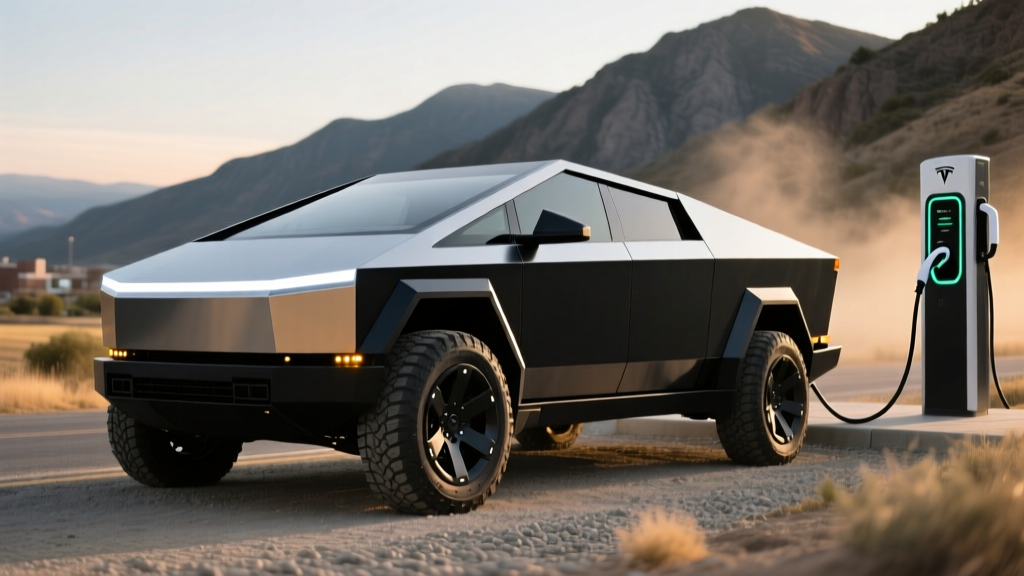
The Tesla Cybertruck has never been a conventional pickup, and the enthusiast-dubbed "Warthog" configuration — referring to the Cybertruck equipped with the off-road armor package, all-terrain tires, and dual-motor AWD powertrain — leans harder into rugged utility than any other variant Tesla currently produces. While "Warthog" isn't an official Tesla trim name, it has become the community shorthand for a Cybertruck spec'd for trail use and heavy-duty work, combining the angular stainless-steel exoskeleton with serious ground clearance and tow capacity. This review breaks down exactly what you get, what it costs, and whether the real-world numbers match the spec sheet.
Quick Verdict: Who the Cybertruck Warthog Is For
The Warthog-configured Cybertruck is best suited for buyers who want an electric pickup that can tow a trailer on weekends, handle light-to-moderate off-road trails, and still serve as a daily driver with access to Tesla's Supercharger network. It is not the most comfortable highway cruiser in the EV truck segment — the Rivian R1T and Chevrolet Silverado EV both ride more compliantly — but its stainless-steel body, 48-volt electrical architecture, and steer-by-wire system make it genuinely unique. If you need a work-capable EV truck and can tolerate a firm ride and a steep learning curve with the touchscreen-centric controls, the Warthog setup delivers capability that's hard to match.
Range, Battery, and Real-World Efficiency
Real-World Expectation: ~255–280 miles on highway road trips at 70–75 mph; ~220–245 miles in sustained cold weather (below 30°F) with cabin heating and all-terrain tires. The off-road tire package adds rolling resistance that costs roughly 8–12% efficiency versus the standard highway tire spec.
The Cybertruck Dual Motor AWD — the powertrain most commonly configured in the "Warthog" setup — uses an estimated 123 kWh battery pack (usable capacity). Tesla has not published official chemistry details, but industry teardowns and supply-chain reporting indicate the pack uses NMC (nickel manganese cobalt) cells in a structural 4680 format. NMC offers higher energy density than LFP, which is necessary given the Cybertruck's 6,600+ lb curb weight and large frontal area.
| Spec | Value |
|---|---|
| EPA Range | 318 miles (Dual Motor AWD) |
| Battery (usable, est.) | ~123 kWh, NMC 4680 cells |
| Efficiency | 56 MPGe combined / 58 kWh/100 mi |
| 0–60 mph | 3.9 seconds (Dual Motor) |
| Horsepower | 600 hp (Dual Motor AWD) |
| Drivetrain | Dual-motor AWD |
| Max Tow Capacity | 11,000 lbs |
| Ground Clearance (max) | 17.4 inches (Extract Mode) |
| Bed Length | 6 ft (72 in) composite bed |
| Cargo Volume (bed) | ~67 cu ft |
| Frunk | 7.1 cu ft (lockable, drainable) |
| Seating | 5 passengers, 60/40 rear fold |
| Rear Legroom | 38.2 inches |
| Base MSRP (Dual Motor AWD) | $79,990 |
| As-Tested (Warthog config est.) | ~$89,000–$93,000 |
| Battery Warranty | 8 years / 120,000 miles (min 70% retention) |
| Basic Vehicle Warranty | 4 years / 50,000 miles |
Efficiency in the Cybertruck is inherently compromised by its brick-like aerodynamics. At 58 kWh per 100 miles, it consumes significantly more energy per mile than a Tesla Model Y (~27 kWh/100 mi) or even the Rivian R1T (~48 kWh/100 mi). That translates to higher charging costs on road trips and fewer miles added per minute at a DC fast charger. Plan accordingly if you drive long highway stretches regularly.
Charging Speed: DC Fast, Level 2, and the 400V Reality
The Cybertruck uses a 400-volt architecture (not 800V like the Hyundai Ioniq 5 or Porsche Taycan), which caps its peak DC fast-charge rate. Tesla rates the Cybertruck at a maximum of 250 kW peak on V3 Superchargers and compatible CCS/NACS DC stations.
| Charging Level | Power | Speed / Time |
|---|---|---|
| Level 1 (120V household) | ~1.4 kW | ~3 miles per hour |
| Level 2 (240V, 48A Wall Connector) | 11.5 kW | ~34 miles per hour; full charge in ~11 hrs |
| Level 2 (240V, 32A mobile) | 7.7 kW | ~23 miles per hour |
| DC Fast (NACS Supercharger V3) | Up to 250 kW peak | 10–80% in ~32 minutes |
| DC Fast (sustained avg 10–80%) | ~140 kW avg | Charge curve tapers significantly above 60% SoC |
The charge curve is the critical detail most spec sheets omit. The Cybertruck hits its 250 kW peak only briefly, typically between 10–25% State of Charge. From 25% to 60%, it sustains roughly 150–180 kW, then tapers to under 80 kW above 70% SoC. The net result: a 10–80% session takes approximately 32 minutes at a V3 Supercharger, which is competitive but not class-leading. The Rivian R1T (with its 800V-capable Max pack) can complete the same session in roughly 25 minutes.
For home charging, Tesla's Wall Connector at 48 amps (11.5 kW) is the practical choice. A full overnight charge from 20% to 100% takes about 9–11 hours. Note that installing a 60-amp circuit for a Wall Connector typically requires a 200-amp electrical panel — if your home has a 100-amp panel, a $1,500–$3,000 upgrade may be necessary before installation. Always consult a licensed electrician for final specifications.
Performance and Drivetrain
The Dual Motor AWD Cybertruck produces 600 horsepower and reaches 60 mph in 3.9 seconds — genuinely quick for a 6,600-lb truck. The Cyberbeast tri-motor variant drops that to 2.6 seconds and 845 hp, but the Warthog community configuration typically centers on the Dual Motor for its balance of range and capability.
The steer-by-wire system is the most polarizing feature. There is no mechanical connection between the yoke (or optional round wheel) and the front axle. At low speeds, the ratio is extremely quick — lock-to-lock requires less than a full turn — which makes parking and tight trails manageable despite the truck's 223.7-inch length. At highway speeds, the system firms up and feels stable, but drivers accustomed to traditional steering will need an adjustment period of roughly 50–100 miles before it feels natural.
Adaptive air suspension offers up to 17.4 inches of ground clearance in Extract Mode (for obstacle clearance at very low speeds), dropping to 13.3 inches in standard ride height. Approach, departure, and breakover angles are competitive with body-on-frame trucks when in Extract Mode, though the Cybertruck's unibody construction and low-hanging battery pack mean you should avoid high-speed rock crawling.
Pricing, Trims, and Federal Tax Credit Eligibility
| Trim / Config | Base MSRP | Est. Warthog Build | §30D Credit Eligible? |
|---|---|---|---|
| RWD (Long Range) | $60,990 | N/A | Likely yes (MSRP under $80K cap) |
| Dual Motor AWD | $79,990 | ~$89,000–$93,000 | Borderline — base MSRP qualifies; options push above $80K cap |
| Cyberbeast (Tri-Motor) | $99,990 | $105,000+ | No (exceeds $80K MSRP cap for trucks) |
The federal EV tax credit under IRS §30D offers up to $7,500 for qualifying new EVs, but eligibility for the Cybertruck Warthog configuration is complicated:
- MSRP Cap: Trucks, SUVs, and vans must have an MSRP at or below $80,000. The Dual Motor AWD base MSRP of $79,990 clears this threshold, but adding the off-road armor package, all-terrain tires, and other accessories pushes the total above $80,000 — potentially disqualifying the build.
- Buyer Income Limits (2026): Modified adjusted gross income must not exceed $150,000 (single), $225,000 (head of household), or $300,000 (married filing jointly).
- Battery Sourcing: A percentage of critical minerals and battery components must be sourced from the U.S. or free-trade-agreement countries. Tesla's 4680 cell supply chain has been evolving — confirm current-year sourcing compliance at fueleconomy.gov before purchasing.
- Point-of-Sale Transfer: If eligible, you can transfer the credit to the dealer at purchase, reducing the purchase price directly rather than waiting for a tax refund.
Because the §30D rules are subject to change and battery-sourcing requirements tighten annually, consult a tax professional and verify eligibility on the IRS website before finalizing your order.
Tech, Interior, and Daily Usability
The Cybertruck interior is minimalist even by Tesla standards. An 18.5-inch touchscreen handles virtually all vehicle controls — there are no physical buttons for climate, media, or even the glovebox (which opens via the screen or voice command). The front row gets two wireless charging pads, USB-C ports, and a 15-speaker audio system. The rear seat offers a 9.4-inch touchscreen for passengers, which is a thoughtful addition for family duty.
Driver Assistance: The Cybertruck ships with Tesla's Enhanced Autopilot (adaptive cruise, lane-keeping, auto lane change). Full Self-Driving (Supervised) is available as a $8,000 option or $99/month subscription. Per NHTSA's SAE classification, both Autopilot and FSD Supervised are Level 2 systems — the driver must remain fully engaged and is legally responsible for the vehicle at all times. This is not self-driving.
Unique tech features include Powershare — the Cybertruck's built-in 240V and 120V outlets (up to 11.5 kW output) that can power tools at a job site or serve as backup home power during an outage. The stainless-steel exoskeleton eliminates the need for paint (and its associated chip/scratch concerns), though it does show fingerprints and can dent under extreme impact.
Notable drawbacks: The bed is only 6 feet long — shorter than most full-size trucks — and the tonneau cover, while motorized and lockable, limits vertical cargo height. Visibility is compromised by the angular A-pillars and the lack of a rear windshield (a camera-based rearview mirror replaces it). Wind noise at highway speeds is higher than in the Rivian R1T or Ford F-150 Lightning due to the flat-panel stainless-steel construction.
Pros and Cons
Pros
- Stainless-steel body resists scratches, dents, and corrosion — no paint to chip
- 11,000-lb tow rating and 11.5 kW Powershare for job-site and backup use
- Access to Tesla Supercharger network (17,000+ stalls in North America)
- 0–60 in 3.9 seconds — quicker than most sports sedans, let alone trucks
- Steer-by-wire enables an extremely tight turning circle for a full-size truck
- Adaptive air suspension with Extract Mode for serious ground clearance
Cons
- 58 kWh/100 mi efficiency means higher charging costs and fewer road-trip miles per stop
- 32-minute 10–80% DC charge is adequate but trails 800V competitors
- Firm ride quality on rough pavement; not as refined as Rivian R1T or Silverado EV
- 6-foot bed is short for a full-size truck; payload and vertical cargo are limited
- Steer-by-wire and yoke require a significant adaptation period
- Tax credit eligibility is uncertain for optioned-up Warthog builds above $80K MSRP
Warthog Cybertruck vs. the Competition
Against the Rivian R1T Dual-Motor Max (EPA 410 mi, ~$87,000), the Cybertruck offers more raw towing capacity (11,000 vs. 7,700 lbs) and Supercharger access, but the R1T delivers better ride comfort, a longer bed with the Gear Tunnel, and faster 800V charging. Against the Ford F-150 Lightning Extended Range (EPA 320 mi, ~$72,000), the Cybertruck is quicker and more off-road capable, but the Lightning offers a more traditional truck experience, a larger 5.5-foot bed (with a 72-inch option on some trims), and Pro Power Onboard at a lower price point. The Chevrolet Silverado EV 4WT (EPA 440 mi) leads the segment in range but targets fleet buyers first and lacks the Cybertruck's performance credentials.
If towing and off-road capability are your top priorities and you value the Tesla charging ecosystem, the Warthog-configured Cybertruck is the strongest choice. If daily comfort, range, or a traditional truck layout matter more, the R1T or Lightning deserve serious consideration.
Frequently Asked Questions
What is the real-world range of the Cybertruck Warthog configuration?
The EPA rates the Dual Motor AWD Cybertruck at 318 miles. In real-world highway driving at 70–75 mph with all-terrain tires, expect roughly 255–280 miles. In cold weather (below 30°F) with cabin heating, plan for 220–245 miles. Towing a trailer will reduce range further — typically by 30–50% depending on trailer weight and aerodynamics.
How fast does the Cybertruck charge at home and on the road?
At home on a Level 2 Tesla Wall Connector (48A, 11.5 kW), you gain about 34 miles per hour — a full overnight charge takes roughly 11 hours. On a V3 Supercharger (250 kW peak DC), a 10–80% session takes approximately 32 minutes. The charge curve tapers significantly above 60% State of Charge, so the last 20% is considerably slower.
Does the Cybertruck Warthog qualify for the $7,500 federal EV tax credit?
It depends on your build. The base Dual Motor AWD MSRP of $79,990 falls under the $80,000 truck cap, but adding the off-road armor package and accessories can push the MSRP above $80,000, disqualifying the vehicle. You must also meet IRS income limits ($300K married filing jointly, $150K single) and the vehicle must meet battery-sourcing requirements. Verify current eligibility at irs.gov and consult a tax professional.
Is the Cybertruck worth buying over the Rivian R1T or F-150 Lightning?
If you prioritize towing capacity (11,000 lbs), off-road ground clearance (17.4 in), and access to Tesla's Supercharger network, the Cybertruck Warthog configuration is worth the premium. If ride comfort, interior refinement, or a longer bed matter more, the Rivian R1T and F-150 Lightning are strong alternatives at similar or lower prices.
What is the battery warranty on the Cybertruck?
Tesla covers the Cybertruck battery and drive unit for 8 years or 120,000 miles, whichever comes first, with a minimum 70% capacity retention guarantee. If the battery degrades below 70% State of Health within the warranty period, Tesla will repair or replace it. The basic vehicle warranty is 4 years / 50,000 miles.
Can the Cybertruck power my home during an outage?
Yes, with the Powershare system. The Cybertruck can output up to 11.5 kW through its 240V and 120V outlets, which is enough to run essential home circuits (refrigerator, lights, HVAC fan) for several days depending on usage. A Tesla Powerwall or compatible transfer switch is recommended for whole-home backup integration.