Tesla Cybertruck Warranty Exclusions: The Fine Print Every Buyer Must Read
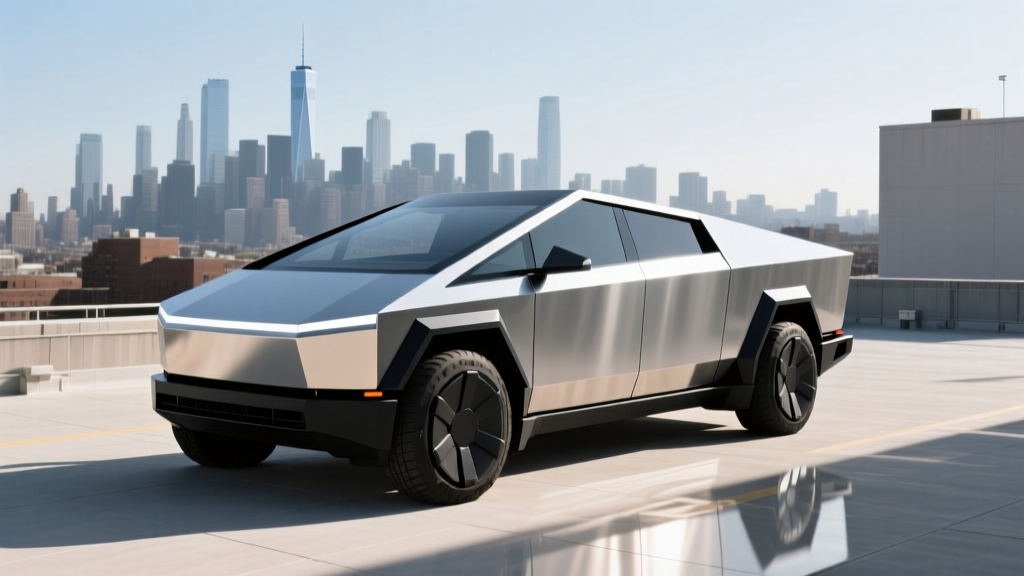
The Tesla Cybertruck remains one of the most polarizing electric vehicles on the road. Its stainless-steel exoskeleton, steer-by-wire system, and 48-volt architecture set it apart from every other pickup — but its warranty coverage is equally unconventional. If you're researching a Tesla Cybertruck warranty exclusion before signing a purchase agreement, you've come to the right place. This review dissects exactly what Tesla covers, what it doesn't, and how the Cybertruck's real-world specs stack up against the warranty promises.
We'll also run through the full ownership picture: EPA range versus what you'll actually see, DC fast-charging speeds, home charging logistics, pricing across all three trims, federal tax credit eligibility under current IRS §30D rules, and whether the Cybertruck makes financial sense against the Ford F-150 Lightning and Rivian R1T.
Cybertruck Specs at a Glance: Range, Battery, Charging, and Performance
| Spec | AWD | Cyberbeast |
|---|---|---|
| EPA Range | 340 miles | 320 miles |
| Battery Capacity (usable) | ~123 kWh (NMC) | ~123 kWh (NMC) |
| Max DC Fast Charge | 350 kW (peak) | 350 kW (peak) |
| 10–80% DC Charge Time | ~12 minutes (peak conditions) | ~12 minutes (peak conditions) |
| Level 2 Home Charge Rate | 11.5 kW (~37 mi/hr) | 11.5 kW (~37 mi/hr) |
| 0–60 mph | 3.9 seconds | 2.6 seconds |
| Horsepower | 600 hp | 845 hp |
| Drivetrain | Dual-Motor AWD | Tri-Motor AWD |
| MPGe (combined) | 79 MPGe | 74 MPGe |
| Efficiency (kWh/100 mi) | 42 kWh/100 mi | 45 kWh/100 mi |
| Towing Capacity | 11,000 lbs | 11,000 lbs |
| Base MSRP (2026) | $79,990 | $99,990 |
These are the headline numbers. But as any experienced EV owner knows, the spec sheet only tells half the story. Let's dig into what matters on the road — and in the service center.
Real-World Range vs. EPA Estimates: What You'll Actually Drive
EPA Estimate: 340 miles (AWD) / 320 miles (Cyberbeast)
Real-World Expectation: 260–300 miles at sustained highway speeds (70–80 mph). In cold weather (below 32°F), expect a further 15–25% reduction, bringing effective range to roughly 210–260 miles depending on conditions and driving style.
The Cybertruck's angular stainless-steel body gives it a drag coefficient higher than most modern EVs. That aerodynamic penalty hits hardest at highway speeds, where efficiency drops to roughly 48–52 kWh/100 mi in real-world testing — significantly worse than the EPA combined figure suggests. The tri-motor Cyberbeast compounds this with its extra motor weight and more aggressive power delivery.
For city and suburban driving with frequent regenerative braking opportunities, owners report figures closer to the EPA sticker — sometimes slightly above it in stop-and-go traffic. But if your primary use case involves long highway commutes or road trips, plan your charging stops around 250 miles of usable range to maintain a comfortable buffer.
Towing is the range killer. Pulling a 7,000–8,000 lb trailer can cut range nearly in half, yielding as little as 150–180 miles before you need to charge. This is consistent with all electric pickups and something to plan for seriously if you tow frequently.
Charging Speed and Infrastructure: 350 kW Peak, But Read the Curve
The Cybertruck supports a peak DC fast-charge rate of 350 kW on V4 Superchargers and compatible third-party CCS/NACS stations. Under ideal conditions — battery preconditioned, starting at a low state of charge — Tesla claims a 10–80% charge in approximately 12 minutes. That's among the fastest of any production EV.
However, the charging curve tells a more nuanced story. The Cybertruck sustains peak charging power only between roughly 10–35% state of charge. Above 50%, the rate tapers significantly, dropping to around 150 kW and continuing to decline through 80%. If you arrive at a charger at 20% SoC, you'll see blistering speeds early on, but a 10–90% session will take closer to 25–28 minutes.
| Charging Level | Power (kW) | Miles Added per Hour | Typical Use Case |
|---|---|---|---|
| Level 1 (120V) | 1.4 kW | ~3–4 mi/hr | Emergency / trickle top-off |
| Level 2 (240V, 48A) | 11.5 kW | ~37 mi/hr | Overnight home charging |
| DC Fast (peak) | 350 kW | ~1,000+ mi/hr (burst) | Road-trip charging |
| DC Fast (10–80% avg) | ~200 kW (avg) | — | Real-world fast-charge session |
At home on a Level 2 wall connector, a full overnight charge from 20% to 80% takes roughly 6–7 hours. The Cybertruck's NACS connector gives it native access to the entire Tesla Supercharger network — currently the most reliable DC fast-charging infrastructure in the US, with over 30,000 stalls nationwide. Via the included adapter or native NACS ports on newer vehicles, CCS charging is also available at Electrify America, EVgo, and other networks.
Warranty Coverage and the Critical Exclusions
This is where the Cybertruck diverges sharply from competitors. Tesla's warranty structure is straightforward in some areas and notably restrictive in others. Here's the full breakdown:
What Tesla Covers
- Basic Vehicle Limited Warranty: 4 years or 50,000 miles (whichever comes first) — covers defects in materials and workmanship on the vehicle body, interior, electronics, suspension, and all non-powertrain components.
- Battery and Drive Unit Warranty: 8 years or 120,000 miles (whichever comes first) — covers the high-voltage battery pack and all drive motors. Tesla guarantees the battery will retain at least 70% of its original capacity during this period.
- Rust-Through Warranty: There is no traditional perforation warranty listed in the same way legacy automakers offer 5–7 year rust coverage, though the stainless-steel exoskeleton is inherently corrosion-resistant.
The Key Tesla Cybertruck Warranty Exclusions
Tesla's warranty documentation contains several exclusions that Cybertruck buyers should understand before purchase:
- Exterior Panels and Cosmetic Damage: The stainless-steel body panels, while dent-resistant, are excluded from cosmetic warranty claims. Scratches, scuffs, and surface marks on the raw stainless steel are considered normal wear. Tesla has explicitly noted that the panel finish may change over time with environmental exposure, and this is not a warrantable defect.
- Steer-by-Wire Components (Limited): While the steer-by-wire system is covered under the basic warranty for defects, Tesla excludes coverage for issues arising from aftermarket modifications, improper use, or damage from road hazards (potholes, curbs) to the yoke steering mechanism and its actuators.
- Off-Road and Towing Damage: Despite marketing the Cybertruck as an off-road-capable vehicle, damage sustained during off-road use — including underbody damage, suspension stress from extreme terrain, and rock strikes — is excluded. Similarly, drivetrain damage caused by exceeding the 11,000-lb towing rating or improper towing setup is not covered.
- Vault (Bed) and Cargo Area: The powered tonneau cover and composite bed liner carry the basic 4/50,000 warranty, but damage from overloading beyond the 2,500-lb payload rating, improper tie-down use, or cargo-induced scratches is excluded.
- 48-Volt Architecture Components: The Cybertruck's novel 48V low-voltage system is covered under the basic warranty, but Tesla excludes failures caused by third-party accessories wired into the system without Tesla authorization.
- Tires: As with all manufacturers, tires are covered by the tire manufacturer's warranty (typically Goodyear or Michelin), not Tesla. The Cybertruck's unique 35-inch tire size may complicate warranty service at non-Tesla tire shops.
- Windshield and Glass: The large single-piece windshield is covered for manufacturing defects but not for rock chips, cracks from road debris, or stress fractures arising from body flex during off-road use. Given the windshield's size and replacement cost (estimated $1,500–$2,500), this exclusion carries real financial weight.
For authoritative warranty details, always refer to the current Tesla New Vehicle Limited Warranty document for your specific model year, as terms can be updated between production runs.
How It Compares to Competitors
| Warranty Element | Tesla Cybertruck | Ford F-150 Lightning | Rivian R1T |
|---|---|---|---|
| Basic | 4 yr / 50,000 mi | 3 yr / 36,000 mi | 5 yr / 60,000 mi |
| Battery | 8 yr / 120,000 mi (70% retention) | 8 yr / 100,000 mi (70% retention) | 8 yr / 120,000 mi (70% retention) |
| Powertrain/Drive Unit | 8 yr / 120,000 mi | 5 yr / 60,000 mi | 8 yr / 120,000 mi |
| Rust Perforation | Not explicitly listed | 5 yr / unlimited mi | Not explicitly listed |
| Roadside Assistance | 4 yr / 50,000 mi | 5 yr / 60,000 mi | 5 yr / 60,000 mi |
Rivian edges Tesla on basic coverage with a 5-year term. Ford's basic warranty is shorter, but its dealer network provides more accessible service points in rural areas. Tesla's battery and drive unit coverage is competitive, though the 120,000-mile cap (versus the F-150 Lightning's 100,000) gives the Cybertruck a slight edge for high-mileage drivers.
Pricing, Trims, and Federal Tax Credit Eligibility
The 2026 Tesla Cybertruck is offered in two primary trims now that the rear-wheel-drive Foundation Series has been phased out:
| Trim | Base MSRP | Federal §30D Credit | Effective Price |
|---|---|---|---|
| AWD | $79,990 | $0 (exceeds MSRP cap) | $79,990 |
| Cyberbeast | $99,990 | $0 (exceeds MSRP cap) | $99,990 |
Critical tax credit note: Under current IRS §30D rules, the federal EV tax credit has an MSRP cap of $80,000 for trucks, SUVs, and vans. The Cybertruck AWD at $79,990 sits just under this threshold, but after mandatory destination and order fees (typically $1,800–$3,990), the effective price often exceeds $80,000, potentially disqualifying it. The Cyberbeast at $99,990 is well above the cap and does not qualify regardless of fees. Always verify current eligibility on fueleconomy.gov and consult a tax professional before relying on the credit.
Additional §30D requirements include buyer income caps ($150,000 single / $300,000 joint AGI), battery critical-mineral and component sourcing thresholds, and the option for point-of-sale transfer to the dealer. Even if the AWD trim technically clears the MSRP cap, battery-sourcing rules may further reduce or eliminate the credit amount. Check the latest IRS guidance at irs.gov for current-year specifics.
Interior, Cargo, and Tech: Function Over Convention
The Cybertruck's cabin seats five across two rows with a minimalist dashboard dominated by an 18.5-inch front touchscreen and a 9.4-inch rear display. Rear legroom measures approximately 41.5 inches — generous for a crew-cab-style pickup — though the steeply raked roofline limits headroom for taller passengers.
Cargo capacity breaks down as follows:
- Vault (bed): 6 feet long × 4 feet wide between the wheel wells; ~67 cu ft with the tonneau closed
- Front trunk (frunk): ~7 cu ft — useful for charging cables and small bags, but modest compared to the F-150 Lightning's 14 cu ft Mega Power Frunk
- Hidden under-bed storage: ~3 cu ft lockable compartment behind the rear axle
On the technology front, the Cybertruck includes:
- Tesla Autopilot (SAE Level 2 driver assistance) — adaptive cruise control and lane centering with mandatory driver supervision. Full Self-Driving (Supervised) is available as a $8,000 add-on or $99/month subscription, adding automatic lane changes, traffic-light recognition, and navigation-guided steering. This is not autonomous driving — the driver must remain attentive at all times.
- Steer-by-wire yoke with variable-ratio steering — eliminates the need for hand-over-hand turning but requires a meaningful learning curve.
- 48-volt electrical architecture — reduces wiring harness weight by roughly 70% compared to traditional 12V systems and enables higher-power accessories.
- Bioweapon Defense Mode — HEPA-grade cabin air filtration.
- Vehicle-to-load (V2L) capability — 120V and 240V outlets in the vault and frunk for powering tools, appliances, or a home during outages (with appropriate transfer equipment).
Notable drawbacks include the absence of traditional side mirrors on early deliveries (camera-based mirrors were planned but regulatory approval delayed them; Tesla has since added physical mirrors on 2025+ builds), the yoke's polarizing ergonomics, and the tonneau cover's tendency to collect debris in its tracks, requiring periodic maintenance.
Who the Cybertruck Is Actually For
Buy the Cybertruck AWD if: You want a high-performance electric truck with strong towing capacity, Supercharger network access, and a distinctive design, and your budget allows for the ~$80K+ price without relying on a federal tax credit.
Buy the Cyberbeast if: Performance is paramount, you rarely tow at max capacity (the tri-motor setup sacrifices some efficiency), and the $100K price tag fits your budget.
Look elsewhere if: You need maximum tax-credit savings, prefer a conventional steering wheel, tow frequently over long distances (range drops severely), or require a large frunk for gear storage. The Ford F-150 Lightning offers a lower starting price, available tax credit, bigger frunk, and a more familiar truck experience. The Rivian R1T provides superior off-road capability, a longer basic warranty, and a more refined interior at a comparable price point.
Pros and Cons
Pros
- 350 kW peak DC charging — among the fastest of any EV
- Supercharger network access — the most reliable public charging ecosystem
- Stainless-steel exoskeleton is highly dent- and corrosion-resistant
- Sub-3-second 0–60 (Cyberbeast) in a 6,800-lb truck
- 11,000-lb towing capacity with integrated trailer brake controller
- V2L capability for job-site or emergency home power
- Over-the-air updates continuously add features
Cons
- Real-world highway range falls 15–25% below EPA estimates
- Towing cuts range nearly in half
- Federal tax credit eligibility is uncertain due to MSRP and sourcing rules
- Steer-by-wire yoke requires adaptation and isn't for everyone
- Windshield replacement cost is high and excluded from road-debris damage
- Off-road damage exclusions contradict the truck's rugged marketing
- Limited service center footprint outside major metros
Frequently Asked Questions
What is the real-world range of the Tesla Cybertruck?
The EPA rates the AWD at 340 miles and the Cyberbeast at 320 miles. In real-world highway driving at 70–80 mph, expect 260–300 miles. Cold weather below freezing can reduce this further by 15–25%. Towing a mid-size trailer drops effective range to approximately 150–180 miles.
How fast does the Cybertruck charge at home and on the road?
On a DC fast charger, the Cybertruck peaks at 350 kW and can charge from 10–80% in roughly 12 minutes under ideal conditions (preconditioned battery, V4 Supercharger). At home on Level 2 (240V, 48A), it charges at 11.5 kW, adding about 37 miles of range per hour — a full overnight session replenishes most of the battery.
Does the Tesla Cybertruck qualify for the federal EV tax credit?
Possibly, but it's complicated. The §30D credit caps eligible trucks at $80,000 MSRP. The AWD trim starts at $79,990, but destination fees may push it over. The Cyberbeast at $99,990 does not qualify. Battery-sourcing and buyer-income requirements may further limit eligibility. Verify on fueleconomy.gov and consult a tax professional.
Is the Cybertruck worth buying over the F-150 Lightning or Rivian R1T?
It depends on priorities. The Cybertruck wins on charging speed and Supercharger access. The F-150 Lightning wins on price, tax credit eligibility, frunk space, and dealer service accessibility. The Rivian R1T wins on off-road capability, interior quality, and basic warranty length. If fast charging and Tesla's ecosystem are your top priorities, the Cybertruck is the strongest choice.
What are the biggest Cybertruck warranty exclusions to watch for?
The most consequential exclusions are: cosmetic damage to stainless-steel panels (scratches, patina), windshield damage from road debris, off-road and underbody damage despite the truck's off-road marketing, steer-by-wire damage from road hazards, and drivetrain damage from exceeding towing or payload ratings. The 48V system is excluded if modified by unauthorized third parties.
How long will the Cybertruck battery last?
Tesla warranties the battery for 8 years or 120,000 miles with a minimum 70% capacity retention guarantee. Based on Tesla's track record with NMC packs in the Model S and Model X, most owners report 8–12% degradation over the first 100,000 miles. The 123 kWh pack should remain functional well beyond the warranty period, though gradual range loss is expected over 150,000+ miles.