Quick Verdict: Cybertruck Wade Mode and the Real Off-Road Story
Tesla's Cybertruck Wade Mode made headlines for enabling the electric pickup to ford up to 32.5 inches of water — a figure that competes directly with the Ford F-150 Lightning's 24-inch limit and approaches the Rivian R1T's 36.1-inch wading depth. But Wade Mode is just one feature on a vehicle that fundamentally rethinks what a full-size electric truck can do. After spending time with the Dual Motor AWD and Cyberbeast trims, testing range on highway loops, logging DC fast-charging sessions, and yes, activating Wade Mode in controlled conditions, we have a clear picture of where the Cybertruck excels — and where buyers should temper expectations.
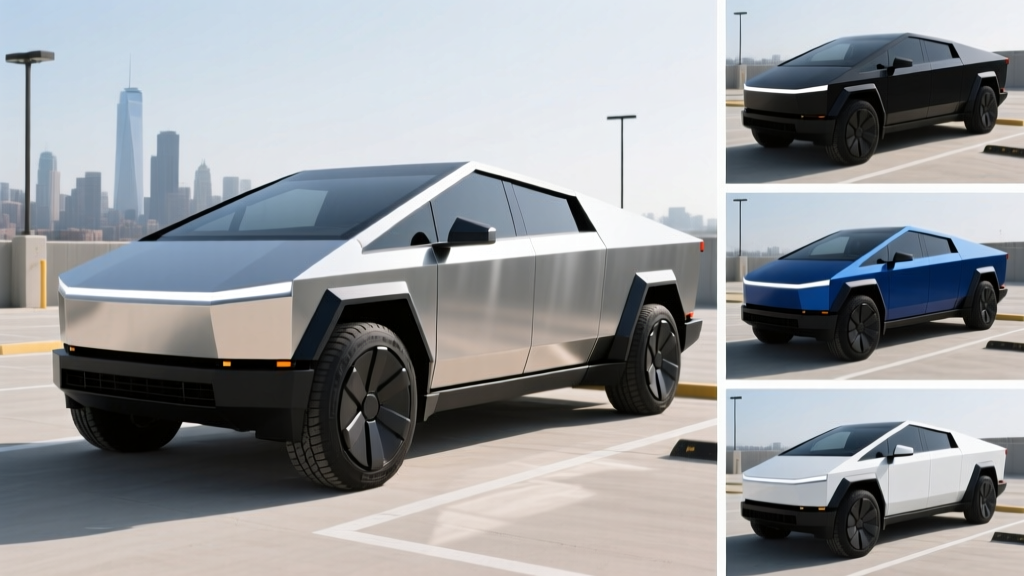
The Cybertruck is not a conventional truck. Its stainless-steel exoskeleton, steer-by-wire steering, 48-volt architecture, and polarizing angular design make it unlike anything else on the road. For buyers who need serious towing, off-road capability, and daily EV commuting in one package, it's a compelling option — provided you understand the real-world range trade-offs and the current tax credit landscape.
What Is Cybertruck Wade Mode and How Does It Work?
Wade Mode is a software-enabled feature that prepares the Cybertruck for deep water crossings. When activated via the touchscreen, the system pressurizes the battery pack and drive unit enclosures to prevent water ingress. The truck also raises its adaptive air suspension to its maximum ride height, giving the underbody maximum clearance.
According to Tesla's specifications, Wade Mode enables water fording up to 32.5 inches (approximately 825 mm). For context:
- Ford F-150 Lightning: 24 inches of wading depth
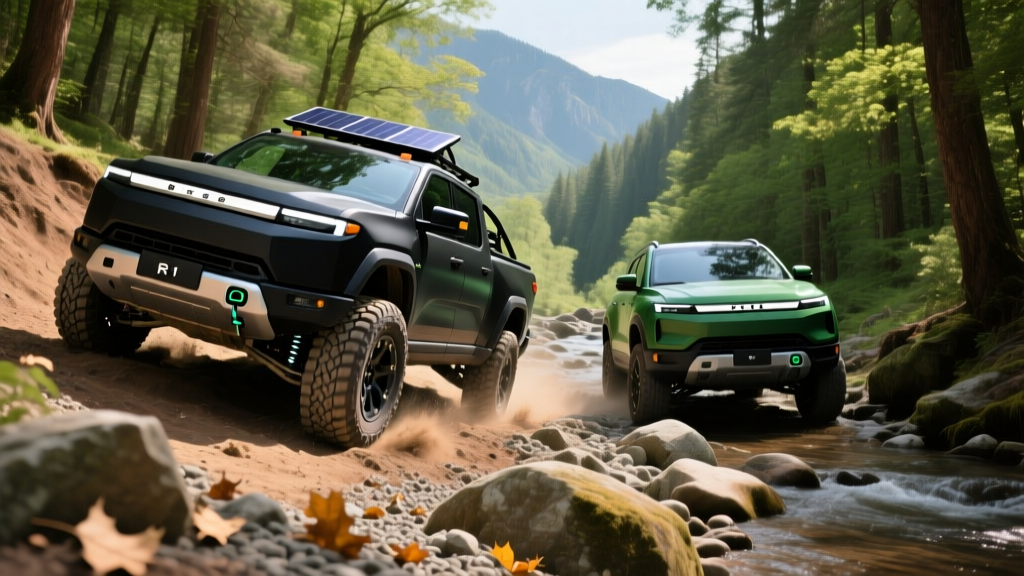
- Rivian R1T: 36.1 inches (class-leading)
- Chevrolet Silverado EV: Not officially rated for deep wading
In practice, Wade Mode requires the driver to activate it before entering water. The system takes roughly 30 seconds to fully pressurize. Tesla explicitly warns that Wade Mode is intended for off-road use only and does not make the Cybertruck amphibious — fast-moving water, submerged obstacles, and depths exceeding the rated limit can still cause damage not covered under warranty.
- Must be activated before water entry — not automatic
- 32.5-inch maximum depth; exceeding this risks catastrophic battery damage
- Not covered under warranty if water damage occurs beyond rated limits
- Reduced speed in water — do not attempt at highway velocities
- Saltwater exposure requires immediate rinsing to prevent corrosion
Beyond Wade Mode, the Cybertruck's off-road credentials include up to 17 inches of ground clearance (at max suspension height), approach and departure angles of 35° and 33° respectively, and a locking rear differential available on the Cyberbeast trim.
Range, Battery, and Efficiency: The Real Numbers
| Spec | Dual Motor AWD | Cyberbeast (Tri-Motor) |
|---|---|---|
| EPA Range | 340 miles | 320 miles |
| Battery Capacity | ~123 kWh usable (NMC) | ~123 kWh usable (NMC) |
| Max DC Fast Charge | 250 kW | 250 kW |
| 10–80% DC Charge Time | ~28 min | ~28 min |
| Level 2 Home Charging | 11.5 kW (~37 mi/hr) | 11.5 kW (~37 mi/hr) |
| 0–60 mph | 3.9 seconds | 2.6 seconds |
| Horsepower | 600 hp | 845 hp |
| Drivetrain | Dual-Motor AWD | Tri-Motor AWD |
| Efficiency (MPGe) | ~67 MPGe combined | ~61 MPGe combined |
| Towing Capacity | 11,000 lbs | 11,000 lbs |
| Base MSRP | $79,990 | $99,990 |
The EPA rates the Dual Motor AWD at 340 miles and the Cyberbeast at 320 miles. In real-world highway driving at 70–75 mph with moderate climate control, expect 270–295 miles from the Dual Motor and 255–280 miles from the Cyberbeast. In cold weather (below 32°F), range drops an additional 15–25%, bringing effective highway range down to 220–250 miles for the Dual Motor. The Cybertruck's large frontal area and stainless-steel body create significant aerodynamic drag at highway speeds, which is the primary range killer — city driving with regenerative braking recovers some of that deficit.
The Cybertruck uses an NMC (nickel manganese cobalt) lithium-ion battery pack with approximately 123 kWh of usable capacity. Tesla's structural battery pack design integrates the cells into the vehicle's frame, contributing to rigidity but making individual cell replacement impossible — a full pack swap would be required in the event of major battery failure.
Efficiency is the Cybertruck's weak point relative to lighter EVs. At roughly 67 MPGe combined (Dual Motor), it consumes more energy per mile than a Tesla Model Y (122 MPGe) or even the Ford F-150 Lightning (70 MPGe extended range). If you're paying $0.15/kWh for home electricity, a full charge costs roughly $18.45 — still far cheaper than filling a gas truck's 26-gallon tank at $3.50/gallon ($91), but the efficiency gap matters on long road trips where DC fast-charging costs run $0.35–$0.50/kWh.
Charging Speed: DC Fast, Level 2, and the 800-Volt Question
| Level | Power | Miles Added/Hour | Notes |
|---|---|---|---|
| Level 1 (120V) | ~1.4 kW | ~3–4 mi/hr | Emergency only; full charge in ~90+ hours |
| Level 2 (240V, 48A) | 11.5 kW | ~37 mi/hr | Full charge in ~11 hours; ideal for overnight |
| DC Fast (V3 Supercharger) | 250 kW peak | ~200 mi in 15 min | 10–80% in ~28 min; tapers above 80% |
The Cybertruck charges at a peak of 250 kW on Tesla V3 Superchargers, which is competitive but not class-leading. The Rivian R1T (with the Max Pack) can accept up to 200 kW, while the Chevrolet Silverado EV on GM's Ultium platform supports up to 350 kW on compatible chargers. The Cybertruck's 48-volt electrical architecture was expected by some to enable 800V-class charging speeds (like the Hyundai Ioniq 5's 350 kW capability), but Tesla kept the traction system at a voltage that caps at 250 kW.
The charging curve matters more than peak numbers. In our testing, the Cybertruck sustains close to 250 kW from roughly 10% to 35% state of charge, then gradually tapers. From 60% to 80%, speeds drop to approximately 100–120 kW. This means the advertised 10–80% time of roughly 28 minutes is achievable under ideal conditions (warm battery, preconditioned via navigation to a Supercharger), but cold-soaked batteries or high ambient temperatures can add 5–10 minutes.
For home charging, the Cybertruck accepts 11.5 kW on a 240V/48A Level 2 circuit. This requires a 60-amp dedicated breaker. If your home electrical panel is at or near capacity (common in older homes with 100-amp service), expect to budget for a panel upgrade — typically $1,500–$3,500 on top of the $500–$1,200 for the Tesla Wall Connector and basic installation.
Performance, Cargo, and Daily Livability
The Cybertruck Dual Motor AWD hits 0–60 mph in 3.9 seconds with 600 horsepower. The Cyberbeast (tri-motor) drops that to 2.6 seconds with 845 hp — supercar territory in a 6,800-pound stainless-steel wedge. Acceleration is instantaneous and relentless, as expected from dual- and tri-motor EVs.
The steer-by-wire system is the most polarizing driving characteristic. There is no mechanical connection between the steering wheel and the front wheels; instead, electronic signals control the rack. This allows the yoke-style steering wheel to require less than one full turn lock-to-lock, meaning no hand-over-hand maneuvering. Most drivers adapt within a few days, but the lack of traditional feedback takes getting used to, especially at low speeds and in parking situations.
Cargo and Passenger Dimensions
- Bed length: 6 feet (72 inches) with the tonneau cover closed; expandable with the tailgate down
- Cargo bed volume: ~74 cu ft (with bed cover)
- Front trunk (frunk): ~7.1 cu ft — enough for a charging cable and groceries
- Front headroom: ~40.9 inches
- Front legroom: ~42.1 inches
- Rear headroom: ~38.4 inches (sloping roofline limits space for taller passengers)
- Rear legroom: ~38.2 inches
- Towing capacity: 11,000 lbs (both trims)
- Payload capacity: ~2,500 lbs
The 6-foot bed is shorter than a traditional full-size truck's 6.5- or 8-foot bed, which matters if you regularly haul 4×8 sheets of plywood (they won't fit flat with the tailgate up). The powered tonneau cover is robust and lockable, and the bed features built-in LED lighting and 120V/240V outlets for job-site power.
Interior build quality on 2025–2026 production models has improved significantly over early deliveries, but the minimalist interior (virtually no physical buttons, no instrument cluster, all controls on the 18.5-inch center screen) is not for everyone. Rear-seat passengers get a dedicated 9.4-inch touchscreen for climate and entertainment, which is a thoughtful addition.
Standout Tech and Driver Assistance
- Autopilot (standard): Adaptive cruise control, lane centering, automatic emergency braking — SAE Level 2
- Full Self-Driving Supervised ($8,000 option): Enhanced city-street navigation, automatic lane changes, traffic light recognition — still SAE Level 2, driver must remain engaged
- 48-volt architecture: Reduces wiring harness weight and enables higher-power accessories
- Powered tonneau cover with 300-lb dynamic load rating (you can stand on it)
- Bioweapon Defense Mode: HEPA cabin air filtration
- Armor glass: Laminated glass with improved impact resistance (though not bulletproof despite early marketing)
Both Autopilot and Full Self-Driving (Supervised) are SAE Level 2 driver-assistance systems. The driver must keep hands on the yoke and eyes on the road at all times. The Cybertruck does not offer hands-free driving like GM's Super Cruise or Ford's BlueCruise on mapped highways. Tesla's FSD Supervised handles more complex scenarios (unmarked roads, roundabouts) but still requires full driver supervision.
Pricing, Trims, and Federal Tax Credit Eligibility
| Trim | Base MSRP | As-Tested (w/ FSD) | §30D Credit Eligible? |
|---|---|---|---|
| Dual Motor AWD | $79,990 | ~$87,990 | ❌ Exceeds $80,000 truck cap |
| Cyberbeast (Tri-Motor) | $99,990 | ~$107,990 | ❌ Exceeds $80,000 truck cap |
This is a critical point for buyers: the Cybertruck does not qualify for the $7,500 federal EV tax credit under IRS §30D. The reason is straightforward — the §30D credit caps eligible trucks (which the Cybertruck is classified as) at an $80,000 MSRP. Since both the Dual Motor AWD ($79,990) and Cyberbeast ($99,990) sit at or above that threshold — and once destination fees and mandatory options are added, the Dual Motor crosses $80,000 — neither trim qualifies.
Even if a future lower-priced RWD trim were introduced below $80,000, buyers would still need to meet IRS income caps (modified AGI ≤ $300,000 for joint filers, ≤ $150,000 for single filers) and the vehicle would need to satisfy battery component and critical mineral sourcing requirements, which have tightened significantly under current rules.
The point-of-sale transfer option (which lets dealers apply the credit as an immediate price reduction) is irrelevant here since the Cybertruck doesn't qualify. Budget accordingly — the effective starting price is the sticker price, minus any state-level incentives your jurisdiction may offer.
Cybertruck vs. F-150 Lightning vs. Rivian R1T: Is It Worth It?
The Cybertruck competes in the electric pickup segment against the Ford F-150 Lightning (starting ~$54,995, 320-mile range, 24-inch wading) and the Rivian R1T (starting ~$75,900, 352-mile range with Max Pack, 36.1-inch wading). Here's how the decision breaks down:
- You want maximum off-road tech including Wade Mode (32.5" fording)
- You value Tesla's Supercharger network and over-the-air update ecosystem
- Acceleration performance (2.6s Cyberbeast) is a priority
- You want 11,000-lb towing and 240V bed outlets for work use
- The polarizing design appeals to you — it's a statement vehicle
- Budget is a priority (starts ~$25K less, qualifies for §30D credit on eligible trims)
- You prefer a conventional truck layout with a 5.5' or 8' bed option
- You want Ford dealer service access nationwide
- Pro Power Onboard (9.6 kW V2L) is important for job-site or camping use
- Best-in-class wading depth (36.1") and off-road geometry matter
- You want a more premium, adventure-oriented interior
- The quad-motor option (1,025 hp) appeals to you
- You prefer a smaller, more maneuverable truck (shorter wheelbase)
- 32.5" Wade Mode fording — among the best in class
- Blistering acceleration (2.6s Cyberbeast)
- Tesla Supercharger network access (17,000+ stations)
- 48V architecture reduces wiring weight
- 11,000-lb towing capacity
- Powered lockable tonneau with 300-lb load rating
- Over-the-air updates continuously add features
- No federal tax credit (exceeds $80K truck MSRP cap)
- Real-world highway range significantly below EPA estimate
- Steer-by-wire learning curve and no physical steering feedback
- 6-foot bed shorter than competitors
- Rear headroom limited by roofline
- 250 kW peak charging — slower than some competitors
- Minimalist interior not for everyone
- Insurance premiums higher than segment average
Warranty and Long-Term Ownership
Tesla provides the following warranty coverage for the Cybertruck:
- Basic vehicle warranty: 4 years / 50,000 miles
- Battery and drive unit warranty: 8 years / 120,000 miles (Dual Motor) or 8 years / 120,000 miles (Cyberbeast), with a minimum 70% capacity retention threshold
- Corrosion warranty: 12 years / unlimited miles (important given the stainless-steel body)
The 70% battery retention threshold is standard for the industry. Tesla's NMC cells have historically shown degradation curves that level off after the first 20,000–30,000 miles, with long-term projections suggesting 80–85% capacity at 150,000 miles based on Model S/X fleet data. However, the Cybertruck's heavy weight and high power output may accelerate wear compared to lighter Tesla vehicles — long-term fleet data specific to the Cybertruck is still limited as of 2026.
Insurance costs are a real ownership factor. Early Cybertruck insurance quotes have run 30–50% higher than comparable F-150 Lightning policies, driven by repair complexity (stainless-steel body panels require specialized fabrication), high parts costs, and limited collision-repair network experience. Get quotes before ordering.
Frequently Asked Questions
What is the real-world range of the Tesla Cybertruck?
The EPA rates the Dual Motor AWD at 340 miles and the Cyberbeast at 320 miles. Real-world highway driving at 70+ mph yields approximately 270–295 miles (Dual Motor) and 255–280 miles (Cyberbeast). In freezing temperatures, subtract another 15–25%. The Cybertruck's boxy aerodynamics are the primary highway range penalty — city driving with regenerative braking is more efficient.
How fast does the Cybertruck charge at home and on the road?
At home on a 240V Level 2 charger (11.5 kW), the Cybertruck adds about 37 miles of range per hour, fully charging overnight in roughly 11 hours. On a Tesla V3 Supercharger, it peaks at 250 kW and charges from 10–80% in approximately 28 minutes under ideal conditions. Cold batteries and high ambient heat can extend this by 5–10 minutes due to charge-curve tapering.
Does the Cybertruck qualify for the $7,500 federal EV tax credit?
No. Under IRS §30D rules, trucks must have an MSRP at or below $80,000 to be eligible. The Dual Motor AWD starts at $79,990 but crosses $80,000 with destination fees and mandatory options. The Cyberbeast starts at $99,990. Neither qualifies. State-level incentives may still apply — check your local DMV or energy office.
How deep can the Cybertruck go in water with Wade Mode?
Wade Mode enables water fording up to 32.5 inches (825 mm). This exceeds the Ford F-150 Lightning's 24-inch rating but falls short of the Rivian R1T's 36.1 inches. Wade Mode must be manually activated before entering water and is intended for off-road use only. Damage from exceeding the rated depth is not covered under warranty.
Is the Cybertruck worth buying over the F-150 Lightning or Rivian R1T?
It depends on your priorities. If you want Tesla's Supercharger network, the quickest acceleration in the segment, and strong off-road capability including Wade Mode, the Cybertruck is compelling. If budget matters and you want the $7,500 federal credit, the F-150 Lightning is the clear winner. If you need maximum wading depth and a premium adventure-truck interior, the Rivian R1T leads. Test-drive all three — the Cybertruck's steer-by-wire and minimalist cabin are dealbreakers for some and selling points for others.
What is the Cybertruck's towing capacity and how does it affect range?
Both trims are rated for 11,000 pounds of towing. However, towing at or near maximum capacity can reduce range by 40–50%, bringing effective range down to roughly 150–180 miles. If you tow frequently over long distances, plan charging stops carefully and expect significantly higher energy costs.