Why Tesla Cybertruck's Voltage Architecture Matters for Buyers
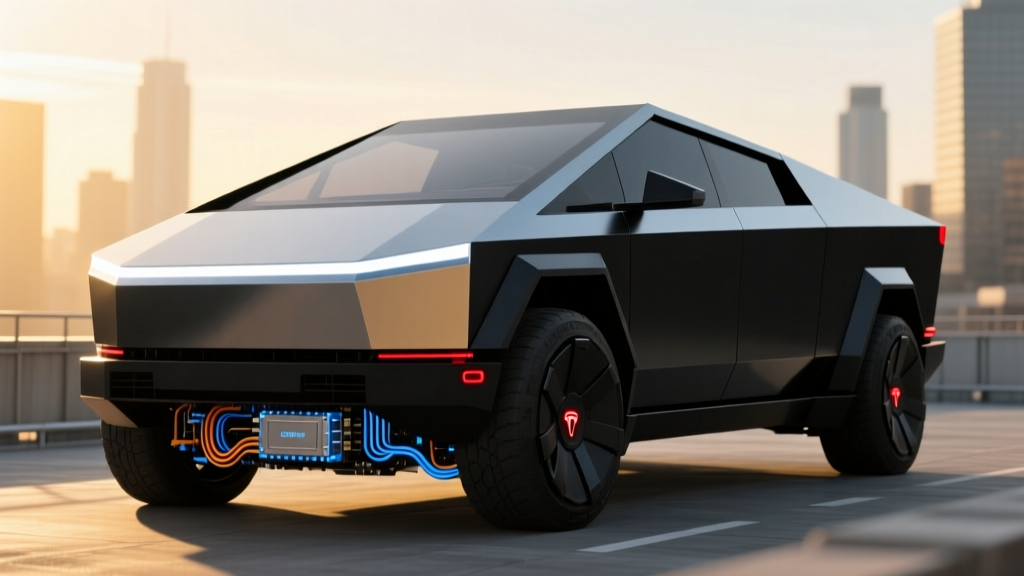
The Tesla Cybertruck is an engineering oddity — a stainless-steel exoskeleton wrapped around one of the most advanced electric powertrains ever put into production. But beneath the polarizing exterior lies a technical decision that fundamentally shapes the ownership experience: its voltage architecture. Unlike most legacy EVs built on 400-volt platforms, the Cybertruck operates on an 800-volt (nominal) electrical architecture, a choice that cascades through every aspect of the vehicle — from how fast it charges to how efficiently it delivers power under load.
Higher voltage means the Cybertruck can push more power through thinner, lighter wiring harnesses. It means DC fast charging peaks can reach 350 kW without requiring dangerously high current. It means the tri-motor Cyberbeast variant can dump over 845 horsepower to the wheels with less thermal stress on the motors and inverter. For the buyer, this isn't just an engineering footnote — it's the reason the Cybertruck charges as fast as it does, accelerates as hard as it does, and manages battery thermals the way it does.
This review breaks down the Cybertruck's voltage architecture in practical terms and pairs it with a full spec-driven profile so you can decide whether this truck earns a spot in your driveway.
Cybertruck Spec Table: Range, Battery, Charging, and Performance
| Specification | AWD (Dual Motor) | Cyberbeast (Tri Motor) |
|---|---|---|
| EPA Range | 340 miles | 320 miles |
| Battery Capacity (usable, est.) | ~123 kWh (NMC) | ~123 kWh (NMC) |
| Voltage Architecture | ~800V nominal | ~800V nominal |
| Max DC Fast Charge | 350 kW peak | 350 kW peak |
| 10–80% DC Charge Time | ~17 minutes (optimal) | ~17 minutes (optimal) |
| Level 2 Home Charge Rate | 11.5 kW (44 mi/hr) | 11.5 kW (44 mi/hr) |
| 0–60 mph | 3.9 seconds | 2.6 seconds |
| Horsepower | 600 hp | 845 hp |
| Drivetrain | Dual-motor AWD | Tri-motor AWD |
| Efficiency (MPGe) | 79 MPGe combined | 76 MPGe combined |
| Base MSRP (2026) | $79,990 | $99,990 |
| Towing Capacity | 11,000 lbs | 11,000 lbs |
Sources: EPA fueleconomy.gov, Tesla Cybertruck specs.
Understanding the 800V Architecture: What It Means for Charging and Power
Most EVs on the road today — including earlier Tesla models like the Model 3 and Model Y — use a 400-volt nominal battery architecture. The Cybertruck's move to approximately 800V doubles the electrical pressure, which has several direct consequences:
- Lower current for the same power. Power (watts) = Voltage × Current. At 800V, delivering 350 kW requires roughly 437 amps. At 400V, the same power would demand 875 amps — requiring much thicker, heavier, and more expensive cables.
- Reduced resistive heat losses. Heat in wiring scales with the square of current (I²R). Halving the current cuts heat generation by roughly 75%, improving overall powertrain efficiency and reducing cooling demands.
- Faster DC fast charging. The Cybertruck can accept up to 350 kW peak at compatible V4 Superchargers or third-party 350 kW CCS/NACS stations. This is among the fastest charge rates of any production EV sold in the U.S.
- Higher power delivery to motors. The tri-motor Cyberbeast can sustain extreme power output because the high-voltage bus feeds the inverters more efficiently, with less voltage sag under heavy load.
The Cybertruck uses a structural battery pack with 4680-format NMC (nickel manganese cobalt) cells, which Tesla manufactures in-house. The estimated usable capacity is around 123 kWh — one of the largest battery packs in any consumer EV. This large pack, combined with the 800V architecture, is what enables both the 320–340-mile range and the aggressive charging curve.
The Charging Curve Reality: Peak vs. Sustained kW
Tesla advertises 350 kW peak charging, but as with all EVs, that number is a momentary maximum, not a sustained average. In real-world testing at V4 Superchargers and Electrify America 350 kW stations, the Cybertruck's charge curve looks roughly like this:
| State of Charge | Average Power (kW) | Approx. Miles Added in 10 min |
|---|---|---|
| 10–30% | ~310–350 kW | ~130 miles |
| 30–50% | ~250–300 kW | ~105 miles |
| 50–70% | ~170–220 kW | ~80 miles |
| 70–80% | ~100–140 kW | ~50 miles |
A preconditioned Cybertruck at a 350 kW station will typically achieve 10–80% in approximately 17 minutes under ideal conditions. However, if the battery is cold (below 50°F / 10°C) or if you arrive at a charger without preconditioning via the navigation system, expect that time to stretch to 25–30+ minutes. Always navigate to the charger using the truck's built-in routing to trigger automatic battery preconditioning.
Real-World Range: EPA Sticker vs. What You'll Actually Get
EPA Estimated Range: 340 miles (AWD) / 320 miles (Cyberbeast)
Real-World Expectations:
- City/mixed driving (65–75°F): ~300–330 miles — close to EPA
- Sustained highway (75 mph, 75°F): ~260–290 miles — the boxy shape creates significant aerodynamic drag at speed
- Cold weather (20–30°F, highway): ~210–250 miles — battery resistance increases, cabin heating draws energy, and cold air is denser
- Towing (5,000–8,000 lb trailer): ~140–180 miles — expect range to roughly halve under heavy tow loads
The Cybertruck's angular stainless-steel body is distinctive, but its drag coefficient (estimated ~0.39 Cd) is higher than more aerodynamically shaped EVs like the Model Y (~0.23 Cd). This means highway efficiency suffers more than city efficiency — the opposite of what many buyers expect. The large 123 kWh pack compensates with sheer capacity, but at 75+ mph, you'll watch the range meter drop noticeably faster than in a sedan or crossover EV.
For daily commuting under 80 miles round-trip, range is essentially a non-issue. For road trips, plan charging stops every 200–250 miles to keep a comfortable buffer, especially in winter or mountainous terrain where regenerative braking partially offsets uphill energy use.
Performance and Drivetrain: The 800V Advantage Under Acceleration
The 800V architecture doesn't just help charging — it unlocks ferocious acceleration. The Cyberbeast's tri-motor setup (one front, two rear) produces 845 hp and rockets to 60 mph in 2.6 seconds, making it one of the quickest production vehicles on Earth regardless of powertrain. The dual-motor AWD variant is hardly slow at 3.9 seconds to 60 mph with 600 hp.
High voltage enables these numbers because the inverters can switch massive amounts of power to the motors with less current-related heat buildup. Tesla's carbon-sleeved rotor technology on the rear motors prevents the rotors from expanding and contacting the stator at extreme RPMs — a problem that limits sustained top speed in lesser EVs.
The Cybertruck also features steer-by-wire (no mechanical connection between the yoke and the wheels), four-wheel steering for a tighter turning radius, and adaptive air suspension with up to 16 inches of ground clearance in Off-Road mode. These are enabled by the high-voltage electrical bus, which can supply the substantial power demands of multiple electrically actuated systems simultaneously.
Interior, Cargo, and Practicality
The Cybertruck seats five (a front bench option was initially planned but the current production configuration is 2+3 seating). Interior materials are minimalist and utilitarian — vegan leather, exposed metal, and a single 18.5-inch central touchscreen running Tesla's latest infotainment software. A rear 9.4-inch touchscreen serves second-row passengers.
| Dimension | Measurement |
|---|---|
| Bed Length | 6 ft (72 in) with tailgate down; ~4 ft with tailgate up |
| Bed Volume (tailgate up) | ~67 cu ft |
| Frunk Volume | ~7 cu ft |
| Gear Locker (under-bed, lockable) | ~7 cu ft |
| Front Headroom | ~41.0 in |
| Rear Legroom | ~38.5 in |
| Curb Weight | ~6,600–6,850 lbs (varies by trim) |
The powered motorized tonneau cover is a standout feature — it's strong enough to support 300 lbs (standing on it) and seals the bed from weather. The stainless-steel exoskeleton means no paint to chip, though fingerprint smudges and micro-scratches are a reality of the raw finish.
The 120V/240V bed outlets (powered by the high-voltage battery) are genuinely useful for job sites or camping — you can run power tools, a mini-fridge, or charge e-bikes directly from the truck. This is a direct benefit of the large, high-voltage pack acting as a mobile power source, though Tesla does not currently market a full V2H (vehicle-to-home) or V2G (vehicle-to-grid) system for the Cybertruck.
Pricing, Trim Levels, and Federal Tax Credit Eligibility
| Trim | 2026 Base MSRP | Est. Federal Tax Credit (§30D) | Effective Price (if eligible) |
|---|---|---|---|
| AWD (Dual Motor) | $79,990 | $0 (exceeds MSRP cap) | $79,990 |
| Cyberbeast (Tri Motor) | $99,990 | $0 (exceeds MSRP cap) | $99,990 |
⚠ Tax Credit Reality Check: The Cybertruck does not qualify for the federal §30D Clean Vehicle Credit. Under current IRS rules, pickup trucks must have an MSRP of $80,000 or less to be eligible. The AWD trim at $79,990 sits right at the cap, but destination fees and mandatory options push it over. The Cyberbeast at $99,990 is well above the threshold. Additionally, buyers must meet adjusted gross income caps ($150K single / $300K joint) and the vehicle must meet critical mineral and battery component sourcing requirements. Always verify current eligibility on IRS.gov and consult a tax professional before purchase.
The Cybertruck also does not currently qualify for most state-level EV rebates that mirror the federal MSRP cap structure. However, some states offer separate incentives with different thresholds — check your state's energy office for specifics.
Battery Warranty and Long-Term Ownership
Tesla covers the Cybertruck's battery and drive units with an 8-year / 120,000-mile warranty (whichever comes first), with a minimum 70% capacity retention guarantee over that period. This is slightly more generous in mileage than the Model 3/Y warranty (8yr/100K mi) owing to the truck's heavier-duty positioning.
The 4680 NMC cells are relatively new in high-volume production. Early data from Model Y vehicles equipped with 4680 cells suggests degradation curves similar to the older 2170 NMC cells — roughly 10–12% loss over the first 50,000 miles, then a slower, more linear decline. The Cybertruck's large 123 kWh pack means that even 15% degradation still leaves ~275 miles of range on the AWD trim, which is livable for most owners.
For longevity, Tesla recommends:
- Charging to 80–90% for daily use (not 100% unless needed for a trip)
- Avoiding prolonged storage at very low or very high SoC
- Using DC fast charging in moderation — frequent 350 kW sessions may accelerate degradation slightly compared to Level 2 charging
Driver Assistance: Autopilot and FSD (Supervised)
SAE Automation Level: Level 2
Tesla Autopilot and Full Self-Driving (Supervised) are Level 2 driver-assistance systems. The driver must remain fully attentive, keep hands on the yoke, and be prepared to take over at any moment. These are not autonomous or self-driving systems. Only Level 4 robotaxi services like Waymo operate without a human driver in defined areas.
The Cybertruck ships with Basic Autopilot (adaptive cruise control + lane centering) standard. FSD (Supervised) is available as an $8,000 one-time purchase or $99/month subscription and adds automatic lane changes, intersection handling, and city-street navigation. The Cybertruck's HW4 computer and enhanced camera suite (including a cabin-facing camera for driver monitoring) provide the hardware backbone.
In practice, FSD (Supervised) has improved significantly but still requires active supervision. It handles highway driving well but can make unexpected decisions at complex intersections, construction zones, or in heavy rain. Treat it as a fatigue-reducing assistant, not a replacement for your attention.
Pros and Cons: The Cybertruck Ownership Verdict
✅ Pros
- 800V architecture enables 350 kW peak DC fast charging — among the fastest available
- Cyberbeast's 2.6s 0–60 mph is supercar territory in a 6,800-lb truck
- 11,000-lb towing capacity and 120V/240V bed outlets for job-site utility
- Stainless-steel exoskeleton is dent-resistant and requires no paint
- Large 123 kWh pack provides genuine 300+ mile daily range
- Tesla Supercharger network remains the most reliable DC fast-charging ecosystem
❌ Cons
- No federal tax credit — MSRP exceeds the $80K truck cap for most builds
- Highway range drops significantly due to boxy aerodynamics (~260 mi at 75 mph)
- Cold-weather range loss is substantial (~30–35% in sub-freezing highway driving)
- Steer-by-wire and yoke steering have a steep learning curve
- Bed length is short (6 ft) with tailgate up; no traditional 8-ft bed option
- Panel gaps and early build-quality issues reported on 2024–2025 models
- Premiums for insurance can be 30–50% higher than comparable trucks
Who the Cybertruck Is Actually For
The Cybertruck makes the most sense for buyers who:
- Want a statement vehicle with genuine performance: Nothing else in the truck segment matches the Cyberbeast's acceleration or the 800V charging speed.
- Have home Level 2 charging access: The 123 kWh pack takes ~10–12 hours on an 11.5 kW Level 2 charger. Without home charging, the large battery becomes a frequent-DC-charging burden.
- Need occasional towing or job-site power: The 11,000-lb rating and 240V bed outlet are legitimately useful, though max towing cuts range roughly in half.
- Don't need a traditional full-size truck bed: If you regularly haul 4×8 sheets of plywood flat or need an 8-ft bed, the Cybertruck's 6-ft bed with the tonneau cover won't work. A Ford F-150 Lightning or Rivian R1T may suit better.
If your primary use case is long highway road trips in cold climates, the aerodynamic penalty and cold-weather range loss make the Cybertruck less ideal than a more slippery EV like the Rivian R1S or even the Tesla Model X for family hauling. And if you need the $7,500 federal credit to make the numbers work, the Cybertruck is off the table — consider the F-150 Lightning or Rivian R1T instead.
Frequently Asked Questions
What is the real-world range of the Tesla Cybertruck?
The EPA rates the AWD at 340 miles and the Cyberbeast at 320 miles. In real-world mixed driving at moderate temperatures, expect 300–330 miles. Sustained 75 mph highway driving drops this to roughly 260–290 miles, and cold-weather highway driving (20–30°F) can reduce range to 210–250 miles. Towing a mid-size trailer cuts range approximately in half.
How fast does the Cybertruck charge at home and on the road?
On a DC fast charger rated at 350 kW, the Cybertruck peaks at approximately 350 kW and can charge from 10–80% in about 17 minutes with a preconditioned battery. At home on a 48-amp Level 2 charger (11.5 kW), it adds roughly 44 miles of range per hour, taking about 10–12 hours for a full charge from near-empty. On a standard 120V outlet (Level 1), expect roughly 3–4 miles per hour — usable only for emergency trickle charging.
Does the Cybertruck qualify for the $7,500 federal EV tax credit?
In most configurations, no. The IRS §30D credit caps pickup truck eligibility at an MSRP of $80,000. The AWD trim starts at $79,990 but destination fees and options typically push it over the cap. The Cyberbeast at $99,990 is well above the limit. Additionally, buyer income caps ($150K single / $300K joint) and battery-sourcing requirements apply. Verify current rules at IRS.gov.
Is the Cybertruck worth buying vs. the Ford F-150 Lightning or Rivian R1T?
It depends on priorities. The Cybertruck wins on charging speed (800V / 350 kW vs. the Lightning's ~150 kW peak), acceleration (2.6s 0–60 Cyberbeast), and bed security (motorized tonneau). The F-150 Lightning wins on traditional truck utility (larger bed, Pro Power Onboard, familiar driving dynamics), tax credit eligibility on lower trims, and dealer service network. The Rivian R1T wins on off-road capability, build quality, and a more practical quad-motor option. For pure performance and tech novelty, the Cybertruck is unmatched. For traditional truck work, the Lightning is more pragmatic.
What are the biggest drawbacks of the Cybertruck's 800V architecture?
The 800V system itself is an engineering advantage, but the large 123 kWh NMC pack that accompanies it adds significant weight (~6,800 lbs curb), which hurts efficiency (76–79 MPGe combined — lower than most EVs). The pack also takes a long time to charge on Level 2 (10–12 hours) due to sheer capacity. And NMC chemistry, while energy-dense, degrades slightly faster than LFP over thousands of cycles, though Tesla's 8-year/120K-mile warranty provides a backstop.
Can I charge the Cybertruck at non-Tesla fast chargers?
Yes. The Cybertruck uses the NACS (North American Charging Standard) connector natively, which is now supported by Electrify America, EVgo, and other networks deploying NACS cables. It can also use CCS stations via a Tesla-supplied adapter. The 800V architecture is compatible with all major DC fast-charging networks — the limiting factor is the station's maximum power output, not the truck.