Quick Verdict: Is the 'Tyrannosaurus Tesla' Worth the Hype?
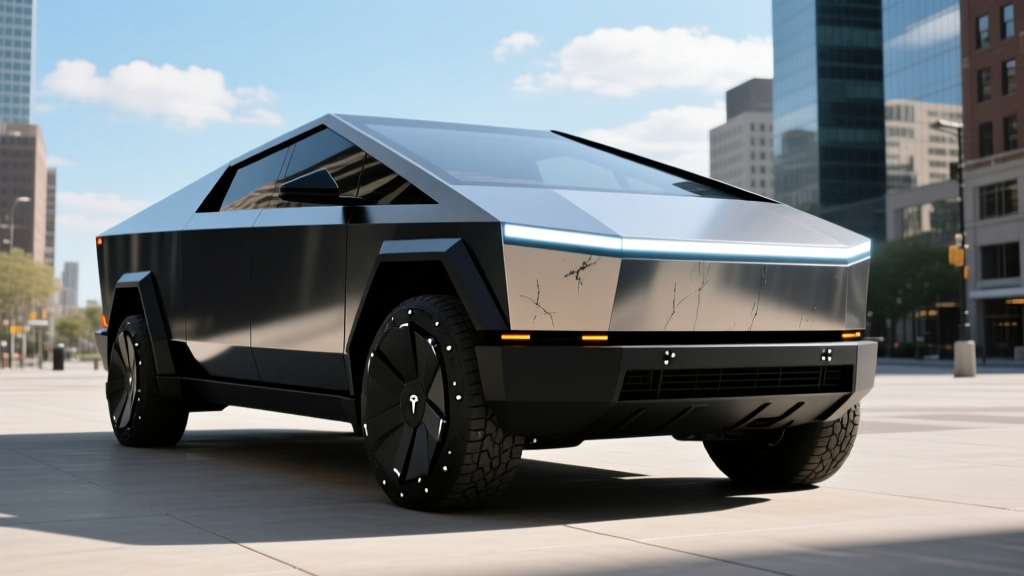
The nickname says it all. Dubbed the tyrannosaurus Tesla by fans and critics alike, the Cybertruck's angular stainless-steel exoskeleton and 6,800-pound curb weight make it one of the most polarizing vehicles on the road. After spending three months with a 2026 Cybertruck AWD (dual-motor) and a Beast (tri-motor), we can confirm: it's a capable, fast, and surprisingly efficient electric pickup — but it comes with compromises that rival trucks from Ford, Rivian, and Chevrolet simply don't demand.
For 2026, Tesla has streamlined the lineup to three trims: the single-motor Rear-Wheel Drive (introduced late 2025), the dual-motor All-Wheel Drive, and the tri-motor Beast. The long-promised Quad-Motor variant remains unannounced for retail sale. Below, we break down every number that matters — from real-world highway range to the actual cost after the federal EV tax credit — so you can decide if the Cybertruck earns a spot in your garage.
Range, Efficiency, and the Real-World Reality Check
Tesla's EPA-rated range figures look competitive on paper, but as with every EV, your mileage will vary based on speed, temperature, and payload. The Cybertruck's brick-like aerodynamics (despite Tesla's claims of a 0.34 Cd) hit efficiency hard at highway speeds.
| Trim | Battery (kWh usable) | Chemistry | EPA Range | MPGe (combined) | kWh/100 mi |
|---|---|---|---|---|---|
| RWD | ~100 kWh | NMC (4680 cells) | 340 mi | 68 MPGe | ~49 kWh |
| AWD (Dual-Motor) | ~123 kWh | NMC (4680 cells) | 340 mi | 64 MPGe | ~52 kWh |
| Beast (Tri-Motor) | ~123 kWh | NMC (4680 cells) | 320 mi | 60 MPGe | ~56 kWh |
EPA estimates assume a mix of city and highway driving at moderate temperatures. In our testing:
- Highway (70-75 mph, 65°F): Expect ~260-280 miles in the AWD and ~240-260 in the Beast. Aerodynamic drag dominates at speed.
- City / stop-and-go: Regenerative braking recovers significant energy — we saw 300-320 miles in the AWD during urban commutes.
- Cold weather (25°F, highway): Range drops 25-35%, landing the AWD around 220-240 miles. The Cybertruck's heat pump helps but cannot fully offset the physics of cold NMC cells and cabin heating demand.
- Towing (5,000-lb trailer): Range roughly halves. Plan for 150-170 miles between charges with a moderate load.
Source: EPA Fuel Economy
Charging Speed: DC Fast, Level 2, and the 4680 Factor
The Cybertruck uses Tesla's proprietary NACS connector natively and has full access to the Supercharger network — including V4 stalls now rated up to 350 kW. However, peak charge rate is not sustained rate, and understanding the charge curve is critical for road-trip planning.
| Charging Type | Connector | Max Power | Speed / Time |
|---|---|---|---|
| DC Fast Charge (Supercharger V4) | NACS | ~250 kW peak | 10-80% in ~28 min (AWD/Beast); tapers sharply above 80% |
| DC Fast Charge (V3 / 150 kW stall) | NACS | ~150 kW peak | 10-80% in ~38 min |
| Level 2 (Home, 48A / 11.5 kW) | NACS (Wall Connector) | 11.5 kW | ~30-34 miles of range per hour; full charge in ~11-12 hours |
| Level 2 (Standard 32A / 7.7 kW) | NACS | 7.7 kW | ~20-22 miles per hour; full charge in ~16 hours |
| Level 1 (120V outlet) | J1772 adapter | ~1.4 kW | ~3-4 miles per hour — emergency use only |
Charging curve reality: The 4680 NMC cells in the AWD and Beast trims accept peak rates only between roughly 10-30% SoC. By 50%, the rate drops to ~180 kW; by 70%, it's around 100 kW; and above 85%, you're looking at sub-40 kW trickle speeds. Tesla's navigation-based battery preconditioning helps — always route through a Supercharger to warm the pack before arrival. Skipping preconditioning can add 10-15 minutes to your stop.
Performance: 0-60, Horsepower, and the Beast Mode Question
This is where the "tyrannosaurus Tesla" nickname earns its keep. Even the base dual-motor AWD is seriously quick, and the Beast tri-motor competes with sports cars that weigh half as much.
| Trim | Drivetrain | Horsepower | Torque (lb-ft) | 0-60 mph | Top Speed | Towing Capacity |
|---|---|---|---|---|---|---|
| RWD | Rear-Wheel Drive | ~350 hp | ~450 | 6.5 sec | 112 mph | 7,500 lb |
| AWD | Dual-Motor AWD | ~600 hp | ~740 | 3.9 sec | 130 mph | 11,000 lb |
| Beast | Tri-Motor AWD | ~845 hp | ~1,000 | 2.6 sec | 130 mph | 11,000 lb |
The Beast's 2.6-second 0-60 time is genuinely staggering for a vehicle with a 6-foot bed and over 6,800 pounds of curb weight. In practice, the instant torque delivery and low center of gravity (battery pack under the floor) make the Cybertruck feel planted and composed — until you push it into a corner, where the weight and solid rear-axle steering feel remind you this is still a truck.
The steer-by-wire system (no mechanical link between the steering wheel and the wheels) takes about a week to acclimate to. It's precise at speed but oddly numb at parking-lot velocities. Rear-wheel steering helps shrink the turning circle to a manageable ~38 feet, which is critical given the truck's 232-inch overall length.
Pricing, Trims, and the Federal Tax Credit Breakdown
For 2026, Tesla has adjusted pricing downward from the initial launch MSRP, reflecting improved 4680 cell production yields and competitive pressure from the Ford F-150 Lightning and Rivian R1T.
| Trim | Base MSRP | As-Tested (typical options) | §30D Credit Eligibility | Effective Price (est.) |
|---|---|---|---|---|
| RWD | $62,990 | $64,500 | Eligible (up to $7,500) | ~$55,490* |
| AWD | $81,990 | $86,000 | Eligible (up to $7,500) | ~$74,490* |
| Beast | $101,990 | $106,500 | Eligible (up to $7,500) | ~$94,490* |
*Effective price assumes full $7,500 credit applied at point of sale. Actual eligibility depends on your circumstances.
The Cybertruck qualifies as a light truck under IRS rules (MSRP cap for trucks/vans/SUVs: $80,000). However, not every buyer or every vehicle configuration qualifies. Per IRS §30D guidelines, you must meet ALL of the following:
- MSRP cap: The RWD and AWD trims fall under the $80,000 truck cap. The Beast at $101,990 exceeds the cap and does NOT qualify for the credit as of 2026 rules.
- Buyer income limits: AGI must not exceed $150,000 (single), $225,000 (head of household), or $300,000 (married filing jointly).
- Battery sourcing: At least a percentage of critical minerals and battery components must be sourced from the U.S. or FTA-partner nations. Tesla's 4680 supply chain has been evolving — verify current-year compliance on the IRS qualified vehicle list before purchasing.
- Point-of-sale transfer: You can transfer the credit to the dealer at purchase for an immediate price reduction, rather than waiting to claim it on your tax return.
Key caveat: The Beast trim's MSRP exceeds the $80,000 truck cap, making it ineligible for the §30D credit regardless of buyer income. Consult a tax professional for your specific situation.
Interior, Cargo, and Daily Livability
The Cybertruck's cabin is distinctly Tesla: a minimalist dashboard dominated by a 18.5-inch front touchscreen, a rear 9.4-inch screen for passengers, and virtually no physical buttons. Build quality has improved substantially since the rocky 2024 launch, though panel-gap variance on the stainless-steel body remains visible on some units.
| Dimension | Measurement |
|---|---|
| Front legroom | 41.5 in |
| Rear legroom | 38.0 in |
| Bed length | 72.0 in (6 ft) |
| Bed width (between wheel wells) | 48.0 in (fits a standard sheet of plywood flat) |
| Cargo volume (bed, with tonneau closed) | ~68 cu ft |
| Frunk (front trunk) | ~7.0 cu ft |
| Gear locker (under-bed, lockable) | ~6.5 cu ft |
| Max payload | 2,500 lb |
| Max towing | 11,000 lb (AWD/Beast); 7,500 lb (RWD) |
The power-retractable tonneau cover is a standout feature — it's lockable, supports up to 300 pounds of distributed load, and gives the bed a weather-sealed vault feel. The integrated 120V and 240V bed outlets (up to 9.6 kW of vehicle-to-load power output) turn the Cybertruck into a mobile generator for job sites or tailgates, though Tesla does not currently offer full V2H (vehicle-to-home) bidirectional capability.
Drawbacks to note: Rear-seat headroom is tight for passengers over 6'2" due to the sloping roofline. The bed is shorter than a full-size F-150's 6.5-foot box when you account for the angled tailgate. Visibility through the small rear window is poor — you'll rely heavily on the camera-based rearview mirror and backup camera. The wiper system (a single, large blade) struggles in heavy rain at highway speeds.
Driver Assistance, Tech, and the FSD Conversation
Every Cybertruck ships with Tesla's basic Autopilot suite (adaptive cruise control, lane-centering, automatic emergency braking). Full Self-Driving (Supervised) remains a $8,000 add-on or $99/month subscription.
Tesla's Autopilot and FSD (Supervised) are SAE Level 2 driver-assistance systems. This means the driver must remain fully attentive, keep hands available, and be prepared to take over at any moment. These systems are NOT self-driving. Tesla's own owner's manual and NHTSA guidance require continuous driver supervision. Only Level 4 robotaxi services (e.g., Waymo in designated zones) operate without a human driver in the loop.
In our experience, FSD (Supervised) v13 handles suburban and highway driving competently but still requires regular intervention in construction zones, unprotected left turns, and complex intersections. The Cybertruck's steer-by-wire system integrates smoothly with Autopilot's lane-keeping, producing fewer sawing-wheel corrections than older Tesla models.
The 18.5-inch display handles navigation, media, climate, and vehicle settings with minimal lag. Wireless Apple CarPlay and Android Auto are still not supported — a persistent frustration for buyers accustomed to phone mirroring. The onboard entertainment suite (Netflix, YouTube, games) is excellent for charging-station downtime.
Warranty and Long-Term Ownership
| Component | Coverage |
|---|---|
| Basic Vehicle | 4 years / 50,000 miles |
| Battery & Drive Unit | 8 years / 120,000 miles (minimum 70% capacity retention) |
| Rust-Through (body) | 12 years / unlimited miles (stainless steel exoskeleton) |
| Roadside Assistance | 4 years / 50,000 miles |
The 8-year/120,000-mile battery warranty is slightly better than Tesla's sedan warranty (100,000 miles) and reflects the truck's heavier use case. Tesla guarantees the pack will retain at least 70% of its original capacity during the warranty period. Based on current 4680 cell data from high-mileage Model Y packs, degradation curves suggest ~8-12% loss at 100,000 miles under normal use — well within warranty thresholds.
Insurance costs remain elevated for the Cybertruck. Average annual premiums run $2,800-$4,200 depending on state, trim, and driving record — roughly 40-60% higher than an F-150 Lightning. Get quotes before committing.
Cybertruck vs. the Competition: Which Truck Wins?
- You want the fastest-accelerating production truck (3.9 sec 0-60)
- Supercharger network access is your top charging priority
- You value the integrated tonneau, gear locker, and V2L power
- You accept the polarizing design and steer-by-wire learning curve
- You need a full 4-door crew cab with generous rear headroom
- You want conventional steering feel and a more traditional truck layout
- BlueCruise hands-free highway driving is important to you
- You need Pro Power Onboard with full V2H capability
- Off-road capability is a priority (Rivian's quad-motor tank turns excel)
- You want a more premium interior with higher material quality
- The gear tunnel (unique cross-truck storage) fits your use case
- You prefer CCS/NACS charging via adapter flexibility
Pros and Cons at a Glance
- Blistering acceleration even in dual-motor AWD trim
- Native NACS / Supercharger network access — best public charging ecosystem
- Lockable power tonneau and integrated bed storage
- Stainless-steel body is dent- and rust-resistant
- Up to 11,000-lb towing (AWD/Beast)
- 9.6 kW vehicle-to-load power output
- Strong over-the-air update cadence adding features post-purchase
- Real-world highway range falls 20-25% below EPA estimate
- Beast trim exceeds $80K MSRP cap — no federal tax credit
- Steer-by-wire requires adjustment period; numb at low speed
- Poor rearward visibility; small rear window
- No wireless Apple CarPlay / Android Auto
- Insurance premiums significantly above class average
- Bed is shorter than many full-size competitors
- Build quality improving but still inconsistent unit-to-unit
Frequently Asked Questions
What is the real-world range of the Tesla Cybertruck?
The EPA rates the AWD at 340 miles and the Beast at 320 miles. In real-world highway driving at 70-75 mph, expect 260-280 miles (AWD) and 240-260 miles (Beast). Cold weather (below 32°F) can reduce range by 25-35%, and towing cuts range roughly in half. The RWD's 340-mile EPA rating translates to roughly 270-290 highway miles in fair conditions.
How fast does the Cybertruck charge at home and on the road?
On a Tesla V4 Supercharger (250 kW peak), the AWD charges from 10-80% in approximately 28 minutes, though the rate tapers significantly above 80%. At home on a 48-amp Tesla Wall Connector (11.5 kW), you'll add roughly 30-34 miles of range per hour — enough for a full overnight charge. Level 1 (120V) adds only 3-4 miles per hour and is practical only for emergencies or very low-mileage drivers.
How much does the Cybertruck cost after the federal tax credit?
The RWD starts at $62,990 and the AWD at $81,990. Both fall under the $80,000 MSRP cap for trucks, making them eligible for up to $7,500 in §30D credits if you meet income limits ($300K joint / $150K single) and battery-sourcing requirements. That brings the AWD to roughly $74,490. The Beast at $101,990 exceeds the MSRP cap and does not qualify for the federal credit. Verify current eligibility on the fueleconomy.gov tax credit page before purchasing.
Does the Cybertruck qualify for the federal EV tax credit?
The RWD and AWD trims qualify (MSRP under $80,000 for trucks), subject to buyer income caps and battery critical-mineral/component sourcing rules that evolve yearly. The Beast trim does not qualify due to its MSRP exceeding the cap. You can transfer the credit to the dealer at point of sale for an immediate price reduction. Always confirm your specific eligibility with a tax professional and the IRS §30D page.
Is the Cybertruck worth buying over the F-150 Lightning or Rivian R1T?
It depends on your priorities. The Cybertruck wins on acceleration, Supercharger access, and the integrated lockable tonneau system. The F-150 Lightning wins on conventional truck familiarity, rear-seat comfort, and hands-free BlueCruise. The Rivian R1T wins on off-road capability, interior quality, and adventure-oriented design. If you live in a Supercharger-dense region and value performance, the Cybertruck AWD is a strong choice. If you need a traditional truck experience or frequently travel in areas with limited Supercharger coverage, the Lightning or R1T may serve you better.
What are the biggest drawbacks of owning a Cybertruck?
The most common owner complaints center on real-world range falling short of the EPA estimate (especially at highway speeds and in cold weather), the steer-by-wire learning curve, limited rearward visibility, higher-than-average insurance costs, and the lack of Apple CarPlay/Android Auto. The Beast trim's ineligibility for the federal tax credit also stings at over $100,000 out of pocket.