The Cybertruck in 2026: Hype Meets Highway Reality
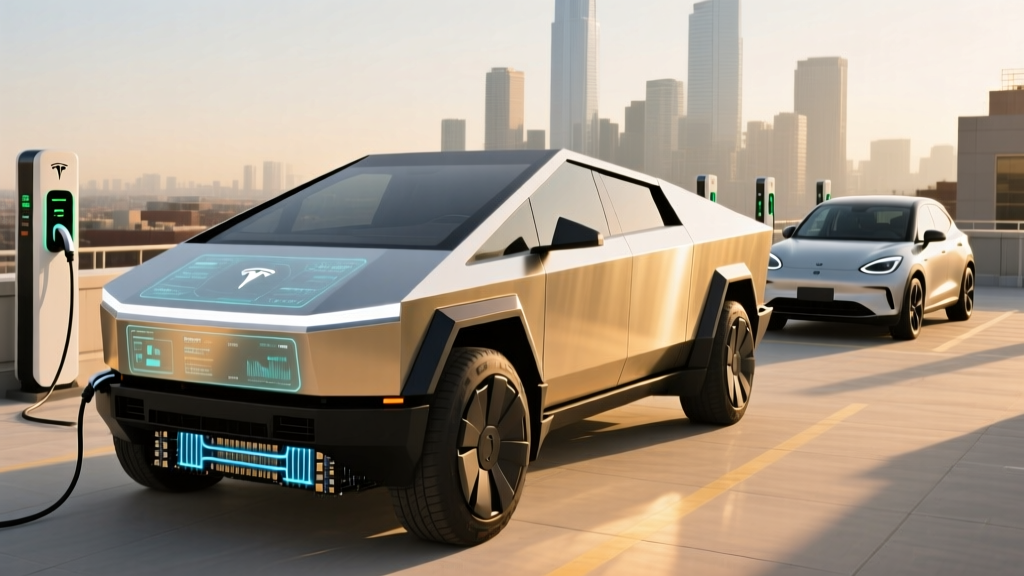
Search interest around why is Tesla Cybertruck trending has surged again in early 2026, driven by a collision of factors: Tesla finally ramping AWD and Cyberbeast production to meaningful volume, the first long-term ownership data surfacing from fleet buyers, and a polarizing price structure that starts near $80,000 before options. Unlike the 2023 unveiling hype cycle, today's conversation is grounded in real-world miles, actual charging curves, and IRS §30D tax-credit math. This review treats the Cybertruck not as a meme but as a $80K–$100K electric pickup competing against the Ford F-150 Lightning, Rivian R1T, and Chevrolet Silverado EV.
| Spec | AWD Trim | Cyberbeast Trim |
|---|---|---|
| EPA Estimated Range | 340 miles | 320 miles |
| Battery Capacity (usable) | ~123 kWh (NMC 4680 cells) | ~123 kWh (NMC 4680 cells) |
| Peak DC Fast Charge | ~250 kW (800V architecture) | ~250 kW (800V architecture) |
| 10–80% DC Fast Charge Time | ~27 minutes | ~27 minutes |
| Level 2 Home Charge Rate | 11.5 kW (~37 mi/hr) | 11.5 kW (~37 mi/hr) |
| 0–60 mph | 4.1 seconds | 2.6 seconds |
| Horsepower | 600 hp (dual-motor AWD) | 845 hp (tri-motor AWD) |
| Drivetrain | Dual-motor AWD | Tri-motor AWD |
| Max Towing Capacity | 11,000 lbs | 11,000 lbs |
| Payload Capacity | ~2,500 lbs | ~2,500 lbs |
| MPGe (combined) | 72 MPGe | 68 MPGe |
| Efficiency | ~48 kWh/100 mi | ~50 kWh/100 mi |
| Base MSRP (2026) | $79,990 | $99,990 |
| Battery & Drive Unit Warranty | 8 years / 120,000 miles | 8 years / 120,000 miles |
Real-World Range: What the EPA Sticker Doesn't Tell You
The Cybertruck AWD carries an EPA-estimated 340 miles of range; the tri-motor Cyberbeast drops to 320 miles. Those numbers come from Tesla's official filings on fueleconomy.gov. But the Cybertruck's defining physical trait — its angular stainless-steel exoskeleton — creates a drag coefficient around 0.38, far higher than a Model Y's ~0.23. That aero penalty shows up most on the highway.
- EPA sticker: 340 mi (AWD) / 320 mi (Cyberbeast)
- 70-mph highway loop (mild weather): expect ~270–290 mi (AWD)
- 30°F winter highway driving: expect ~210–240 mi (AWD), due to battery preconditioning load and cabin heat
- Towing a 5,000-lb trailer at 65 mph: range roughly halves to ~150–170 mi
The 4680 NMC pack's thermal management is robust — Tesla's heat pump and octovalve system precondition the battery efficiently — but physics wins. Heavy, boxy, stainless-steel trucks lose more range to speed and cold than sleek crossovers.
Charging Speed: 800V Architecture, Real-World Curve
The Cybertruck uses an 800-volt electrical architecture with Tesla's 4680 structural battery pack. Peak DC fast-charge rate is approximately 250 kW at a V4 Supercharger, yielding a 10–80% session in roughly 27 minutes under ideal thermal conditions. That's competitive with the Hyundai Ioniq 5's 800V system but falls short of the Lucid Air's sustained 300+ kW capability.
| Charging Level | Power (kW) | Speed (miles of range added per hour) | Notes |
|---|---|---|---|
| Level 1 (120V household) | ~1.4 kW | ~3–4 mi/hr | Emergency/trickle only; ~90+ hrs for full charge |
| Level 2 (240V, 48A Wall Connector) | 11.5 kW | ~37 mi/hr | Full charge in ~11 hours; ideal overnight setup |
| DC Fast Charge (V4 Supercharger) | ~250 kW peak | ~700+ mi/hr (peak) | 10–80% in ~27 min; tapers sharply above 80% |
| DC Fast Charge (CCS adapter, EA/Ionity) | ~150–200 kW typical | ~450–600 mi/hr (peak) | Requires Tesla CCS adapter; speed varies by network |
A critical nuance: the charge curve on the 4680 pack is aggressive at the bottom (high C-rate from 5–40% SoC) but tapers significantly above 80%. If you regularly charge to 100% at a Supercharger, budget 45–50 minutes, not 27. For daily driving, Tesla's own battery-management guidance recommends charging to 80% for NMC chemistry to minimize long-term degradation — only charge to 100% before long trips.
Home charging on a Tesla Wall Connector (11.5 kW / 48A) adds roughly 37 miles of range per hour, meaning an overnight 10-hour session replenishes ~370 miles — more than the truck's full usable capacity. Most owners will need a NEMA 14-50 outlet (40A circuit, 9.6 kW) or a hardwired Wall Connector installation; expect $800–$2,500 for a licensed electrician to install a dedicated 60A circuit, depending on panel proximity and local permit costs.
Performance, Capability, and the Cyberbeast Question
The dual-motor AWD Cybertruck hits 0–60 mph in 4.1 seconds with 600 horsepower — quick for a 6,800-pound truck and genuinely faster than most V8 full-size pickups. The tri-motor Cyberbeast (845 hp, 2.6 seconds 0–60) exists in a performance category with almost no peers outside the Rivian R1T Quad-Motor and Hummer EV. It's absurdly fast for a vehicle with an 11,000-pound tow rating, though that capability comes at the cost of efficiency (68 MPGe combined vs. 72 for the AWD).
Cargo space is where the Cybertruck diverges from traditional pickups. The 6-foot bed (called the "vault") offers approximately 74 cubic feet of lockable storage with the tonneau cover closed. The rear seats fold to expand interior cargo volume. However, the bed is narrower between the wheel wells than an F-150's, and the stainless-steel bed floor, while dent-resistant, is slippery — cargo slides without bed mats. Rear-seat legroom measures ~40.5 inches, adequate for adults on longer drives but less generous than the F-150 Lightning's crew cab.
The steer-by-wire system (Tesla calls it no mechanical linkage between yoke and rack) remains the most debated engineering choice. At low speeds, the variable ratio is remarkably tight (under two turns lock-to-lock); at highway speed, it firms up appropriately. Some drivers adapt within a day; others never trust the lack of physical feedback. Test-drive before committing.
Pricing, Tax Credits, and Total Cost Reality
For 2026, the Cybertruck lineup is priced aggressively for the luxury EV truck segment but remains far from the originally promised $40K price point:
| Trim | Base MSRP | Federal §30D Credit | Effective Price (if eligible) |
|---|---|---|---|
| AWD | $79,990 | $0 (exceeds MSRP cap) | $79,990 |
| Cyberbeast | $99,990 | $0 (exceeds MSRP cap) | $99,990 |
Why no federal tax credit? Under current IRS §30D rules, new clean vehicle credits are capped at $80,000 MSRP for vans, sport utility vehicles, and pickup trucks. The Cybertruck AWD at $79,990 technically sits at the threshold, but destination fees and mandatory options push it above. The Cyberbeast at $99,990 is far above the cap. Additionally, buyers face adjusted gross income limits ($150K single / $300K joint filers) and battery critical-mineral sourcing requirements that shift annually. Consult a tax professional before relying on any credit assumption.
State incentives vary: California's CVRP program, Colorado's $5,000 credit, and utility-company rebates may partially offset cost, but these are jurisdiction-specific and subject to funding availability. Check your state energy office for current programs.
Who Should Buy the Cybertruck (And Who Shouldn't)
- Class-leading acceleration (Cyberbeast: 2.6s 0–60)
- Stainless exoskeleton is dent- and corrosion-resistant
- Lockable vault with integrated ramp and 11,000-lb tow rating
- Access to Tesla Supercharger network (17,000+ stalls in North America)
- 800V architecture with competitive 10–80% charge times
- OTA updates continuously add features post-purchase
- No federal §30D tax credit due to MSRP cap
- Poor efficiency vs. competitors (48–50 kWh/100 mi)
- Real-world highway and winter range significantly below EPA
- Steer-by-wire polarizes drivers; not universally intuitive
- Bed is narrower and less configurable than F-150 Lightning
- Insurance premiums 20–40% above segment average (stainless repair costs)
- Panel gap and build-quality variability still reported by owners
The Cybertruck is best for: Tech-forward buyers who want a statement vehicle with genuine truck capability, primarily drive in urban/suburban environments where home charging handles daily needs, and value Tesla's Supercharger network for road trips. It suits a two-vehicle household where a second car handles heavy towing or long rural routes.
Look elsewhere if: You need maximum range-per-dollar (the F-150 Lightning Extended Range offers 320 miles at lower MSRP and qualifies for the $7,500 credit on eligible trims), you regularly tow heavy loads over long distances, or you prioritize traditional truck ergonomics (conventional steering wheel, wider bed, easier third-party upfitting).
How It Stacks Up Against Key Competitors
Against the Ford F-150 Lightning (EPA 320 mi, ~$55K starting, federal credit eligible on XLT/Lariat trims under MSRP cap), the Cybertruck trades efficiency and tax-credit savings for performance and Supercharger access. The Lightning is the pragmatic fleet and family choice; the Cybertruck is the enthusiast pick.
The Rivian R1T Dual-Motor (~$73K, EPA 352 mi with Max Pack) offers superior off-road capability with quad-motor torque vectoring and a more traditional truck interior. It qualifies for the §30D credit on eligible configurations. Rivian's Adventure Network is growing but remains a fraction of Tesla's Supercharger footprint.
The Chevrolet Silverado EV (4WT and RST trims, EPA up to 440 mi on RST) undercuts on range and offers Ultium-platform CCS charging, but its size and commercial orientation make it less suitable as a daily driver for most households.
Cybertruck FAQ: Trending Questions Answered
What is the real-world range of the Tesla Cybertruck?
The EPA rates the AWD at 340 miles and the Cyberbeast at 320 miles. In mixed real-world driving at highway speeds in mild weather, expect 270–290 miles. In winter conditions (below freezing) at highway speeds, that drops to 210–240 miles. Towing cuts range roughly in half.
How fast does the Cybertruck charge at home and on the road?
On a Level 2 Tesla Wall Connector (11.5 kW), it adds ~37 miles of range per hour, fully charging overnight in about 11 hours. At a V4 Supercharger, it peaks at ~250 kW and charges from 10–80% in approximately 27 minutes, though the curve tapers sharply above 80% SoC.
Does the Cybertruck qualify for the federal EV tax credit?
No, in practice. While the AWD's base MSRP of $79,990 sits at the §30D cap for trucks, destination fees push it over. The Cyberbeast at $99,990 is well above the $80,000 MSRP cap. Even if MSRP qualified, buyers must meet income limits ($150K single / $300K joint) and the vehicle must satisfy battery critical-mineral and component sourcing rules, which tighten annually. Verify with a tax professional and the IRS clean vehicle credit page.
Is the Cybertruck worth buying vs. the F-150 Lightning or Rivian R1T?
If you prioritize acceleration, Supercharger network access, and the stainless-steel aesthetic, the Cybertruck has no direct rival. If you need maximum range, federal tax-credit eligibility, a wider bed, or conventional steering, the F-150 Lightning or Rivian R1T are stronger choices. Test-drive all three — steer-by-wire feel is the deciding factor for many buyers.
What are the biggest Cybertruck drawbacks owners report?
Insurance costs (stainless-steel body repair is specialized and expensive), panel-gap variability on early builds, the learning curve of steer-by-wire, poor cold-weather range relative to EPA estimates, and the inability to use third-party bed accessories designed for conventional truck beds. Some owners also report wind noise at highway speeds around the tonneau cover seals.
Does the Cybertruck have Autopilot or Full Self-Driving?
Yes, it ships with Tesla Autopilot (SAE Level 2 driver assistance) and offers FSD (Supervised) as a paid upgrade. Both require continuous driver attention and hands-on or eyes-on engagement. This is not autonomous driving — the driver is legally and operationally responsible at all times. Only Level 4 services like Waymo operate without a human driver in geofenced areas.
Sources: EPA range and efficiency data from fueleconomy.gov; federal tax credit rules from IRS §30D Clean Vehicle Credits; safety and crash data from NHTSA. Pricing and specifications reflect 2026 model year as published by Tesla. State and local incentives vary; verify with official program sources.