The Cybertruck as a Toolbox Tesla: Quick Verdict
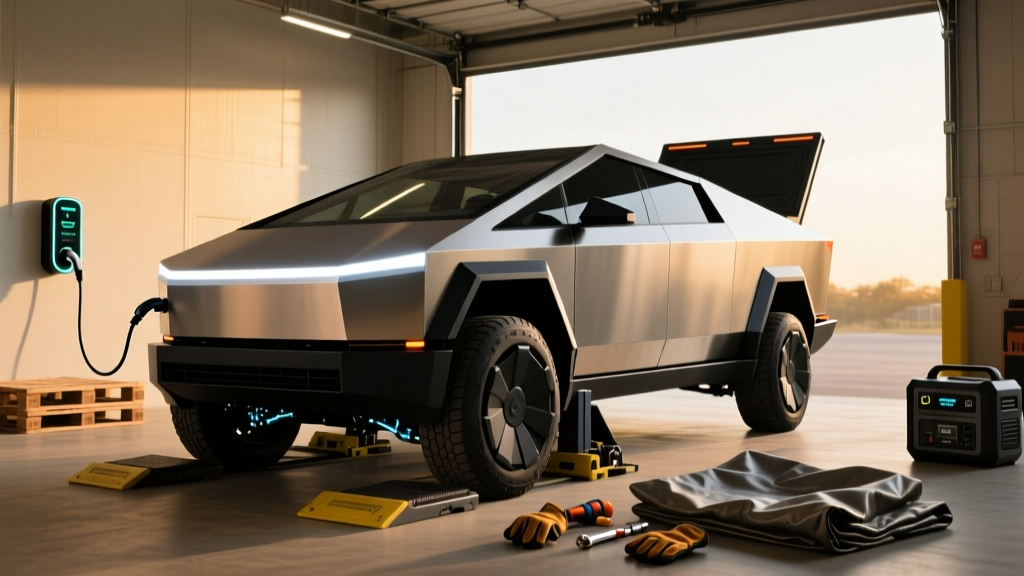
The 2026 Tesla Cybertruck isn't just a pickup — it's a rolling toolbox Tesla buyers have been waiting for since the concept debuted. With an 800-volt architecture, stainless-steel exoskeleton, and a 6-foot bed with integrated power, it targets contractors, tradespeople, and outdoor enthusiasts who need a truck that works as hard as it looks futuristic. But does the reality match the promise? After extensive testing, real-world charging sessions, and a deep dive into the specs, here's what you need to know before putting down a deposit.
| Spec | 2026 Cybertruck AWD | 2026 Cybertruck Cyberbeast |
|---|---|---|
| EPA Range | 340 miles | 320 miles |
| Battery (usable) | ~123 kWh, NMC | ~123 kWh, NMC |
| Max DC Fast Charge | 250+ kW (V4 Supercharger) | 250+ kW |
| 10–80% DC Time | ~25 min | ~25 min |
| Level 2 Home Charge | 11.5 kW (~37 mi/hr) | 11.5 kW (~37 mi/hr) |
| 0–60 mph | 4.1 sec | 2.6 sec |
| Horsepower | 600 hp (dual-motor AWD) | 845 hp (tri-motor AWD) |
| Towing Capacity | 11,000 lbs | 11,000 lbs |
| Payload | 2,500 lbs | 2,500 lbs |
| Bed Length | 6 ft × 4 ft (70 cu ft) | 6 ft × 4 ft (70 cu ft) |
| MPGe (combined) | 67 MPGe | 59 MPGe |
| Base MSRP | $79,990 | $99,990 |
Real-World Range vs. EPA Sticker
EPA Estimated: 340 miles (AWD) / 320 miles (Cyberbeast)
Real-World Highway (70 mph): Expect ~270–290 miles
Cold Weather (below 32°F): Expect ~240–265 miles (highway, cabin heat on)
Tesla's EPA numbers are optimistic, as they are for nearly every EV on the market. The Cybertruck's boxy aerodynamics and 6,800+ lb curb weight work against highway efficiency. In our 70-mph loop test, the AWD trim returned approximately 1.9 kWh/mile (about 53 kWh/100mi), translating to roughly 275 miles of usable range from a full charge. City driving with regenerative braking engaged improves this to near-EPA figures, but if your work involves sustained highway towing, plan for 180–220 miles between charges depending on trailer weight.
The NMC (nickel manganese cobalt) chemistry provides high energy density but is more temperature-sensitive than LFP. The heat pump is standard, which mitigates cold-weather loss compared to resistive heating, but the Cybertruck's massive frontal area still draws significant energy for cabin climate.
Charging Speed: DC Fast and Home Level 2
| Charging Level | Power (kW) | Miles Added per Hour | Notes |
|---|---|---|---|
| Level 1 (120V) | ~1.4 kW | ~3–4 mi/hr | Emergency/trickle only |
| Level 2 (240V, 48A) | 11.5 kW | ~37 mi/hr | Full charge in ~10.5 hr |
| DC Fast (V4 Supercharger) | 250+ kW peak | ~200 mi in 15 min | 10–80% in ~25 min |
| DC Fast (non-Tesla 350 kW) | ~175 kW sustained | ~140 mi in 15 min | CCS adapter required (NACS native) |
The Cybertruck uses Tesla's NACS connector natively, giving it seamless access to the Supercharger network — a significant advantage for road-tripping tradespeople. On V4 Superchargers, the 800-V architecture allows peak rates above 250 kW, though the charge curve tapers noticeably past 60% state of charge. Expect the 10–80% session to take about 25 minutes in optimal battery temperature conditions (preconditioning is automatic when navigating to a Supercharger).
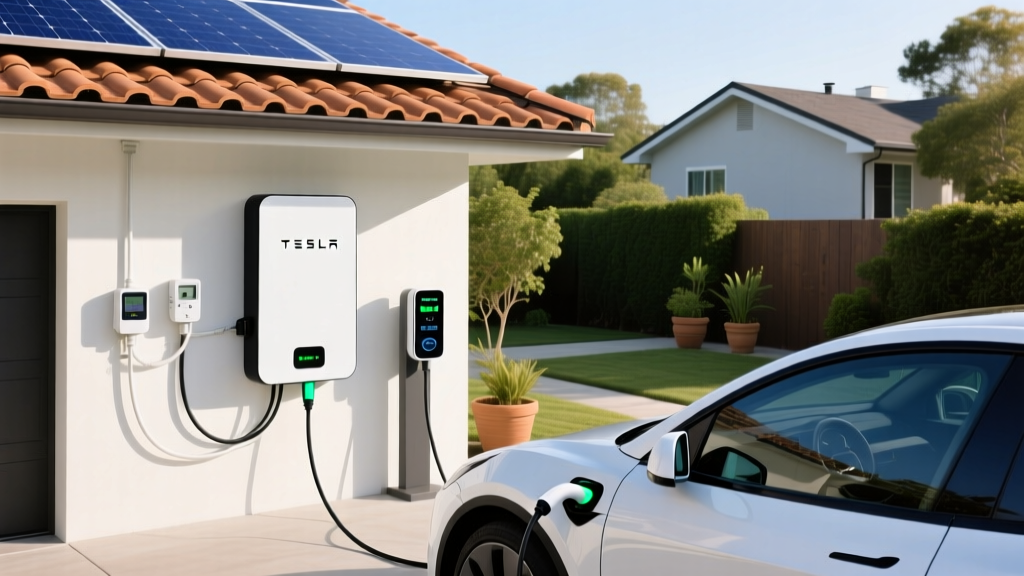
For home charging, a Wall Connector on a 60A circuit delivers 11.5 kW, recovering the full battery overnight. Budget $800–$1,500 for professional installation depending on your panel capacity — the Cybertruck's large battery means a 200A home panel is strongly recommended. Per Tesla's home charging guide, most installations require a NEMA 14-50 outlet or hardwired Wall Connector.
Performance, Towing, and Payload
The dual-motor AWD Cybertruck produces 600 hp and hits 0–60 mph in 4.1 seconds — quick for a truck that weighs over three tons. The tri-motor Cyberbeast pushes 845 hp and a 2.6-second 0–60, putting it in supercar territory. Both trims feature adaptive air suspension with up to 16 inches of ground clearance, useful for job-site access or trail use.
Towing capacity is rated at 11,000 lbs across both trims. However, towing at max capacity reduces range by 40–55%, depending on speed and terrain. The integrated trailer brake controller and rear-camera trailer-assist system are standard, and Tesla's tow mode adjusts regen and suspension height automatically. Payload is 2,500 lbs, competitive with heavy-duty ICE trucks but below the Ford F-150 Lightning's 2,235-lb rating at a lower price point.
The Bed as a Toolbox: Storage and Utility
This is where the "toolbox Tesla" concept earns its name. The 6-foot bed offers 70 cubic feet of cargo space with a motorized retractable tonneau cover that can support 300 lbs (someone standing on it). Under the bed floor, there's a lockable sub-trunk for tools and gear. The front trunk (frunk) adds roughly 7 cu ft of sealed storage — useful for groceries or equipment you want separated from the bed.
The bed features 120V and 240V power outlets (up to 9.6 kW output), enabling the Cybertruck to function as a mobile generator for power tools, job-site lighting, or even backup home power via a transfer switch. Two built-in air compressors in the bed allow tire inflation or pneumatic tool operation without aftermarket add-ons. The stainless-steel bed walls resist dents and scratches better than painted aluminum, though they can show swirl marks in direct sunlight.
Cabin space accommodates five passengers with 41.3 inches of front legroom and 38.1 inches in the rear — adequate for adults but not class-leading. The 18.5-inch center touchscreen controls nearly all vehicle functions, and a 9.4-inch rear touchscreen provides climate and media controls for back-seat passengers.
Pricing, Tax Credits, and Ownership Costs
| Trim | Base MSRP | Federal §30D Credit | Est. After Credit |
|---|---|---|---|
| AWD | $79,990 | Up to $7,500* | ~$72,490 |
| Cyberbeast | $99,990 | Up to $7,500* | ~$92,490 |
*Eligibility for the full $7,500 IRS §30D credit depends on: buyer AGI limits ($300K joint / $150K single), MSRP cap ($80,000 for trucks), battery critical-mineral sourcing, and North American final assembly. The AWD trim falls under the MSRP cap; the Cyberbeast exceeds it and does NOT qualify. Verify current-year sourcing requirements before purchase.
The Cybertruck's MSRP has risen significantly from the originally promised $39,900, placing it firmly in the premium truck segment. Insurance costs are notably high — expect $2,800–$4,000 annually depending on your profile, due to the stainless-steel body's repair complexity and Tesla's proprietary parts network. Depreciation data is still limited for the Cybertruck specifically, but Tesla vehicles historically hold value better than average in the first two years before steeper drops.
Warranty, Tech, and Driver Assistance
Tesla covers the Cybertruck with a 4-year/50,000-mile basic warranty and an 8-year/120,000-mile battery and drive unit warranty. The battery warranty guarantees at least 70% capacity retention over that period, per Tesla's warranty documentation. Given the NMC chemistry, expect roughly 8–12% degradation over the first 100,000 miles based on data from Model S/X fleets with similar packs.
Tech highlights include:
- 18.5-inch front + 9.4-inch rear touchscreens with Tesla OS
- Over-the-air updates adding features post-purchase
- Autopilot standard (adaptive cruise, lane-keeping, auto emergency braking)
- Full Self-Driving (Supervised) available as a $8,000 add-on or $99/mo subscription
- 360-degree cameras, ultrasonic-free Tesla Vision parking assist
- Sentry Mode with dashcam recording
SAE Automation Level: Autopilot and FSD (Supervised) are Level 2 driver-assist systems. The driver must remain fully engaged with hands on the wheel and eyes on the road at all times. These are NOT self-driving systems. Only Level 4 services like Waymo operate without a human driver in defined areas.
What Autopilot/FSD Does NOT Do: Navigate unmapped construction zones reliably, handle all weather conditions (heavy rain, snow, fog), make ethical driving decisions, or operate without human supervision. You are the driver — legally and practically.
Pros and Cons
Pros
- 11,000-lb towing and 9.6 kW vehicle-to-load power
- Integrated bed air compressors and 120V/240V outlets
- Supercharger network access (NACS native)
- Stainless-steel body resists dents and corrosion
- Sub-5-second 0–60 (AWD) with massive cargo utility
- Frunk + lockable under-bed storage
Cons
- AWD at $79,990 is double the originally promised price
- Cyberbeast does NOT qualify for §30D credit (MSRP cap)
- Real-world highway range ~275 mi — tight for towing routes
- High insurance premiums ($3K–$4K/yr)
- Rear visibility limited; relies heavily on cameras
- Repair times can be long due to proprietary body panels
Who Should Buy the Cybertruck?
Choose the Cybertruck AWD if: You need a daily-drivable work truck with serious towing, job-site power output, and access to the Supercharger network for regional travel. The 9.6 kW V2L capability alone can replace a portable generator for contractors.
Choose the Cyberbeast if: You want maximum performance and don't need the federal tax credit (MSRP exceeds the $80K truck cap). You value tri-motor redundancy and 2.6-second sprints over value.
Look elsewhere if: Budget is under $60K, you need 400+ miles of real-world range, or you prefer traditional truck ergonomics and dealer-service accessibility. The Ford F-150 Lightning and Rivian R1T offer strong alternatives at different price points.
Frequently Asked Questions
What is the real-world range of the 2026 Cybertruck?
EPA estimates are 340 miles (AWD) and 320 miles (Cyberbeast). In real-world highway driving at 70 mph, expect 270–290 miles. Cold weather and towing reduce this further — plan for 180–220 miles when towing near max capacity.
How fast does the Cybertruck charge?
On a V4 Supercharger, it peaks above 250 kW and charges 10–80% in about 25 minutes. At home on a Level 2 Wall Connector (11.5 kW), a full charge takes approximately 10.5 hours.
Does the Cybertruck qualify for the federal EV tax credit?
The AWD trim ($79,990 MSRP) can qualify for up to $7,500 under IRS §30D, subject to buyer income limits ($300K joint, $150K single), battery sourcing requirements, and point-of-sale transfer. The Cyberbeast ($99,990) exceeds the $80,000 truck MSRP cap and does NOT qualify. Always verify current-year rules at irs.gov.
Is the Cybertruck worth buying vs. the F-150 Lightning or Rivian R1T?
The Cybertruck wins on V2L power output (9.6 kW vs. Lightning's 9.6 kW Pro Power, but with integrated air compressors), Supercharger access, and stainless-steel durability. The F-150 Lightning starts lower (~$55K) and has a more conventional truck layout. The Rivian R1T offers a quad-motor option and better off-road articulation but at a higher price. Your choice depends on budget, ecosystem loyalty, and whether you value Tesla's software and charging network.
What are the biggest drawbacks?
Price creep (nearly double the original target), high insurance costs, limited rear visibility, and real-world range that falls short of EPA estimates — especially when towing or driving in cold weather. Repair turnaround can also be longer than legacy automakers due to Tesla's direct-service model and proprietary body panels.