Quick Verdict: The Cybertruck's Tax-Credit Reality
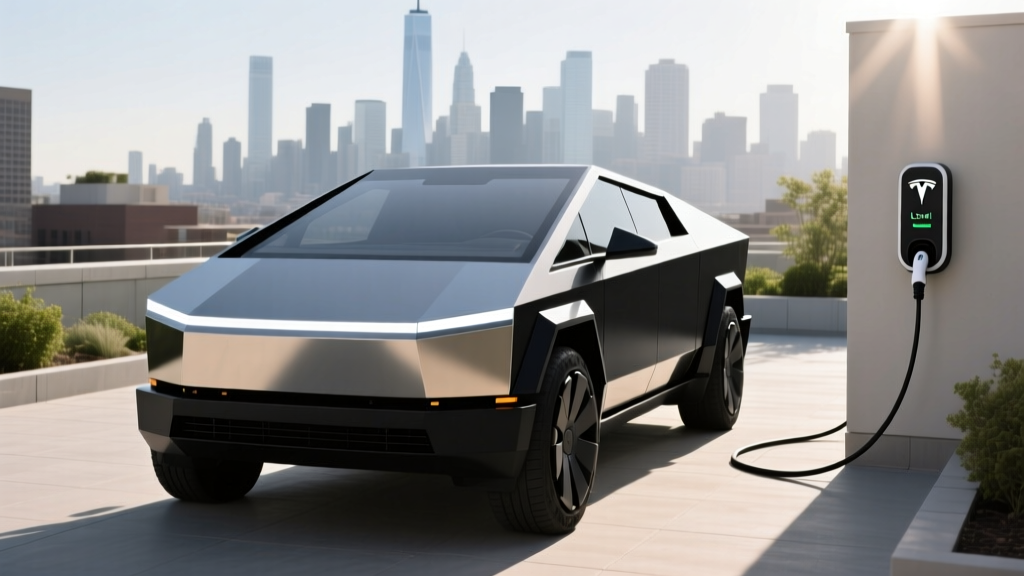
The 2026 Tesla Cybertruck remains one of the most polarizing electric vehicles on the road — a stainless-steel exoskeleton with supercar acceleration and genuine truck capability. But for buyers researching the Tesla Cybertruck tax credit, the picture is complicated. As of the 2026 tax year, the Cybertruck does not qualify for the full $7,500 federal EV tax credit under IRS §30D due to evolving critical-mineral and battery-component sourcing requirements. Buyers may still capture partial credit or leverage point-of-sale lease structures, but you should verify your specific eligibility before signing.
Beyond the incentive question, the Cybertruck delivers 320–340 miles of EPA-rated range, peaks at 250 kW DC fast charging, and offers a 11,000-lb towing capacity that few EVs can match. Here's everything you need to know to decide if it's the right truck for you.
2026 Cybertruck Specs at a Glance
| Spec | AWD (Dual-Motor) | Cyberbeast (Tri-Motor) |
|---|---|---|
| EPA Range | 340 mi | 320 mi |
| Battery (usable) | ~123 kWh, NMC | ~123 kWh, NMC |
| MPGe (combined) | 72 MPGe | 70 MPGe |
| Efficiency | 47 kWh/100 mi | 48 kWh/100 mi |
| 0–60 mph | 3.9 sec | 2.6 sec |
| Horsepower | 600 hp | 845 hp |
| Drivetrain | Dual-motor AWD | Tri-motor AWD |
| Max DC Charge Rate | 250 kW | 250 kW |
| 10–80% DC Charge | ~28 min | ~28 min |
| Level 2 Home Rate | 11.5 kW (~37 mi/hr) | 11.5 kW (~37 mi/hr) |
| Towing Capacity | 11,000 lb | 11,000 lb |
| Payload | 2,500 lb | 2,500 lb |
| Base MSRP | $79,990 | $99,990 |
| Battery/Drive Warranty | 8 yr / 120,000 mi | 8 yr / 120,000 mi |
Range & Real-World Efficiency
The Cybertruck's angular, flat-panel stainless-steel body gives it a drag coefficient around 0.335 — respectable for a truck but far less aerodynamic than a sedan like the Model S (0.208). That bluff front area is the primary reason efficiency sits at 47–48 kWh/100 mi, which translates to 70–72 MPGe. For context, the Rivian R1T dual-motor achieves 73 MPGe combined, while the Ford F-150 Lightning extended-range posts 70 MPGe. The Cybertruck is in the right neighborhood but not class-leading.
The ~123 kWh usable battery pack uses nickel-manganese-cobalt (NMC) chemistry, chosen for its high energy density — necessary to push a 6,800-lb vehicle past 300 miles. NMC cells degrade somewhat faster than lithium iron phosphate (LFP) over thousands of cycles, but Tesla's 8-year/120,000-mile battery warranty (covering degradation below 70% capacity) provides a solid floor. According to fueleconomy.gov, the AWD model achieves 72 MPGe combined across its test cycles.
Charging Speed: DC Fast & Home Level 2
| Charging Level | Power (kW) | Speed | Notes |
|---|---|---|---|
| Level 1 (120V) | 1.2 kW | ~3 mi/hr | Emergency/trickle only |
| Level 2 (240V, 48A) | 11.5 kW | ~37 mi/hr | Full overnight charge in ~9 hrs |
| DC Fast (peak) | 250 kW | ~150 mi in 15 min | At V4 Supercharger or CCS-equivalent |
| DC Fast (10–80%) | — | ~28 min | Charge curve tapers sharply above 80% |
The Cybertruck supports a peak DC fast-charge rate of 250 kW via the NACS (North American Charging Standard) connector, which is now native to Tesla's Supercharger network. At a V3 or V4 Supercharger, you'll see peak rates between 150–250 kW depending on state of charge and battery temperature. The critical detail: the charge curve tapers significantly above 60% state of charge. You'll pull maximum current between roughly 10–40%, then see a gradual ramp-down. Charging from 80–100% on DC fast is painfully slow — plan your road trips around 10–80% stops for optimal time efficiency.
For home charging, the onboard charger accepts up to 11.5 kW on a 240V/48A Level 2 circuit. That adds roughly 37 miles of range per hour, meaning a depleted pack takes about 9 hours to refill — easily accomplished overnight. A Tesla Wall Connector (~$475) installed on a dedicated 60A circuit typically costs $800–$2,000 including electrician labor, depending on panel proximity and local permit fees.
One practical note for road-trippers: Tesla's navigation system now preconditions the battery automatically when you route to a Supercharger. This warms the pack to optimal temperature for maximum charge acceptance, shaving 5–10 minutes off a typical stop. If you're charging at a non-Tesla DC fast station (increasingly rare with NACS adoption, but still relevant), preconditioning won't activate automatically — you'll need to enable it manually in settings or accept a slower initial charge rate.
Federal Tax Credit: Does the Cybertruck Qualify?
This is the question driving most Cybertruck research. Under the current IRS §30D Clean Vehicle Credit, the Cybertruck faces multiple eligibility hurdles:
- MSRP Cap: Trucks must have an MSRP at or below $80,000. The AWD trim at $79,990 squeaks under this cap; the Cyberbeast at $99,990 does not qualify.
- Buyer Income Cap: Modified adjusted gross income must not exceed $300,000 (joint filers), $225,000 (head of household), or $150,000 (single).
- Battery Sourcing: A percentage of critical minerals must be sourced from the U.S. or FTA-partner countries, and battery components must be manufactured or assembled in North America. These thresholds tighten annually. As of the 2026 tax year, the Cybertruck's battery supply chain does not fully satisfy these requirements for the maximum $7,500 credit.
| Credit Component | Amount | Cybertruck AWD Eligibility |
|---|---|---|
| Critical Minerals (§30D(e)(1)) | Up to $3,750 | Partial — verify current sourcing on IRS qualified list |
| Battery Components (§30D(e)(2)) | Up to $3,750 | Partial — verify current sourcing on IRS qualified list |
| Total Possible Credit | $7,500 | Varies — check fueleconomy.gov tax center |
| Point-of-Sale Transfer | Available | Yes, if any credit amount qualifies |
One workaround some buyers have used: leasing the Cybertruck through Tesla's financing arm. Under the commercial clean vehicle credit (§45W), the lessor may capture a $7,500 credit and pass savings through as a reduced lease payment. This bypasses the MSRP and income caps, but it means you don't own the vehicle. Consult your tax advisor on whether this structure works for your situation.
Performance, Tech & Daily Livability
The Cybertruck's performance is genuinely startling for a vehicle this size. The dual-motor AWD model hits 0–60 mph in 3.9 seconds — quicker than most sports sedans. The tri-motor Cyberbeast does it in 2.6 seconds, placing it in hypercar territory. Both versions feature adaptive air suspension with up to 12.3 inches of ground clearance in Off-Road mode and 16 inches of approach angle for trail use.
On the technology front, the Cybertruck runs Tesla's latest infotainment stack on an 18.5-inch center touchscreen with a 9.4-inch rear-seat display. The vehicle supports Tesla Autopilot as standard (adaptive cruise control, lane centering, automatic emergency braking) and offers Full Self-Driving (Supervised) as a $8,000 option or $99/month subscription.
Interior space is surprisingly practical. Front legroom measures 41.5 inches, and rear legroom comes in at 38.2 inches — adequate for adults on shorter trips, tighter than a full-size F-150 SuperCrew for long hauls. The 6-foot bed (6.5-foot with tailgate down) offers 67 cubic feet of cargo volume, and the front trunk (frunk) adds 7.1 cubic feet of lockable, weatherproof storage — a genuine advantage over ICE trucks.
The stainless-steel exoskeleton eliminates the need for paint, which Tesla positions as both a cost-saving and durability feature. In practice, the panels resist minor scratches but show fingerprints aggressively and are difficult to repair after dents. Panel-gap consistency has improved on 2025–2026 builds compared to early-production units, but build quality still lags legacy automakers in fit-and-finish details.
Pricing, Ownership Cost & Competitor Comparison
| Trim | Base MSRP | Est. Tax Credit | Effective Price |
|---|---|---|---|
| AWD (Dual-Motor) | $79,990 | $0–$3,750* | $76,240–$79,990 |
| Cyberbeast (Tri-Motor) | $99,990 | $0 (exceeds MSRP cap) | $99,990 |
*Credit amount depends on battery-sourcing compliance at time of delivery and buyer income eligibility. Verify on IRS qualified-vehicle list.
Insurance costs for the Cybertruck run higher than average for the EV segment — expect $2,400–$3,600 annually depending on your profile and state, driven by the vehicle's repair complexity and high replacement parts cost. Tesla offers its own insurance product in many states, priced on real-time driving behavior, which can reduce premiums for careful drivers.
How does it stack up against the competition?
| Vehicle | EPA Range | 0–60 | Towing | Base MSRP | Tax Credit |
|---|---|---|---|---|---|
| Tesla Cybertruck AWD | 340 mi | 3.9s | 11,000 lb | $79,990 | Partial* |
| Rivian R1T Dual-Motor | 352 mi | 4.5s | 11,000 lb | $69,900 | Likely $7,500 |
| Ford F-150 Lightning Ext. Range | 320 mi | 5.0s | 10,000 lb | $69,995 | Likely $7,500 |
| Chevy Silverado EV 4WT | 440 mi | 5.5s | 10,000 lb | $74,800 | Likely $7,500 |
The Rivian R1T and Ford F-150 Lightning are more likely to qualify for the full $7,500 credit due to established North American battery supply chains, making their effective prices significantly lower than the Cybertruck AWD. The Silverado EV leads on range. The Cybertruck's advantages are its tri-motor Cyberbeast performance (no competitor matches 2.6 seconds), Supercharger network access, and the polarizing-but-distinctive design that turns heads unlike any other truck.
Pros, Cons & Who Should Buy
- Class-leading acceleration, especially Cyberbeast
- 11,000-lb towing with integrated trailer tech
- NACS Supercharger network (most reliable DC charging)
- Stainless-steel body resists corrosion and eliminates paint
- Frunk + vault bed with powered tonneau cover
- Over-the-air updates continuously add features
- Federal tax credit eligibility uncertain/partial
- Efficiency (47–48 kWh/100 mi) trails Rivian R1T
- Rear-seat comfort limited vs. full-size crew cabs
- Stainless panels show fingerprints and are hard to repair
- Visibility compromised by thick A-pillars and angular rear
- Insurance premiums above EV segment average
The Cybertruck is best for: Tech-forward buyers who want a daily-driver truck with supercar performance, frequent Supercharger road-trip capability, and a design that stands apart. It suits solo commuters, couples, and light-family use cases better than large families who need full-size rear-seat comfort.
Look elsewhere if: You need the maximum federal tax credit, prioritize rear-seat space for three adults, or want a proven work-truck dealer service network. The Rivian R1T or F-150 Lightning may be better fits for those needs.
Frequently Asked Questions
Does the 2026 Tesla Cybertruck qualify for the $7,500 federal EV tax credit?
Not fully. The AWD trim at $79,990 is under the $80,000 MSRP cap, but battery-sourcing requirements for critical minerals and components may limit the credit to $3,750 or less. The Cyberbeast exceeds the MSRP cap entirely and does not qualify. Always verify current eligibility on the IRS qualified-vehicle list before purchasing.
What is the real-world range of the Cybertruck?
Expect 270–300 miles on the highway in moderate weather for the AWD model (EPA: 340 mi). In freezing temperatures, plan for 220–250 miles. City driving with regenerative braking can approach or exceed the EPA estimate.
How fast does the Cybertruck charge at home and on the road?
At home on a 240V/48A Level 2 charger, it adds ~37 miles per hour (full charge in ~9 hours). On a DC fast charger, it peaks at 250 kW and charges 10–80% in approximately 28 minutes, though the charge curve tapers significantly above 60% SoC.
Is the Cybertruck worth buying over the Rivian R1T or F-150 Lightning?
It depends on priorities. The Cybertruck wins on acceleration, Supercharger access, and design uniqueness. The R1T offers better efficiency, a more refined interior, and likely qualifies for the full $7,500 tax credit. The F-150 Lightning offers superior rear-seat space, dealer service infrastructure, and also likely qualifies for the full credit.
What is the battery warranty on the Cybertruck?
Tesla covers the battery and drive unit for 8 years or 120,000 miles (whichever comes first), guaranteeing at least 70% capacity retention over that period. This is competitive with Rivian's 8-year/175,000-mile battery warranty and Ford's 8-year/100,000-mile coverage.
Can I use a Cybertruck for towing on road trips?
Yes, with caveats. The 11,000-lb rating is genuine, but towing near max capacity cuts range roughly in half — expect 150–180 miles between charges when pulling a heavy trailer. Tesla's integrated trailer brake controller and hitch-assist camera system make the experience manageable, but plan charging stops carefully on long hauls.