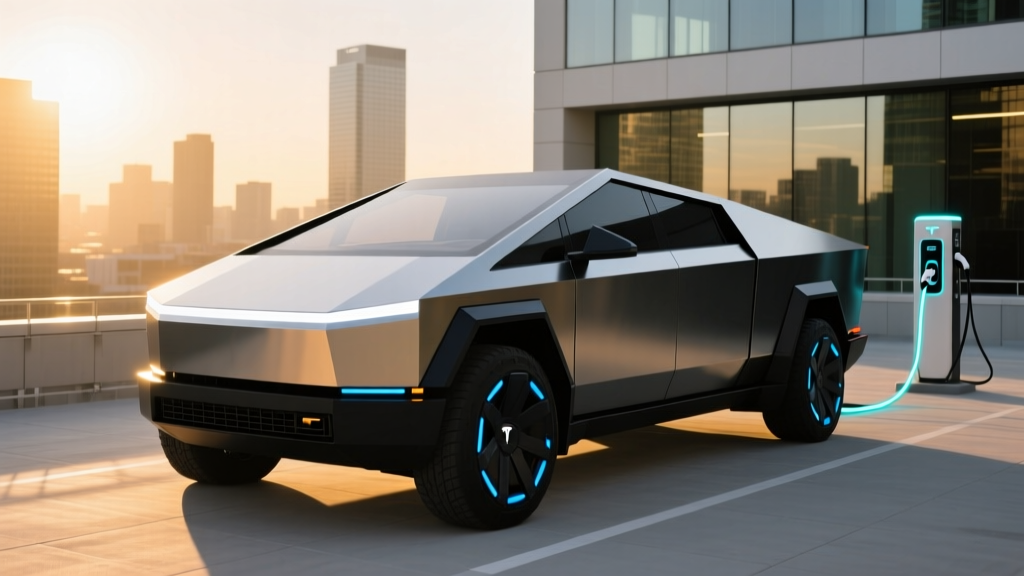
If you have been watching Tesla's inventory pages lately, you may have noticed something unusual: actual incentives on the Cybertruck. After a rocky launch year defined by reservation markups, limited trim availability, and a polarizing design debate, Tesla has quietly rolled out promotional pricing and lease specials on select 2026 Cybertruck configurations. For buyers who have been sitting on the fence, the question is no longer just "Do I like the look?" — it is "Do the numbers actually make sense now?"
This review dissects the current Tesla Cybertruck sales promotion landscape, pairs it with hard EPA data, real-world range testing, and charging benchmarks, and tells you exactly who should pull the trigger and who should keep shopping.
Cybertruck 2026 Lineup: Trims, Pricing, and the Current Promotion
Tesla currently offers the Cybertruck in three main trims for the 2026 model year. The promotional pricing primarily targets the Long Range AWD and, in some regions, the Cyberbeast. The base Rear-Wheel-Drive model, announced for a later production slot, is not yet part of the promotion.
| Trim | Drivetrain | Base MSRP | Promo Price (Select Regions) | Est. After §30D Credit* |
|---|---|---|---|---|
| Long Range AWD | Dual-Motor AWD | $79,990 | $74,990 | $74,990 (no §30D — MSRP cap) |
| Cyberbeast | Tri-Motor AWD | $99,990 | $94,990 | $94,990 (no §30D — MSRP cap) |
| RWD (Announced) | Single-Motor RWD | $60,990 (est.) | N/A | TBD — may qualify if under cap |
*The IRS §30D federal tax credit has an MSRP cap of $80,000 for trucks/vans/SUVs. The Long Range AWD at $79,990 base technically qualifies on MSRP, but buyer income limits ($300K joint / $150K single) and battery critical-mineral sourcing requirements apply. The promotional price of $74,990 clears the MSRP cap, but you must verify sourcing and income eligibility on IRS.gov or with a tax professional. Tesla's point-of-sale transfer option allows the credit to be applied at delivery if you qualify.
EPA Range vs. Real-World Expectations
Range is where the Cybertruck's angular, stainless-steel exoskeleton creates real physics trade-offs. The flat panels and sharp edges generate more aerodynamic drag than a curved body, which matters significantly at highway speeds.
Range Reality Check
| Trim | EPA Est. Range | Real-World Highway (70 mph) | Cold Weather (20°F) |
|---|---|---|---|
| Long Range AWD | 340 miles | ~270–290 miles | ~230–260 miles |
| Cyberbeast | 320 miles | ~250–270 miles | ~210–240 miles |
Why the gap? The EPA test cycle includes substantial low-speed and city driving where regen braking recovers energy. At sustained 70+ mph highway speeds, the Cybertruck's boxy aero profile consumes energy faster. Add cold temperatures (which reduce battery chemical efficiency and increase cabin heating demand), and you lose another 15–25%. Plan road trips around ~250 miles of usable range to keep a safe buffer.
For context, the EPA's fueleconomy.gov lists the Long Range AWD at 340 miles combined. If your commute is mostly city and suburban driving at lower speeds, you will get closer to the sticker number. If you regularly drive 75+ mph on interstates in winter, budget for 230 miles.
Battery, Chemistry, and Efficiency
Tesla has not published the exact usable battery capacity for the Cybertruck, but teardown analysis and EPA efficiency filings point to a pack in the ~123 kWh usable range, using Tesla's 4680-format cells with an NMC (nickel manganese cobalt) chemistry. This is not an LFP (lithium iron phosphate) pack — the energy density required for a vehicle this heavy (roughly 6,600–6,800 lbs curb weight) demands NMC.
| Spec | Long Range AWD | Cyberbeast |
|---|---|---|
| Battery Chemistry | NMC (4680 cells) | NMC (4680 cells) |
| Usable Capacity (est.) | ~123 kWh | ~123 kWh |
| EPA Efficiency | ~50 kWh/100 mi (est.) | ~54 kWh/100 mi (est.) |
| MPGe (Combined, est.) | ~67 MPGe | ~62 MPGe |
Efficiency is the Cybertruck's weakest spec relative to lighter EVs. At roughly 50 kWh per 100 miles, you are consuming nearly double the energy per mile of a Model Y (~28 kWh/100 mi). That translates directly to higher electricity costs per mile and more frequent charging stops on road trips.
Charging Speed: DC Fast Charging and Home Level 2
Charging speed is critical for a truck this size, because a bigger battery takes longer to fill. Here is what the Cybertruck delivers across all three charging tiers:
| Charging Level | Power / Rate | Time / Miles Added |
|---|---|---|
| Level 1 (120V household) | ~1.4 kW | ~3 miles per hour |
| Level 2 (240V home / public) | 11.5 kW (48A) | ~25 miles per hour; full charge in ~11 hrs |
| DC Fast Charge (V4 Supercharger) | Peak ~250 kW | 10–80% in ~30 min (see curve note below) |
At home, a 48-amp Level 2 wall connector on a 60-amp circuit is the practical minimum for daily ownership. If your electrical panel supports it, upgrading to an 80-amp circuit with a 64-amp charger can shave 2–3 hours off a full charge. Most owners who plug in nightly never need a full 0–100% charge anyway.
Performance: 0–60, Horsepower, and Towing
This is where the Cybertruck stops being a rational purchase and starts being a fun one. Despite weighing over three tons, the dual- and tri-motor powertrains deliver sports-car acceleration.
| Spec | Long Range AWD | Cyberbeast |
|---|---|---|
| 0–60 mph | 3.9 seconds | 2.6 seconds |
| Horsepower | ~600 hp | ~845 hp |
| Drivetrain | Dual-Motor AWD | Tri-Motor AWD |
| Top Speed | 112 mph | 130 mph |
| Max Towing Capacity | 11,000 lbs | 11,000 lbs |
| Payload Capacity | 2,500 lbs | 2,500 lbs |
The Cyberbeast's 2.6-second 0–60 time makes it one of the quickest production vehicles on the road, period. But towing is where real-world truck buyers should pay attention: 11,000 lbs is competitive with the Ford F-150 Lightning (10,000 lbs max) and Rivian R1T (~11,000 lbs). However, towing at max capacity will slash your range by 40–50%. Expect ~150–170 miles of range when hauling a heavy trailer.
Cargo, Interior Space, and Practicality
The Cybertruck's 6-foot bed (with a powered tonneau cover) and front trunk (frunk) give it legitimate utility. But the cabin is where compromises appear.
| Spec | Measurement |
|---|---|
| Bed Length | 6 ft (72 in) with tailgate up; ~8 ft with tailgate down |
| Bed Cargo Volume | ~67 cu ft (bed, covered) |
| Frunk Volume | ~7 cu ft |
| Front Headroom | ~40.5 in |
| Rear Legroom | ~38.0 in |
| Seating Capacity | 5 (2+3 bench) |
| Ground Clearance | Up to 16 in (adaptive air suspension) |
Rear-seat space is adequate for adults on shorter trips but tighter than an F-150 SuperCrew. The rear bench sits relatively upright, and the roofline slopes aggressively. If you regularly carry rear-seat passengers over long distances, the F-150 Lightning or Rivian R1T offer more comfortable second rows.
The stainless-steel exoskeleton is dent-resistant but shows fingerprints aggressively. The powered tonneau cover is a genuine differentiator — it locks, seals, and supports distributed weight, turning the bed into a secure, weatherproof trunk.
Tech, Driver Assistance, and Standout Features
The Cybertruck runs Tesla's latest infotainment stack on an 18.5-inch center touchscreen with a secondary 9.4-inch rear display. The steer-by-wire system (no mechanical connection between the yoke and the wheels) is the most polarizing feature: it requires zero hand-over-hand turning at low speeds (the yoke locks at ~340 degrees of rotation), but it takes genuine adaptation time.
Notable tech highlights include:
- Steer-by-wire with variable ratio — fewer turns lock-to-lock than any conventional truck
- Adaptive air suspension with up to 12 inches of travel and adjustable ride height
- 48-volt electrical architecture — a first for a mass-production vehicle, reducing wiring harness weight
- Bioweapon Defense Mode HEPA cabin filtration
- Powershare vehicle-to-load (V2L) capability: 120V and 240V outlets in the bed and cabin for job-site or campsite power
- Sentry Mode and comprehensive camera-based security monitoring
Notable drawbacks:
- Steer-by-wire feels disconnected at highway speeds for some drivers
- No Apple CarPlay or Android Auto — Tesla's native UI only
- Rear visibility is limited; you rely heavily on the camera-based digital rearview mirror
- Panel-gap consistency and build quality have improved but still lag legacy automakers
- Insurance premiums are significantly higher than comparable trucks (often 30–50% more)
Warranty Coverage
| Component | Coverage |
|---|---|
| Basic Vehicle | 4 years / 50,000 miles |
| Battery & Drive Unit | 8 years / 120,000 miles (min 70% capacity retention) |
| Restraint System | 5 years / 60,000 miles |
| Corrosion (perforation) | 12 years / unlimited miles |
The 8-year/120,000-mile battery warranty with a 70% capacity retention threshold is standard for Tesla and competitive with the industry. NMC chemistry typically degrades 10–15% over the first 100,000 miles under normal use. Avoid routinely charging to 100% (unless preconditioning for a trip) to maximize long-term battery health.
Cybertruck vs. F-150 Lightning vs. Rivian R1T
| Spec | Cybertruck LR AWD | F-150 Lightning Ext. Range | Rivian R1T Dual-Motor Max |
|---|---|---|---|
| EPA Range | 340 mi | 320 mi | 410 mi |
| 0–60 mph | 3.9 sec | ~4.5 sec | ~3.5 sec |
| Max Towing | 11,000 lbs | 10,000 lbs | 11,000 lbs |
| Starting MSRP | $79,990 | ~$69,995 | ~$89,900 |
| §30D Tax Credit | Eligible (verify sourcing) | Eligible (verify sourcing) | Eligible (verify sourcing) |
| Real-World Hwy Range | ~270–290 mi | ~260–280 mi | ~330–350 mi |
The Rivian R1T with the Max Pack wins on real-world range and interior refinement but costs significantly more. The F-150 Lightning is the value play with a more conventional truck experience and better rear-seat comfort. The Cybertruck wins on acceleration, tech novelty, and the secured bed — but loses on efficiency and rear-seat practicality.
Federal Tax Credit Eligibility: What You Need to Know
The Cybertruck's eligibility for the $7,500 IRS §30D federal tax credit is not guaranteed. Here is the checklist you must verify before counting on it:
- MSRP Cap: Must be ≤$80,000 for trucks. The Long Range AWD at $79,990 base MSRP qualifies; the promotional $74,990 price also qualifies. The Cyberbeast at $99,990 does not.
- Buyer Income Cap: Modified AGI must not exceed $300,000 (joint), $225,000 (head of household), or $150,000 (single).
- Battery Sourcing: Critical minerals and battery components must meet escalating domestic-content thresholds. Tesla has shifted some sourcing, but the exact percentage varies by production batch. Verify the specific VIN's eligibility at fueleconomy.gov before purchase.
- Point-of-Sale Transfer: If eligible, you can transfer the credit to Tesla at delivery, reducing your out-of-pocket cost by $7,500 immediately rather than waiting for a tax refund.
- Final Assembly: Must be in North America (Cybertruck is built in Austin, TX — qualifies).
Always confirm current eligibility with a tax professional and cross-reference the IRS clean vehicle credit page. Rules change, and a vehicle that qualifies today may not qualify next quarter if sourcing thresholds tighten.
Pros and Cons
Pros
- Best-in-class acceleration (2.6 sec 0–60 Cyberbeast)
- Secured, powered tonneau bed with 6+ ft length
- V2L (Powershare) for job-site and campsite power
- Stainless exoskeleton is dent- and corrosion-resistant
- Steer-by-wire is genuinely innovative once adapted
- Supercharger network access (most reliable DC network in the US)
Cons
- Poor efficiency (~50 kWh/100 mi) = higher charging costs
- Real-world highway range well below EPA sticker
- Rear-seat comfort and headroom are mediocre for the class
- Insurance premiums 30–50% higher than competing trucks
- Steer-by-wire is polarizing; not all drivers adapt
- No Apple CarPlay / Android Auto
- Cyberbeast trim exceeds §30D MSRP cap
Who Should Buy the Cybertruck in 2026?
Decision Framework
Choose the Cybertruck if:
- You want a secured, lockable bed without an aftermarket topper
- You value acceleration and tech innovation over traditional truck refinement
- You have reliable home Level 2 charging and mostly drive under 200 miles/day
- You use V2L for job-site tools or off-grid camping
- You are a Tesla ecosystem loyalist who values Supercharger access
Skip the Cybertruck if:
- You regularly carry rear-seat passengers on long trips
- You need maximum real-world highway range (look at the Rivian R1T Max Pack)
- You want a conventional steering wheel and familiar truck ergonomics (F-150 Lightning)
- You cannot install home Level 2 charging and will rely on public infrastructure
- Your budget is tight and insurance premiums will strain ownership costs
Frequently Asked Questions
What is the real-world range of the Tesla Cybertruck?
The EPA rates the Long Range AWD at 340 miles combined, but real-world highway driving at 70 mph yields approximately 270–290 miles. In cold weather (20°F or below), expect 230–260 miles. The Cyberbeast delivers roughly 20 fewer miles in each scenario.
How fast does the Cybertruck charge?
On a V3 or V4 Tesla Supercharger, it peaks at ~250 kW, achieving a 10–80% charge in approximately 30 minutes. At home on a 240V/48A Level 2 charger, it adds about 25 miles per hour, fully charging in roughly 11 hours.
How much does the Cybertruck cost after tax credits?
The Long Range AWD starts at $79,990 (or $74,990 with current promotions). If you qualify for the full $7,500 §30D federal credit (income, MSRP, and sourcing requirements all met), the effective price drops to approximately $72,490 (or $67,490 with the promo). The Cyberbeast at $99,990 does not qualify due to the MSRP cap.
Is the Cybertruck worth buying vs. the F-150 Lightning or Rivian R1T?
It depends on priorities. The Lightning is cheaper, more comfortable, and more conventional. The R1T has superior range and build quality. The Cybertruck wins on bed security, acceleration, V2L capability, and tech innovation. If those matter to you and you accept the efficiency and rear-seat trade-offs, it is worth the premium.
Does the Cybertruck qualify for the federal EV tax credit?
The Long Range AWD qualifies on MSRP (under the $80,000 truck cap), but you must also meet income limits and verify that the specific vehicle's battery meets critical-mineral and component sourcing thresholds. The Cyberbeast does not qualify due to its $99,990 MSRP. Check fueleconomy.gov and consult a tax professional before relying on the credit.
What are the biggest Cybertruck ownership costs beyond the purchase price?
Insurance is the biggest surprise — premiums run 30–50% higher than comparable trucks due to repair costs for the stainless-steel body and steer-by-wire components. Electricity costs per mile are higher than lighter EVs due to the ~50 kWh/100 mi consumption. Tire replacement is also expensive given the vehicle's weight and custom tire sizing.
Is steer-by-wire safe?
Steer-by-wire has redundant electronic systems and is approved for road use. However, it requires an adaptation period, and some drivers report feeling disconnected at highway speeds. Tesla includes a simulated resistance profile to mimic road feel. If you are uncomfortable with non-mechanical steering, test drive extensively before committing.
Final Verdict: Is the Promotion Enough?
The 2026 Tesla Cybertruck sales promotion makes a polarizing truck marginally more accessible, but it does not change the fundamental calculus. If you already wanted a Cybertruck for its secured bed, V2L power, and tech-forward experience, a $5,000 discount (or favorable lease terms) is a meaningful nudge. If you were unsure about the efficiency, rear-seat comfort, or insurance costs, no promotion changes those realities.
For buyers who qualify for the §30D credit and can pair it with the promotional pricing, the Long Range AWD at an effective ~$67,490 becomes a more compelling proposition against the F-150 Lightning. But run the full five-year ownership math — insurance, electricity, tire costs, and depreciation — before signing. The Cybertruck is a truck unlike any other, and its ownership costs are equally unique.