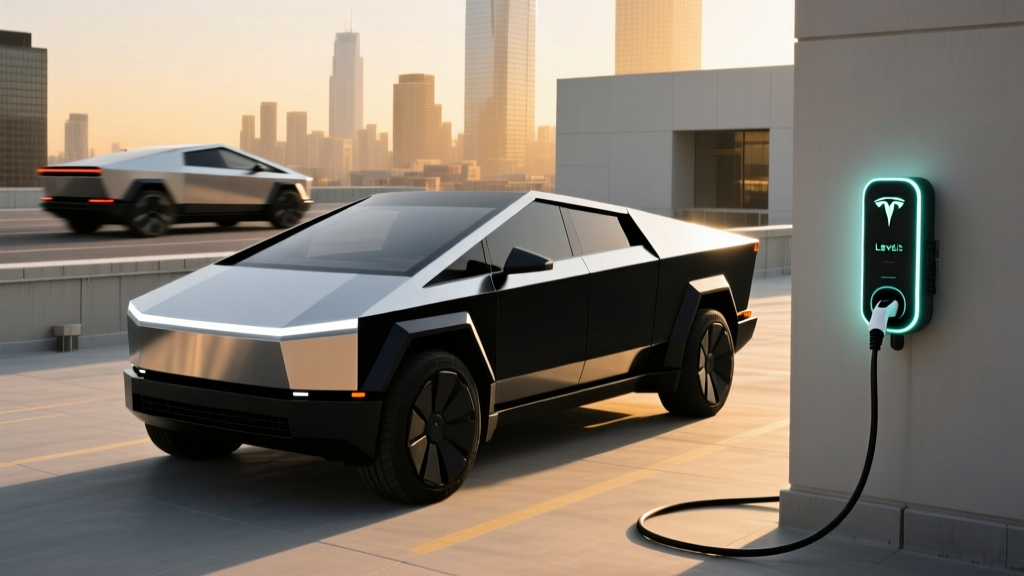
The Tesla Cybertruck entered the market with more hype than any pickup in history. But by early 2026, industry data points to a Tesla Cybertruck sales decline that has analysts and prospective buyers asking tough questions. Is the angular stainless-steel truck a victim of its own polarizing design, its six-figure pricing reality, or the rapidly maturing electric-truck competition from Ford, Rivian, and Chevrolet? This review breaks down the Cybertruck's actual capabilities — range, charging, utility, and cost — so you can decide whether the market's cooling enthusiasm is your opportunity or a warning sign.
The Cybertruck Sales Slowdown: What the Numbers Say
After an initial surge of reservation fulfillments throughout 2024 and early 2025, Cybertruck deliveries have tapered. Multiple factors converge: the Foundation Series pricing pushed early units above $100,000, the broader EV market has normalized post-pandemic, and competitors like the Ford F-150 Lightning and Rivian R1T have captured buyers who want a more conventional truck experience. The Cybertruck's polarizing aesthetics and well-documented early build-quality issues (panel gaps, steer-by-wire calibration complaints, and 12V battery gremlins) have also dampened word-of-mouth demand.
Yet for the right buyer, the sales decline means shorter wait times, less dealer markup pressure, and Tesla's willingness to offer referral incentives. The truck itself remains an engineering showcase — if you understand its trade-offs.
Range, Battery, and Real-World Efficiency
The 2026 Cybertruck lineup offers two battery configurations across the AWD and Cyberbeast trims. Tesla does not publish official kWh figures, but independent teardowns estimate approximately 123 kWh usable in a high-nickel NMC (nickel-manganese-cobalt) architecture on an 800-volt platform.
- AWD trim: EPA-estimated 340 miles. Real-world highway (70 mph, moderate climate): ~280–305 miles. Cold-weather (below 32°F) highway: ~230–260 miles.
- Cyberbeast trim: EPA-estimated 320 miles. Real-world highway: ~265–290 miles. Cold-weather highway: ~215–245 miles.
The Cybertruck's slab-sided aerodynamics (despite the claimed low drag coefficient for a truck) and heavy curb weight (~6,600–6,800 lbs) punish highway efficiency. Expect 48–54 MPGe combined (fueleconomy.gov), translating to roughly 46–52 kWh/100 miles in mixed driving. City and stop-and-go driving with regenerative braking recovers more energy, pushing real-world efficiency closer to EPA in urban use.
Charging Speed: 800V Architecture in Practice
The Cybertruck's 800-volt electrical system enables some of the fastest DC charging in the Tesla lineup — when paired with a V4 Supercharger. Here is what to expect across charging levels:
| Charging Level | Power / Rate | Time / Miles Added |
|---|---|---|
| Level 1 (120V / 12A) | ~1.4 kW | ~3–4 miles per hour |
| Level 2 (240V / 48A Wall Connector) | 11.5 kW | ~34 miles per hour; 0–100% in ~12 hours |
| DC Fast Charge (V4 Supercharger) | Peak ~350 kW | 10–80% in ~18–20 minutes |
| DC Fast Charge (250 kW V3 Supercharger) | Peak ~250 kW | 10–80% in ~25–28 minutes |
The 350 kW peak is only sustained briefly, typically between 10–30% state of charge. Above 50%, the charge curve tapers significantly; above 80%, it drops below 100 kW to protect the NMC cells. This is normal for high-nickel chemistry, but it means charging past 80% adds substantial time. For road trips, plan your stops around 10–80% increments.
At home, a 48-amp Tesla Wall Connector on a dedicated 60-amp circuit is the practical standard. Budget $800–$2,200 for professional installation (depending on panel proximity and whether your electrical panel needs a 200-amp upgrade). The Cybertruck ships with a NACS (North American Charging Standard) port natively — no adapter needed for Tesla Superchargers. For CCS-network charging (Electrify America, EVgo non-Tesla stalls), a NACS-to-CCS adapter is required.
Performance, Utility, and Daily-Drive Reality
| Specification | AWD | Cyberbeast |
|---|---|---|
| Drivetrain | Dual-Motor AWD | Tri-Motor AWD |
| Horsepower | 600 hp | 845 hp |
| 0–60 mph | 3.9 seconds | 2.6 seconds |
| Towing Capacity | 11,000 lbs | 11,000 lbs |
| Payload Capacity | 2,500 lbs | 2,500 lbs |
| Bed Length | 6 ft (72 in) vault-style | |
| Cargo Volume (bed + frunk + rear cabin) | ~120 cu ft total | |
| Rear Legroom | ~38.5 inches | |
| Base MSRP (2026) | $79,990 | $99,990 |
| As-Tested (typical options) | $82,000–$86,000 | $102,000–$110,000 |
The Cyberbeast's 2.6-second 0–60 time is supercar territory in a vehicle that weighs three tons. It is genuinely startling. The AWD trim's 3.9 seconds is also rapid, and for most buyers, it represents the better value proposition given the $20,000 gap.
The steer-by-wire system (no mechanical linkage between the steering wheel and the wheels) remains the Cybertruck's most debated feature. At low speeds, the 340-degree lock-to-lock rotation means you never need to hand-over-hand the yoke. At highway speeds, it feels precise but oddly disconnected. Some owners adapt within a week; others never fully trust it.
The 6-foot bed with a powered tonneau cover is practical for most truck tasks, and the 11,000-lb towing capacity is legitimate. However, towing at max capacity will slash range by 40–55%, depending on trailer aerodynamics. Plan for 150–180 miles of real-world range when towing heavy.
Tax Credit Eligibility and Ownership Cost
This is where the Cybertruck faces a structural disadvantage. Under IRS §30D rules, the federal EV tax credit is capped at $7,500 — but only for trucks with an MSRP at or below $80,000 and buyers meeting income thresholds ($150,000 single / $300,000 joint AGI). Additionally, battery-component and critical-mineral sourcing requirements apply.
| Criteria | AWD ($79,990 MSRP) | Cyberbeast ($99,990 MSRP) |
|---|---|---|
| Under $80,000 truck MSRP cap? | Yes (barely) | No |
| Battery sourcing compliant? | Partial — verify current-year IRS list | N/A (over MSRP cap) |
| Maximum potential credit | Up to $7,500 (if sourcing qualifies) | $0 |
| Effective price after max credit | ~$72,490 | $99,990+ |
The AWD trim just clears the MSRP cap, making it potentially eligible for the full $7,500 point-of-sale transfer — but only if Tesla's battery sourcing meets current-year critical-mineral and component requirements, which shift annually. The Cyberbeast, at $99,990, is categorically excluded. Always verify eligibility on the IRS Clean Vehicle Credit page before purchasing.
Insurance premiums for the Cybertruck run 30–50% higher than an F-150 Lightning, driven by repair costs for the stainless-steel exoskeleton and low production volume. Budget $250–$400/month depending on your profile and state.
Battery Longevity and Warranty Coverage
Tesla warranties the Cybertruck's battery and drive units for 8 years or 120,000 miles (whichever comes first), with a minimum 70% capacity retention threshold. This is slightly better than the 100,000-mile coverage on the Model 3/Y, reflecting the truck's intended workhorse role.
The NMC chemistry prioritizes energy density over cycle life. Based on Tesla's historical fleet data, expect approximately 10–15% degradation over the first 100,000 miles, with the curve flattening thereafter. To maximize longevity: avoid routinely charging to 100%, minimize DC fast-charging sessions, and use scheduled departure preconditioning when possible. The Cybertruck's active thermal management system is robust — it preconditions the battery automatically when a Supercharger is set as your navigation destination.
The limited vehicle warranty covers 4 years / 50,000 miles, which is unremarkable for the price point. Competitors like Rivian offer 5-year/60,000-mile bumper-to-bumper coverage.
Technology, Driver Assistance, and Drawbacks
The Cybertruck runs Tesla's latest infotainment stack on an 18.5-inch center display with a secondary 9.4-inch rear touchscreen. The UI is responsive, and the integrated navigation with Supercharger routing remains the gold standard for EV trip planning. However, there is no Apple CarPlay or Android Auto — a dealbreaker for some buyers in 2026.
Autopilot comes standard (adaptive cruise + lane centering). Full Self-Driving (Supervised) is an $8,000 add-on or $99/month subscription.
Despite the "Full Self-Driving" branding, Tesla's FSD (Supervised) is an SAE Level 2 driver-assistance system. You must keep your hands on the yoke, eyes on the road, and be prepared to intervene at any moment. It does not make the Cybertruck autonomous. Only Level 4 services like Waymo operate without a human driver, and those are geofenced robotaxis — not consumer vehicles.
Notable drawbacks include:
- Yoke-only steering: No round-wheel option. Controversial for low-speed maneuvers and parking.
- Wiper and mirror controls on touchscreen: Minimalist interior means common adjustments require screen taps.
- Stainless-steel fingerprint magnet: The body shows every smudge; Tesla sells a proprietary cleaning cloth.
- No rear windshield wiper: Visibility in rain relies on the bed's aerodynamic design to shed water, which is inconsistent.
- Early build-quality variance: 2024–2025 models had documented panel-gap and recall issues. 2026 production has improved, but verify VIN-specific service history on any used unit.
Who Should (and Shouldn't) Buy the Cybertruck
- You want the fastest production pickup available and value performance as a daily driver.
- You primarily tow light-to-moderate loads (boats, small trailers) and want instant torque.
- You live in an area with dense Supercharger coverage and have home Level 2 charging.
- You're drawn to the design and don't mind being conspicuous.
- You need a work truck with conventional fleet-service infrastructure and easy body repairs.
- You frequently tow over 8,000 lbs long-distance (range loss is severe).
- You prefer CarPlay, physical controls, and a proven service network outside Tesla's ecosystem.
- Budget is a priority — the F-150 Lightning starts ~$25,000 lower and qualifies for the tax credit more reliably.
Frequently Asked Questions
What is the real-world range of the Tesla Cybertruck?
The AWD trim achieves an EPA-estimated 340 miles, but expect 280–305 miles in real-world highway driving and 230–260 miles in cold weather. The Cyberbeast delivers approximately 265–290 miles highway. These numbers assume no towing; heavy towing cuts range by 40–55%.
How fast does the Cybertruck charge at home and on the road?
On a 48-amp Level 2 home charger, the Cybertruck adds roughly 34 miles per hour and charges fully in about 12 hours. On a V4 Supercharger (350 kW peak), a 10–80% charge takes 18–20 minutes. On older V3 Superchargers (250 kW), expect 25–28 minutes for the same increment.
How much does the Cybertruck cost after tax credits?
The AWD trim at $79,990 MSRP may qualify for up to $7,500 in federal tax credits under §30D, bringing the effective price to ~$72,490 — but only if battery-sourcing requirements are met and buyer income is within limits. The Cyberbeast at $99,990 exceeds the $80,000 truck MSRP cap and receives no federal credit.
Is the Cybertruck worth buying vs. the F-150 Lightning or Rivian R1T?
The Cybertruck wins on raw performance and charging speed. The F-150 Lightning wins on price, tax-credit eligibility, conventional truck ergonomics, and dealer service access. The Rivian R1T wins on interior refinement, off-road capability (quad-motor), and adventure-oriented design. The sales decline has improved Cybertruck availability, but the competition offers more practical solutions for most truck buyers.
Does the Cybertruck qualify for the federal EV tax credit?
The AWD trim is potentially eligible for up to $7,500 under IRS §30D, as its MSRP is at or below the $80,000 truck cap. Eligibility depends on battery-sourcing compliance (which changes yearly), buyer income limits ($150K single / $300K joint), and point-of-sale transfer rules. The Cyberbeast does not qualify. Always check IRS.gov before purchasing.
What are the biggest pros and cons of the Cybertruck?
Pros: Tri-motor Cyberbeast performance (2.6s 0–60), 800V fast-charging architecture, 11,000-lb towing, stainless-steel durability, Supercharger network access, best-in-class EV trip planning software.
Cons: Polarizing design limits resale pool, yoke-only steering, Cyberbeast excluded from tax credit, high insurance costs, touchscreen-dependent controls, limited non-Tesla service options, cold-weather and highway range fall well below EPA sticker.