Tesla Cybertruck RWD: The Entry-Level Electric Truck, Stripped Down to What Matters
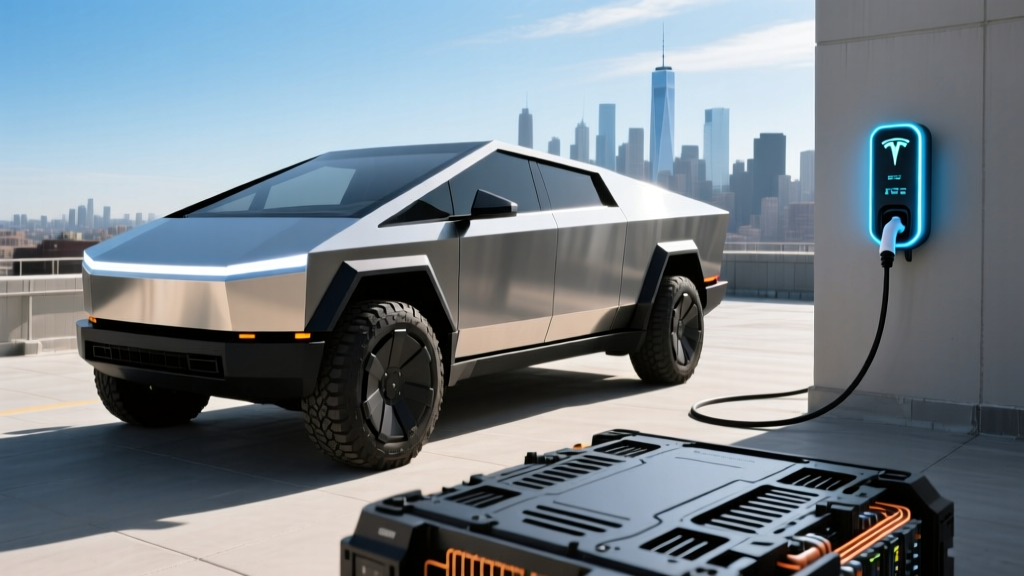
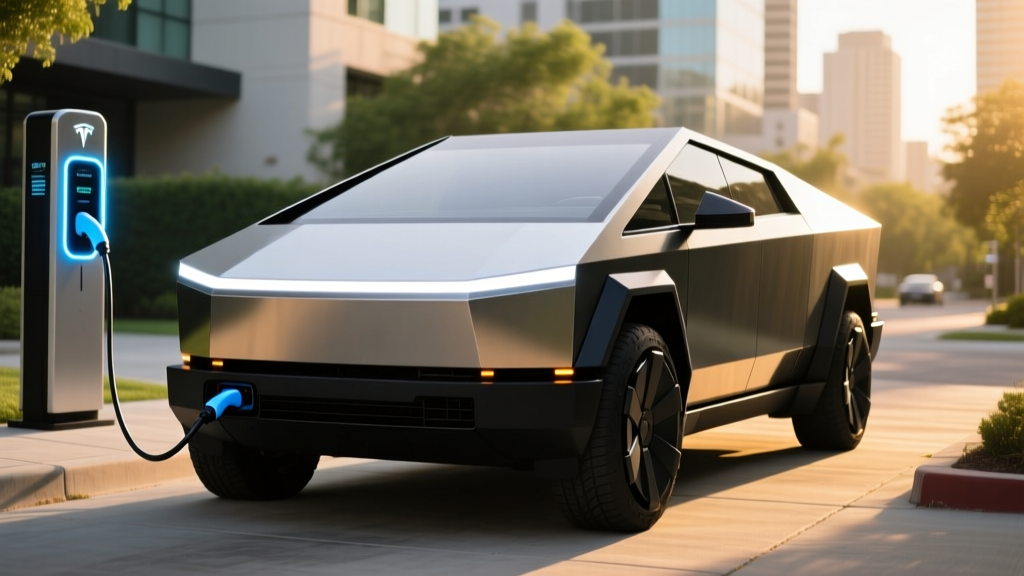
The Tesla Cybertruck lineup has always polarized opinions, but the single-motor rear-wheel-drive variant targets a specific buyer: someone who wants an electric pickup for daily commuting, light hauling, and the occasional weekend adventure — without paying for dual-motor performance they'll never use. After spending time with the Cybertruck RWD, here's the data-driven breakdown of what you're actually getting for the price.
Tesla announced the RWD trim as part of the Cybertruck's phased rollout, positioning it as the most affordable entry point into the platform. But "affordable" in the full-size electric truck segment is relative. Let's examine whether the specs, range, and charging performance justify the MSRP.
Spec Sheet: Tesla Cybertruck RWD at a Glance
| Attribute | Value |
|---|---|
| EPA Estimated Range | 250 miles |
| Battery Capacity (usable) | ~123 kWh |
| Battery Chemistry | NMC (Nickel Manganese Cobalt) |
| Drivetrain | Rear-Wheel Drive (single motor) |
| Horsepower | ~400 hp |
| 0-60 mph | ~6.5 seconds (estimated) |
| Max DC Fast Charge Rate | 350 kW (peak) |
| 10-80% DC Charge Time | ~25-30 minutes |
| Level 2 Home Charging | 11.5 kW (~30-34 miles/hour) |
| EPA Efficiency | ~2.0 kWh/mile (~50 MPGe combined) |
| Towing Capacity | 7,500 lbs |
| Payload Capacity | ~2,500 lbs |
| Base MSRP | ~$60,990 (estimated, before destination) |
| Battery/Drive Unit Warranty | 8 years / 120,000 miles |
Real-World Range: What 250 EPA Miles Actually Means on the Road
EPA Sticker: 250 miles
Real-World Highway (70 mph, mild weather): ~210-225 miles
Real-World City/Mixed Driving: ~230-245 miles
Cold Weather (below 32°F, highway): ~175-195 miles
Note: The Cybertruck's angular stainless-steel exoskeleton creates a higher drag coefficient (~0.34 Cd) than sleeker EVs, which disproportionately impacts highway range. Towing will reduce range by 40-55% depending on trailer weight and profile.
The 250-mile EPA estimate is the headline, but real-world range depends heavily on how and where you drive. The Cybertruck RWD's single motor is more efficient than the dual-motor AWD variants, but the truck's boxy aerodynamics punish you at sustained highway speeds. In mixed suburban driving with regenerative braking doing its job, you'll approach the EPA figure. On a 75-mph interstate run in summer heat, expect to lose 10-15% off the sticker. In freezing temperatures, battery chemistry and cabin heating can drop usable range by 25-30%.
For context, a 200-mile round-trip commute is feasible in mild weather without mid-day charging, but you'll want a reliable home Level 2 setup to start each morning at 100% state of charge (SoC). If your daily driving exceeds 150 miles or you live in a cold climate, the AWD Long Range variant's larger effective range may be worth the premium.
Charging Performance: 350 kW Peak, But the Curve Tells the Real Story
| Charging Level | Power (kW) | Approximate Speed | Typical Use Case |
|---|---|---|---|
| Level 1 (120V household) | 1.4 kW | ~3-4 miles/hour | Emergency/trickle |
| Level 2 (240V home, 48A) | 11.5 kW | ~30-34 miles/hour | Daily home charging |
| DC Fast (Tesla Supercharger V4) | Up to 350 kW peak | 10-80% in ~25-30 min | Road trips |
| DC Fast (sustained avg 10-80%) | ~180-220 kW avg | ~150-180 miles in 25 min | Realistic road-trip gain |
The Cybertruck RWD uses Tesla's 800-volt architecture, which enables the impressive 350 kW peak charge rate. But peak is not sustained. The actual charging curve ramps quickly from 10-40% SoC, then tapers progressively. By 70% SoC, you're likely seeing 150-180 kW; above 80%, the rate drops sharply to protect battery longevity. This is normal for NMC chemistry — Tesla's battery management system is conservative by design.
On a Tesla Supercharger V4 stall (or a compatible CCS/NACS station with adequate power delivery), a 10-80% session takes roughly 25-30 minutes. That's competitive with the best in the segment, though the Cybertruck's massive 123 kWh battery means you're pushing more total energy than a smaller EV. For road trips, plan 25-30 minute stops every 180-200 miles to stay in the optimal charging window.
At home, an 11.5 kW Level 2 wall connector (Tesla's own or a compatible J1772/NACS unit) will add roughly 30-34 miles of range per hour, fully replenishing the battery in about 9-10 hours from near-empty. Most owners charging overnight from 20-80% will wake up with plenty of range for the day.
Performance and Drivetrain: Single-Motor RWD Dynamics
The single rear motor produces approximately 400 horsepower — enough for a 0-60 mph time in the mid-6-second range. That's not the 2.6-second Cyberbeast territory, but for a 6,800+ lb stainless-steel truck, it's genuinely quick. The instant torque delivery makes highway merging and city driving feel effortless.
The RWD configuration trades all-weather traction for a lower purchase price and slightly better efficiency. If you live in a region with mild winters or plan to rely on winter tires, RWD is viable. For snow-belt states or anyone planning off-road use, the dual-motor AWD variants are the pragmatic choice. The RWD also has a marginally higher payload rating since there's less drivetrain weight over the rear axle.
Towing capacity is rated at 7,500 lbs — competitive with mid-size gas trucks and adequate for a boat, small camper, or utility trailer. But remember: towing near max capacity will slash your range roughly in half. A 250-mile truck becomes a 125-mile truck with a heavy trailer.
Pricing, Tax Credits, and Total Cost of Ownership
The Cybertruck RWD's estimated base MSRP of ~$60,990 positions it as the value play in the lineup. Tesla's pricing has fluctuated since launch, so check the configurator for the current figure. Add destination fees, any color or wheel upgrades, and FSD (Supervised) if desired, and a typical as-tested price lands between $62,000-$68,000.
- MSRP Cap: Trucks must be under $80,000 MSRP — the Cybertruck RWD qualifies.
- Buyer Income Cap: AGI must not exceed $150,000 (single), $225,000 (head of household), or $300,000 (joint filers).
- Battery Sourcing: Critical minerals and battery components must meet phased-in domestic/free-trade sourcing thresholds. Tesla's supply chain has adapted, but confirm current-year compliance at fueleconomy.gov before purchasing.
- Credit Amount: Up to $7,500, available as a point-of-sale transfer to the dealer (reducing your purchase price directly) or claimed on your tax return.
- Final Assembly: Must be in North America — the Cybertruck is built in Austin, TX, so this requirement is met.
If you qualify for the full $7,500 federal credit and your state offers additional incentives (check afdc.energy.gov for state-by-state details), the effective price drops meaningfully. Over a 5-year ownership period, fuel savings (electricity vs. gas for a comparable F-150 or Silverado) can offset $5,000-$8,000 depending on your mileage and local electricity rates. Insurance premiums, however, tend to run 15-25% higher for the Cybertruck than comparable gas trucks — factor that into your budget.
Cargo, Interior, and Daily Usability
The Cybertruck's 6-foot bed (with the tonneau-style vault cover closed) offers roughly 74 cubic feet of cargo volume. The bed is stainless steel, eliminating the need for a liner, and includes built-in tie-downs, a powered tonneau, and a ramp-style tailgate. The front trunk (frunk) adds meaningful lockable storage — useful for tools, charging cables, or groceries.
Inside, seating for five is tight in the rear compared to a full-size crew cab like the F-150 Lightning or Rivian R1T. Rear legroom is approximately 36 inches — adequate for adults on shorter trips but not class-leading. The minimalist interior centers on an 18.5-inch touchscreen handling nearly all vehicle functions, including glove-box release and mirror adjustments. There are no physical stalks for turn signals (steering-wheel buttons instead), which is a learning curve some buyers adapt to quickly and others never accept.
The steer-by-wire system (no mechanical connection between the yoke/steering wheel and the rack) is standard across all Cybertruck trims. It's a genuine technological leap with variable ratio benefits at low speeds, but it demands trust in electronic redundancy. Tesla's system includes multiple backup controllers, and the NHTSA has not issued recalls specific to the steer-by-wire implementation as of early 2026.
Driver Assistance and Technology
Tesla Autopilot and FSD (Supervised) are Level 2 systems under SAE classification. The driver must remain fully engaged, hands on the steering device, and ready to take over at any moment. These are not self-driving systems. Only Level 4 robotaxi services (Waymo, Zoox in designated areas) operate without a human driver. Do not sleep, read, or disengage your attention while using Autopilot or FSD.
The Cybertruck RWD ships with Tesla's basic Autopilot (traffic-aware cruise control, lane centering) and offers FSD (Supervised) as a paid add-on — currently $8,000 upfront or $99/month. FSD adds city-street navigation, stop-sign and traffic-light recognition, and more assertive lane changes. It's impressive in controlled scenarios but remains a Level 2 system requiring constant supervision. The camera-only Tesla Vision stack (no lidar or radar) handles most conditions well but can struggle in heavy rain, construction zones, or faded lane markings.
The 18.5-inch infotainment screen runs Tesla's latest software, which is fast and feature-rich but occasionally buries basic functions in submenus. There is no Apple CarPlay or Android Auto — Tesla's ecosystem is self-contained. The glass roof provides an open cabin feel but offers no shade; you'll want aftermarket tint or a sunshade in hot climates.
Pros, Cons, and the Verdict
- 350 kW peak DC fast charging is class-leading for a truck
- Stainless-steel bed eliminates liner cost and dent worries
- Steer-by-wire provides tight low-speed maneuverability
- Frunk adds secure, weatherproof storage
- Lowest entry price in the Cybertruck lineup
- Over-the-air updates continuously add features
- 250-mile EPA range is modest for a truck this size
- Highway and cold-weather range loss is significant
- RWD limits all-weather and off-road capability
- Rear seat space is tight vs. traditional crew cabs
- No CarPlay/Android Auto
- Insurance premiums run higher than segment average
- Steer-by-wire and yoke are polarizing, not universally loved
Who Should Buy the Tesla Cybertruck RWD?
Choose the Cybertruck RWD if: You're a commuter or light-duty truck user in a mild climate, you have home Level 2 charging, you want the lowest Cybertruck entry price, and you value Tesla's Supercharger network and software ecosystem.
Look at the Cybertruck AWD or a competitor (F-150 Lightning, Rivian R1T) if: You need serious off-road capability, you live in a snow-belt state, you regularly tow heavy loads over distance, or you need full-size crew-cab rear-seat room for family.
The Cybertruck RWD makes the most sense as a daily-driver truck for someone who values electric efficiency, fast charging, and Tesla's tech ecosystem over traditional truck utility. It's not a work-site hauler or a family road-trip machine — it's a commuter truck with a bed. If that's your use case, the RWD delivers. If you need more, step up to AWD or cross-shop the Ford F-150 Lightning or Rivian R1T.
Frequently Asked Questions
What is the real-world range of the Tesla Cybertruck RWD?
The EPA estimates 250 miles, but expect 210-225 miles at highway speeds in mild weather and 175-195 miles in freezing conditions. City driving with regenerative braking gets you closest to the sticker number.
How fast does the Cybertruck RWD charge at home and on the road?
At home on a Level 2 (240V, 48A) charger, you'll add roughly 30-34 miles per hour (11.5 kW). On a DC fast charger, peak rate is 350 kW, with a realistic 10-80% session taking 25-30 minutes.
How much does the Cybertruck RWD cost after tax credits?
With an estimated base MSRP of ~$60,990 and a potential $7,500 federal credit (if you meet income, sourcing, and MSRP requirements under IRS §30D), the effective price can drop to roughly $53,490 before state incentives, destination, and options.
Does the Tesla Cybertruck RWD qualify for the $7,500 federal EV tax credit?
It likely qualifies on MSRP (under $80,000 truck cap) and final assembly (Austin, TX), but buyer income limits and battery-sourcing rules apply. Verify current-year eligibility at fueleconomy.gov and consult a tax professional before purchasing.
Is the Cybertruck RWD worth buying vs. the F-150 Lightning or Rivian R1T?
It depends on your priorities. The Cybertruck RWD offers faster DC charging and Tesla's Supercharger network. The F-150 Lightning provides more traditional truck utility, better rear-seat space, and Pro Power Onboard. The Rivian R1T excels off-road and in build quality but costs more. Test-drive all three if possible.
Can I tow with the Cybertruck RWD?
Yes — it's rated for 7,500 lbs. But towing near that limit will reduce range by 40-55%, making it impractical for long-distance towing without very careful charging planning.