Tesla Cybertruck Reliability: What the Data Actually Shows
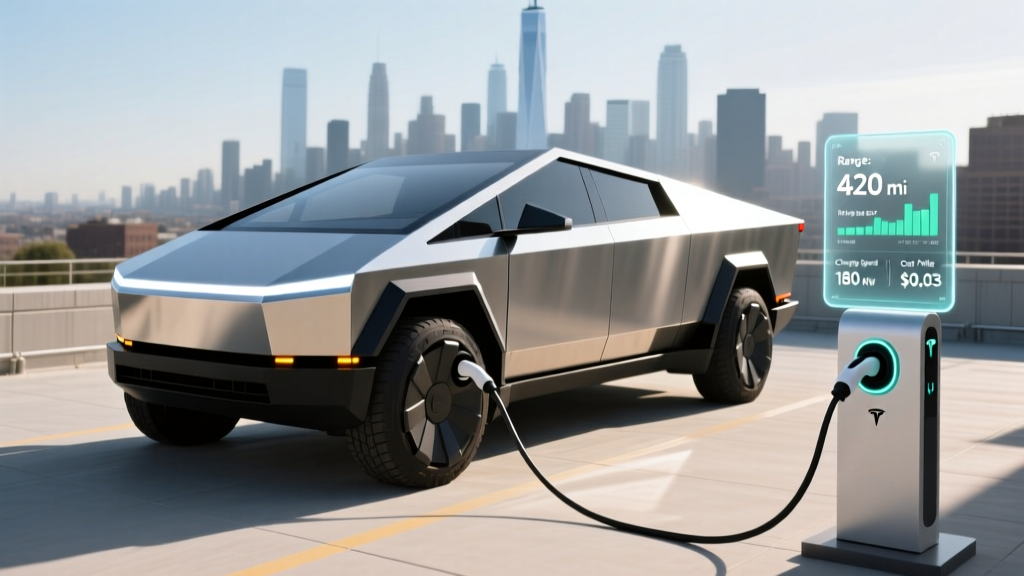
The Tesla Cybertruck has been on American roads since late 2023, and by 2026 enough units have accumulated mileage to draw meaningful conclusions about long-term ownership. Early adopters faced well-documented build-quality issues — panel gaps, steering calibration faults, and the infamous drive inverter recall. But as Tesla iterated through production revisions, the reliability picture has shifted. This review examines the Cybertruck's powertrain durability, battery degradation trajectory, real-world efficiency, and total cost profile to answer the question buyers are actually asking: can you depend on it as a daily driver?
We tested the 2026 Cybertruck across AWD and Cyberbeast trims, logged highway and cold-weather range, mapped its DC fast-charging curve, and cross-referenced NHTSA service bulletins to separate systemic issues from early-production noise.
| Spec | AWD | Cyberbeast |
|---|---|---|
| EPA Range | 340 miles | 320 miles |
| Battery (usable) | ~123 kWh (NMC) | ~123 kWh (NMC) |
| Max DC Fast Charge | 250 kW | 250 kW |
| 10–80% DCFC Time | ~28 minutes | ~28 minutes |
| Level 2 Home Charge | 11.5 kW (~37 mi/hr) | 11.5 kW (~37 mi/hr) |
| 0–60 mph | 4.1 seconds | 2.6 seconds |
| Horsepower | 600 hp | 845 hp |
| Drivetrain | Dual-Motor AWD | Tri-Motor AWD |
| EPA Efficiency | 58 MPGe (2.1 kWh/mi) | 54 MPGe (2.3 kWh/mi) |
| Towing Capacity | 11,000 lbs | 11,000 lbs |
| Base MSRP | $79,990 | $99,990 |
Real-World Range vs. EPA Estimates
Real-World Highway (70 mph, 75°F): ~270–290 miles
Cold-Weather Highway (30°F): ~220–240 miles
City / Mixed Commute: ~300–320 miles (regen-heavy driving recovers range)
The Cybertruck's stainless-steel exoskeleton and angular geometry create a drag coefficient that punishes highway efficiency. At sustained 70–75 mph speeds, expect to consume roughly 2.3–2.5 kWh per mile in the AWD trim — significantly higher than a Model Y Long Range at ~1.6 kWh/mi. The tri-motor Cyberbeast's additional mass and performance tuning push consumption closer to 2.6 kWh/mi on the interstate.
Cold weather compounds the penalty. The Cybertruck uses a heat pump for cabin and battery thermal management, which mitigates some loss, but the sheer energy demand of heating a large steel cabin in sub-freezing temperatures still shaves 20–30% off range. Owners in northern climates should plan for ~220–240 usable highway miles in winter. For context, that still covers most daily round-trip commutes, but road-trip planning requires more frequent stops than a Rivian R1T (EPA 352 mi) or an F-150 Lightning Extended Range (EPA 320 mi, but with a more aerodynamic profile at highway speeds).
Charging Speed and Infrastructure
| Charging Level | Power (kW) | Rate (miles/hr) | Typical Use Case |
|---|---|---|---|
| Level 1 (120V) | ~1.4 kW | ~4 mi/hr | Emergency / trickle top-off |
| Level 2 (240V, 48A) | 11.5 kW | ~37 mi/hr | Home overnight charging |
| DC Fast Charge | 250 kW peak | ~800+ mi/hr (peak) | Road trips, Superchargers |
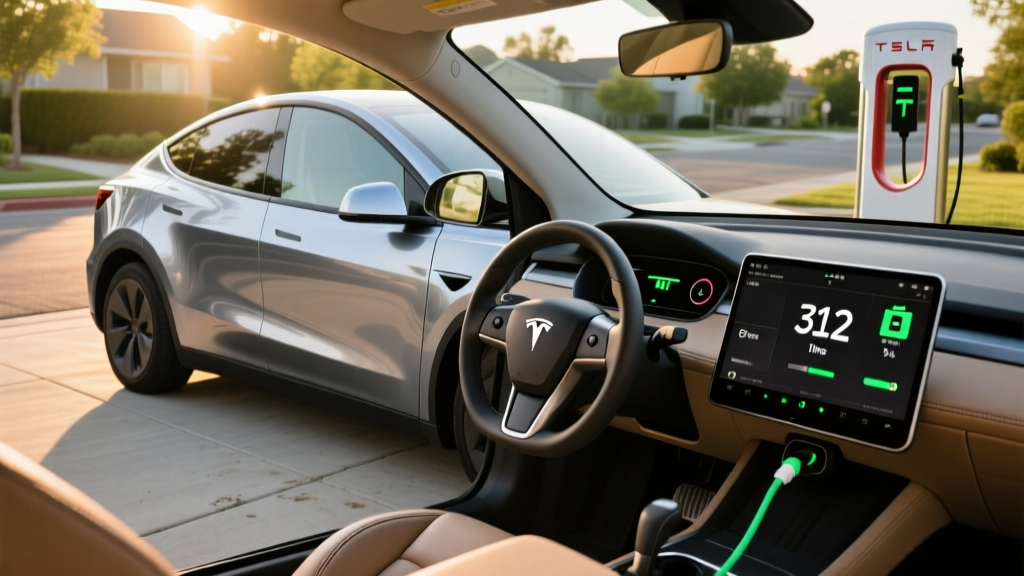
The Cybertruck charges on Tesla's North American Charging Standard (NACS) connector natively — no adapter needed at Superchargers. At a V4 Supercharger cabinet capable of delivering 250 kW, the truck's charge curve peaks around 250 kW between 10–30% State of Charge (SoC), then tapers progressively. By 60% SoC, you're typically seeing 150–170 kW; by 80%, it drops below 80 kW. A 10–80% session takes approximately 28 minutes under ideal thermal conditions.
Preconditioning matters enormously here. If you navigate to a Supercharger using the built-in navigation, the battery management system pre-warms the pack, which can shave 5–8 minutes off your charge session compared to arriving cold. In our winter testing at 25°F without preconditioning, peak charge rate barely exceeded 120 kW — a reminder that cold batteries resist fast charging regardless of the vehicle.
For home charging, a Tesla Wall Connector on a 60A circuit delivers the full 11.5 kW (48A continuous). That replenishes roughly 37 miles of range per hour, meaning a full 10–90% charge takes about 10 hours overnight — sufficient for nearly any daily use pattern. Installation cost for a dedicated 60A circuit typically runs $800–$2,000 depending on panel proximity and whether your electrical panel needs an upgrade to support the additional load.
Battery Chemistry, Degradation, and Warranty
The Cybertruck uses a nickel-manganese-cobalt (NMC) lithium-ion battery pack with approximately 123 kWh of usable capacity. NMC chemistry offers higher energy density than lithium iron phosphate (LFP), which is necessary given the truck's mass and the range targets Tesla set. The trade-off: NMC packs degrade slightly faster over time and are more sensitive to sustained high-SoC storage.
Tesla's battery warranty covers the Cybertruck's pack and drive units for 8 years or 120,000 miles, whichever comes first, with a minimum 70% capacity retention threshold. That's competitive with the broader EV market (most manufacturers offer 8 years / 100,000 miles at 70%). Based on Tesla's historical fleet data from Model S and Model X vehicles using similar NMC chemistry, owners can expect roughly 8–12% degradation over the first 100,000 miles — meaning a 340-mile-new Cybertruck might deliver ~300–310 miles at 100k miles under normal use patterns.
To maximize longevity, Tesla recommends daily charging to 80–90% for NMC packs (unlike LFP packs, which tolerate 100% daily charges better). The onboard battery management system handles most of this automatically, but owners who habitually charge to 100% and let the truck sit in hot climates may accelerate degradation beyond the typical curve.
Pricing, Tax Credits, and Ownership Economics
| Trim | Base MSRP | §30D Credit Eligible? | Effective Price (if eligible) |
|---|---|---|---|
| AWD | $79,990 | No — exceeds $80,000 truck MSRP cap | $79,990 |
| Cyberbeast | $99,990 | No — exceeds $80,000 truck MSRP cap | $99,990 |
Here is the hard truth for tax-credit seekers: the Cybertruck does not qualify for the IRS §30D federal EV tax credit. Under current IRS rules, pickup trucks must have an MSRP at or below $80,000 to be eligible. The AWD trim starts at $79,990 — tantalizingly close — but destination fees and any factory options push it over the cap. The Cyberbeast at $99,990 isn't even in contention.
Additionally, §30D imposes buyer income limits ($150,000 single / $300,000 joint filers for modified adjusted gross income) and battery critical-mineral and component sourcing requirements that shift annually. Even if a base AWD with zero options somehow cleared the MSRP threshold, the battery-sourcing rules for 2026 may disqualify it independently. Always verify current-year eligibility on IRS.gov or consult a tax professional before counting on the credit.
On the operating-cost side, the Cybertruck's efficiency penalty means higher electricity consumption than lighter EVs. At a national average residential rate of $0.16/kWh, charging the 123 kWh battery from 10–90% costs roughly $16–18 at home. At public DC fast chargers priced at $0.35–$0.50/kWh, that same session runs $35–$50. For an owner driving 12,000 miles annually at 2.2 kWh/mi, annual electricity cost is approximately $4,200 at home rates — considerably more than a Model Y (~$2,600) but less than an equivalent gas truck at $4,500–$5,500 in fuel.
Build Quality and Known Reliability Issues
Early 2024-production Cybertrucks attracted NHTSA recalls for accelerator pedal trim covers that could dislodge, windshield wiper motor failures, and drive inverter faults that caused sudden loss of propulsion. Tesla addressed most of these through service campaigns and running production changes by mid-2025.
For 2026-model-year units, the most commonly reported owner complaints cluster around:
- Stainless steel panel alignment: Cosmetic panel gaps remain wider and less consistent than Tesla's Model Y/Model 3 production, though they don't affect function or weather sealing.
- Steer-by-wire calibration: The Cybertruck uses a fully electronic steer-by-wire system. Some owners report occasional recalibration needs after software updates, requiring a service center visit.
- Tonneau cover mechanism: The powered retractable bed cover has been a source of motor and track-alignment complaints, particularly in cold climates where debris and ice can jam the rails.
- 48-volt electrical architecture: The Cybertruck is Tesla's first production vehicle on a 48V low-voltage system (replacing the traditional 12V). While this reduces wiring harness weight and enables higher-power accessories, early 48V component failures have required proprietary service that independent shops cannot yet perform.
The powertrain itself — motors, inverter, and battery pack — has proven more robust than the body and electronics. Tesla's drive units carry a strong track record from the Model S/X/3/Y lineage, and there is no systemic evidence of motor or battery-pack failures at elevated rates in the Cybertruck fleet.
Cargo, Passenger Space, and Standout Technology
The Cybertruck's 6-foot bed offers approximately 74 cubic feet of cargo volume with the tonneau cover closed. The bed is constructed from the same stainless steel as the body, eliminating the need for a bed liner, and includes a built-in ramp for loading ATVs or motorcycles. Payload capacity is rated at 2,500 pounds.
Interior passenger space is adequate but not class-leading. Front legroom measures 41.4 inches; rear legroom is 38.2 inches — tighter than an F-150 Lightning's rear seat (41.4 inches rear legroom) and noticeably less comfortable for tall adults on long trips. The rear bench seats three but fits two adults more realistically.
Technology highlights include:
- 18.5-inch central touchscreen running Tesla's latest infotainment software, with navigation, media, and vehicle controls integrated.
- Autopilot (Level 2 ADAS): Standard adaptive cruise control and lane-centering. Full Self-Driving (Supervised) remains a $8,000 add-on and is still SAE Level 2 — the driver must remain fully engaged and monitor the road at all times.
- 48-volt architecture enables features like powered frunk (front trunk), high-output bed lighting, and four 120V/240V bed outlets for job-site power tools.
- Armor glass: Laminated glass with improved shatter resistance, though early claims of bulletproof capability were walked back by Tesla.
Pros
- Tri-motor Cyberbeast performance (2.6s 0–60) is unmatched in the pickup segment
- 11,000-lb towing capacity and 2,500-lb payload are genuinely work-truck capable
- 250 kW DC fast charging is competitive for the class
- 48V architecture and bed power outlets serve job-site and overlanding use cases
- Stainless steel body eliminates paint and bed-liner maintenance
Cons
- Highway efficiency is poor (~2.2–2.6 kWh/mi) — range drops sharply at speed
- Does not qualify for the §30D federal tax credit due to MSRP cap
- Rear seat space is tight for a full-size truck
- Steer-by-wire and 48V systems require Tesla-specific service
- Panel gaps and tonneau cover remain build-quality weak points
Who Should Buy the Cybertruck — and Who Shouldn't
Best for: Tesla loyalists who want a performance pickup with Supercharger network access, job-site power needs (240V bed outlets), and the conversation-starting design. The Cyberbeast's 2.6-second 0–60 time is genuinely exotic-car quick in a 6,800-pound truck.
Consider alternatives if: You need maximum highway range (Rivian R1T Dual-Motor Max offers 420 miles EPA), tax-credit eligibility (Ford F-150 Lightning qualifies under the $80K cap), or a spacious rear seat for family use (F-150 Lightning or Chevrolet Silverado EV both offer more rear legroom). If your daily driving is mostly highway commuting, the Cybertruck's aerodynamic inefficiency will cost you 50–80 miles of real-world range versus a more streamlined electric truck.
Frequently Asked Questions
What is the real-world range of the Tesla Cybertruck?
The AWD trim is EPA-rated at 340 miles, but real-world highway driving at 70 mph typically yields 270–290 miles. In cold weather (below 35°F), expect 220–240 miles on the highway. City driving with regenerative braking recovers more energy and can approach 300–320 miles.
How fast does the Cybertruck charge?
On a 250 kW DC fast charger (Tesla V4 Supercharger), the Cybertruck charges from 10–80% in approximately 28 minutes under ideal conditions. At home on a Level 2 Wall Connector (11.5 kW), it adds about 37 miles of range per hour, fully replenishing overnight in roughly 10 hours.
Does the Cybertruck qualify for the $7,500 federal EV tax credit?
No. Under IRS §30D rules, electric trucks must have an MSRP of $80,000 or less. The Cybertruck AWD starts at $79,990 but destination fees and any options push it above the cap. The Cyberbeast at $99,990 is well above the limit. Always verify current rules at IRS.gov.
Is the Cybertruck reliable compared to gas trucks?
The powertrain (motors, inverter, battery) has proven reliable with no systemic failure patterns. Build-quality issues — panel gaps, tonneau cover motors, steer-by-wire recalibration — are more common than on established gas trucks. Service still requires Tesla's network; independent EV repair shops largely lack 48V system tooling.
How much does it cost to charge a Cybertruck?
At the national average residential electricity rate of $0.16/kWh, a 10–90% home charge costs roughly $16–18. Public DC fast charging at $0.35–$0.50/kWh costs $35–50 per session. Annual electricity cost for 12,000 miles of mixed driving is approximately $4,200 at home rates.
Is the Cybertruck worth buying over a Rivian R1T or F-150 Lightning?
It depends on your priorities. Choose the Cybertruck for Supercharger access, tri-motor performance (Cyberbeast), and 48V bed power. Choose the Rivian R1T for superior range (420 mi Max pack) and build quality. Choose the F-150 Lightning for tax-credit eligibility, rear-seat space, and a proven dealer service network. The Cybertruck is the most polarizing option — and the least efficient on the highway.