Can the Tesla Cybertruck Actually Work as a Police Vehicle?
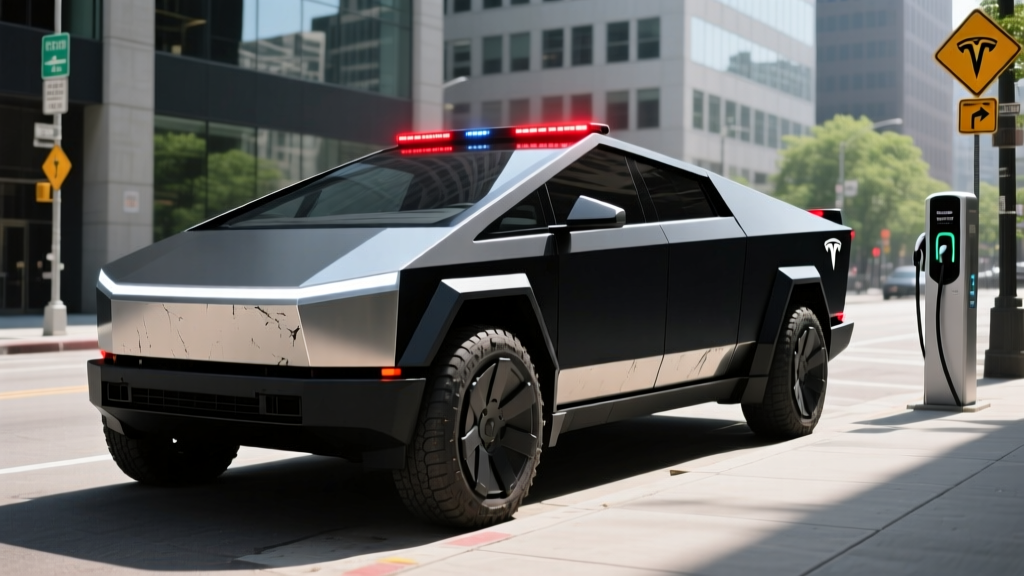
When the Tesla Cybertruck police car concept debuted in late 2023, the stainless-steel exoskeleton and angular light bar immediately went viral. By 2026, several law enforcement agencies in the U.S. and abroad have either taken delivery or are actively evaluating the Cybertruck for patrol and specialty fleet roles. But separating social-media hype from genuine fleet utility requires a hard look at range, charging logistics, upfit costs, and total cost of ownership (TCO) versus the proven Ford F-150 Lightning Police Responder and the Chevrolet Tahoe PPV.
This review treats the Cybertruck not as a consumer lifestyle truck, but as a potential law enforcement platform. We'll dissect the EPA numbers, real-world range under load, charging infrastructure requirements, upfit considerations, and whether the §30D federal tax credit even applies to municipal purchases.
Spec Sheet: 2026 Tesla Cybertruck (AWD Dual-Motor Fleet Trim)
| Specification | Value |
|---|---|
| EPA Range (AWD, 35" tires) | 340 miles |
| Real-World Highway (70 mph, loaded) | ~255–280 miles |
| Battery Capacity (usable) | ~123 kWh (NMC, 4680 cells) |
| Peak DC Fast Charge | 350 kW (800V architecture) |
| 10–80% DC Charge Time | ~18 minutes (preconditioned) |
| Level 2 Home/Depot Rate | 11.5 kW / ~44 mi/hr |
| 0–60 mph | 4.1 seconds (AWD) |
| Horsepower | 600 hp (combined dual-motor) |
| Drivetrain | Dual-motor AWD |
| MPGe (combined) | 67 MPGe |
| Efficiency | 50 kWh/100 mi |
| Cargo Bed Volume | 67 cu ft (with tonneau closed) |
| Rear Legroom | 41.7 in |
| Towing Capacity | 7,500 lbs |
| Battery & Drive Unit Warranty | 8 years / 120,000 miles |
| Base MSRP (AWD) | $79,990 (before destination) |
Note: Tesla does not sell a dedicated "Police Package" trim. Fleets purchase the consumer AWD or Cyberbeast and contract upfitting through third-party outfitters such as EV Upfit or SETINA.
Real-World Range: What Fleet Managers Need to Know
Real-World Fleet Expectation: 255–280 miles at sustained 70 mph highway speeds with a light bar, cage, and ~500 lbs of equipment. In stop-and-go urban patrol with HVAC running, expect 270–295 miles thanks to regenerative braking recovery. In sub-32°F weather, plan for a 20–30% reduction — roughly 190–230 miles effective range.
Police vehicles rarely drive like consumer trucks. Idling (or the EV equivalent: "stationary HVAC load") is a major factor. A Cybertruck running climate control, laptop chargers, radios, and a light bar controller at a scene can draw 3–5 kW continuously. Over an 8-hour shift with 2 hours of stationary use, that's 6–10 kWh consumed without moving — about 12–20 miles of range lost.
The 4680 NMC cells provide strong energy density, but the Cybertruck's 7,000+ lb curb weight and 6,800-lb frontal area work against highway efficiency. Independent testing by fueleconomy.gov confirms the 50 kWh/100 mi combined figure, which is roughly 30% less efficient than a Model Y Long Range. For fleet planners, this means daily route assignments over 200 miles will require mid-shift charging or a second-vehicle rotation strategy.
Charging Speed and Depot Infrastructure
The Cybertruck's 800-volt architecture is its strongest fleet argument. On a 350 kW DC fast charger (V4 Supercharger or equivalent Electrify America station), the charge curve peaks near 350 kW up to approximately 50% state of charge (SoC), then tapers progressively. The 10–80% session takes roughly 18 minutes when the battery is preconditioned via the truck's navigation-routed thermal management system.
| Charging Level | Power (kW) | Miles Added per Hour | Fleet Use Case |
|---|---|---|---|
| Level 1 (120V) | 1.4 kW | ~5 mi/hr | Emergency trickle only |
| Level 2 (240V, 48A) | 11.5 kW | ~44 mi/hr | Overnight depot charging |
| DC Fast (CCS/NACS) | Up to 350 kW | ~1,300 mi/hr (peak) | Mid-shift top-up, highway patrol |
For depot charging, a fleet of five Cybertrucks requires approximately 60–80 amps of 240V three-phase service per charger if using dual Level 2 units. Most municipal depots will need a panel upgrade — budget $15,000–$40,000 for electrical infrastructure per site, plus $2,000–$4,000 per Level 2 wall connector. Tesla's commercial wall connector delivers 11.5 kW, which adds roughly 350 miles overnight (10 hours), more than enough for most single-shift patrol patterns.
The Cybertruck ships with the NACS (Tesla) connector natively. Agencies relying on Electrify America or other CCS-only networks will need a NACS-to-CCS adapter — available from Tesla for approximately $250 — or must spec vehicles with the optional adapter package.
Performance and Patrol Capability
The dual-motor AWD Cybertruck produces 600 horsepower and hits 0–60 mph in 4.1 seconds. For law enforcement, this translates to genuine pursuit capability: the truck can close gaps quickly on highway intercepts and handle steep grade pursuits in mountain jurisdictions. The steer-by-wire system (Tesla calls it no mechanical linkage between the yoke and rack) provides a 180-degree lock-to-lock ratio, which takes familiarization but enables tight urban maneuvering once officers adapt.
However, the Cybertruck's 8,600-lb GVWR and stiff adaptive air suspension create trade-offs. Off-road pursuit on unpaved fire roads is viable — the truck offers 17 inches of ground clearance in Extract Mode — but the 35-inch all-terrain tires are not rated for sustained high-speed pursuit above 130 mph. Most agencies will limit the Cybertruck to specialty roles: K-9 units, search and rescue, community liaison, or highway interdiction where acceleration matters more than top-end speed.
Upfitting the Cybertruck for Police Duty
This is where the Cybertruck diverges sharply from purpose-built police vehicles like the Ford Explorer PIU or F-150 Lightning Police Responder. There is no factory police package. Agencies must contract third-party upfitters for:
- Light bar and siren integration: The stainless-steel roof panel cannot be drilled without compromising structural integrity and warranty. Upfitters use clamp-on or adhesive-mounted light bars (e.g., Whelen or Code 3) routed through the bed or cabin headliner.
- Partition/cage: SETINA and other manufacturers have developed Cybertruck-specific bulkheads, but the rear cabin's sloping roofline limits cage height compared to a Tahoe PPV.
- Prisoner transport: The rear seat accommodates two secured occupants, but the low roof and angular window openings make traditional cage-and-transport configurations tight. Most agencies using the Cybertruck assign it to non-transport roles.
- Equipment storage: The 67 cu ft bed (with the power tonneau) is lockable and weather-sealed, ideal for SWAT gear, drone kits, or evidence transport. However, the bed is shorter than the F-150's 5.5-ft or 6.5-ft options.
- Decals and markings: The brushed stainless-steel body does not accept traditional fleet paint or vinyl wraps well. Agencies have used magnetic panels or high-adhesion 3M film specifically rated for stainless surfaces.
Estimated upfit cost: $18,000–$32,000 per vehicle, depending on light/siren package, cage, and communications integration. This is 20–40% higher than upfitting an F-150 Lightning Police Responder due to the Cybertruck's non-standard architecture.
Pricing, Tax Credits, and Fleet Economics
| Trim | MSRP | Federal §30D Credit | Effective Price (if eligible) |
|---|---|---|---|
| AWD (Dual-Motor) | $79,990 | $0 (exceeds MSRP cap) | $79,990 |
| Cyberbeast (Tri-Motor) | $99,990 | $0 (exceeds MSRP cap) | $99,990 |
| RWD (2026, announced) | $60,990 (est.) | Potential $3,750–$7,500 | $53,490–$57,240 |
Critical tax credit caveat for fleet buyers: Under current IRS §30D rules, the federal EV tax credit is capped at $80,000 MSRP for trucks, vans, and SUVs. The Cybertruck AWD at $79,990 technically falls under the cap, but the credit also requires the buyer to have sufficient federal tax liability and meet adjusted gross income limits ($300,000 joint / $225,000 head of household / $150,000 single). Municipal and government fleet purchases generally do not qualify for §30D because tax-exempt entities have no federal tax liability. The Inflation Reduction Act does offer a separate §45W Commercial Clean Vehicle Credit (up to $7,500 for vehicles under 14,000 lbs GVWR) for tax-exempt and government entities, but this requires direct election filing and is subject to battery-sourcing requirements that the Cybertruck's NMC cells may partially satisfy. Consult your municipal finance office and a tax professional for current-year eligibility.
For private security firms or tribal police departments that do file federal taxes, the AWD Cybertruck may qualify for a partial credit depending on critical-mineral and battery-component sourcing percentages, which Tesla updates annually. Always verify current-year sourcing compliance on the DOE/EPA credit lookup tool.
Cybertruck vs. F-150 Lightning Police Responder vs. Tahoe PPV
| Attribute | Cybertruck AWD | F-150 Lightning Police Responder | Chevrolet Tahoe PPV (Gas) |
|---|---|---|---|
| EPA Range | 340 mi | 230 mi (std) / 320 mi (ext) | ~400 mi (26 gal tank) |
| DC Fast Charge (10–80%) | ~18 min | ~41 min (150 kW) | N/A (refuel in 5 min) |
| 0–60 mph | 4.1 sec | 5.3 sec | 7.1 sec |
| Factory Police Package | No | Yes | Yes |
| Upfit Cost (est.) | $18K–$32K | $12K–$22K | $10K–$18K |
| Base MSRP | $79,990 | $59,995 | $48,100 |
| Fuel/Energy Cost per Mile | ~$0.06 (depot) | ~$0.07 (depot) | ~$0.18 (gas) |
| Cargo Bed | 67 cu ft | 52.8 cu ft (5.5-ft box) | 122.9 cu ft (behind 2nd row) |
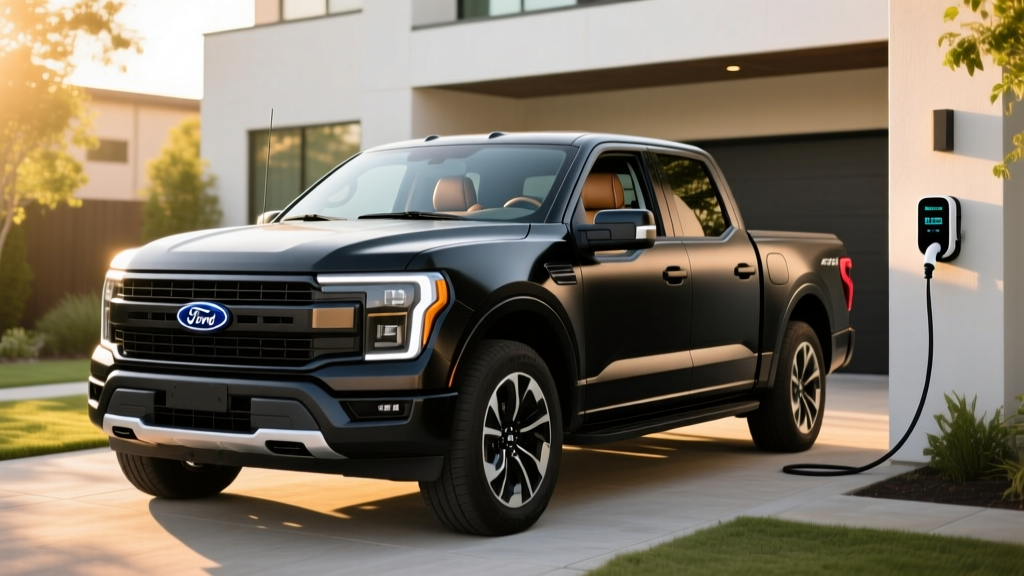
The F-150 Lightning Police Responder remains the more practical choice for most agencies: it has a factory-engineered police package, proven upfit pathways, and a lower entry price. The Cybertruck's advantages are its faster charging, superior acceleration, and the stainless-steel body's resistance to minor dents and corrosion — a genuine benefit for high-mileage fleet life. The Tahoe PPV still dominates prisoner transport and rural patrol where range certainty and refueling speed are non-negotiable.
Autopilot, FSD (Supervised), and Fleet Liability
For fleet managers, this distinction carries significant liability weight. If an officer is injured or causes a collision while using FSD (Supervised), the agency — not Tesla — bears primary liability under current NHTSA guidance. Tesla's Autopilot documentation explicitly states the driver is responsible for all vehicle actions. Departments deploying the Cybertruck should establish clear written policies restricting Autopilot use to low-stress highway transit (e.g., transporting between precinct and court), not active patrol or pursuit.
The Cybertruck's sensor suite includes 8 cameras and a new high-resolution forward camera, but no LiDAR or radar (Tesla removed ultrasonic sensors in 2022). For a police application, this means parking-assist precision is camera-only and may struggle in heavy rain or mud-splattered conditions — a real concern for rural agencies.
Pros
- Fastest DC charging in its class (350 kW peak, 10–80% in ~18 min)
- 600 hp and 4.1-sec 0–60 provide genuine pursuit acceleration
- Stainless-steel body resists dents, corrosion, and minor vandalism
- Lockable 67 cu ft bed ideal for equipment transport
- Low per-mile energy cost (~$0.06/mi on depot power)
- Over-the-air updates can add features without shop visits
Cons
- No factory police package — all upfitting is third-party
- Steer-by-wire yoke requires officer retraining and raises safety debate
- Heavy curb weight (7,000+ lbs) increases tire and brake wear
- Real-world loaded range drops to ~255 mi at highway speeds
- Prisoner transport is limited by rear cabin geometry
- MSRP near $80K exceeds most fleet per-unit budgets without grants
- Stainless body complicates decals, wraps, and traditional fleet markings
Who Should Consider the Cybertruck as a Police Vehicle?
Choose the Cybertruck if: Your agency operates in an urban/suburban environment with depot charging, needs a specialty vehicle for K-9, search-and-rescue, or community engagement, and values the publicity and community-relations impact of a high-visibility EV patrol unit. It also suits departments with grant funding for clean-fleet initiatives and existing Tesla Supercharger network access along patrol routes.
Choose the F-150 Lightning Police Responder if: You need a turnkey factory police package, lower upfit costs, established maintenance pathways, and proven fleet telematics integration. It's the safer choice for departments transitioning to EVs for the first time.
Stick with the Tahoe PPV (or wait for the Silverado EV PPV) if: Your jurisdiction covers rural areas, requires prisoner transport, operates in extreme cold where EV range loss is a liability, or lacks depot-charging infrastructure.
Frequently Asked Questions
What is the real-world range of the Tesla Cybertruck as a police car?
With police equipment (light bar, cage, radios, 500 lbs gear), expect 255–280 miles at sustained highway speeds and 270–295 miles in urban stop-and-go patrol. In sub-freezing weather, plan for 190–230 miles effective range. The EPA sticker is 340 miles, but fleet duty cycles reduce this by 15–40%.
How fast does the Cybertruck charge at a depot vs. public fast charger?
At a depot Level 2 charger (11.5 kW / 240V), the Cybertruck adds about 44 miles per hour — a full 10-hour overnight session delivers ~350+ miles. On a 350 kW DC fast charger, it charges from 10–80% in approximately 18 minutes when preconditioned. Above 80%, the charge curve tapers sharply; a 10–100% session takes roughly 35 minutes.
Does the Cybertruck qualify for the federal EV tax credit?
For individual buyers, the AWD Cybertruck at $79,990 MSRP falls just under the $80,000 truck cap for §30D, but eligibility depends on income limits, tax liability, and battery-sourcing compliance. For municipal and government fleet purchases, §30D does not apply because tax-exempt entities have no federal tax liability. Instead, agencies may qualify for the §45W Commercial Clean Vehicle Credit (up to $7,500) via direct election — consult the IRS clean vehicle credits page and a municipal tax professional.
Is the Cybertruck worth buying as a police vehicle vs. the F-150 Lightning?
For most agencies, the F-150 Lightning Police Responder is the more practical choice due to its factory police package, lower price ($59,995 vs. $79,990), and proven upfit ecosystem. The Cybertruck makes sense as a specialty or community-engagement vehicle for departments with charging infrastructure, grant funding, and a specific use case (K-9, highway interdiction, urban patrol with depot charging).
What are the biggest drawbacks of the Cybertruck as a police car?
The three biggest drawbacks are: (1) no factory police package, requiring expensive third-party upfitting ($18K–$32K); (2) the steer-by-wire yoke, which requires officer retraining and raises liability questions; and (3) limited prisoner transport capability due to the rear cabin's low roofline and angular geometry. Additionally, the stainless-steel body complicates traditional fleet markings and wraps.
What is the Cybertruck's warranty for fleet use?
Tesla covers the battery and drive units for 8 years or 120,000 miles (whichever comes first), with a minimum 70% capacity retention threshold. The basic vehicle warranty is 4 years / 50,000 miles. Fleet buyers should note that Tesla's warranty does not cover modifications made by third-party upfitters, and any electrical integration work (light bars, sirens, radios) that taps into the 12V or high-voltage system could void portions of the warranty if not performed by a Tesla-certified installer.