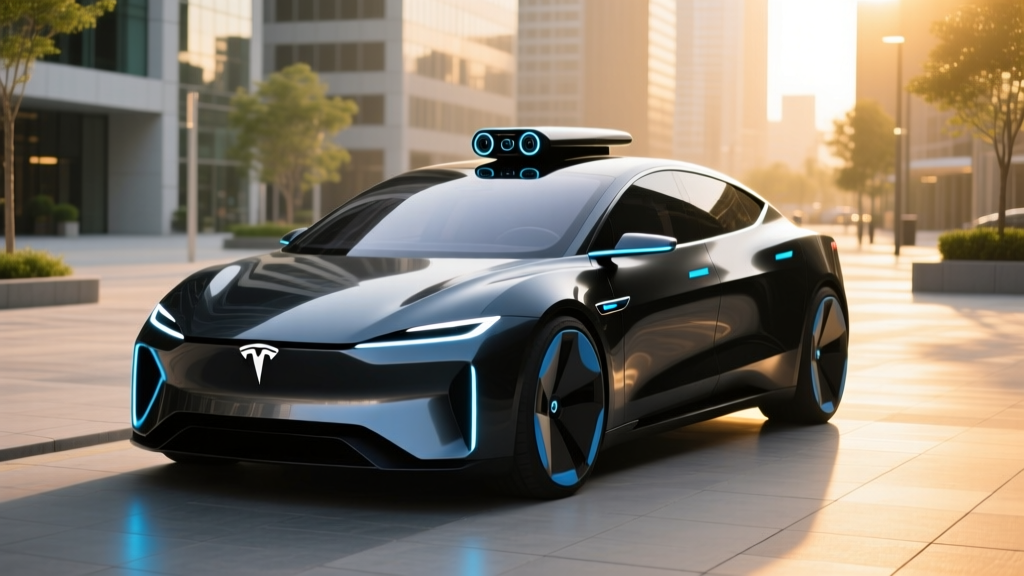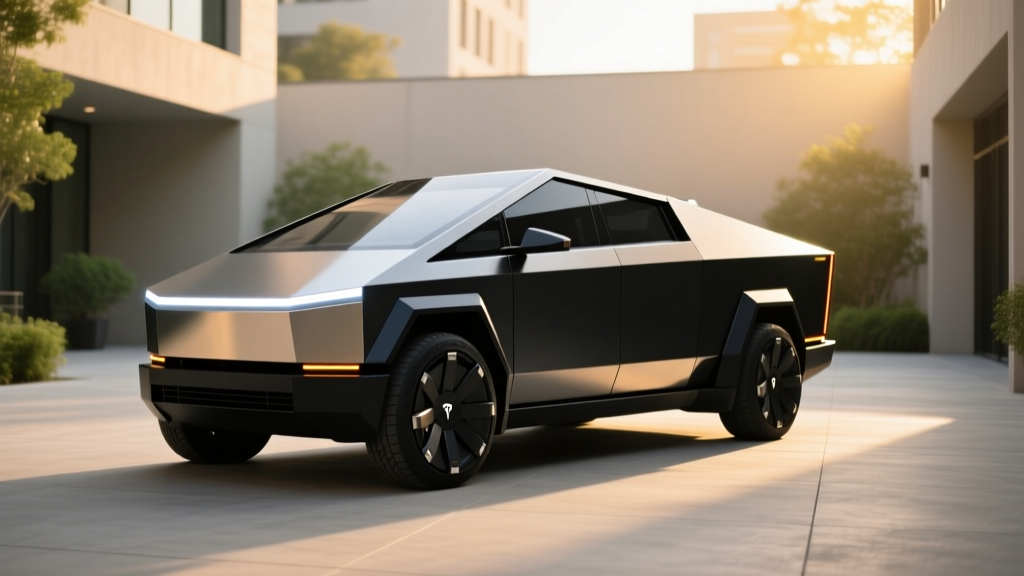
What Is the Tesla Cybertruck Mini?
Since the full-size Cybertruck debuted in late 2023, speculation about a smaller, more affordable sibling has followed every Tesla earnings call and design leak. The "Tesla Cybertruck Mini" — not an official Tesla nameplate, but the widely used shorthand among analysts, forums, and EV media — refers to a rumored compact electric pickup that would slot below the Cybertruck in size and price, potentially targeting the Ford Maverick and the Hyundai Santa Cruz in footprint while undercutting them on price.
As of early 2026, Tesla has not officially announced, priced, or opened reservations for a compact pickup. Every specification circulating online — range estimates, battery sizes, pricing — is either extrapolated from Tesla's existing platform architecture, sourced from patent filings, or derived from supply-chain reporting. This article separates what is confirmed from what is projected, so buyers can plan realistically.
Projected Specs: What a Compact Tesla Pickup Could Offer
Based on Tesla's next-generation vehicle platform (the same architecture underpinning the Robotaxi and the anticipated Model 2/Model Q compact), industry analysts project the following specifications for a Cybertruck Mini variant. These figures assume a unibody steel-composite construction, a smaller structural battery pack, and Tesla's latest drive-unit efficiency.
| Attribute | Projected Figure | Basis for Estimate |
|---|---|---|
| EPA Range (est.) | 250–310 miles | Tesla compact platform + structural pack |
| Battery Capacity (est.) | 55–65 kWh usable | Scaled structural 4680 cell pack |
| Battery Chemistry | LFP (likely) or NMC | Tesla's cost-reduction strategy favors LFP for entry models |
| Max DC Fast Charge | ~170–200 kW peak | Smaller pack limits peak C-rate |
| 10–80% DC Charge Time | ~25–30 minutes (est.) | Comparable to Model 3 RWD charging profile |
| Level 2 Home Charging | 11.5 kW (~44 mi/hr) | Standard Tesla onboard charger |
| 0–60 mph | ~5.5–6.5 sec (RWD); ~4.0 sec (AWD) | Tesla single/dual motor units |
| Horsepower | ~280 hp (RWD); ~450 hp (AWD) | Current-gen Tesla drive units |
| Drivetrain | RWD standard; AWD available | Tesla platform convention |
| Towing Capacity (est.) | ~3,500–5,000 lbs | Compact truck class benchmark |
| Bed Length (est.) | ~4.5–5.0 ft | Compact pickup segment norms |
| Base MSRP (target) | $29,990–$39,990 | Tesla's stated $25K–$35K next-gen platform goal |
| Battery Warranty (est.) | 8 years / 100,000 miles | Tesla's current standard warranty |
Range Reality: What to Expect Beyond the EPA Sticker
EPA Estimate (projected): 250–310 miles depending on trim and drivetrain
Real-World Highway (70+ mph): Expect ~210–265 miles — a 15–20% reduction from EPA combined figures, consistent with all EVs at sustained highway speeds.
Cold-Weather Impact (below 32°F): LFP chemistry loses roughly 20–30% of range in freezing temperatures without preconditioning; NMC variants would fare slightly better (~15–25% loss). A heat pump, standard on current Tesla models, mitigates cabin-heating energy draw.
Towing Scenario: Towing near max capacity could reduce range to 120–160 miles, based on Cybertruck and F-150 Lightning towing data.
If Tesla equips the Cybertruck Mini with a ~60 kWh LFP structural pack, the efficiency math points to roughly 250 miles EPA for an RWD base model. An AWD Long Range variant with a larger ~65 kWh NMC pack could stretch to 300–310 miles. These projections align with the current EPA EV range database entries for similarly sized electric vehicles.
The critical factor for buyers is not peak range but usable daily range. A 250-mile EPA truck that charges to 80% in 25 minutes at a Supercharger delivers practical road-trip capability — roughly 200 miles between 20-minute stops. For daily commuting with home Level 2 charging, even the base model's range far exceeds the average American's 37-mile daily round trip.
Charging: DC Fast, Level 2, and the Supercharger Advantage
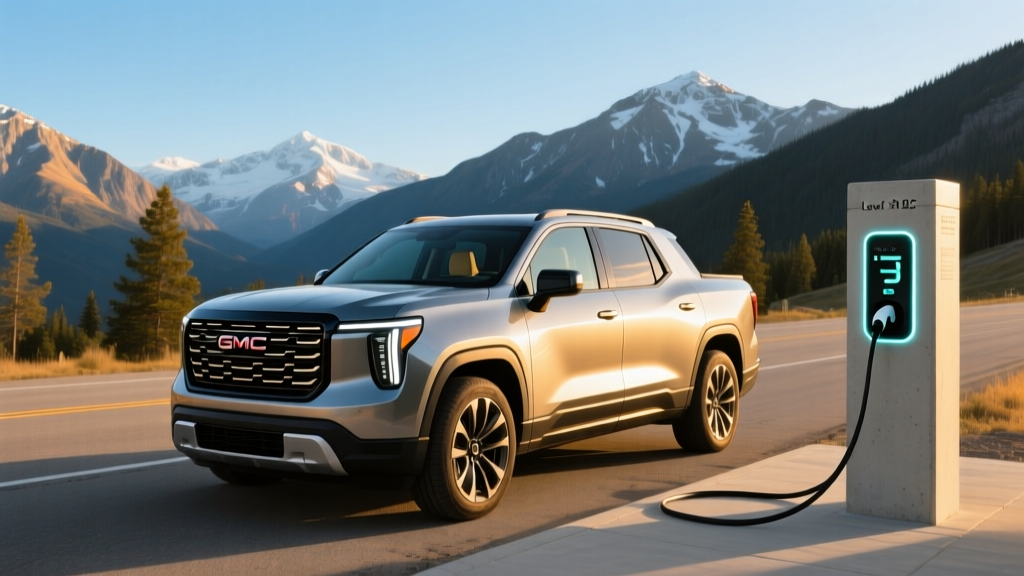
A compact Tesla pickup would charge natively on the Tesla Supercharger network using the NACS (North American Charging Standard) connector — the same plug now adopted by Ford, GM, Rivian, Hyundai, and most major automakers through 2025–2026. This means access to over 25,000 Supercharger stalls across North America, widely regarded as the most reliable public charging network.
| Charging Level | Power (kW) | Miles of Range Added | Notes |
|---|---|---|---|
| Level 1 (120V household) | ~1.4 kW | ~3–5 mi/hr | Emergency/trickle only; ~50+ hours for full charge |
| Level 2 (240V, 48A) | 11.5 kW | ~44 mi/hr | Full charge overnight (~6 hours from 10%) |
| DC Fast (Supercharger V3/V4) | ~170–200 kW peak | ~150+ mi in 15 min | Peak rate tapers above 60% SoC; 10–80% in ~25–30 min |
Charging curve reality check: No EV sustains its peak charge rate for the full session. A 200 kW peak on a ~60 kWh pack represents roughly a 3.3C charge rate, which the battery can sustain only between approximately 10–50% State of Charge. Above 60%, the rate tapers to protect cell longevity — expect ~80–100 kW through the 60–80% window, and ~30–40 kW from 80–100%. This is why the 10–80% metric matters more than peak kW alone.
For home charging, a Tesla Wall Connector installed on a 60-amp circuit delivers the full 11.5 kW / 48 amps. Installation costs typically range from $800 to $2,500 depending on panel capacity and conduit run length, according to Tesla's certified installer network. Buyers in older homes may need a $1,500–$3,000 electrical panel upgrade to support a dedicated 60-amp circuit.
Performance, Platform, and What Tesla's Compact Architecture Means
Tesla's next-generation platform, previewed at the 2023 Investor Day and refined through 2024–2025 production engineering, emphasizes a "unboxed" manufacturing process that reduces factory footprint by ~40% and per-unit cost significantly. A compact pickup built on this platform would likely feature:
- Structural battery pack: The 4680 cells serve as a stressed chassis member, reducing weight and part count. This is the same approach used in the Cybertruck and updated Model Y.
- Single rear motor (RWD base) or dual motor (AWD): Tesla's latest permanent-magnet reluctance motors deliver high efficiency without rare-earth-heavy components in some configurations.
- Estimated 0–60 mph: ~5.5–6.5 seconds for RWD; ~4.0 seconds for a dual-motor AWD variant — competitive with or quicker than any gas compact truck.
- Horsepower: ~280 hp (single motor) to ~450 hp (dual motor), based on current Tesla drive-unit output.
The towing question looms large for truck buyers. The Ford Maverick hybrid tows up to 2,000 lbs (4,000 lbs with the EcoBoost and tow package), while the Hyundai Santa Cruz turbo AWD tows 5,000 lbs. A Cybertruck Mini with a reinforced rear subframe and integrated brake controller could plausibly target 3,500–5,000 lbs — enough for a small boat, motorcycle trailer, or light utility trailer. However, towing at max capacity will cut range roughly in half, a physics reality that applies to every EV truck on the market.
Pricing, Trims, and Federal Tax Credit Eligibility
Tesla CEO Elon Musk has repeatedly stated that the next-generation platform targets a starting price around $25,000 for the base compact car variant. A pickup body style with a larger structural pack, bed hardware, and truck-rated suspension would likely command a premium. Analyst projections place the Cybertruck Mini in the following range:
| Trim (Projected) | Est. MSRP | §30D Credit Eligibility | Effective Price (if eligible) |
|---|---|---|---|
| Base RWD | $29,990 | Likely eligible (under MSRP cap) | ~$22,490 |
| Long Range RWD | $34,990 | Likely eligible (under MSRP cap) | ~$27,490 |
| AWD Dual Motor | $39,990 | Eligible (truck MSRP cap: $80,000) | ~$32,490 |
Federal tax credit rules (IRS §30D) — key caveats for 2026:
- MSRP cap: Trucks, vans, and SUVs qualify up to an $80,000 MSRP ceiling; sedans and cars are capped at $55,000. A compact pickup would fall under the truck cap, making all projected trims eligible on price alone.
- Buyer income limits: Modified adjusted gross income must not exceed $150,000 (single), $225,000 (head of household), or $300,000 (joint). Check the latest thresholds at IRS.gov §30D guidelines.
- Battery sourcing requirements: The full $7,500 credit requires meeting both critical-mineral and battery-component sourcing thresholds, which tighten annually. Tesla's increasing use of North American–sourced LFP (via partnerships and domestic cell production) positions them well, but final credit amounts ($3,750 vs. $7,500) depend on the specific battery pack's supply chain at time of delivery.
- Point-of-sale transfer: As of 2024, buyers can transfer the credit to the dealer at purchase, receiving the discount upfront rather than waiting to claim it on their tax return. This is expected to continue through 2026.
Cargo, Interior, and Daily Usability
A compact electric pickup would compete directly with the Ford Maverick (which offers a 33.3 cu ft bed and a hybrid powertrain) and the Hyundai Santa Cruz (42.7 cu ft bed). Projected dimensions for a Cybertruck Mini:
- Bed volume: ~30–38 cu ft (estimated), with a bed length of approximately 4.5–5.0 feet
- Bed features: Likely an integrated tonneau-compatible design, 120V/240V bed outlets (following the Cybertruck's V2L pattern), and tie-down tracks
- Cabin seating: 5-passenger, 4-door crew cab configuration (the only body style that makes sense in the compact truck market)
- Rear legroom: ~36–38 inches (estimated, based on compact truck norms and Tesla's space-efficient skateboard platform)
- Frunk (front trunk): Likely 3–5 cu ft, useful for charging cables and groceries — an advantage no gas compact truck offers
- Infotainment: Expected to run Tesla's latest vehicle software on a 15.4-inch center touchscreen, with no traditional instrument cluster (consistent with current Tesla design language)
The interior will almost certainly follow Tesla's minimalist approach: steering-wheel–integrated controls, a single large display, and no physical buttons. This polarizes buyers — some love the clean aesthetic and over-the-air update capability, while others miss tactile climate and volume controls. For truck buyers accustomed to the Ford Maverick's conventional layout, the adjustment period may be notable.
Driver Assistance and Autonomy Features
The Cybertruck Mini would ship with Tesla's latest Autopilot hardware (likely HW5 or later), including:
- Adaptive cruise control with stop-and-go
- Lane-centering and lane-keeping assist
- Automatic emergency braking and collision warning
- Parking assist and Summon features
Full Self-Driving (Supervised) would be available as a paid software option (currently $8,000 or $99/month). FSD Supervised handles highway on-ramps, off-ramps, lane changes, and some city-street navigation — but it remains a SAE Level 2 driver-assistance system. The driver must keep hands on the wheel and eyes on the road at all times. Tesla's FSD is not autonomous driving; it does not replace the driver.
How It Stacks Up: Cybertruck Mini vs. the Compact Truck Field
Even as projections, the Cybertruck Mini's numbers invite comparison with current compact trucks:
| Attribute | Tesla Cybertruck Mini (proj.) | Ford Maverick Hybrid | Hyundai Santa Cruz Turbo AWD |
|---|---|---|---|
| Powertrain | BEV (RWD/AWD) | 2.5L Hybrid (FWD) | 2.5L Turbo (AWD) |
| Starting Price | ~$29,990 | ~$28,000 | ~$36,000 |
| Range / Fuel Economy | ~250–310 mi / ~110 MPGe | ~500 mi / 42 MPG combined | ~420 mi / 22 MPG combined |
| 0–60 mph | ~5.5–6.5 sec | ~7.5 sec | ~6.3 sec |
| Towing Capacity | ~3,500–5,000 lbs | 2,000 lbs (4,000 w/ pkg) | 5,000 lbs |
| Federal Tax Credit | Up to $7,500 | None (hybrid) | None (ICE) |
| Cost per Mile (energy) | ~$0.04–0.06 (home) | ~$0.08–0.10 | ~$0.14–0.18 |
The Maverick Hybrid wins on total range and upfront price, but cannot match the Cybertruck Mini's projected acceleration, per-mile energy cost, or federal tax credit advantage. The Santa Cruz offers more bed volume and a proven turbo powertrain but trails on fuel economy and purchase price. The Cybertruck Mini's value proposition hinges on Tesla delivering a sub-$30K price and the buyer qualifying for the full $7,500 credit.
Who Should Wait for the Cybertruck Mini — and Who Shouldn't
Wait for the Cybertruck Mini if:
- You want an all-electric compact truck and no current option exists in this segment
- You have reliable home Level 2 charging access and a daily commute under 100 miles round trip
- You want access to the Tesla Supercharger network for road trips
- You qualify for the full §30D tax credit and want to maximize the effective discount
- You're not in a rush — production could be 2027 or later
- You need a truck within the next 6–12 months
- You regularly tow heavy loads over long distances (EV towing range remains limited)
- You lack home charging access and rely entirely on public infrastructure
- You prefer a conventional interior with physical controls and a traditional gauge cluster
- You want proven long-term reliability data (the Maverick and Santa Cruz have multi-year track records)
Pros, Cons, and the Bottom Line
- Sub-$30K starting price (before credit) could make it the cheapest EV truck
- Supercharger network access via native NACS
- Quick acceleration and low per-mile energy cost
- Frunk + bed outlets for versatile cargo/power
- Over-the-air updates and Tesla's software ecosystem
- Eligible for up to $7,500 federal tax credit
- Not yet announced — no confirmed timeline, specs, or pricing
- Smaller bed than Maverick or Santa Cruz (~30–38 cu ft)
- Range drops significantly when towing (expect ~50% loss)
- Minimalist interior won't suit all truck buyers
- LFP battery may struggle in extreme cold without preconditioning
- Tesla's build-quality reputation remains a concern for some buyers
Frequently Asked Questions
What is the real-world range of the Tesla Cybertruck Mini?
Based on projected battery capacity (55–65 kWh) and Tesla's platform efficiency, expect an EPA rating of 250–310 miles depending on trim. Real-world highway driving at 70+ mph will yield roughly 210–265 miles. Cold weather (below freezing) can reduce range by 20–30%, particularly with LFP chemistry.
How fast does the Cybertruck Mini charge?
Projected DC fast charging peaks at 170–200 kW, with a 10–80% session taking approximately 25–30 minutes on a Supercharger V3/V4 stall. Home Level 2 charging at 11.5 kW adds roughly 44 miles of range per hour, fully replenishing the pack overnight in about 6 hours.
How much does the Tesla Cybertruck Mini cost after tax credits?
If the base RWD trim launches at ~$29,990 and the buyer qualifies for the full $7,500 §30D federal credit, the effective price could be as low as ~$22,490. Eligibility depends on buyer income (under $150K single / $300K joint), battery-sourcing compliance, and the vehicle's final MSRP staying under the $80,000 truck cap.
Is the Cybertruck Mini worth waiting for vs. buying a Ford Maverick or Hyundai Santa Cruz?
If you want a fully electric truck with low operating costs, Supercharger access, and a potentially transformative price point, the Cybertruck Mini is worth monitoring. However, it is unannounced and may not arrive before 2027. If you need a truck now, the Maverick Hybrid offers outstanding fuel economy at a proven price, and the Santa Cruz provides turbo AWD capability with 5,000-lb towing.
What are the biggest pros and cons?
The biggest pro is the potential price: a sub-$30K EV truck with 250+ miles of range and Supercharger access would be a segment-defining vehicle. The biggest con is uncertainty — Tesla has not confirmed the vehicle exists, and specs, timing, and pricing remain entirely speculative.
Does the Tesla Cybertruck Mini qualify for the federal EV tax credit?
It is projected to qualify, assuming Tesla meets 2026 battery-sourcing requirements under IRS §30D rules. The MSRP would fall well under the $80,000 truck cap. However, the credit amount ($3,750 vs. $7,500) depends on whether the battery's critical minerals and components meet annual threshold requirements, which tighten each year. Always verify eligibility at the point of purchase.
Sources: U.S. EPA Fuel Economy, IRS Clean Vehicle Credits, SAE International J3016. All projected specifications are analyst estimates based on publicly available platform data and are subject to change upon official Tesla announcement.