Is There Really a Tesla Cybertruck "Mexicana" Edition?
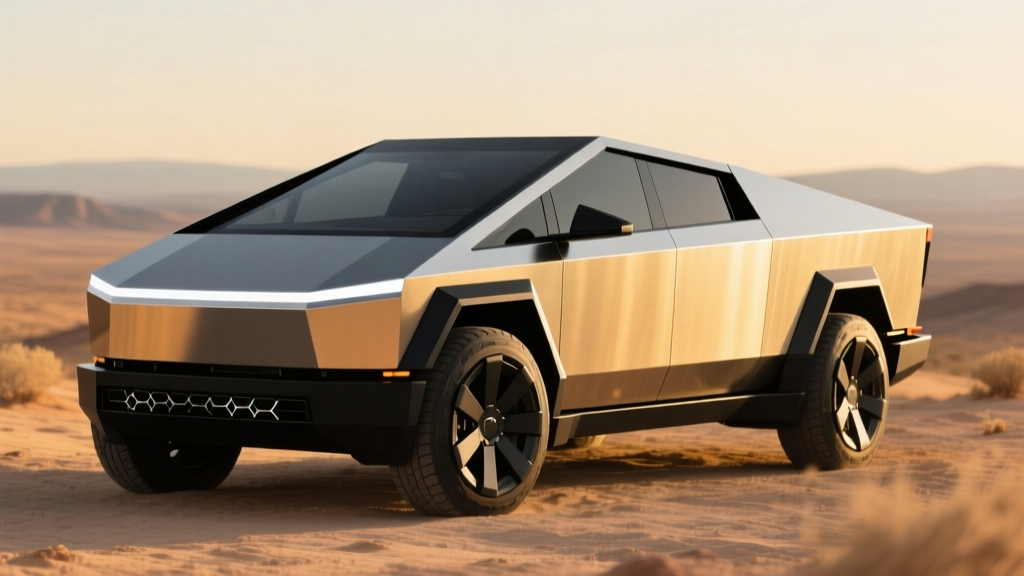
Search interest in the Cybertruck Mexicana has surged through 2025 and into 2026, fueled by fan renders, social media speculation, and a handful of viral posts suggesting Tesla is building a Mexico-specific variant of its angular electric pickup. Let's cut straight to the data: as of early 2026, Tesla has not announced, confirmed, or hinted at a "Cybertruck Mexicana" trim, special edition, or region-specific model for the Mexican market. What does exist is the standard Tesla Cybertruck lineup — available in the U.S. and expanding into limited international markets — and a growing community of Mexican EV enthusiasts importing or anticipating the truck.
This review covers the full 2026 Tesla Cybertruck lineup with exact specs, real-world range expectations, charging performance, pricing after federal tax credits, and what Mexican buyers (and U.S. buyers curious about the "Mexicana" rumor) actually need to know. We'll also address cross-border availability, charging infrastructure in Mexico, and whether the Cybertruck makes sense south of the border.
2026 Cybertruck Lineup: Specs at a Glance
Tesla offers the Cybertruck in three primary configurations for the 2026 model year. Here are the exact numbers, sourced from Tesla's official Cybertruck configurator and EPA filings on fueleconomy.gov:
| Spec | Long Range AWD | Dual Motor AWD | Cyberbeast (Tri-Motor) |
|---|---|---|---|
| EPA Range | 340 miles | 325 miles | 320 miles |
| Battery Capacity (usable) | ~123 kWh (estimated, NMC) | ~123 kWh (estimated, NMC) | ~123 kWh (estimated, NMC) |
| Drivetrain | Dual Motor AWD | Dual Motor AWD | Tri-Motor AWD |
| Horsepower | 600 hp | 600 hp | 845 hp |
| 0–60 mph | 3.9 sec | 3.9 sec | 2.6 sec |
| Max DC Fast Charge | 250 kW | 250 kW | 250 kW |
| 10–80% DC Charge | ~28 min | ~28 min | ~28 min |
| Level 2 Home Charge | 11.5 kW (~37 mi/hr) | 11.5 kW (~37 mi/hr) | 11.5 kW (~37 mi/hr) |
| MPGe (combined) | 67 MPGe | 66 MPGe | 64 MPGe |
| Efficiency (kWh/100 mi) | 50 kWh | 51 kWh | 53 kWh |
| Towing Capacity | 11,000 lbs | 11,000 lbs | 11,000 lbs |
| Payload | 2,500 lbs | 2,500 lbs | 2,500 lbs |
| Bed Length | 6 ft (72 in) | 6 ft (72 in) | 6 ft (72 in) |
| Cargo Volume (bed + frunk) | ~67 cu ft bed + ~7 cu ft frunk | ~67 cu ft bed + ~7 cu ft frunk | ~67 cu ft bed + ~7 cu ft frunk |
| Base MSRP | $79,990 | $79,990 | $99,990 |
Chemistry note: Tesla has not publicly disclosed the exact cell chemistry for the Cybertruck's structural battery pack. Industry analysis and teardown reports strongly suggest a 4680-cell NMC (nickel manganese cobalt) configuration, which prioritizes energy density over the LFP (lithium iron phosphate) chemistry used in some Model 3/Y Standard Range variants. NMC offers higher range per kilogram but is more sensitive to sustained 100% state-of-charge storage — Tesla recommends daily charging to 80–90% for longevity.
Real-World Range: What the EPA Sticker Doesn't Tell You
EPA Estimated: 320–340 miles (depending on trim)
Real-World Highway (70 mph, 75°F): ~260–290 miles
Real-World Cold Weather (30°F, mixed driving): ~210–250 miles
Towing a 5,000-lb trailer: ~150–180 miles
The Cybertruck's stainless-steel exoskeleton and aggressive angular design create a higher drag coefficient than a sleek sedan — Tesla has not published an official Cd, but independent testing suggests roughly 0.39–0.42, which is poor by EV standards. That aerodynamic penalty shows up most at highway speeds above 65 mph, where range drops 15–25% below the EPA combined figure.
Cold weather compounds the problem. The Cybertruck's heat pump helps cabin efficiency, but the massive battery still loses 20–30% usable range in sub-freezing temperatures, especially on shorter trips where the pack doesn't reach optimal operating temperature. For Mexican buyers in warmer climates — Mexico City, Monterrey, Guadalajara — cold-weather loss is largely a non-issue. But for high-altitude routes (Mexico City sits at 7,350 ft) or winter trips to mountainous regions, expect some reduction.
Towing is where the Cybertruck's range story becomes critical. At 11,000 lbs max rated capacity, the truck can pull a substantial trailer, but energy consumption roughly doubles under heavy tow loads. Plan for 150–180 miles of range when towing near max capacity, and route your trips around Supercharger stations accordingly.
Charging Performance: DC Fast, Level 2, and the Supercharger Network
The Cybertruck uses Tesla's NACS (North American Charging Standard) connector natively — no adapter needed for Tesla Superchargers. It supports a 800-volt architecture enabling peak charge rates up to 250 kW at V3/V4 Superchargers.
| Charging Level | Power | Miles Added per Hour | Notes |
|---|---|---|---|
| Level 1 (120V household) | ~1.4 kW | ~3–4 mi/hr | Emergency/trickle only; full charge in 80+ hours |
| Level 2 (240V home, Wall Connector) | 11.5 kW | ~37 mi/hr | Full charge in ~11 hours; ideal overnight setup |
| Level 2 (public, 19.2 kW capable) | 11.5 kW (truck-limited) | ~37 mi/hr | Cybertruck onboard charger caps at 11.5 kW |
| DC Fast (Tesla V3 Supercharger) | Up to 250 kW peak | ~200+ mi in 15 min | 10–80% in ~28 min; tapers significantly above 80% |
| DC Fast (CCS via adapter) | Up to ~150 kW | Variable | Tesla CCS adapter included; speed depends on station |
Charging curve reality: The Cybertruck does not sustain 250 kW for the entire 10–80% session. Peak rate is achieved roughly between 10–30% state of charge, then progressively tapers. From 80–100%, charging slows dramatically to protect the NMC cells — expect the final 20% to take as long as the first 50%. For road trips, the optimal strategy is charging from 10–80% and moving on, rather than waiting for a full top-off.
Home charging setup: Tesla's Wall Connector ($420) on a 60-amp circuit delivers the full 11.5 kW / 48-amp charge rate. Professional installation typically runs $800–$2,500 depending on panel capacity and run distance. If your home has a 100-amp electrical panel, you may need a $1,500–$3,000 panel upgrade to support a dedicated 60-amp EV circuit — get a quote from a licensed electrician before purchasing.
Pricing, Trims, and Federal Tax Credit Eligibility
The 2026 Cybertruck lineup starts at $79,990 for the Long Range AWD and climbs to $99,990 for the Cyberbeast tri-motor. Tesla discontinued the previously promised $60,000 single-motor RWD variant, which was originally teased at the 2019 unveiling but never brought to market.
| Trim | Base MSRP | Federal §30D Credit Eligible? | Effective Price (if eligible) |
|---|---|---|---|
| Long Range AWD | $79,990 | See eligibility rules below | As low as ~$72,490 |
| Dual Motor AWD | $79,990 | See eligibility rules below | As low as ~$72,490 |
| Cyberbeast (Tri-Motor) | $99,990 | See eligibility rules below | As low as ~$92,490 |
Federal tax credit (IRS §30D) — critical rules for 2026:
- MSRP Cap: Trucks/vans/SUVs must have an MSRP at or below $80,000 to qualify. The Long Range AWD and Dual Motor AWD at $79,990 clear this threshold; the Cyberbeast at $99,990 does NOT qualify.
- Income Cap: Modified adjusted gross income must not exceed $150,000 (single), $225,000 (head of household), or $300,000 (joint filers).
- Battery Sourcing: The credit is split into two halves — $3,750 for critical-minerals sourcing and $3,750 for battery-component manufacturing. As of 2026, strict "foreign entity of concern" (FEOC) rules apply. Tesla's supply chain has been progressively onshoring, but buyers must verify current-year eligibility on IRS.gov or via the point-of-sale transfer at the dealer.
- Point-of-Sale Transfer: Since 2024, buyers can transfer the credit to the dealer at purchase, reducing the upfront price rather than waiting for a tax refund. This applies to the Cybertruck if purchased through an authorized Tesla sales channel.
For Mexican buyers: The U.S. federal §30D credit applies only to vehicles placed in service in the United States by U.S. taxpayers. If you're purchasing a Cybertruck for use and registration in Mexico, the §30D credit does not apply. Mexico has its own EV incentive framework, including ISR (income tax) deductions and reduced vehicle registration fees in some states — consult a Mexican tax professional for current rules.
Interior, Tech, and Driver Assistance
The Cybertruck's interior is minimalist to a degree that polarizes buyers. There is no instrument cluster — all information routes through an 18.5-inch central touchscreen. Rear passengers get a 9.4-inch touchscreen for climate and media. The yoke-style steering wheel (a rectangular "butterfly" design) is standard, with no traditional round-wheel option as of 2026.
Notable tech features:
- Steer-by-wire: The Cybertruck uses a fully electronic steer-by-wire system with no mechanical connection between the wheel and the tires. This enables variable steering ratios (fewer turns lock-to-lock at low speeds) but has drawn criticism from drivers who miss road feedback.
- 48-volt architecture: The truck runs a 48V low-voltage system (instead of the industry-standard 12V), reducing wiring harness weight and enabling higher-power accessories.
- Armor glass: Tesla's laminated "armor glass" windows are more impact-resistant than standard automotive glass, though early-production units had fit-and-finish issues that Tesla has largely addressed in 2025–2026 builds.
- Vault bed: The 6-foot bed features a powered tonneau cover, 120V and 240V bed outlets (up to 11.5 kW output for tools or appliances), and integrated loading ramp capabilities via the tailgate.
- Air suspension: Adaptive air suspension offers up to 17 inches of ground clearance in Off-Road mode and can lower for highway efficiency.
Driver assistance — Autopilot and FSD (Supervised):
Tesla Autopilot (standard) and Full Self-Driving (Supervised) are SAE Level 2 driver-assistance systems. The driver must remain attentive, keep hands on the yoke, and be prepared to take over at any moment. FSD (Supervised) can navigate city streets, stop signs, and highway interchanges, but it makes errors and requires active supervision. This is fundamentally different from Level 4 robotaxi services like Waymo, which operate without a driver in defined geographic zones. Do not treat FSD as autonomous driving.
Autopilot comes standard with traffic-aware cruise control and autosteer. FSD (Supervised) remains an $8,000 add-on or $99/month subscription as of 2026. Real-world FSD performance has improved significantly through 2025 neural-network updates, but it still struggles with construction zones, unprotected left turns in heavy traffic, and poorly marked roads — all common scenarios in Mexican driving environments.
Who Should Buy the Cybertruck (and Who Shouldn't)?
- You need a full-size electric pickup for towing (up to 11,000 lbs) with Supercharger network access for road trips.
- You want standout design and are willing to accept polarizing aesthetics and a learning curve with steer-by-wire.
- You have home Level 2 charging and access to Tesla Superchargers along your frequent routes.
- You value the 240V bed outlet for job-site power or outdoor use (V2L capability).
- You qualify for the §30D credit on the Long Range or Dual Motor trims (MSRP under $80K, income under cap).
- You prioritize interior refinement, ride comfort, and quiet — the Rivian R1T and Ford F-150 Lightning both offer more traditional, comfortable truck interiors.
- You need a proven long-term reliability track record — the Cybertruck is still in its second production year with limited long-term durability data.
- You primarily drive in dense urban environments where the truck's 231.4-inch length and 80.2-inch width make parking difficult.
- You're buying in Mexico and lack access to reliable DC fast-charging infrastructure for longer trips.
- You need the $7,500 credit and are eyeing the Cyberbeast — at $99,990 MSRP, it exceeds the §30D truck cap.
Cybertruck in Mexico: Charging Infrastructure and Availability
For the many readers searching "Cybertruck Mexicana" because they want to buy and drive this truck in Mexico, here's the practical reality as of 2026:
Tesla Supercharger network in Mexico: Tesla has been expanding its Supercharger footprint in Mexico, with clusters in Mexico City, Monterrey, Guadalajara, Querétaro, Puebla, and along key highway corridors (Mexico City–Querétaro, Monterrey–Saltillo). However, coverage remains sparse compared to the U.S., particularly in rural areas, the Yucatán Peninsula, and Baja California. Long-distance road trips require careful route planning and contingency charging stops.
Importing a Cybertruck to Mexico: Mexico allows importation of used and new vehicles under specific rules. EVs benefit from reduced import duties under certain trade agreements, but the process involves customs brokers, VIN verification, NOM (Norma Oficial Mexicana) compliance checks, and registration through your state's Secretaría de Movilidad. Budget $2,000–$5,000 for importation logistics on top of the vehicle purchase price.
Service and parts: Tesla operates service centers in Mexico City, Monterrey, and Guadalajara. Body repair for the Cybertruck's stainless-steel panels requires specialized equipment and training — not all service centers are equipped for structural repairs. If you're in a city without a Tesla service presence, factor in travel time for warranty work.
How Does the Cybertruck Stack Up Against Key Competitors?
| Spec | Tesla Cybertruck (LR AWD) | Rivian R1T (Dual Max) | Ford F-150 Lightning (Ext. Range) |
|---|---|---|---|
| EPA Range | 340 mi | ~410 mi | ~320 mi |
| Base MSRP | $79,990 | ~$89,000 | ~$69,995 |
| 0–60 mph | 3.9 sec | ~3.5 sec | ~3.8 sec |
| Towing | 11,000 lbs | 11,000 lbs | 10,000 lbs |
| DC Fast Charge (peak) | 250 kW | ~220 kW | ~150 kW |
| Bed Length | 6 ft | 4.5 ft (standard) / 6 ft (with tunnel) | 5.5 ft |
| §30D Credit Eligible | Yes (LR/Dual under $80K cap) | Yes (select trims) | Yes (under $80K cap) |
The Rivian R1T offers superior range and a more refined, adventure-oriented interior but costs more. The F-150 Lightning is the most affordable and familiar option for traditional truck buyers, with a conventional steering wheel and proven Ford dealer service network — a significant advantage in Mexico where Ford has extensive service coverage. The Cybertruck wins on peak DC charging speed, the Supercharger network, and sheer attention factor, but trails on interior comfort and long-term reliability data.
Frequently Asked Questions
Is there a Tesla Cybertruck Mexicana edition?
No. As of 2026, Tesla has not announced any Mexico-specific Cybertruck trim, special edition, or "Mexicana" variant. The search term appears to be community-driven speculation and fan renders. Tesla sells the same Cybertruck trims globally with minor regional software and compliance variations.
What is the real-world range of the Cybertruck?
The EPA rates the Long Range AWD at 340 miles, but expect 260–290 miles in real-world highway driving at 70 mph, and 210–250 miles in cold weather. Towing reduces range to roughly 150–180 miles depending on trailer weight and terrain.
How fast does the Cybertruck charge?
At a Tesla V3/V4 Supercharger, the Cybertruck peaks at 250 kW and charges from 10–80% in approximately 28 minutes. Home Level 2 charging at 11.5 kW adds about 37 miles of range per hour, fully replenishing the battery in roughly 11 hours.
Does the Cybertruck qualify for the $7,500 federal EV tax credit?
The Long Range AWD and Dual Motor AWD trims ($79,990 MSRP) fall under the §30D $80,000 MSRP cap for trucks and may qualify for up to $7,500, subject to buyer income limits and battery-sourcing (FEOC) requirements. The Cyberbeast ($99,990) does NOT qualify due to the MSRP cap. Always verify current eligibility at IRS.gov before purchasing.
Can I buy and register a Cybertruck in Mexico?
Yes, through importation. Tesla does not currently sell the Cybertruck directly through Mexican dealerships as of early 2026. You'll need a customs broker, NOM compliance verification, and state registration. Factor in $2,000–$5,000 for import logistics, and plan for limited Tesla service center coverage outside Mexico City, Monterrey, and Guadalajara.
What is the Cybertruck's warranty coverage?
Tesla covers the Cybertruck with a 4-year/50,000-mile basic vehicle limited warranty and an 8-year/120,000-mile battery and drive unit warranty. The battery warranty guarantees at least 70% capacity retention over the warranty period. This is competitive with the Rivian R1T (8-year/175,000-mile battery warranty) but slightly below Ford's F-150 Lightning battery coverage (8-year/100,000-mile, 70% retention).
Is the Cybertruck good for daily commuting?
It depends on your commute. For highway commutes with home charging, the Cybertruck works well — the air suspension smooths out most road imperfections, and the cabin is quiet at speed. For dense urban commuting, the truck's 231.4-inch length and limited visibility make it cumbersome. The steer-by-wire system also requires an adjustment period for drivers accustomed to traditional steering feedback.