Quick Verdict: Is Leasing the Cybertruck the Smart Move in 2026?
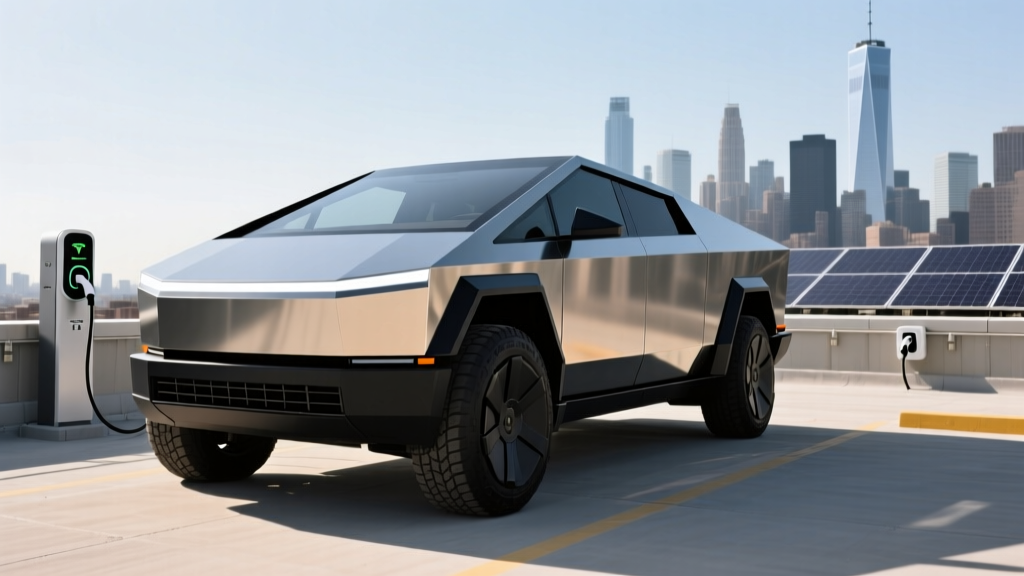
The Tesla Cybertruck remains one of the most polarizing electric vehicles on the road, and for 2026, Tesla continues to offer it through direct purchase and lease arrangements. If you've been searching for Tesla Cybertruck lease options, you're likely weighing the appeal of lower monthly payments against the realities of mileage caps, wear-and-tear policies, and the question of whether you'll actually qualify for the federal EV tax credit when leasing versus buying.
This review breaks down every number that matters: EPA range versus what you'll actually see on the highway, real DC fast-charging curves, home charging speeds, and the full pricing picture including IRS §30D tax credit eligibility. Whether you're eyeing the rear-wheel-drive base model or the tri-motor Cyberbeast, we'll give you the data to decide if a Cybertruck lease makes financial sense for your situation.
2026 Cybertruck Specs at a Glance
| Spec | RWD (Base) | All-Wheel Drive | Cyberbeast |
|---|---|---|---|
| EPA Range | ~250 mi | ~340 mi | ~320 mi |
| Battery (usable) | ~100 kWh (est.) NMC | ~123 kWh NMC | ~123 kWh NMC |
| 0-60 mph | ~6.5 sec | ~4.1 sec | ~2.6 sec |
| Horsepower | ~315 hp | ~600 hp | ~845 hp |
| Drivetrain | RWD (single motor) | AWD (dual motor) | AWD (tri motor) |
| Max DC Fast Charge | ~250 kW | ~350 kW | ~350 kW |
| 10-80% DC Charge | ~28 min | ~18 min | ~18 min |
| Level 2 Home Charge | 11.5 kW (~37 mi/hr) | 11.5 kW (~37 mi/hr) | 11.5 kW (~37 mi/hr) |
| Base MSRP (2026) | ~$60,990 | ~$79,990 | ~$99,990 |
| Towing Capacity | 7,500 lbs | 11,000 lbs | 11,000 lbs |
Note: RWD base model availability is limited and subject to production allocation. Most lease inventory in 2026 is concentrated on the AWD and Cyberbeast trims.
Real-World Range: What the EPA Sticker Doesn't Tell You
- AWD (340 mi EPA): Expect ~270-290 miles in mixed highway driving at 70-75 mph. In freezing temperatures (below 32°F), plan for 220-250 miles due to battery heating demands and cabin climate load.
- Cyberbeast (320 mi EPA): Real-world highway range sits around ~250-270 miles. Aggressive acceleration and heavy towing can drop this below 200 miles per charge.
- RWD (~250 mi EPA): City-heavy commuting may approach the EPA figure, but sustained highway speeds above 70 mph typically yield ~200-220 miles.
The Cybertruck's angular stainless-steel exoskeleton creates a drag coefficient that penalizes highway efficiency more than sleeker EVs. At 75 mph, aerodynamic drag consumes significantly more energy than at 55 mph.
According to fueleconomy.gov, the AWD Cybertruck achieves approximately 67 MPGe combined (city/highway). In terms of energy consumption, that translates to roughly 48-52 kWh per 100 miles in mixed driving — higher than the Ford F-150 Lightning Extended Range (~47 kWh/100 mi) and considerably higher than a Rivian R1T Dual-Motor (~43 kWh/100 mi). The Cybertruck's weight (nearly 7,000 lbs for AWD) and bluff-body aerodynamics are the primary culprits.
If your lease includes a 10,000-mile-per-year cap (Tesla's typical lease term structure), range matters less for daily commuting but becomes critical for road trips. Plan charging stops every 200-230 miles on long highway drives to avoid the steep charging-curve taper above 80% State of Charge.
Charging Speed: DC Fast, Level 2, and the Curve Reality
Charging speed is arguably the most important ownership variable after range. Here's what the Cybertruck actually delivers at different charge levels:
| Charge Level | Power (kW) | Miles Added/Hour | Notes |
|---|---|---|---|
| Level 1 (120V household) | ~1.4 kW | ~3-4 mi/hr | Emergency/top-up only; ~80+ hrs for full charge |
| Level 2 (240V home, 48A) | 11.5 kW | ~37 mi/hr | Full charge in ~10-12 hrs; requires NEMA 14-50 or hardwired Wall Connector |
| DC Fast (V4 Supercharger) | Up to 350 kW (AWD/Cyberbeast) | ~200+ mi in 15 min (peak) | Peak rate sustained only to ~50% SoC; tapers significantly above 80% |
| DC Fast (V3 Supercharger) | Up to 250 kW | ~150 mi in 15 min | More common at existing Supercharger stations |
The AWD and Cyberbeast trims support Tesla's latest 800-volt-class architecture, enabling peak charge rates up to 350 kW on V4 Superchargers. However, peak kW is not sustained kW. The charge curve is aggressive: you'll see 300+ kW from roughly 10% to 45% State of Charge, after which the rate progressively tapers. From 80% to 100%, charging slows to roughly 30-40 kW to protect the NMC battery cells.
For home Level 2 charging, Tesla's Wall Connector at 48 amps delivers 11.5 kW, adding about 37 miles of range per hour. A full overnight charge from 20% to 80% takes roughly 7-8 hours. Home charging installation typically costs $500-$2,000 depending on your electrical panel's proximity to the parking spot and whether a panel upgrade (to 200A service) is needed. Always consult a licensed electrician for final installation specs.
The Cybertruck uses Tesla's NACS (North American Charging Standard) connector natively. With the broader industry adopting NACS through 2025-2026, access to non-Tesla DC fast chargers using NACS connectors is expanding, though Tesla's Supercharger network remains the most reliable option.
Performance, Cargo, and Everyday Practicality
The Cybertruck's performance numbers are genuinely impressive. The Cyberbeast's 2.6-second 0-60 mph time makes it one of the quickest production trucks ever built, and even the AWD model's 4.1-second sprint outpaces most sports sedans. The tri-motor Cyberbeast produces an estimated 845 horsepower with torque vectoring across the rear axle for enhanced cornering stability.
But beyond the drag-strip numbers, how practical is it as a daily driver and truck?
Cargo and Dimensions
- Bed length: 6 feet (with tailgate closed); extends to ~8 feet with tailgate down
- Bed volume: ~67 cu ft (bed only); lockable tonneau cover included
- Frunk (front trunk): ~7 cu ft — useful for groceries or charging cables
- Rear seat legroom: ~38 inches — adequate for adults on shorter trips
- Seating: 5-passenger (2+3 bench configuration available on some trims, 2+2 on others)
- Vault (bed) payload: ~2,500 lbs
The stainless-steel exoskeleton means no traditional paint, which eliminates scratch concerns but makes dent repair specialized and potentially expensive. The motorized tonneau cover is standard and supports up to 300 lbs of distributed weight — handy for standing on at a campsite or tailgate.
Standout Tech and Drawbacks
The Cybertruck runs Tesla's latest infotainment on a 18.5-inch center touchscreen with a secondary 9.4-inch rear-seat display. It includes native integration for navigation, streaming, and Tesla's app ecosystem. The steer-by-wire system (no mechanical connection between the yoke and the wheels) is a first for a production vehicle in the US, offering variable steering ratios that make parking-lot maneuvers surprisingly easy despite the truck's width.
Notable drawbacks:
- The yoke-style steering wheel divides opinion and takes genuine adaptation time, especially for three-point turns and roundabouts.
- Visibility is compromised by the thick A-pillars and the angular rear profile — the rear camera is essential for parking.
- Panel gaps and early build-quality issues have improved through 2025-2026 production runs but remain a concern relative to legacy truck makers.
- Insurance premiums run 20-40% higher than comparable F-150 Lightning or Rivian R1T policies, driven by stainless-steel body repair costs and high replacement parts pricing.
Driver Assistance
Tesla's Autopilot and available Full Self-Driving (Supervised) are Level 2 driver-assistance systems. The driver must remain fully engaged, hands on the yoke, and eyes on the road at all times. FSD (Supervised) can handle highway lane changes, on-ramp to off-ramp navigation, and some city-street scenarios, but it is not autonomous driving. Only Level 4 services like Waymo operate without a driver.
Pricing, Lease Options, and Tax Credit Eligibility
Understanding the financial picture requires separating purchase pricing from lease economics and the shifting federal tax credit landscape.
| Trim | Base MSRP (2026) | Est. Lease (36 mo, 10k mi/yr) | Federal §30D Credit Eligibility |
|---|---|---|---|
| RWD (Base) | ~$60,990 | ~$750-$850/mo | Eligible (below $80k truck cap) — up to $7,500 if income/sourcing rules met |
| AWD | ~$79,990 | ~$1,000-$1,150/mo | Eligible (below $80k truck cap) — up to $7,500 if income/sourcing rules met |
| Cyberbeast | ~$99,990 | ~$1,300-$1,500/mo | NOT eligible — exceeds $80,000 MSRP cap for trucks under §30D |
Federal Tax Credit Rules (IRS §30D, 2026)
The federal EV tax credit under IRS §30D provides up to $7,500, but eligibility depends on several requirements that change frequently. For 2026, key rules include:
- MSRP cap: Trucks, vans, and SUVs must have an MSRP at or below $80,000. This makes the RWD and AWD Cybertruck eligible but excludes the Cyberbeast at ~$99,990.
- Buyer income caps: Modified adjusted gross income (MAGI) must not exceed $150,000 (single), $225,000 (head of household), or $300,000 (joint filers).
- Battery sourcing: A percentage of critical minerals and battery components must be sourced from the US or free-trade-agreement countries. Tesla's US-built battery packs generally meet these thresholds, but verify at purchase.
- Point-of-sale transfer: As of 2024, eligible buyers can transfer the credit to the dealer at point of sale, reducing the purchase price directly rather than waiting for a tax refund. For leases, the credit technically goes to the lessor (Tesla), who may pass savings through as a capitalized-cost reduction — but this is not guaranteed.
Lease-specific tax credit nuance: When you lease a Cybertruck, the vehicle is titled to Tesla Finance (the lessor). The §30D credit is technically claimed by the lessor. Tesla has historically passed some or all of this benefit to lessees as a lease incentive, but you should confirm the exact capitalized-cost reduction before signing. Always consult a tax professional for guidance specific to your situation. Current rules are published at irs.gov.
Lease Terms to Watch
Tesla's lease structure typically offers 36-month terms with 10,000 or 12,000 miles per year. Key considerations:
- Mileage penalties: Excess mileage fees can run $0.20-$0.30 per mile. If you commute long distances or take road trips, the mileage cap can make leasing more expensive than purchasing.
- Wear and tear: Tesla's lease-return inspection can flag stainless-steel scratches, wheel damage, and interior wear. Budget for potential end-of-lease charges.
- No purchase option: Historically, Tesla leases do not include a purchase option at lease end — you return the vehicle. This is a critical difference from many legacy automaker leases.
- Residual value risk: Tesla sets the residual. If EV depreciation accelerates (as seen in 2024-2025 used EV price drops), you're protected as a lessee. If the Cybertruck holds value well, you miss the equity upside.
How It Compares: Cybertruck vs. F-150 Lightning vs. Rivian R1T
The Cybertruck doesn't exist in a vacuum. Here's how it stacks up against its two primary electric-truck competitors on the metrics that matter most to truck buyers:
| Metric | Tesla Cybertruck AWD | Ford F-150 Lightning Ext. Range | Rivian R1T Dual-Motor Max |
|---|---|---|---|
| EPA Range | ~340 mi | ~320 mi | ~352 mi |
| Base MSRP | ~$79,990 | ~$69,995 | ~$79,900 |
| 0-60 mph | ~4.1 sec | ~4.5 sec | ~4.5 sec |
| Towing | 11,000 lbs | 10,000 lbs | 11,000 lbs |
| Bed Length | 6 ft | 5.5 ft | 4.5 ft (+ Gear Tunnel) |
| Max DC Charge | ~350 kW | ~150 kW | ~220 kW |
| NACS Native | Yes | No (CCS, adapter avail.) | No (CCS, adapter avail.) |
| Supercharger Access | Native | Via adapter (limited) | Via adapter (limited) |
- You prioritize the fastest DC charging in the segment (350 kW peak)
- You want native Supercharger access without adapters
- Performance and tech-forward features (steer-by-wire, yoke, Cyberbeast speed) matter to you
- You value the stainless-steel body for durability and zero paint maintenance
- You need a traditional truck cab layout, full-size bed options, and familiar controls
- Pro Power Onboard (V2L/V2H) for job-site power is a priority
- You want a lower entry MSRP and established dealer service network
- You want the longest EPA range in the segment (~352 mi with Max Pack)
- Adventure features (Gear Tunnel, camp kitchen, quad-motor option) align with your use case
- You prefer a more refined interior and traditional steering wheel
Warranty, Battery Longevity, and Ownership Costs
Tesla covers the Cybertruck with the following warranty structure:
- Basic vehicle: 4 years / 50,000 miles
- Battery and drive unit: 8 years / 120,000 miles (whichever comes first), with a minimum 70% capacity retention guarantee
The Cybertruck uses NMC (nickel-manganese-cobalt) battery chemistry in its AWD and Cyberbeast trims. NMC offers higher energy density than LFP (lithium iron phosphate), enabling the Cybertruck's 340-mile range in a physically smaller pack. However, NMC cells are more sensitive to sustained high State of Charge. Tesla recommends daily charging to 80% for routine use and reserving 100% charges for road trips.
Based on data from Tesla's existing fleet, NMC packs typically lose 8-12% capacity over the first 100,000 miles, with degradation slowing significantly after the initial break-in period. The 8-year/120,000-mile battery warranty provides a floor: if capacity drops below 70% within that window, Tesla will repair or replace the pack at no cost.
Battery replacement outside of warranty, should it ever be necessary, is estimated at $15,000-$25,000 for the Cybertruck's large pack — a figure that should factor into long-term ownership planning if you intend to keep the vehicle beyond the warranty period.
Pros and Cons
- Class-leading DC fast-charge speed (350 kW peak on AWD/Cyberbeast)
- Native NACS connector and full Supercharger network access
- Exceptional performance — Cyberbeast is the quickest truck in production
- Stainless-steel exoskeleton is dent- and scratch-resistant (no paint to chip)
- Strong towing capacity (11,000 lbs on AWD/Cyberbeast)
- Over-the-air updates continuously add features
- Highway efficiency is below rivals (~48-52 kWh/100 mi) due to weight and aerodynamics
- Cyberbeast exceeds $80k MSRP cap — no federal tax credit
- Yoke steering requires significant adaptation; not for everyone
- Insurance premiums are notably higher than competing electric trucks
- Build quality has improved but still trails legacy automakers in fit and finish
- Lease mileage caps (10-12k mi/yr) may not suit high-mileage drivers
- No lease purchase option — you return the truck at term end
Who Is the Cybertruck Lease Best For?
A Cybertruck lease makes the most sense for a specific buyer profile:
- The tech-forward commuter who drives under 10,000 miles per year, has home Level 2 charging, and wants the latest EV technology without a long-term commitment.
- The performance enthusiast who wants Cyberbeast acceleration but doesn't want to absorb the steeper depreciation risk of a $100k electric truck.
- The business user who can deduct lease payments and wants a statement vehicle for client-facing use, with the stainless-steel body serving as a rolling billboard.
A lease is less ideal if you regularly tow heavy loads over long distances (towing range drops to ~150-180 miles), drive more than 12,000 miles annually, or live in an area with limited Supercharger coverage. In those cases, purchasing the AWD trim with the §30D credit (if eligible) and keeping the truck for 5-7 years may yield better total cost of ownership.
Frequently Asked Questions
What is the real-world range of the Tesla Cybertruck?
The AWD Cybertruck carries a ~340-mile EPA rating, but real-world highway driving at 70-75 mph typically yields 270-290 miles. In cold weather (below freezing), expect 220-250 miles. The Cyberbeast delivers roughly 250-270 real-world highway miles on its ~320-mile EPA rating.
How fast does the Cybertruck charge at home and on the road?
At home on a Level 2 Tesla Wall Connector (48A, 11.5 kW), the Cybertruck adds about 37 miles of range per hour, reaching a full charge overnight in 10-12 hours. On DC fast chargers, the AWD and Cyberbeast peak at 350 kW on V4 Superchargers, achieving a 10-80% charge in approximately 18 minutes. The RWD model peaks at around 250 kW, taking roughly 28 minutes for 10-80%.
Does the Cybertruck qualify for the $7,500 federal EV tax credit?
The RWD (~$60,990 MSRP) and AWD (~$79,990 MSRP) trims fall under the $80,000 MSRP cap for trucks and may qualify for up to $7,500 under IRS §30D — provided the buyer meets income caps ($150k single / $300k joint) and battery sourcing requirements are satisfied. The Cyberbeast (~$99,990 MSRP) exceeds the cap and is not eligible. For leases, the credit goes to the lessor (Tesla) and may or may not be passed through as a lease incentive. Consult irs.gov for current rules and a tax professional for personal guidance.
Is leasing the Cybertruck better than buying?
Leasing offers lower monthly payments and protects you from depreciation risk — relevant given volatile used EV values. However, Tesla leases typically include 10,000-12,000 mile/year caps, no purchase option at lease end, and potential wear-and-tear charges. If you drive more than 12,000 miles annually or want long-term equity, purchasing (and claiming the §30D credit if eligible) is usually the better financial path.
What are the biggest drawbacks of the Cybertruck?
Key drawbacks include below-average highway efficiency (~48-52 kWh/100 mi), higher insurance costs than rival trucks, the yoke steering wheel's steep learning curve, limited rear-seat comfort on long trips, and the Cyberbeast's ineligibility for the federal tax credit. Early build-quality concerns have improved but still lag legacy truck makers.
Can I tow with the Cybertruck, and how does it affect range?
The AWD and Cyberbeast both tow up to 11,000 lbs. However, towing at or near maximum capacity dramatically reduces range — expect roughly 150-180 miles per charge when towing a 7,000-10,000 lb trailer at highway speeds. Plan charging stops accordingly and use Tesla's navigation, which factors trailer load into route planning.