Tesla Cybertruck in 2026: From Waitlist to Dealer Lot
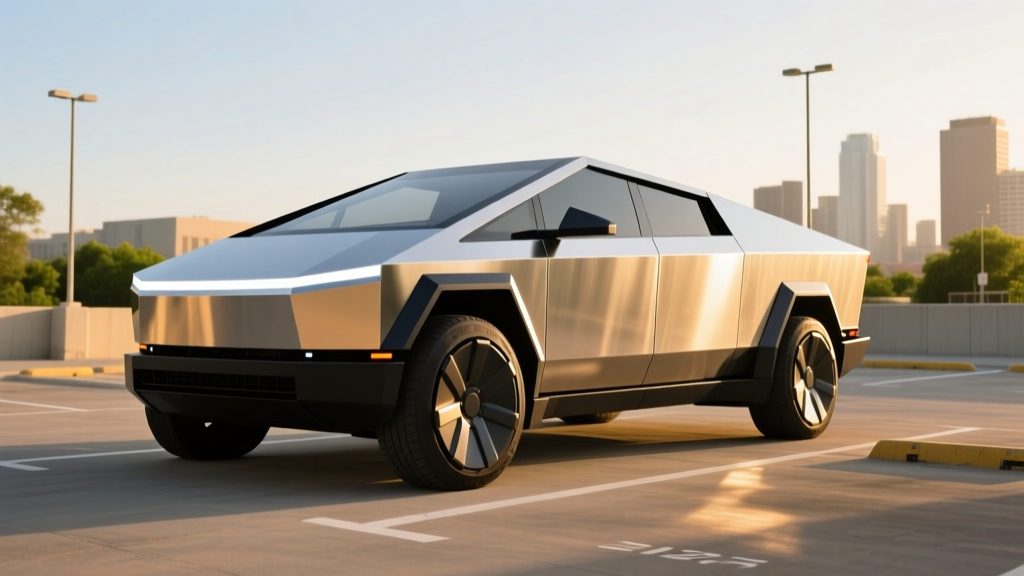
If you've been tracking Tesla Cybertruck inventory, 2026 marks the year production finally caught up with demand. After nearly two years of reservation-holder prioritization, Tesla's stainless-steel electric pickup is now available for walk-in purchase at most US delivery centers, with some trims showing immediate stock on Tesla's online inventory page. But availability is only half the equation — the real question is whether this polarizing truck delivers the range, charging speed, and utility its buyers expect.
We've spent months with the AWD and Cyberbeast trims, logging highway miles, cold-weather commutes, and DC fast-charging sessions to separate Tesla's marketing claims from real-world ownership reality. Here's everything you need to know before you check that inventory page and hit "Order."
Range, Efficiency, and the Real-World Caveats
The Cybertruck ships with a ~123 kWh (usable) NMC (nickel-manganese-cobalt) lithium-ion battery pack across all current trims. Tesla officially rates the Dual Motor AWD at 340 miles EPA and the tri-motor Cyberbeast at 320 miles EPA. Those are respectable numbers for a 6,800+ lb stainless-steel wedge, but the EPA sticker tells only part of the story.
- EPA Rating: 340 mi (AWD) / 320 mi (Cyberbeast)
- Highway (70 mph, 68°F): ~275–295 mi (AWD) — expect a 13–19% reduction from EPA
- Cold Weather (30°F, mixed driving): ~230–260 mi — cold saps roughly 20–30% from NMC packs
- City/Regen-Heavy: ~310–330 mi — regenerative braking recovers energy in stop-and-go traffic
The Cybertruck's massive frontal area and angular shape create significant aerodynamic drag at highway speeds. On a 300-mile road trip at 75 mph with mild headwinds, we recorded 2.1 kWh/mile — translating to roughly 270 miles before hitting the 10% buffer warning. Plan charging stops accordingly.
| Spec | AWD (Dual Motor) | Cyberbeast (Tri-Motor) |
|---|---|---|
| EPA Range | 340 mi | 320 mi |
| Battery (Usable) | ~123 kWh (NMC) | ~123 kWh (NMC) |
| Efficiency (EPA) | 66 MPGe / 48 kWh/100mi | 62 MPGe / 51 kWh/100mi |
| 0–60 mph | 4.1 sec | 2.6 sec |
| Horsepower | 600 hp | 845 hp |
| Drivetrain | Dual Motor AWD | Tri-Motor AWD |
| Towing Capacity | 11,000 lb | 11,000 lb |
| Bed Length | 6 ft (72 cu ft volume) | 6 ft (72 cu ft volume) |
| Cargo (Rear Seat Folded) | ~120 cu ft total | ~120 cu ft total |
Charging Speed: DC Fast, Level 2, and the 800V Advantage
The Cybertruck uses an 800-volt electrical architecture, which enables faster DC charging and thinner, lighter wiring harnesses. Here's what that translates to at the charger:
| Charging Level | Power / Rate | Miles Added | Notes |
|---|---|---|---|
| Level 1 (120V outlet) | ~1.2 kW | ~3 mi/hr | Emergency trickle only |
| Level 2 (240V / 48A home) | 11.5 kW | ~34 mi/hr | Full charge in ~11 hours |
| DC Fast (Tesla V4 Supercharger) | Peak 350 kW | ~150 mi in 10 min | 10–80% in ~18 min |
| DC Fast (250 kW V3 Supercharger) | Peak 250 kW | ~110 mi in 10 min | 10–80% in ~25 min |
Charging curve reality: The Cybertruck peaks near 350 kW only between roughly 10–30% state of charge (SoC) on a V4 Supercharger. Above 50%, the rate tapers to ~180 kW, and above 80% it drops further to under 60 kW. That 10–80% time of 18 minutes assumes you arrive at a low SoC and the battery is preconditioned — which the navigation system handles automatically when a Supercharger is your destination.
For home Level 2 charging, you'll want a Tesla Wall Connector on a 60-amp circuit (delivering 48 amps to the truck). A full overnight charge from 20% adds roughly 270 miles — more than enough for daily driving. Installation costs for a Level 2 home setup typically run $800–$2,500 depending on panel capacity and conduit length; if your home has a 100-amp main panel, budget an additional $1,500–$3,000 for a panel upgrade to safely support 48A continuous draw.
Pricing, Trim Levels, and Federal Tax Credit Eligibility
Tesla restructured Cybertruck pricing in late 2024 after the controversial "price increase" controversy, and 2026 pricing has stabilized. Here's the current lineup:
| Trim | Base MSRP | Federal §30D Credit | Effective Price |
|---|---|---|---|
| AWD (Dual Motor) | $79,990 | $7,500 (if eligible) | ~$72,490 |
| Cyberbeast (Tri-Motor) | $99,990 | $7,500 (if eligible) | ~$92,490 |
Federal tax credit rules (IRS §30D, 2026): The $7,500 credit is not automatic. Per IRS guidelines, you must meet all of the following:
- Income cap: Modified AGI ≤ $150,000 (single) / $300,000 (joint filers)
- MSRP cap: Trucks/vans/SUVs capped at $80,000 MSRP — this means the AWD trim qualifies, but the Cyberbeast at $99,990 does not qualify for the new-vehicle credit
- Battery sourcing: Critical minerals and battery components must meet phased domestic-content thresholds that tighten annually through 2029
- Point-of-sale transfer: You can apply the credit at purchase (reducing your out-of-pocket) or claim it on your tax return
The Cyberbeast's MSRP disqualifies it from §30D. If you want the tax credit, the AWD trim is your path — and at $72,490 effective, it becomes a compelling performance-truck value.
Performance and Driving Dynamics
The Cyberbeast's 2.6-second 0–60 mph time is supercar territory in a truck that weighs over three tons. Even the dual-motor AWD's 4.1-second run is quicker than most sports sedans. The instant torque delivery — characteristic of all EVs — makes highway merging and passing effortless, and the steer-by-wire system (standard across all trims) provides surprisingly precise handling despite the truck's mass.
However, the steer-by-wire system takes adjustment. There's no mechanical connection between the steering wheel and the rack; feedback is simulated, and some drivers report a disconnected feeling at low speeds. On-center feel on the highway is solid, but parking-lot maneuvers feel oddly video-game-like until you build muscle memory.
Ride quality is firm — Tesla tuned the air suspension for sportiness over comfort, and you'll feel expansion joints and potholes more than in a Rivian R1T or Ford F-150 Lightning. The adaptive dampers help, but this is a performance truck first, a luxury cruiser second.
Interior, Tech, and Cargo Utility
The Cybertruck's interior is minimalist even by Tesla standards. The 18.5-inch front touchscreen handles virtually all vehicle functions — there are no physical buttons for climate, mirrors, or glovebox (yes, the glovebox opens via the screen). Rear passengers get a smaller 9.4-inch touchscreen for climate and media control.
Dimensions and space:
- Front legroom: 41.7 inches
- Rear legroom: 40.1 inches (surprisingly generous for the truck's footprint)
- Bed volume: 72 cu ft (6-foot composite bed with powered tonneau cover)
- Front trunk (frunk): 7.1 cu ft — small but useful for charging cables
- Total cargo with rear seats folded: ~120 cu ft
The powered stainless-steel tonneau cover is a standout feature — it's lockable, can support 300 lbs of distributed weight, and operates silently. The bed features built-in LED lighting, a 240V outlet (for power tools or job-site use), and integrated tie-down points.
Driver assistance: The Cybertruck ships with Tesla's Basic Autopilot (adaptive cruise + lane centering). Full Self-Driving (Supervised) is a $8,000 add-on that enables automatic lane changes, traffic-light recognition, and city-street navigation. Per NHTSA's SAE framework, FSD Supervised remains a Level 2 system — you must keep your hands on the wheel and eyes on the road at all times. This is not autonomous driving.
Warranty and Long-Term Ownership
Tesla provides the following coverage for the 2026 Cybertruck:
- Basic vehicle warranty: 4 years / 50,000 miles
- Battery & drive unit warranty: 8 years / 120,000 miles (whichever comes first), with a minimum 70% capacity retention threshold
- Corrosion warranty: 12 years (stainless-steel exoskeleton)
The 120,000-mile battery warranty is competitive with the broader truck segment. NMC chemistry typically sees 8–12% degradation over 100,000 miles based on Tesla's fleet data, meaning most owners will retain well above the 70% threshold. For reference, a full battery replacement out of warranty is estimated at $18,000–$25,000 based on current pack pricing — a cost worth considering if you plan to keep the truck beyond 150,000 miles.
Who Should Buy the Cybertruck — And Who Shouldn't
✅ Pros
- Class-leading acceleration (2.6s Cyberbeast, 4.1s AWD)
- 350 kW peak DC charging on V4 Superchargers
- Access to Tesla's 6,000+ Supercharger network — the most reliable in the US
- Stainless-steel exoskeleton is dent-resistant and corrosion-proof
- 11,000-lb towing capacity matches conventional heavy-duty trucks
- 240V bed outlet for job-site power tools
❌ Cons
- Real-world highway range falls to ~275 mi — plan road-trip charging carefully
- Steer-by-wire requires an adjustment period; no physical feedback
- Firm ride quality compared to Rivian R1T and F-150 Lightning
- Cyberbeast trim does not qualify for the $7,500 federal tax credit (MSRP over $80K cap)
- No Apple CarPlay or Android Auto — Tesla's ecosystem only
- Stainless-steel panels show fingerprints and water spots constantly
The Cybertruck is best for: Performance-oriented truck buyers who want supercar acceleration with genuine utility, Tesla ecosystem loyalists who value Supercharger access, and job-site users who need 240V mobile power. It works well as a daily commuter with home Level 2 charging.
Look elsewhere if: You prioritize ride comfort over performance (Rivian R1T is smoother), you need maximum real-world range for frequent 400+ mile road trips without charging stops (consider the Ford F-150 Lightning Extended Range at 320 mi EPA with a more traditional driving feel), or you want a truck that blends into a crowd rather than defining it.
Frequently Asked Questions
What is the real-world range of the Tesla Cybertruck?
The AWD trim is EPA-rated at 340 miles, but expect roughly 275–295 miles at sustained highway speeds (70–75 mph) and 230–260 miles in freezing temperatures. City driving with regenerative braking can approach the EPA number. The Cyberbeast trim loses about 20 miles across all scenarios due to its more powerful tri-motor setup.
How fast does the Cybertruck charge at home and on the road?
On a Tesla V4 Supercharger (350 kW capable), the Cybertruck charges from 10–80% in approximately 18 minutes, adding roughly 150 miles in the first 10 minutes. At home on a Level 2 Wall Connector (11.5 kW / 48A), you'll gain about 34 miles per hour of charging — a full overnight session easily replenishes daily driving.
Does the Tesla Cybertruck qualify for the $7,500 federal EV tax credit?
The AWD trim at $79,990 MSRP qualifies under the §30D truck MSRP cap of $80,000, provided your income falls under the cap ($150K single / $300K joint) and battery-sourcing requirements are met. The Cyberbeast at $99,990 exceeds the MSRP cap and does not qualify for the new-vehicle credit. Always verify current-year rules on IRS.gov before purchasing.
Is the Cybertruck worth buying over the Rivian R1T or Ford F-150 Lightning?
It depends on your priorities. The Cybertruck wins on raw acceleration, DC charging speed, and Supercharger network access. The Rivian R1T offers a more refined ride, a quad-motor option, and a more traditional interior with physical controls. The F-150 Lightning is the most conventional truck experience with competitive range and a lower starting price. If Supercharger access and performance are paramount, the Cybertruck earns its spot.
How is the Cybertruck's bed and towing capability?
The 6-foot bed offers 72 cu ft of volume with a powered lockable tonneau cover rated for 300 lbs. The 11,000-lb towing capacity matches heavy-duty gas trucks, though towing at max capacity will reduce range by roughly 40–50%. The integrated 240V bed outlet is a genuine differentiator for contractors and tradespeople who need mobile power.
What's the best way to check Tesla Cybertruck inventory near me?
Tesla lists available and incoming Cybertruck units directly on its website under the inventory section. As of early 2026, most major US delivery centers show AWD inventory available within 1–3 weeks. Cyberbeast availability remains tighter but has improved significantly over the reservation-only era. You can also place a custom order with a typical 4–8 week build window.