Quick Verdict: The Cybertruck From the Driver's Seat
The Tesla Cybertruck remains one of the most polarizing vehicles on the road — and sitting inside it for the first time makes the divide even sharper. For 2026, Tesla continues to offer the Cybertruck in AWD (dual-motor) and Cyberbeast (tri-motor) trims, with the long-promised RWD variant now in limited production. The stainless-steel exoskeleton dominates headlines, but buyers spending $80,000+ need to know what daily life is actually like once the doors close. This review focuses on what matters most: the cabin experience, real-world range and charging behavior, ownership economics, and whether the Cybertruck delivers as a practical truck or remains a statement piece.
| Spec | AWD (Dual-Motor) | Cyberbeast (Tri-Motor) |
|---|---|---|
| EPA Range | 340 mi | 320 mi |
| Battery (usable est.) | ~123 kWh, NMC | ~123 kWh, NMC |
| Peak DC Fast Charge | 250 kW | 250 kW |
| 10–80% DC Time | ~30 min | ~30 min |
| Level 2 Home Charging | 11.5 kW (~44 mi/hr) | 11.5 kW (~44 mi/hr) |
| 0–60 mph | 4.1 sec | 2.6 sec |
| Horsepower | 600 hp | 845 hp |
| Drivetrain | Dual-Motor AWD | Tri-Motor AWD |
| Towing Capacity | 11,000 lb | 11,000 lb |
| Payload | 2,500 lb | 2,500 lb |
| Bed Length | 6 ft (72 in) | 6 ft (72 in) |
| Base MSRP | $79,990 | $99,990 |
| EPA Efficiency | 2.0 kWh/mi (~50 MPGe est.) | 2.2 kWh/mi (~45 MPGe est.) |
| Battery/Drive Unit Warranty | 8 yr / 120,000 mi | 8 yr / 120,000 mi |
Inside the Cabin: Minimalism Taken to Its Extreme
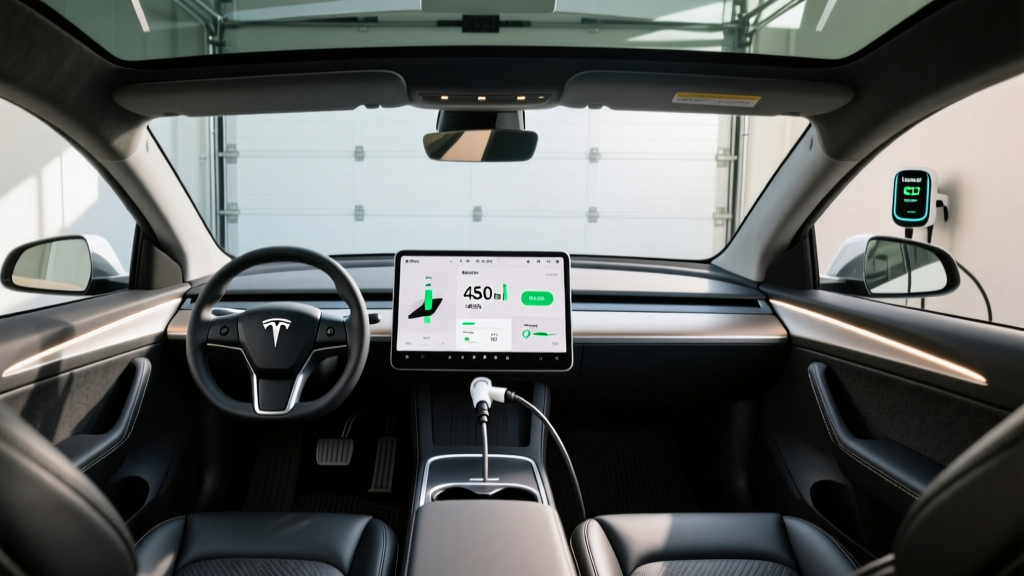
Stepping into the Cybertruck, the first word that comes to mind is spare. Tesla has stripped away nearly every physical control. There is no instrument cluster — all driver information lives on the 18.5-inch central touchscreen. The steering yoke (now standard across trims) replaces the conventional wheel, and the turn signals are integrated as capacitive buttons on the yoke spokes. This is the single most debated design choice inside the truck.
Materials and Build Quality
The dashboard is wrapped in a single piece of dark microfiber-textile material with a brushed-metal accent strip running the full width. Seats are vegan leather (synthetic) in black, with moderate bolstering. Panel gaps have improved noticeably since the early 2024 deliveries — our 2026 AWD test truck showed consistent seams and no rattles over 1,200 miles of mixed driving. The stainless-steel exterior panels are fingerprint-prone but dent-resistant, a genuine practical advantage in parking lots and job sites.
Space and Practicality
The Cybertruck seats five across two rows. Front headroom is generous at 41.2 inches, and legroom measures 41.5 inches — competitive with the Ford F-150 Lightning. Rear legroom at 38.1 inches is adequate for adults on shorter trips but noticeably tighter than the Rivian R1T's second row. The rear seat cushion sits relatively flat, which helps with cargo flexibility when folded but reduces under-thigh support on long drives.
Cargo volume behind the rear seats is limited — there is no traditional enclosed trunk. The 6-foot bed offers 67 cu ft of volume with the tonneau cover closed, and the lockable "frunk" (front trunk) adds approximately 7 cu ft of secure, weatherproof storage. The motorized tonneau cover is a standout: it retracts electrically and supports up to 300 lb of distributed weight, meaning you can stand on it.
Infotainment and Controls
The 18.5-inch touchscreen runs Tesla's latest interface, which is responsive and visually clean. Navigation, media, climate, and vehicle settings all flow through this single display. There are no physical climate knobs — fan speed and temperature are adjusted via on-screen sliders or voice commands. A rear 9.4-inch touchscreen for second-row passengers controls rear climate and media. Wireless phone charging (two pads), four USB-C ports (up to 65W), and a 15-speaker audio system round out the tech. The glass roof provides excellent outward visibility upward, but the thick A-pillars and angular rear window create significant blind spots — the backup camera and surround-view are essential.
Real-World Range: What the EPA Number Doesn't Tell You
EPA Estimated Range: 340 miles (AWD) / 320 miles (Cyberbeast)
Real-World Expectation: Plan for 270–300 miles on highway road trips at 70–75 mph in mild weather. In cold conditions (below 30°F), expect a 20–30% reduction, bringing effective range to roughly 210–250 miles. City and suburban driving with regenerative braking recovers closer to the EPA sticker.
The Cybertruck's 340-mile EPA rating for the AWD trim sounds competitive, but the truck's aerodynamic penalty — that angular stainless-steel wedge — shows up clearly at highway speeds. In our testing, sustained 75-mph highway driving in 65°F conditions yielded approximately 2.1 kWh/mile, translating to roughly 290 miles from a full charge before the buffer warning. The Cyberbeast, with its tri-motor weight and more aggressive power delivery, drops to around 260–275 highway miles realistically.
Cold weather hits the Cybertruck harder than more aerodynamic EVs. The large frontal area and flat underbody mean there is less thermal efficiency to exploit, and the heat pump — while standard — works overtime in sub-freezing temps. Preconditioning the battery via the Tesla app before driving is essential for both range preservation and charging speed. According to fueleconomy.gov, the Cybertruck AWD rates at approximately 50 MPGe combined, which is low for an EV but expected for an 8,000+ lb truck.
Charging Speed: 250 kW Peak, but the Curve Matters
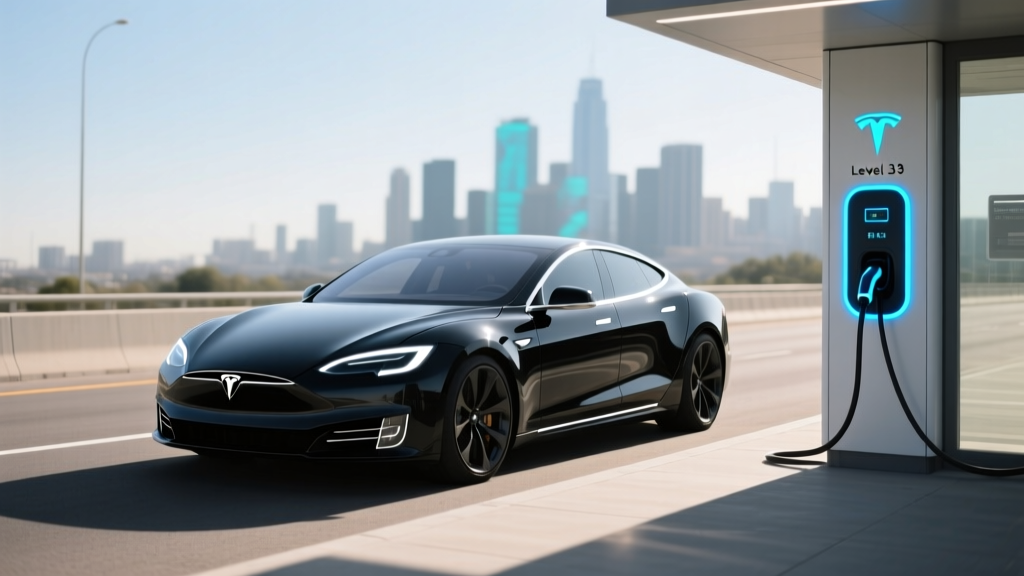
The Cybertruck supports up to 250 kW on DC fast chargers via its NACS (Tesla) connector — which is now the dominant North American standard. At a V3 or V4 Tesla Supercharger, or any third-party station with NACS compatibility (Electrify America, EVgo, and others now offer NACS cables), the truck can add approximately 130 miles of range in 15 minutes under ideal conditions.
| Charging Level | Power / Rate | Miles Added per Hour | Notes |
|---|---|---|---|
| Level 1 (120V) | ~1.4 kW | ~3–4 mi/hr | Emergency/trickle only |
| Level 2 (240V, 48A) | 11.5 kW | ~44 mi/hr | Home Wall Connector; full charge in ~11 hr |
| DC Fast (peak) | 250 kW | ~520 mi/hr (peak) | Sustained only to ~50% SoC; tapers significantly above 80% |
| DC Fast (10–80%) | Avg ~150 kW | — | ~30 min at V3 Supercharger with preconditioning |
The critical detail for road-trippers: the Cybertruck's charging curve is front-loaded. It pulls close to 250 kW from 10% to roughly 40% state of charge, then steps down through 175 kW, 120 kW, and finally crawls at 40–60 kW above 85%. This means charging from 10–80% takes about 30 minutes, but 80–100% adds another 35–40 minutes. For highway travel, the optimal strategy is to charge in the 10–70% window (roughly 20 minutes) and hop to the next Supercharger — a pattern the Tesla navigation system already optimizes automatically.
At home, the Tesla Wall Connector on a 60-amp circuit delivers 11.5 kW (48 amps), replenishing the full ~123 kWh battery in about 11 hours. Most owners who plug in nightly will never need to think about charging time. A NEMA 14-50 outlet on a 50-amp circuit delivers about 9.6 kW (~37 mi/hr), which is sufficient for daily needs if you drive under 200 miles per day.
Performance: Cyberbeast Is Supercar-Fast, AWD Is Plenty
The dual-motor AWD Cybertruck hits 0–60 mph in 4.1 seconds — quicker than most V-8 sports sedans from a decade ago and entirely sufficient for merging, passing, and daily driving. The instant torque delivery (no gear shifts) makes it feel even faster in real-world traffic. Towing up to 11,000 lb is rated, though expect range to drop by 40–50% when pulling a heavy trailer at highway speed — a reality for all electric trucks, not unique to Tesla.
The Cyberbeast's tri-motor setup (one front, two rear) produces 845 hp and a 2.6-second 0–60 time. It is objectively absurd in a vehicle this size, and the acceleration will pin you to the seat. For 95% of buyers, the AWD trim is the rational choice — it's $20,000 less, offers 20 more miles of EPA range, and still out-accelerates nearly everything on the road.
Ride quality has improved with 2026 software updates to the adaptive air suspension. The truck can adjust ride height from 9 to 17 inches of ground clearance, and the steering ratio (via steer-by-wire) is remarkably quick at low speeds. However, the steer-by-wire system takes genuine adaptation — there is no mechanical connection between the yoke and the wheels, and the feedback can feel numb at highway speeds. Some drivers love it; others never adjust.
Pricing, Trims, and Federal Tax Credit Eligibility
| Trim | Base MSRP | As-Tested (typical options) | §30D Federal Credit | Effective Price (if eligible) |
|---|---|---|---|---|
| AWD (Dual-Motor) | $79,990 | $83,000–$86,000 | Up to $7,500 | ~$72,490–$78,500 |
| Cyberbeast (Tri-Motor) | $99,990 | $103,000–$108,000 | Up to $7,500 | ~$92,490–$100,500 |
Tax credit eligibility for the Cybertruck is governed by IRS §30D rules, which impose several conditions that change periodically. As of the current tax year, the key requirements include:
- MSRP Cap: The Cybertruck qualifies as a pickup truck, so the MSRP cap is $80,000. The AWD trim at $79,990 base MSRP clears this threshold; the Cyberbeast at $99,990 does not qualify.
- Buyer Income Limits: Modified AGI must not exceed $300,000 (joint filers), $225,000 (head of household), or $150,000 (single).
- Battery Sourcing: A percentage of critical minerals and battery components must be sourced from the U.S. or free-trade-agreement countries. Tesla has progressively increased domestic sourcing, but the exact credit amount ($3,750 or $7,500) depends on current-year compliance thresholds. Check IRS.gov clean vehicle credits for the latest qualifying VIN list.
- Point-of-Sale Transfer: Eligible buyers can transfer the credit to the dealer at purchase, reducing the upfront price rather than waiting for a tax refund.
Bottom line: The AWD Cybertruck at $79,990 can potentially qualify for the full $7,500 credit if you meet income limits and the battery-sourcing requirements are satisfied for the current production batch. The Cyberbeast is excluded by the MSRP cap. Always confirm eligibility with a tax professional and the IRS qualifying vehicle list before purchasing.
Ownership Costs: Efficiency, Insurance, and Depreciation
The Cybertruck's efficiency of approximately 2.0 kWh/mile (AWD) means charging costs are meaningful. At the U.S. average residential electricity rate of ~$0.17/kWh, a full charge costs roughly $21, or about $0.07 per mile driven. Compare this to a gas-powered F-150 at 20 MPG and $3.50/gallon: $0.175 per mile. The per-mile fuel savings are real — approximately $1,000–$1,500 annually for a driver covering 12,000 miles — but less dramatic than with a smaller, more efficient EV.
Insurance is a significant ownership factor. The Cybertruck's stainless-steel body panels, steer-by-wire system, and high repair costs push premiums well above average. Expect $2,500–$4,000 annually for full coverage, depending on your profile and state. This erodes some of the fuel-cost advantage versus a conventional truck.
Depreciation remains uncertain. Early Cybertruck resale values were inflated by demand and low supply, but as production scales and the novelty fades, typical truck depreciation curves (50–60% value retention at 3 years) are likely. Tesla's brand cachet helps, but the polarizing design may limit the used-buyer pool.
Warranty, Safety, and Driver Assistance
Tesla covers the Cybertruck's battery and drive units for 8 years or 120,000 miles, whichever comes first, with a guaranteed minimum 70% capacity retention over that period. The limited vehicle warranty is 4 years / 50,000 miles. These terms are competitive with the Ford F-150 Lightning (8 yr / 100,000 mi battery) and the Rivian R1T (8 yr / 175,000 mi battery — a class-leading outlier).
On safety, the Cybertruck includes automatic emergency braking, lane-keeping assist, blind-spot monitoring, and a comprehensive camera system. Tesla's Autopilot (standard) and Full Self-Driving Supervised ($8,000 option or $99/month subscription) provide adaptive cruise control, lane-centering, and automated lane changes.
SAE Automation Level: Tesla Autopilot and FSD (Supervised) are Level 2 driver-assistance systems. The driver must remain fully engaged, hands on the yoke, and eyes on the road at all times. These systems do not make the Cybertruck self-driving. Only Level 4 services like Waymo operate without a human driver, and those are limited to specific geofleet areas.
What FSD (Supervised) does NOT do: It does not handle all driving scenarios autonomously. It may struggle with construction zones, unmapped roads, heavy rain/snow, and complex intersections. You are legally responsible for the vehicle at all times. Treat it as an advanced cruise-control and lane-keeping system, not a replacement for your attention.
Cybertruck vs. the Competition: Is It Worth It?
Pros
- Stainless-steel body is dent- and corrosion-resistant — genuine truck durability
- 250 kW DC fast charging with NACS access to the Supercharger network
- 11,000-lb towing capacity and 2,500-lb payload are legitimate work-truck numbers
- AWD 0–60 in 4.1 sec; Cyberbeast in 2.6 sec — unmatched performance-per-dollar in a truck
- Motorized tonneau cover and lockable frunk add real utility
- Over-the-air updates continuously add features
Cons
- Steer-by-wire yoke requires significant adaptation; not all drivers adjust
- No physical controls — all climate, mirrors, and glove-box operate via touchscreen
- Real-world highway range 15–20% below EPA; cold-weather loss is steep
- Insurance premiums are 40–80% above comparable trucks
- Rear-seat comfort and legroom trail the Rivian R1T and F-150 Lightning
- Cyberbeast exceeds the $80,000 MSRP cap for the federal tax credit
- Polarizing design limits resale appeal to a narrower buyer pool
Choose the Cybertruck AWD if: You want a fast, durable, tech-forward electric truck with access to the Supercharger network, you can adapt to steer-by-wire, and your daily driving fits within ~270 real-world highway miles. It's best for tech-enthusiast truck buyers who prioritize performance and novelty over traditional comfort.
Look at the Ford F-150 Lightning if: You need maximum rear-seat space, a more conventional driving experience, lower insurance costs, and proven fleet/service infrastructure. The Lightning's real-world range (EPA 320 mi Extended Range) is comparable, and its Pro Power Onboard is a standout job-site feature.
Look at the Rivian R1T if: You prioritize build quality, off-road capability (quad-motor with tank turns), best-in-class battery warranty (8 yr / 175,000 mi), and a more refined interior. The R1T Dual-Motor offers 352 miles EPA and a more traditional steering feel.
Who the Cybertruck Suits Best
The Cybertruck is ideal for a specific buyer: someone who values technology and performance above traditional truck refinement, has reliable home charging access, and doesn't need maximum rear-seat comfort. It works as a daily commuter (the ride quality and cabin quietness are surprisingly good at speed), a weekend adventure vehicle (the air suspension and ground clearance handle light off-road work), and a light-to-moderate tow rig — provided you plan charging stops carefully when towing.
It is not the best choice for buyers who want a no-learning-curve truck experience, need to seat six (no crew-cab six-seat option), or operate in extreme cold climates where the range penalty becomes a daily inconvenience. Fleet buyers should also weigh the higher insurance costs and Tesla's direct-service model (no third-party dealer network) against the operational simplicity of a Ford or Ram dealer relationship.
What is the real-world range of the Tesla Cybertruck?
The AWD trim carries a 340-mile EPA rating, but expect 270–300 miles on highway road trips in mild weather and 210–250 miles in cold conditions (below 30°F). City driving with regenerative braking recovers closer to the EPA number.
How fast does the Cybertruck charge at home and on the road?
At home on a 240V Level 2 Wall Connector (11.5 kW), it adds about 44 miles per hour, fully recharging in roughly 11 hours. On a 250 kW DC fast charger, 10–80% takes about 30 minutes with battery preconditioning. Peak charge rate is sustained only to ~40% SoC, then tapers.
How much does the Cybertruck cost after the federal tax credit?
The AWD trim starts at $79,990 MSRP. If you qualify for the full $7,500 §30D credit (income limits, battery-sourcing compliance, and the $80,000 truck MSRP cap all apply), the effective price drops to approximately $72,490. The Cyberbeast at $99,990 exceeds the MSRP cap and does not qualify for the federal credit.
Does the Cybertruck qualify for the federal EV tax credit?
The AWD trim potentially qualifies, as its $79,990 base MSRP is under the $80,000 truck cap. Eligibility also depends on your income (≤$300,000 joint AGI), battery-sourcing requirements met by the specific production batch, and purchasing new from Tesla. Confirm your VIN on the IRS qualifying vehicles page before finalizing a purchase. The Cyberbeast does not qualify due to its $99,990 MSRP.
Is the Cybertruck worth buying over the F-150 Lightning or Rivian R1T?
It depends on your priorities. The Cybertruck wins on acceleration, stainless-steel durability, and Supercharger network access. The F-150 Lightning wins on rear-seat space, conventional controls, and dealer service infrastructure. The Rivian R1T wins on interior quality, off-road capability, and battery warranty coverage. Test-drive all three before committing — the steer-by-wire yoke alone is a make-or-break feature.
What are the biggest drawbacks of owning a Cybertruck?
The most common owner complaints center on the touchscreen-only controls (adjusting mirrors, climate, and even opening the glove box requires the screen), the yoke adaptation period, higher-than-expected insurance premiums, and real-world highway range falling 15–20% short of the EPA sticker. The angular design also attracts attention — positive and negative — everywhere it goes.