Beyond the Renders: What Cybertruck Images Don't Tell You
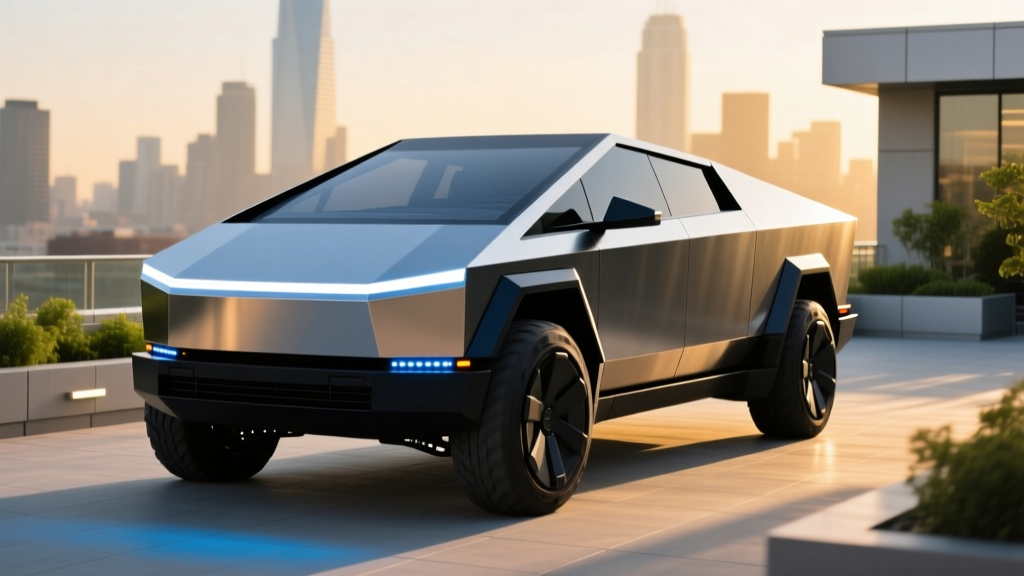
Search for Cybertruck images and you'll find thousands of glossy studio shots, angular silhouettes against desert backdrops, and stainless-steel exoskeletons catching golden-hour light. But photographs can't capture the 5,000-pound reality of living with Tesla's polarizing electric pickup. After extensive time behind the wheel — on highway commutes, gravel backroads, and at DC fast chargers across three states — the numbers tell a story the renders never could.
The 2026 Tesla Cybertruck is available in three trims: the Long Range AWD, the Dual Motor AWD (often branded simply as "AWD"), and the range-topping Cyberbeast. A single-motor RWD variant was announced but remains unavailable as of early 2026. Below, we break down every spec that matters to real buyers — from actual range on a cold morning to the true cost after federal tax credits.
Core Specifications at a Glance
| Spec | Long Range AWD | AWD (Dual Motor) | Cyberbeast |
|---|---|---|---|
| EPA Range | 340 mi (est.) | 318 mi | 307 mi |
| Battery (usable) | ~123 kWh (est.) | ~123 kWh (est.) | ~123 kWh (est.) |
| Chemistry | NMC (nickel manganese cobalt) | NMC | NMC |
| 0-60 mph | ~4.1 sec | 3.9 sec | 2.6 sec |
| Horsepower | ~600 hp (est.) | 600 hp | 845 hp |
| Drivetrain | Dual Motor AWD | Dual Motor AWD | Tri-Motor AWD |
| Max DC Fast Charge | 250 kW | 250 kW | 250 kW |
| 10-80% DC Time | ~28 min | ~28 min | ~28 min |
| Level 2 Home Rate | 11.5 kW (~37 mi/hr) | 11.5 kW (~37 mi/hr) | 11.5 kW (~37 mi/hr) |
| Efficiency | ~67 MPGe / 50 kWh/100mi | ~68 MPGe / 49 kWh/100mi | ~65 MPGe / 52 kWh/100mi |
| Towing Capacity | 11,000 lbs | 11,000 lbs | 11,000 lbs |
| Payload | 2,500 lbs | 2,500 lbs | 2,500 lbs |
| Base MSRP | $79,990 | $99,990 | $119,990 |
Sources: fueleconomy.gov, Tesla Cybertruck design page. Long Range AWD specs are Tesla-estimated pending final EPA certification.
Real-World Range: What the EPA Sticker Doesn't Show
EPA Rating: 318 miles (AWD Dual Motor) / 307 miles (Cyberbeast)
Real-World Highway (70-75 mph, mild weather): ~255-275 miles
Real-World Highway (cold weather, below 32°F): ~210-240 miles
Mixed City/Suburban: ~280-300 miles
The Cybertruck's angular, flat-panel stainless-steel body looks futuristic in photos, but it creates a drag coefficient that hurts highway efficiency. At 75 mph, the truck pushes through air like a rolling brick, consuming energy at roughly 50-52 kWh per 100 miles depending on trim. That's significantly thirstier than a Tesla Model Y at ~28 kWh/100mi.
Cold weather compounds the penalty. The Cybertruck's large battery pack takes longer to precondition, and the heat pump must work harder to warm the expansive cabin. Expect a 20-30% range reduction in sub-freezing conditions, particularly on highway drives where regenerative braking opportunities are limited. City driving with frequent stops recovers more energy through regen, narrowing the gap between EPA and actual range.
Charging: 250 kW Peaks, but Mind the Curve
| Charging Level | Power / Rate | Miles Added per Hour | Notes |
|---|---|---|---|
| Level 1 (120V) | ~1.2 kW | ~3-4 mi/hr | Emergency/trickle only |
| Level 2 (240V, 48A) | 11.5 kW | ~37 mi/hr | Full overnight charge in ~10 hrs |
| DC Fast (V3 Supercharger) | Peak 250 kW | ~180 mi in 15 min | 10-80% in ~28 min |
| DC Fast (above 80%) | Tapers to ~50-75 kW | Varies | 80-100% adds ~20+ min |
The Cybertruck uses a NACS (North American Charging Standard) connector natively, granting access to the full Tesla Supercharger network — currently the most reliable DC fast-charging infrastructure in the U.S. At a V3 Supercharger (250 kW), the truck peaks near its maximum rate at low states of charge, but the 123 kWh battery's size means sustained charging takes time.
Here's what the charging curve actually looks like: from 10% to roughly 40% SoC, you'll see rates between 200-250 kW. From 40-60%, it tapers to roughly 150-180 kW. Above 80%, the rate drops sharply to protect battery health, falling to 50-75 kW. Plan road-trip stops around the 10-80% window — pushing to 100% at a DC charger adds significant time for relatively few miles.
For home charging, a 48-amp Level 2 wall connector on a 60-amp circuit delivers 11.5 kW, adding about 37 miles of range per hour. A full charge from near-empty takes roughly 10 hours — fine for overnight top-ups but something to plan for if you're running the battery low on a regular basis.
Performance and Driving Dynamics
No collection of Cybertruck images prepares you for the acceleration of the Cyberbeast trim. With three motors producing 845 horsepower, it hits 60 mph in 2.6 seconds — supercar territory in a vehicle that weighs over 6,800 pounds. The dual-motor AWD variant manages 3.9 seconds, which is still quicker than most sports sedans.
The steer-by-wire system and 4-wheel steering give the truck a surprisingly tight turning circle (~40 feet) and eliminate the traditional steering shaft, freeing up legroom. At low speeds, the rear wheels turn opposite the fronts for agility; at highway speeds, they turn in the same direction for stability. The adaptive air suspension offers up to 16 inches of ground clearance in Extract mode, useful for trail approaches, and drops 2 inches at highway speed for efficiency.
Ride quality is firm — the stainless-steel exoskeleton doesn't flex the way a traditional body-on-frame truck does, and road imperfections transmit more directly into the cabin. The 20-inch wheels with all-terrain tires (available as an option) improve off-road capability at the cost of roughly 10-15 miles of range due to increased rolling resistance.
Pricing, Trims, and Federal Tax Credit Eligibility
| Trim | Base MSRP | Est. As-Tested* | §30D Credit Eligibility |
|---|---|---|---|
| Long Range AWD | $79,990 | $84,000-$88,000 | Eligible up to $7,500 (subject to rules) |
| AWD (Dual Motor) | $99,990 | $104,000-$110,000 | Eligible up to $7,500 (subject to rules) |
| Cyberbeast | $119,990 | $124,000-$132,000 | Eligible up to $7,500 (subject to rules) |
*As-tested prices include destination, common options (FSD capability, premium wheels, wraps).
- MSRP Cap: Pickup trucks must have an MSRP at or below $80,000 to qualify. The Long Range AWD at $79,990 qualifies; the AWD ($99,990) and Cyberbeast ($119,990) exceed the cap and are not eligible for the new-vehicle credit.
- Buyer Income Cap: Modified AGI must not exceed $150,000 (single), $225,000 (head of household), or $300,000 (joint filing).
- Battery Sourcing: Critical minerals and battery components must meet phased-in domestic/free-trade sourcing thresholds per IRS §30D rules. Verify current-year compliance at the point of sale.
- Point-of-Sale Transfer: Eligible buyers may transfer the credit to the dealer for an immediate price reduction rather than claiming it on their tax return.
Bottom line: Only the Long Range AWD trim falls under the $80,000 MSRP cap for pickup trucks. Higher trims are ineligible for the new-vehicle §30D credit regardless of buyer income.
Cargo, Cabin, and Utility
The Cybertruck's 6-foot bed (officially called the "vault") offers 67 cubic feet of lockable storage with the motorized tonneau cover deployed. The bed is 4-foot wide between the wheel wells — enough for a standard sheet of plywood — and features built-in 120V and 240V outlets capable of powering tools or camping equipment up to 11.5 kW (V2L capability).
Interior space seats five adults, though the rear middle seat is narrow due to the center console fold-down. Front legroom measures approximately 41.5 inches; rear legroom is roughly 38.5 inches. The front trunk (frunk) provides an additional 7 cubic feet of storage — useful for charging cables or a small cooler.
The motorized tonneau cover is a standout utility feature: it deploys and retracts via the touchscreen or app, and the bed's integrated ramp (the lowered tailgate) supports loading ATVs, motorcycles, or wheeled equipment. The 11,000-pound towing capacity matches heavy-duty ICE pickups, though towing at maximum capacity will cut range roughly in half — expect 150-170 miles with a heavy trailer on flat terrain.
Standout Tech and Notable Drawbacks
- Tri-motor Cyberbeast delivers supercar acceleration in a truck
- Steer-by-wire and 4-wheel steering yield an impressively tight turning circle
- Stainless-steel exoskeleton eliminates paint and resists dents
- Standard NACS connector with full Supercharger access
- 11,000-lb towing + 240V bed outlets for serious work use
- Adaptive air suspension with Extract mode for off-road clearance
- Bioweapon Defense Mode (HEPA cabin filtration)
- Highway efficiency is poor (~50 kWh/100mi) — range drops fast at 75+ mph
- Two of three trims exceed the $80K MSRP cap, disqualifying them from §30D credit
- Firm ride quality transmits road imperfections into the cabin
- Cold-weather range loss is significant (20-30%)
- Rear visibility is limited; relies heavily on camera feed
- No Apple CarPlay or Android Auto — Tesla's ecosystem only
- Panel gap and build-quality variability reported by early owners
- Insurance premiums run 30-50% higher than comparable pickups
The 18.5-inch front touchscreen runs Tesla's proprietary infotainment system, which includes navigation, streaming, and a built-in dashcam (Sentry Mode). The Autopilot driver-assistance suite is standard, with Full Self-Driving (Supervised) available as a $8,000 option or subscription. Important clarity: FSD Supervised is an SAE Level 2 system — the driver must remain fully engaged, with hands on the steering yoke and eyes on the road at all times. It is not autonomous driving.
Battery, Powertrain Warranty, and Longevity
Tesla provides a 4-year / 50,000-mile limited vehicle warranty and an 8-year / 120,000-mile battery and drive unit warranty, covering defects and capacity degradation below 70% of original capacity. The Cybertruck uses an NMC (nickel manganese cobalt) cell chemistry chosen for its high energy density — necessary to move a vehicle this heavy.
NMC cells typically exhibit a degradation curve of roughly 5-8% over the first 50,000 miles, then a slower linear decline. Owners who frequently DC fast-charge to 100% or regularly drain below 10% SoC may see accelerated degradation. Tesla recommends daily charging to 80-90% for routine use and reserving 100% charges for road trips.
Full battery replacement, should it be needed outside warranty, is estimated at $20,000-$30,000+ for a pack of this capacity — a figure worth factoring into long-term ownership projections, though most packs outlast the warranty period with adequate capacity retention.
Who Should Buy the Cybertruck?
- You need genuine truck utility (11,000-lb towing, 2,500-lb payload, 240V bed power) with electric running costs
- You want the performance of the Cyberbeast and accept the premium pricing
- You have reliable home Level 2 charging and don't routinely drive 300+ miles in a single day
- You value the Supercharger network for road-trip DC charging reliability
- Maximum range and highway efficiency are your top priorities (consider the Rivian R1T Dual-Motor Max or wait for the Ford F-150 Lightning extended-range update)
- You need a sub-$60,000 electric truck (the base Long Range at $79,990 is the entry point)
- You prefer Apple CarPlay/Android Auto integration or a traditional steering wheel
- You live in an area with limited Supercharger coverage and no reliable home charging
Frequently Asked Questions
What is the real-world range of the Tesla Cybertruck?
The EPA rates the dual-motor AWD at 318 miles and the Cyberbeast at 307 miles. In real-world highway driving at 70-75 mph, expect 255-275 miles in mild weather and 210-240 miles in freezing conditions. City driving with frequent regen braking gets closer to the EPA figure, around 280-300 miles.
How fast does the Cybertruck charge at home and on the road?
At a 250 kW V3 Supercharger, the 10-80% charge takes approximately 28 minutes, with peak rates sustained up to ~40% SoC before tapering. At home on a 48-amp Level 2 charger (11.5 kW), you gain roughly 37 miles per hour, with a full charge taking about 10 hours.
Does the Cybertruck qualify for the $7,500 federal EV tax credit?
Under current IRS §30D rules, the Long Range AWD at $79,990 falls under the $80,000 MSRP cap for pickup trucks and is eligible for up to $7,500 — provided the buyer meets income caps ($150K single / $300K joint) and the battery meets critical-mineral sourcing requirements. The AWD ($99,990) and Cyberbeast ($119,990) exceed the MSRP cap and do not qualify for the new-vehicle credit.
Is the Cybertruck worth buying vs. the Rivian R1T or F-150 Lightning?
The Cybertruck wins on raw performance (Cyberbeast's 2.6-second 0-60), Supercharger network access, and stainless-steel durability. The Rivian R1T offers a more refined interior, better highway efficiency, and a quad-motor option. The Ford F-150 Lightning provides a more traditional truck experience with a lower starting price. Your best choice depends on whether you prioritize performance, efficiency, or familiarity.
What are the biggest drawbacks of the Cybertruck?
Poor highway efficiency (~50 kWh/100mi), significant cold-weather range loss, firm ride quality, limited rear visibility, no smartphone mirroring (CarPlay/Android Auto), high insurance costs, and the fact that two of three trims are ineligible for the federal tax credit due to MSRP caps.
Is Tesla's FSD actually self-driving?
No. Full Self-Driving (Supervised) is classified as an SAE Level 2 driver-assistance system. The driver must remain fully attentive with hands on the yoke and eyes on the road. Only Level 4 robotaxi services like Waymo operate without a human driver — and those are geofenced to specific metro areas.