Why Everyone Is Searching for 'Cybertruck Glue'
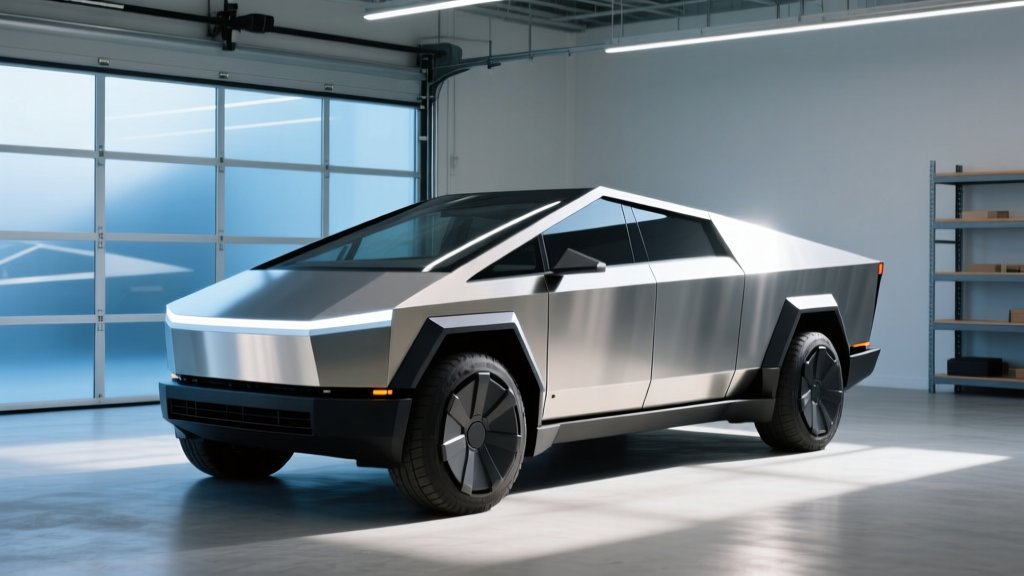
If you've spent any time on EV forums or Reddit threads in 2025-2026, you've likely seen the phrase Cybertruck glue trending alongside discussions of panel gaps, stainless steel exoskeletons, and build quality. The term refers to Tesla's extensive use of structural adhesives in assembling the Cybertruck's cold-rolled stainless steel body — a manufacturing approach that replaces traditional spot-welding in many areas because Tesla's ultra-hard 30X stainless steel simply cannot be stamped or welded using conventional automotive techniques.
The result is a truck held together in significant part by industrial-grade adhesive bonding — the same aerospace-inspired technique used in aircraft fuselage assembly. For prospective buyers, the question isn't whether this approach is unusual (it is), but whether it holds up over tens of thousands of miles, extreme temperatures, and real-world truck abuse. This review covers the full Cybertruck ownership picture, with the adhesive construction question front and center.
EPA Estimated: 320 mi (Dual Motor AWD) / 340 mi (Cyberbeast)
Real-World Highway (70 mph, 75°F): ~265-285 mi
Real-World Cold Weather (30°F, mixed): ~220-250 mi
The angular slab-side design yields a drag coefficient around 0.34 Cd — respectable for a truck but higher than sleeker EVs, which compounds range loss at sustained highway speeds.
2026 Tesla Cybertruck: Core Specifications at a Glance
| Specification | Dual Motor AWD | Cyberbeast (Tri-Motor) |
|---|---|---|
| EPA Range | 320 miles | 340 miles |
| Battery (usable) | ~123 kWh (estimated, NMC) | ~123 kWh (estimated, NMC) |
| Max DC Fast Charge | 250 kW (V3 Supercharger) | 250 kW (V3 Supercharger) |
| 10-80% DC Time | ~28 minutes | ~28 minutes |
| Level 2 Home Charge | 11.5 kW / ~37 mi/hr | 11.5 kW / ~37 mi/hr |
| 0-60 mph | 3.9 seconds | 2.6 seconds |
| Horsepower | 600 hp | 845 hp |
| Drivetrain | Dual-Motor AWD | Tri-Motor AWD |
| Efficiency | 58 MPGe / 58 kWh/100mi | 56 MPGe / 60 kWh/100mi |
| Towing Capacity | 11,000 lbs | 11,000 lbs |
| Base MSRP (2026) | $79,990 | $99,990 |
Note: Tesla does not officially publish usable battery capacity. The ~123 kWh figure is derived from independent teardown analysis and EPA efficiency calculations. Battery chemistry is NMC (nickel manganese cobalt), consistent with Tesla's performance-oriented packs.
The Cybertruck Glue Question: Adhesive Bonding Explained
The Cybertruck's 30X cold-rolled stainless steel is harder than conventional automotive-grade steel — approximately 3x harder, according to Tesla's claims. This creates a manufacturing problem: traditional resistance spot-welding, which joins body panels by passing current through overlapping metal sheets, doesn't work well on ultra-hard stainless. The material resists deformation, and the heat-affected zones can compromise the steel's corrosion resistance.
Tesla's solution relies heavily on structural adhesive bonding — industrial-grade epoxy and polyurethane adhesives applied robotically along panel flanges and joints. This is supplemented by laser welding in select areas. The approach offers several engineering advantages:
- Uniform stress distribution: Adhesive spreads load across the entire bond line rather than concentrating it at discrete weld points, which improves fatigue resistance.
- Dissimilar material joining: Adhesive can bond stainless steel to aluminum subframe components and composite elements without galvanic corrosion risk.
- Sealing: The adhesive simultaneously seals joints against water intrusion, reducing the need for separate sealant applications.
- NVH improvement: Bonded joints damp vibration transmission compared to mechanical fasteners.
But here's what prospective owners should understand about real-world durability. Structural adhesives used in automotive applications (3M Scotch-Weld, Henkel Teroson, and similar) are rated for temperature ranges from -40°F to over 300°F, and they are designed to maintain bond integrity through thousands of thermal cycles. The aerospace industry has relied on adhesive bonding for decades — the Boeing 787 fuselage is largely adhesive-bonded composite.
The concern that surfaces in owner forums typically involves cosmetic adhesive issues: visible glue squeeze-out along panel seams, adhesive residue near trim pieces, and occasional reports of trim adhesive failing in extreme heat. These are build-quality inconsistencies, not structural failures. Tesla has issued multiple service bulletins addressing cosmetic adhesive application, and 2026 production models show noticeably cleaner seam finishing than early 2024 units.
Charging Speed and Infrastructure: What to Expect
The Cybertruck uses the NACS (North American Charging Standard) connector natively — no adapter needed for Tesla's Supercharger network. It supports a peak DC fast-charge rate of 250 kW on V3 Superchargers, though V4 Supercharger stalls (rolling out through 2026) may unlock slightly higher sustained rates as firmware updates arrive.
| Charging Level | Power (kW) | Speed | Use Case |
|---|---|---|---|
| Level 1 (120V) | 1.4 kW | ~4 mi/hr | Emergency / trickle |
| Level 2 (240V, 48A) | 11.5 kW | ~37 mi/hr | Home overnight |
| DC Fast (V3 Supercharger) | 250 kW peak | 10-80% in ~28 min | Road trips |
A critical nuance: the Cybertruck's ~123 kWh battery is large, which means even at 250 kW peak, the 10-80% session takes longer than smaller-battery EVs. The charge curve peaks around 250 kW up to roughly 40% State of Charge (SoC), then tapers progressively — by 70% SoC, you're likely seeing 120-150 kW. Preconditioning the battery (initiated automatically when you navigate to a Supercharger) is essential for achieving peak rates, especially in cold weather.
For home charging, a Wall Connector on a 60-amp circuit delivers the full 11.5 kW (48 amps continuous). That translates to roughly 37 miles of range per hour of charging, or a full 320-mile replenishment in about 8.5-9 hours — ideal for overnight sessions. Installation typically costs $500-$2,000 depending on your electrical panel's capacity and proximity to the garage. Homes with older 100-amp panels may need a $1,500-$3,000 panel upgrade to support a dedicated 60-amp EV circuit.
Pricing, Tax Credits, and Total Cost
| Trim | MSRP (2026) | §30D Credit Eligible? | Effective Price (if eligible) |
|---|---|---|---|
| Dual Motor AWD | $79,990 | ❌ Exceeds $80K truck cap | $79,990 |
| Cyberbeast (Tri-Motor) | $99,990 | ❌ Exceeds $80K truck cap | $99,990 |
This is a significant pain point for Cybertruck buyers. Under current IRS §30D rules, the federal EV tax credit for trucks (vans, SUVs, and pickups) is capped at vehicles with an MSRP of $80,000 or less. The Dual Motor AWD at $79,990 technically squeaks under this cap — however, the moment you add any factory options, destination fees, or package upgrades that push the delivered price above $80,000, eligibility evaporates. The Cyberbeast at $99,990 is categorically ineligible.
Additionally, §30D has buyer income limits ($300,000 joint / $150,000 single filer MAGI) and battery component/critical mineral sourcing requirements that change annually. Always verify current-year eligibility on IRS.gov's clean vehicle credit page before assuming you qualify. The credit can now be transferred to the dealer as a point-of-sale discount, but only if the vehicle itself qualifies.
For buyers who do not qualify for the federal credit, some states offer supplemental rebates — California's CVRP, for example, has its own income and MSRP thresholds. Check your state energy office for current programs.
Performance, Efficiency, and Daily Driving
The Cyberbeast's 2.6-second 0-60 mph time makes it one of the quickest production trucks ever built, and the dual-motor variant's 3.9 seconds is hardly slow. But the more relevant daily-driving metric is efficiency. At 58 MPGe (Dual Motor) and roughly 58 kWh per 100 miles, the Cybertruck is less efficient than smaller EVs — a consequence of its 6,800+ lb curb weight and brick-like aerodynamics. For context, a Tesla Model Y Long Range achieves 122 MPGe combined.
This efficiency gap matters for two reasons: higher electricity costs per mile (roughly $0.06-$0.08/mile at average residential rates vs. $0.03-$0.04 for a Model Y) and more frequent charging stops on road trips. On a 500-mile highway trip, expect 2-3 Supercharger stops of 25-30 minutes each.
Ride quality has improved meaningfully in 2026 production. The adaptive air suspension now features revised damping calibrations that reduce the head-toss over sharp impacts that plagued early models. Steering is quick and precise by truck standards, and the rear-wheel steering system (up to 10 degrees) makes the 223.7-inch-long truck surprisingly maneuverable in parking lots — its turning circle is comparable to a midsize sedan.
Interior, Cargo, and Practicality
The Cybertruck seats five (three-across bench front, two-across rear) with a minimalist interior dominated by an 18.5-inch front touchscreen and a 9.4-inch rear screen. Build quality in 2026 models is markedly improved over 2024 examples, though the stainless steel interior trim still shows fingerprints aggressively.
Cargo dimensions are where the truck diverges from expectations:
- Bed length: 6 feet (with tailgate up); extends to 8 feet with tailgate down and bed extender deployed
- Bed width (between wheel wells): 43.5 inches — narrower than a Ford F-150's 50.6 inches, which limits standard 4x8 sheet goods
- Frunk (front trunk): ~7.1 cu ft — useful for charging cables and small cargo
- Total enclosed cargo: ~67 cu ft (bed vault with tonneau closed + frunk)
- Rear legroom: 38.2 inches — adequate for adults but less generous than a Rivian R1T (38.9 in)
The motorized retractable tonneau cover is standard and includes a built-in cargo ramp. The sail-shaped C-pillars create a distinctive enclosed bed vault, but they also limit overhead clearance when loading tall items from the side.
Tech, Driver Assistance, and Safety
The Cybertruck ships with Tesla's latest hardware suite (HW4/AI5), including higher-resolution cameras and improved processing for Autopilot and Full Self-Driving (Supervised). It's critical to understand that FSD Supervised is an SAE Level 2 driver-assistance system — you must keep your hands on the wheel and eyes on the road at all times. It is not autonomous driving.
Tesla Autopilot and FSD (Supervised) are classified as SAE Level 2 — partial driving automation. The system can manage steering, acceleration, and braking under certain conditions, but the driver must continuously supervise and be prepared to take over immediately. True self-driving (Level 4) is currently limited to geofenced robotaxi services like Waymo.
Safety ratings remain a moving target. The Cybertruck has not yet received a full evaluation from IIHS as of early 2026. NHTSA has not published a comprehensive star rating. The stainless steel exoskeleton's crash energy management is fundamentally different from conventional unibody trucks, and real-world crash data is still accumulating given the vehicle's relatively short time on the road.
Warranty and Long-Term Ownership
- Basic vehicle warranty: 4 years / 50,000 miles
- Battery & drive unit: 8 years / 120,000 miles (whichever comes first), with a minimum 70% capacity retention threshold
- Restraint system: 5 years / 60,000 miles
Tesla's battery warranty is competitive with the industry standard (Ford, GM, and Rivian all offer 8 years, though mileage thresholds vary between 100,000 and 150,000 miles). For the adhesive bonding question specifically: structural adhesive integrity falls under the basic vehicle warranty for the first 4 years. Any adhesive-related panel separation would be covered. Cosmetic adhesive issues (visible squeeze-out, trim adhesive) have been addressed under warranty on a case-by-case basis.
- Class-leading acceleration (Cyberbeast: 2.6s 0-60)
- 11,000-lb towing capacity
- Standard air suspension with adaptive damping
- Rear-wheel steering for tight maneuverability
- Native NACS — full Supercharger network access
- Distinctive design with stainless durability (no paint to chip)
- No federal tax credit (MSRP exceeds $80K cap in practice)
- Below-average efficiency (58 MPGe) means higher charging costs
- Narrow 43.5" bed width limits standard plywood/sheet goods
- Build quality inconsistencies persist (adhesive cosmetics, panel alignment)
- Limited IIHS/NHTSA crash-test data
- Higher insurance premiums vs. conventional trucks
Who Should Buy the Cybertruck (And Who Shouldn't)
- You want a fast, distinctive electric truck and budget is not the primary constraint
- You need 11,000-lb towing and plan to leverage the Supercharger network for towing routes
- You value the stainless exoskeleton's dent/scratch resistance for work-site or off-road use
- You have home Level 2 charging and can accommodate the ~9-hour full charge cycle
- Federal tax credit eligibility is a dealbreaker (consider the Ford F-150 Lightning or Rivian R1T, which may qualify at lower trims)
- You regularly haul 4x8 sheet materials (the narrow bed is a real limitation)
- You prioritize proven crash-test ratings — wait for IIHS/NHTSA results
- You want maximum range per dollar — the Rivian R1T Max Pack offers 420+ miles EPA
Frequently Asked Questions
Is the Cybertruck's adhesive bonding structurally safe?
Yes. Structural adhesive bonding is a proven aerospace and automotive manufacturing technique. The adhesives used (industrial epoxy/polyurethane formulations) are rated for extreme temperatures and thousands of thermal cycles. There have been no reported structural adhesive failures in Cybertrucks as of early 2026. Cosmetic adhesive issues (visible squeeze-out, trim separation) have been documented but are non-structural and typically addressed under warranty.
What is the real-world range of the Cybertruck?
The EPA rates the Dual Motor AWD at 320 miles and the Cyberbeast at 340 miles. In real-world highway driving at 70 mph in moderate temperatures, expect 265-285 miles. In cold weather (below 35°F), range drops to approximately 220-250 miles due to battery resistance increase and cabin heating demands. Towing at maximum capacity will reduce range by 40-50%.
Does the Cybertruck qualify for the $7,500 federal EV tax credit?
In most real-world configurations, no. The §30D credit caps truck MSRP at $80,000. While the base Dual Motor AWD lists at $79,990, adding destination charges or any options pushes it above the cap. The Cyberbeast at $99,990 is categorically ineligible. Additionally, buyer income limits ($300K joint / $150K single) and battery sourcing requirements apply. Verify current eligibility at IRS.gov.
How fast does the Cybertruck charge at home and on the road?
At home on a 240V Level 2 Wall Connector (48A), the Cybertruck charges at 11.5 kW, adding approximately 37 miles of range per hour. A full charge from empty takes about 9 hours. On a V3 Supercharger, it peaks at 250 kW and charges from 10-80% in approximately 28 minutes, though the charge curve tapers significantly above 70% SoC.
Cybertruck vs. Rivian R1T vs. F-150 Lightning: which is best?
For maximum range and off-road versatility, the Rivian R1T (especially the Max Pack at 420+ miles EPA) leads. For fleet/tax-credit-eligible buyers and conventional truck ergonomics, the Ford F-150 Lightning (starting around $55,000, potentially credit-eligible) is the pragmatic choice. The Cybertruck wins on acceleration, towing capacity, and Supercharger network access, but it's the most expensive option and the least tax-credit-friendly. Your choice depends on whether performance and network access outweigh cost efficiency.
Will Cybertruck adhesive degrade in extreme heat or cold?
Automotive structural adhesives are engineered for -40°F to 300°F+ operating ranges. Tesla's adhesive selections are validated through environmental testing that exceeds any real-world climate exposure in North America. The more realistic concern is cosmetic trim adhesive softening in sustained 110°F+ desert heat, which has been reported anecdotally but does not affect structural integrity.