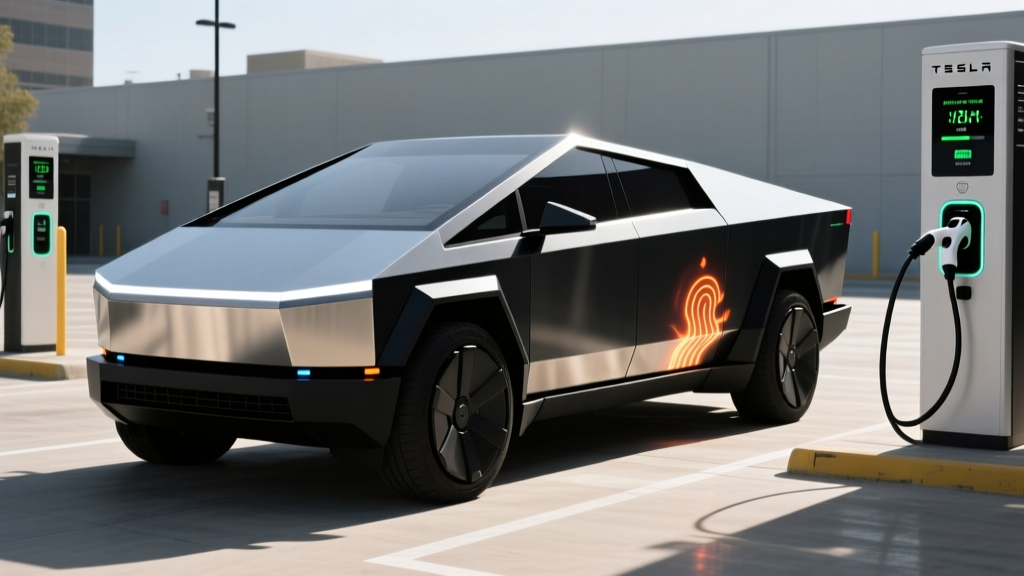
Viral videos of damaged vehicles catching fire have pushed the phrase Tesla Cybertruck exploding into search bars across the country. But separating internet spectacle from engineering reality requires looking at actual incident data, battery chemistry, and the broader context of vehicle fire risk — both electric and gasoline-powered. This review tackles the fire-safety question head-on, then delivers the complete 2026 Cybertruck ownership picture: range, charging, pricing, tax credits, and how it stacks up against the Rivian R1T and Ford F-150 Lightning.
Is the Tesla Cybertruck Actually Exploding?
Let's address the keyword directly: there is no documented pattern of Tesla Cybertrucks spontaneously exploding. As of early 2026, the National Highway Traffic Safety Administration (NHTSA) has not issued a recall for the Cybertruck related to battery fires or thermal runaway events. The handful of viral incidents circulating on social media generally involve high-speed collisions, extreme structural damage, or aftermarket modifications — scenarios where any vehicle's energy storage system can become compromised.
Lithium-ion battery packs can experience thermal runaway when cells are physically punctured, shorted, or exposed to sustained extreme heat. This is true for every EV on the road, not just Tesla. The Cybertruck uses a structural battery pack with 4680-format cells arranged in a honeycomb configuration that Tesla engineers designed to limit propagation — meaning if one cell fails, the surrounding cells are less likely to follow.
Putting Fire Risk in Perspective
According to data compiled by the National Fire Protection Association (NFPA) and AutoInsuranceEZ using NTSB and BTS figures, gasoline vehicles experience fires at a rate of roughly 1,529 per 100,000 vehicles, while EVs experience approximately 25 per 100,000. Hybrids fall in between at about 3,474 per 100,000 (higher because they carry both fuel systems and batteries). The Cybertruck's stainless-steel exoskeleton adds a layer of physical protection around the pack that most unibody EVs lack.
Range, Battery, and Efficiency: The Real Numbers
The 2026 Tesla Cybertruck is offered in two main configurations: the dual-motor AWD and the tri-motor Cyberbeast. Both use Tesla's 4680-cell structural battery pack with an NMC (nickel manganese cobalt) chemistry optimized for energy density and power delivery.
| Spec | Dual-Motor AWD | Cyberbeast (Tri-Motor) |
|---|---|---|
| EPA Est. Range | 340 miles | 320 miles |
| Battery Capacity (usable) | ~123 kWh | ~123 kWh |
| Battery Chemistry | NMC (4680 cells) | NMC (4680 cells) |
| Horsepower | 600 hp | 845 hp |
| 0–60 mph | 4.1 seconds | 2.6 seconds |
| Drivetrain | Dual-Motor AWD | Tri-Motor AWD |
| Efficiency | 56 MPGe / 58 kWh/100mi | 52 MPGe / 62 kWh/100mi |
| Towing Capacity | 11,000 lbs | 11,000 lbs |
| Payload | 2,500 lbs | 2,500 lbs |
Efficiency is the Cybertruck's weak point relative to sedans, but competitive for a 6,800+ lb stainless-steel truck. The angular design creates more aerodynamic drag than a sleek sedan, and the weight demands more energy per mile. At 58 kWh/100 miles for the AWD, you're consuming roughly $0.07–$0.10 per mile at the national average residential electricity rate of $0.16/kWh — still cheaper than a comparable gas truck at current fuel prices.
Charging Speed: DC Fast, Level 2, and the 4680 Advantage
Tesla's 4680 cells were designed partly to accept higher charge rates, and the Cybertruck leverages this on the Supercharger network. Here's the complete charging picture:
| Charging Level | Power / Rate | Speed / Time |
|---|---|---|
| DC Fast Charge (Peak) | 250 kW (V3 Supercharger) | 10–80% in ~30 minutes |
| DC Fast Charge (V4) | Up to 350 kW (compatible) | 10–80% in ~22 minutes |
| Level 2 (Home / Wall Connector) | 11.5 kW (48A) | ~37 miles of range per hour |
| Level 1 (120V outlet) | ~1.4 kW | ~4–5 miles per hour |
The charge curve matters more than peak numbers. The Cybertruck sustains strong charging rates through the 20–60% state-of-charge window, then progressively tapers above 80% to protect cell longevity. On a V3 Supercharger (250 kW), you'll see peak rates near 250 kW only briefly in the 15–30% SoC range, averaging closer to 170–190 kW across the full 10–80% session. This is why the 30-minute 10–80% time is a more honest metric than peak kW alone.
For home charging, Tesla's Wall Connector at 48 amps (11.5 kW on a 240V/60A circuit) adds roughly 37 miles per hour of charging. An overnight 10-hour session restores approximately 370 miles — more than enough to replenish any single day's driving. Installation typically requires a NEMA 14-60 outlet or hardwired connection; budget $800–$2,000 for a licensed electrician depending on panel capacity and run distance.
Pricing, Trims, and Federal Tax Credit Eligibility
Tesla has adjusted Cybertruck pricing multiple times since launch. Here's where the 2026 lineup stands:
| Trim | Base MSRP | Est. After §30D Credit | §30D Eligible? |
|---|---|---|---|
| Dual-Motor AWD | $79,990 | $72,490* | Potentially (see below) |
| Cyberbeast (Tri-Motor) | $99,990 | $92,490* | Potentially (see below) |
*Estimated prices assume full $7,500 federal tax credit eligibility and point-of-sale transfer. Actual eligibility depends on multiple factors.
§30D Federal Tax Credit — The Fine Print
Under current IRS rules, the Cybertruck's eligibility for the $7,500 New Clean Vehicle Credit (§30D) depends on three moving targets:
- MSRP Cap: Trucks, vans, and SUVs must have an MSRP at or below $80,000. The Dual-Motor AWD at $79,990 squeaks under this cap; the Cyberbeast at $99,990 does not qualify.
- Buyer Income Limits: Modified adjusted gross income must not exceed $150,000 (single), $225,000 (head of household), or $300,000 (joint filers).
- Battery Sourcing: Critical minerals and battery components must meet escalating domestic-content and free-trade-agreement thresholds that tighten each year. Tesla's supply chain has been progressively onshoring, but eligibility can shift with model-year battery batches.
The point-of-sale transfer option allows qualified buyers to apply the credit as an immediate price reduction at delivery rather than waiting for a tax refund. Always verify current eligibility on the IRS clean vehicle credit page and consult a tax professional before finalizing a purchase — these rules have changed multiple times since 2023.
Interior, Cargo, Tech, and Driver Assistance
The Cybertruck's cabin is minimalist even by Tesla standards. A single 18.5-inch touchscreen dominates the dash, handling infotainment, climate, vehicle settings, and a camera-based "rearview mirror" display (the bed wall blocks a traditional mirror). Materials are vegan leather and hard-wearing plastics designed for utility rather than luxury.
Dimensions and Cargo
- Bed Length: 6 feet (with tailgate closed); extends to ~8 feet with tailgate down
- Bed Volume: ~67 cu ft (bed only)
- Frunk (Front Trunk): ~7 cu ft — useful for groceries or charging cables
- Seating: 5 passengers (60/40 split rear bench)
- Rear Legroom: ~41 inches — adequate for adults on longer trips
- Vault Storage: Lockable under-bed compartment accessible from the side
The powered tonneau cover (called the "sail" structure) is standard and integrates with the truck's locking system. Tesla also includes built-in 120V and 240V outlets in the bed, enabling vehicle-to-load (V2L) capability — you can run power tools, camping equipment, or even supply limited power to a home during an outage.
Driver Assistance: Autopilot and FSD
Autopilot includes adaptive cruise control, lane-keeping, and automatic emergency braking. FSD Supervised adds automated lane changes, city-street navigation, and traffic-light recognition — impressive in practice but still requiring constant supervision. In mixed real-world use, FSD handles highway driving competently but can make questionable decisions in complex urban scenarios, construction zones, and unprotected left turns.
Cybertruck vs. Rivian R1T vs. Ford F-150 Lightning
The electric truck segment has three serious contenders in 2026. Here's how they compare on the metrics that matter most to truck buyers:
| Attribute | Tesla Cybertruck AWD | Rivian R1T Dual-Motor | Ford F-150 Lightning XLT |
|---|---|---|---|
| EPA Range | 340 mi | 352 mi (Standard) | 320 mi (Ext. Range) |
| Starting MSRP | $79,990 | $75,900 | $59,990 |
| 0–60 mph | 4.1 sec | 4.5 sec | 3.8 sec (Ext. Range) |
| Towing | 11,000 lbs | 11,000 lbs | 10,000 lbs |
| Max DC Charge | 250–350 kW | 200 kW | 150 kW |
| Bed Length | 6 ft | 4.5 ft (+ Gear Tunnel) | 5.5 ft |
| §30D Eligible | AWD only* | Yes (most trims) | Yes (most trims) |
| Charging Network | Tesla Supercharger (NACS) | NACS (Supercharger access) | NACS (Supercharger access) |
The F-150 Lightning wins on price and familiarity — it looks and drives like a conventional truck, making it the easiest transition for traditional truck buyers. The Rivian R1T offers the most innovative storage (the Gear Tunnel is genuinely useful) and a strong adventure-oriented ecosystem. The Cybertruck leads in charging speed, raw performance (especially the Cyberbeast), and Supercharger network integration, but its polarizing design, higher price, and smaller bed limit its appeal to a narrower audience.
→ Choose the Cybertruck if: You prioritize fast DC charging, want tri-motor performance, live in the Tesla ecosystem, and don't need a full-size 6.5+ ft bed.
→ Choose the F-150 Lightning if: Budget matters, you want traditional truck ergonomics, or you need fleet compatibility.
→ Choose the Rivian R1T if: You want adventure-oriented design, the Gear Tunnel, and a premium interior at a moderate price point.
Warranty, Ownership Costs, and Longevity
Tesla provides the following warranty coverage for the 2026 Cybertruck:
- Basic Vehicle: 4 years / 50,000 miles
- Battery & Drive Unit: 8 years / 120,000 miles (with minimum 70% capacity retention)
- Rust-Through (Exterior): Limited coverage — stainless steel resists surface rust, but weld points and underbody components are covered separately
The 8-year/120,000-mile battery warranty is competitive with the industry standard (most EVs offer 8 years/100,000 miles). Tesla's 70% retention threshold means the warranty triggers if your battery drops below 70% of original capacity within the coverage window. Based on data from high-mileage Model 3 and Model Y fleets running similar NMC chemistries, most Tesla packs retain 85–92% capacity at 100,000 miles, suggesting the Cybertruck's pack should age well under normal use.
Insurance costs are the ownership wildcard. The Cybertruck's stainless-steel body panels, specialized repair requirements, and high MSRP push insurance premiums notably higher than a conventional F-150. Expect quotes in the $2,800–$4,200/year range depending on your location, driving record, and coverage level — roughly 30–50% more than a comparably priced gas truck.
Pros and Cons
✓ Pros
- Class-leading DC fast-charging speed (250–350 kW)
- Supercharger network — still the most reliable public charging in the US
- Tri-motor Cyberbeast performance (2.6s 0–60) is absurd for a truck
- Stainless-steel exoskeleton offers exceptional dent and corrosion resistance
- V2L capability with 120V/240V bed outlets
- Low running costs vs. gas trucks (~$0.08/mi electricity vs. ~$0.22/mi gas)
✗ Cons
- High starting price; Cyberbeast exceeds §30D MSRP cap
- 6-foot bed is shorter than most full-size competitors
- Poor efficiency (56 MPGe) due to weight and aerodynamics
- Insurance premiums 30–50% higher than comparable gas trucks
- Polarizing design — love it or hate it, resale value is uncertain
- FSD remains Level 2 despite the "Full Self-Driving" name
- Visibility challenges from thick A-pillars and angular rear sail
Who Should Buy the Cybertruck?
The Cybertruck works best for a specific buyer profile: someone who wants an electric truck primarily for daily driving and light-to-moderate utility, values fast charging and Tesla's Supercharger network, and is drawn to the design rather than repelled by it. It's a strong commuter vehicle (quiet, smooth, low per-mile cost), a capable light towing rig, and a legitimate camping/adventure platform thanks to V2L.
It's not ideal for commercial fleet buyers who need a traditional bed and upfitter ecosystem, buyers on a tight budget (the Lightning starts $20,000 lower), or anyone who needs maximum cargo volume. The 6-foot bed and unconventional proportions make it a lifestyle truck more than a work truck — and that's fine, as long as you go in with clear expectations.
Frequently Asked Questions
Has any Tesla Cybertruck exploded in normal use?
No verified reports exist of a Cybertruck exploding during normal operation, charging, or parking. The few fire-related incidents shared online have involved severe collisions or significant external damage — conditions under which any vehicle's energy system can be compromised. NHTSA has not issued a battery-fire-related recall for the Cybertruck as of early 2026.
What is the real-world range of the Cybertruck?
The EPA rates the Dual-Motor AWD at 340 miles and the Cyberbeast at 320 miles. In real-world highway driving at 70–75 mph, expect 270–295 miles (AWD) and 250–275 miles (Cyberbeast). Cold weather below 30°F reduces range by 15–30%. Towing cuts range roughly in half.
How fast does the Cybertruck charge?
On a V3 Supercharger (250 kW), the Cybertruck charges from 10–80% in approximately 30 minutes. On newer V4 Superchargers capable of 350 kW, that drops to roughly 22 minutes. At home on a Level 2 Wall Connector (11.5 kW), it adds about 37 miles of range per hour.
Does the Cybertruck qualify for the $7,500 federal tax credit?
The Dual-Motor AWD at $79,990 MSRP is under the $80,000 truck cap and may qualify, subject to buyer income limits (§30D caps at $150K single / $300K joint) and battery-sourcing requirements. The Cyberbeast at $99,990 exceeds the MSRP cap and does not qualify. Always verify current eligibility at irs.gov and consult a tax professional.
Is the Cybertruck worth buying over the F-150 Lightning or Rivian R1T?
It depends on your priorities. The Cybertruck wins on charging speed and Supercharger access, the Lightning wins on price and traditional truck utility, and the R1T wins on adventure design and interior quality. If fast charging and Tesla ecosystem integration are your top needs, the Cybertruck earns its premium. If budget or bed length matters more, look at the Lightning or R1T.
Is Tesla's Full Self-Driving actually self-driving?
No. FSD Supervised is an SAE Level 2 driver-assist system. You must remain fully attentive, monitor the road, and be ready to intervene at any moment. It does not make the vehicle autonomous. Calling it "self-driving" is misleading and potentially dangerous.