Why the Tesla Cybertruck Can't Be Sold in Europe
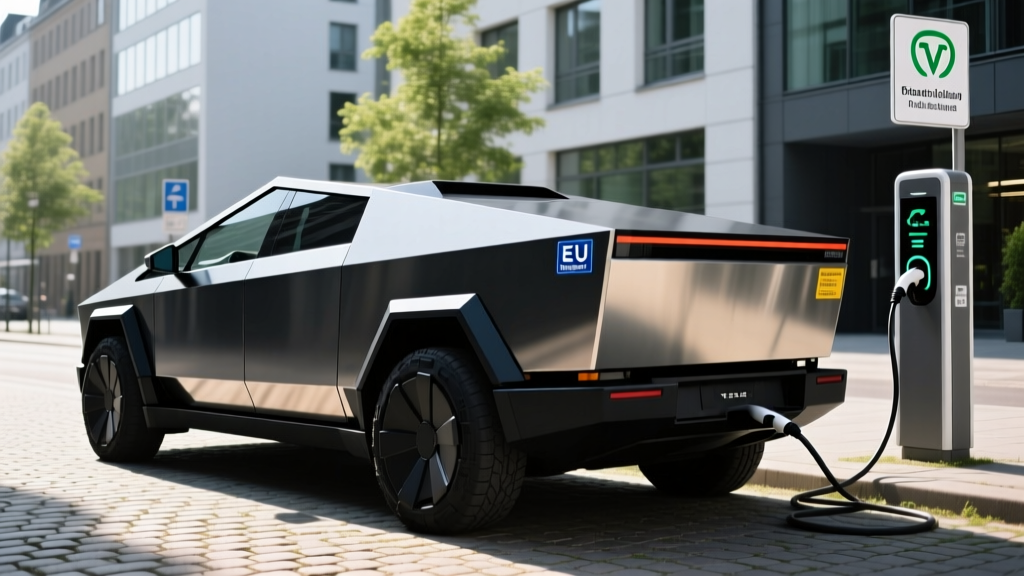
The Tesla Cybertruck is one of the most polarizing electric vehicles ever built — and for buyers in the European Union, it remains one of the most inaccessible. Despite strong demand from European EV enthusiasts, Tesla Cybertruck EU import restrictions stem from a complex web of pedestrian safety regulations, vehicle dimension rules, and type-approval requirements that the truck's angular stainless-steel exoskeleton simply cannot satisfy under current law.
This isn't a matter of Tesla choosing not to sell the Cybertruck in Europe. It's a matter of the vehicle's fundamental design being incompatible with EU vehicle homologation standards — particularly the General Safety Regulation (GSR) and UN Regulation 127 governing pedestrian head-impact protection. The flat, rigid stainless-steel front panel and sharp leading edges that define the Cybertruck's aesthetic are precisely what EU regulators designed their rules to prevent.
Below, we break down the regulatory barriers, examine what individual importers can and cannot do, and provide a full spec profile of the Cybertruck as sold in the US market — so European buyers understand exactly what they're missing, and whether gray-market import is a viable path.
The Regulatory Wall: EU Pedestrian Safety and Type Approval
European vehicle type approval requires every new model sold in the EU to pass a battery of safety tests under the EU General Safety Regulation (Regulation 2019/2144). Among the most restrictive for the Cybertruck is UN Regulation 127, which mandates pedestrian headform impact testing on the vehicle's front-end structure.
The test fires a headform impactor at the hood and bumper area at 40 km/h. The resulting Head Injury Criterion (HIC) value must stay below 1,000 to limit the risk of serious or fatal head trauma. Vehicles with deformable hoods, crumple zones, and energy-absorbing structures — like the Ford F-150 Lightning or Rivian R1T — can pass. The Cybertruck's 3mm-thick cold-rolled stainless-steel exoskeleton, which Tesla markets as ultra-rigid and dent-proof, has no meaningful deformation zone in the headform impact area.
Additional regulatory conflicts include:
- Sharp edge prohibitions: EU rules restrict exterior protrusions and sharp edges that could cause lacerations in a collision. The Cybertruck's angular folds and exposed panel seams are problematic.
- Mass and dimension limits: EU Category N1 light commercial vehicle rules cap mass at 3,500 kg for standard licensing. The Cybertruck AWD's curb weight of approximately 6,600 lbs (~2,994 kg) plus payload can push close to or over this limit, depending on configuration.
- Lighting and mirror regulations: EU lighting standards (UN R148, R149) differ from US FMVSS 108, and the Cybertruck's light bar configuration would require redesign for European compliance.
- Side-impact underrun protection: EU rules for trucks require lateral protection devices not present on the Cybertruck's US-spec body.
Full Tesla Cybertruck Spec Profile (US Market)
For US buyers — and Europeans evaluating the gray-market route — here is the complete specification breakdown for the current-generation Cybertruck lineup.
| Spec | AWD | Cyberbeast |
|---|---|---|
| EPA Range | 340 miles | 320 miles |
| Battery (usable, est.) | ~123 kWh (NMC, 4680 cells) | ~123 kWh (NMC, 4680 cells) |
| Drivetrain | Dual-Motor AWD | Tri-Motor AWD |
| Horsepower | 600 hp | 845 hp |
| 0–60 mph | 4.1 seconds | 2.6 seconds |
| Efficiency (MPGe) | ~70 MPGe | ~65 MPGe |
| Efficiency (kWh/100 mi) | ~48 kWh/100 mi | ~52 kWh/100 mi |
| Max DC Fast Charge | ~250 kW (peak) | ~250 kW (peak) |
| 10–80% DC Charge | ~28 minutes | ~28 minutes |
| Level 2 Home Charging | 11.5 kW (~30 mi/hr) | 11.5 kW (~30 mi/hr) |
| Towing Capacity | 11,000 lbs | 11,000 lbs |
| Base MSRP | $79,990 | $99,990 |
| Curb Weight | ~6,600 lbs | ~6,800 lbs |
Real-World Range: What the EPA Number Doesn't Tell You
Cybertruck AWD: EPA 340 miles → Expect ~270–290 miles at sustained 70 mph highway speeds; ~240–260 miles in freezing temperatures with cabin heat.
Cyberbeast: EPA 320 miles → Expect ~250–270 miles highway; ~220–240 miles in cold weather.
The Cybertruck's boxy aerodynamics (Cd ~0.38 estimated) punish highway efficiency significantly. Towing drops effective range to roughly 150–180 miles depending on trailer weight and speed.
The Cybertruck's EPA-estimated range figures look competitive on paper, but real-world ownership tells a more nuanced story. The truck's angular shape — which is central to both its appeal and its EU regulatory problems — creates substantial aerodynamic drag at highway speeds. Electric vehicles lose range to drag proportionally to the cube of velocity, meaning the difference between 65 mph and 75 mph is far more punishing in a Cybertruck than in a sleek sedan like the Tesla Model S or Lucid Air.
In independent highway-range testing at 70 mph in moderate temperatures (65–75°F), the Cybertruck AWD typically delivers between 270 and 290 miles before reaching a low state of charge — roughly 15–20% below its EPA sticker. In cold weather (below 32°F), battery chemistry limitations and cabin-heating energy draw reduce effective range further, to approximately 240–260 miles for the AWD model.
Towing is where range collapses most dramatically. With a loaded 7,000-lb trailer at highway speeds, expect to see no more than 150–180 miles of range — a reality that makes the Cybertruck impractical for long-distance towing without meticulous route planning around DC fast-charger availability. According to fueleconomy.gov, the Cybertruck's combined efficiency sits around 48–52 kWh per 100 miles, making it one of the least efficient EVs on the market per mile driven.
Charging Performance: DC Fast and Home Level 2
| Charge Level | Power (kW) | Miles Added/Hour | Notes |
|---|---|---|---|
| Level 1 (120V) | ~1.4 kW | ~3 mi/hr | Emergency/trickle only |
| Level 2 (240V, 48A) | 11.5 kW | ~30 mi/hr | Full overnight charge (~10 hrs) |
| DC Fast (Supercharger V3) | ~250 kW peak | ~800+ mi/hr (peak) | 10–80% in ~28 min; tapers above 80% |
| DC Fast (V4 Supercharger) | ~250 kW peak | ~800+ mi/hr (peak) | Same peak; newer cabinet architecture |
The Cybertruck uses Tesla's proprietary NACS (North American Charging Standard) connector, which is now the dominant standard in North America after most major automakers committed to adopting it. On Tesla's Supercharger network, the truck peaks at approximately 250 kW, though — as with all EVs — that peak is not sustained across the entire charging session.
The 4680-cell battery pack delivers a strong charge curve between 10% and roughly 50% state of charge, where the truck can accept close to peak power. Above 60%, the charge rate tapers progressively to protect cell longevity, and the final 80–100% top-off adds significant time. Plan on roughly 28 minutes for a 10–80% session at a V3 or V4 Supercharger, and avoid relying on charging past 80% during road trips unless absolutely necessary.
For European importers, this NACS connector presents an additional hurdle: Europe uses CCS2 for DC fast charging and Type 2 for AC Level 2. While adapters exist, they add cost, complexity, and potential reliability concerns. There is currently no factory CCS2 option for the Cybertruck.
Can You Individually Import a Cybertruck to Europe?
The most common question from European EV enthusiasts: Can I privately import a Cybertruck? The short answer is technically possible in some jurisdictions but practically very difficult and expensive.
EU member states allow individual vehicle imports under Individual Vehicle Approval (IVA) or national single-vehicle type-approval schemes. However, these processes still require compliance with core safety and emissions directives, including pedestrian protection. Some countries, like the Netherlands and Germany, have particularly stringent IVA enforcement. Others may offer limited exemptions, but these are inconsistent, subject to regulatory change, and typically do not grant full EU-wide registration portability.
Estimated costs for a private Cybertruck import to Europe:
- Vehicle purchase (US MSRP): $79,990–$99,990+
- Shipping (RoRo or container): $3,000–$6,000
- EU import duty (10% for passenger vehicles): $8,000–$10,000
- VAT (19–27% depending on country): $15,000–$27,000
- IVA testing and modifications: $5,000–$15,000+ (if approval is even granted)
- CCS2 adapter and charging modifications: $1,000–$3,000
Total landed cost for a Cybertruck AWD in Europe: roughly $115,000–$170,000+, with no guarantee of successful registration. For most buyers, this makes the gray-market route financially irrational compared to purchasing a European-market EV like the Ford F-150 Lightning (available in limited EU markets), the Rivian R1T (pending EU expansion), or the upcoming Volkswagen ID. Buzz Cargo for commercial needs.
Pricing, Tax Credits, and Ownership Costs (US Market)
| Trim | Base MSRP | §30D Credit Eligible? | Effective Price (after credit) |
|---|---|---|---|
| AWD | $79,990 | No — exceeds $80,000 truck MSRP cap | $79,990 |
| Cyberbeast | $99,990 | No — exceeds $80,000 truck MSRP cap | $99,990 |
The Cybertruck's pricing places it firmly outside the reach of the IRS §30D federal EV tax credit. Under current rules, the credit — up to $7,500 — is available only for new electric trucks, vans, and SUVs with an MSRP at or below $80,000. The Cybertruck AWD starts at $79,990, which technically clears the cap, but destination charges, mandatory options, and any add-ons push the transaction price above the threshold. The Cyberbeast at $99,990 is definitively ineligible.
Additionally, §30D imposes buyer income caps ($150,000 single / $300,000 joint MAGI), critical-mineral and battery-component sourcing requirements, and a North American final-assembly mandate. The Cybertruck is assembled in Austin, Texas, satisfying the assembly requirement, but the 4680 cells' critical-mineral supply chain must also meet evolving thresholds that change annually through 2029.
For the Cybertruck AWD at a borderline MSRP, buyers should confirm with their tax professional whether their specific configuration and delivery charges keep the vehicle under the $80,000 cap. The point-of-sale transfer option — where the credit is applied as an immediate price reduction at the dealer — requires the vehicle to qualify at the time of sale.
Cargo, Passenger Space, and Standout Technology
The Cybertruck's 6.5-foot bed offers approximately 74 cu ft of cargo volume with the tonneau cover closed. The bed features a powered retractable cover, built-in 120V and 240V outlets (capable of powering tools and appliances up to 11.5 kW), and integrated tie-down points. The powered frunk (front trunk) adds roughly 7 cu ft of lockable storage — enough for charging cables and a small bag.
Interior passenger space is tighter than a full-size truck. Rear-seat legroom measures approximately 38 inches, adequate for adults on moderate drives but not class-leading. The cabin seats five, and the minimalist interior centers on an 18.5-inch touchscreen that handles all vehicle controls, infotainment, and climate settings. There are no physical buttons on the dash — a design choice that some love and others find distracting while driving.
Standout technology includes:
- Steer-by-wire: The Cybertruck eliminates the mechanical steering column entirely, using electronic actuators. This enables the yoke-style steering wheel and variable steering ratio (fewer turns lock-to-lock at low speeds).
- 48-volt electrical architecture: An industry first for a production vehicle, reducing wiring harness weight and enabling higher-power accessories.
- Armor glass: Tesla's proprietary laminated glass is highly impact-resistant, though early production units reported quality issues with panel gaps and glass delamination.
- Air suspension: Adaptive damping with up to 16 inches of ground clearance in Off-Road mode.
- Tesla Autopilot (Level 2): Standard adaptive cruise and lane-centering. Full Self-Driving (Supervised) is an optional $8,000 add-on — but it remains SAE Level 2 and requires active driver supervision at all times.
Warranty Coverage
Tesla provides the following warranty coverage for the Cybertruck:
- Basic Vehicle Limited Warranty: 4 years / 50,000 miles
- Battery and Drive Unit Warranty: 8 years / 120,000 miles (whichever comes first), with a minimum 70% battery capacity retention guarantee over the warranty period
- Restraint System Warranty: 5 years / 60,000 miles
The 8-year/120,000-mile battery warranty is competitive with the broader EV truck segment. The 70% retention threshold means Tesla will repair or replace the battery if its usable capacity drops below 70% of original capacity within the warranty window — a reasonable benchmark given that NMC chemistry typically degrades 10–15% over the first 100,000 miles under normal use.
Pros and Cons
✅ Pros
- Tri-motor Cyberbeast delivers supercar-level acceleration (2.6s 0–60)
- 11,000-lb towing capacity leads the EV truck segment
- Stainless-steel body is dent- and corrosion-resistant
- Onboard 240V power (11.5 kW) for tools and emergency backup
- Steer-by-wire offers remarkably tight turning radius
- Access to Tesla Supercharger network (most reliable DC network in North America)
- Air suspension with adaptive ride height
❌ Cons
- Cannot be sold or easily imported to the EU (pedestrian safety non-compliance)
- Real-world highway range falls 15–20% below EPA estimates
- Towing reduces range to 150–180 miles
- Heavy and inefficient (~48–52 kWh/100 mi)
- No federal tax credit eligibility at most trim levels
- Rear-seat space is tight for a truck this size
- All-touchscreen controls can distract while driving
- Build quality inconsistencies reported in early production
Who Should Buy the Cybertruck — And Who Shouldn't?
Best for: US-based buyers who want a high-performance electric truck for weekend towing, job-site power delivery, and daily driving — and who value Tesla's Supercharger network and over-the-air update ecosystem. The Cybertruck AWD makes sense for truck owners who tow occasionally, carry tools, and want V2L (vehicle-to-load) capability for off-grid power.
Not ideal for: European buyers (due to import restrictions detailed above), long-distance highway commuters (efficiency is poor), buyers seeking maximum interior space (Rivian R1T and F-150 Lightning offer roomier cabins), or budget-conscious shoppers (the lack of tax credit eligibility makes the effective price steep).
For European buyers specifically: The Ford F-150 Lightning is available in limited EU markets through select importers, and the Rivian R1T may expand to Europe in the near term. Neither faces the same pedestrian-safety regulatory barriers as the Cybertruck due to their more conventional hood designs and crumple zones.
Frequently Asked Questions
Why is the Tesla Cybertruck banned in Europe?
The Cybertruck is not technically "banned" — it simply cannot pass EU vehicle type-approval requirements. The primary barrier is UN Regulation 127 on pedestrian head-impact safety. The truck's rigid stainless-steel front panel lacks the energy-absorbing deformation zones required to keep Head Injury Criterion (HIC) values below 1,000 in standardized impact tests. Additional issues include sharp-edge restrictions, lighting regulation differences, and mass classification conflicts.
Can I privately import a Cybertruck to the EU?
Some EU member states allow Individual Vehicle Approval (IVA) for single imports, but the process still requires meeting core safety directives — including pedestrian protection. Success is not guaranteed, and the total landed cost (purchase + shipping + 10% duty + 19–27% VAT + modification and testing fees) typically reaches $115,000–$170,000+. Registration may not be portable across EU countries.
Will Tesla ever make an EU-compliant Cybertruck?
As of 2026, Tesla has not announced plans for a European-spec Cybertruck. Elon Musk has publicly acknowledged the difficulty of meeting EU regulations with the current design. A compliant version would require significant structural redesign — particularly a deformable front-end structure — which would fundamentally alter the vehicle's aesthetic and engineering. This appears unlikely in the near term.
Does the Cybertruck qualify for the US federal EV tax credit?
The Cybertruck AWD at $79,990 MSRP sits at the very edge of the §30D $80,000 truck cap. However, destination fees and mandatory options typically push the transaction price above the threshold, making it ineligible in most configurations. The Cyberbeast at $99,990 definitively exceeds the cap. Additionally, buyers must meet income limits ($150K single / $300K joint) and the vehicle must satisfy critical-mineral and battery-component sourcing requirements. Consult a tax professional and verify with the IRS clean vehicle credit page before relying on credit eligibility.
What is the Cybertruck's real-world range when towing?
With a loaded 7,000-lb trailer at highway speeds (65–70 mph), expect approximately 150–180 miles of effective range. This represents a 45–55% reduction from the EPA sticker. Route planning around Supercharger locations is essential for any tow trip exceeding 100 miles.
How does the Cybertruck compare to the Rivian R1T and F-150 Lightning?
The Cybertruck leads in acceleration (2.6s 0–60 Cyberbeast) and towing capacity (11,000 lbs). The Rivian R1T offers a more refined interior, better rear-seat space, and a more conventional design that clears EU pedestrian safety rules. The Ford F-150 Lightning provides the most practical bed and cabin layout, Pro Power Onboard, and limited EU availability. All three use NMC battery chemistry with comparable warranty coverage.