The Cybertruck Dually Question: What We Know in 2026
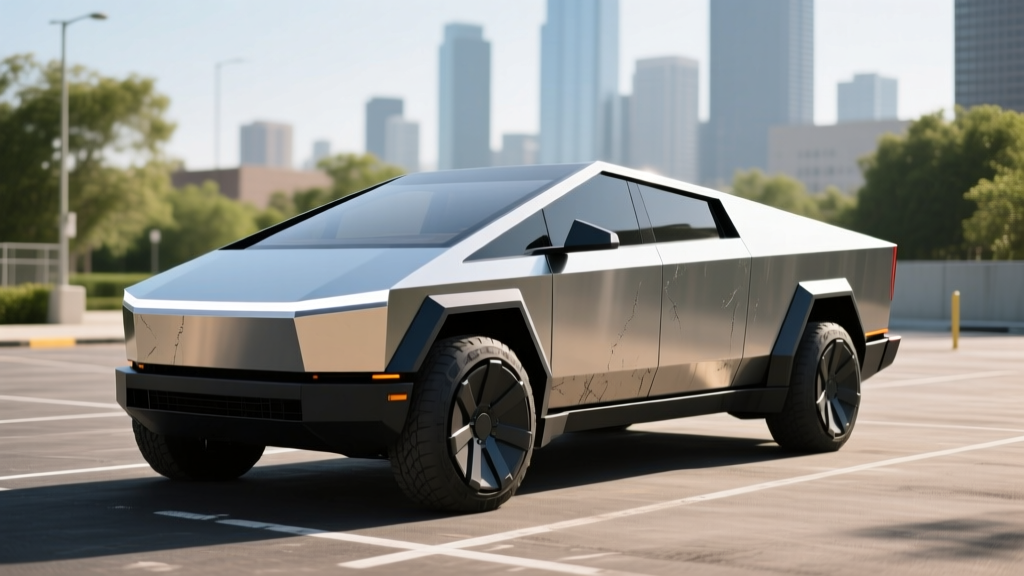
Since the Cybertruck launched in late 2023, one persistent question circles EV truck forums and Tesla investor threads: will Tesla ever build a Cybertruck dually — a dual rear wheel (DRW) variant aimed at heavy towing and commercial work? As of early 2026, Tesla has not announced, teased, or filed homologation paperwork for a dually Cybertruck. What exists is the standard single-rear-wheel (SRW) Cybertruck in Rear-Wheel Drive, Long Range AWD, and Cyberbeast trims.
But the search interest is real, and the engineering case is worth examining. Below, we break down what a Cybertruck dually would need to deliver, how it compares to the existing SRW lineup, and whether the physics and economics support it. If Tesla does pull the trigger, this is what buyers should expect.
| Spec | RWD | Long Range AWD | Cyberbeast AWD |
|---|---|---|---|
| EPA Range | ~250 mi (est.) | 340 mi | 320 mi |
| Battery (usable) | ~84 kWh (est.) | ~123 kWh | ~123 kWh |
| Chemistry | LFP (est.) | NMC | NMC |
| Horsepower | ~315 hp | 600 hp | 845 hp |
| 0-60 mph | ~6.5 sec | 3.9 sec | 2.6 sec |
| Max Tow Rating | 7,500 lb | 11,000 lb | 11,000 lb |
| Payload | 2,500 lb | 2,500 lb | 2,500 lb |
| Peak DC Charge | ~200 kW | ~350 kW | ~350 kW |
| 10-80% DC Time | ~30 min | ~15 min | ~15 min |
| Base MSRP | $60,990 | $79,990 | $99,990 |
Sources: Tesla Cybertruck specs, fueleconomy.gov. RWD trim specs estimated from pre-delivery filings; confirm at point of sale.
What a Cybertruck Dually Would Need to Offer
A dually (DRW) pickup exists for one reason: stability and capacity under heavy loads. The Ford F-350, Ram 3500, and Chevrolet Silverado 3500 HD all use dual rear wheels to increase gross combined weight rating (GCWR), payload, and towing stability. For an electric dually to make sense, Tesla would need to address several engineering constraints.
Battery Capacity and Range Under Load
The current Cybertruck Long Range AWD carries approximately 123 kWh of usable NMC battery. Towing at the 11,000-lb max rating cuts real-world range roughly in half — independent testing shows 150-170 miles at highway speeds with a loaded trailer. A dually variant targeting 15,000+ lb towing would need either a significantly larger battery pack (150-180 kWh) or accept that range while towing drops to 100-130 miles.
EPA sticker: 320-340 mi (SRW AWD trims)
Highway at 75 mph (no load): ~260-280 mi
Towing 11,000 lb at 65 mph: ~150-170 mi
Cold weather (below 32°F), unloaded: ~220-260 mi
A dually variant towing 15,000+ lb could see highway range drop to 100-130 mi without a larger pack.
Drivetrain and Motor Configuration
The Cyberbeast's tri-motor setup (one front, two rear) already produces 845 hp and an estimated 1,000+ lb-ft of torque — more than enough for heavy towing from a power standpoint. A dually would likely retain this tri-motor or move to a quad-motor layout (similar to the Rivian R1T concept or GMC Hummer EV) to distribute torque across four rear wheels. The challenge isn't power; it's thermal management under sustained high-load conditions like climbing a 6% grade with a 15,000-lb trailer.
Chassis and Suspension Upgrades
The current Cybertruck uses a stainless steel exoskeleton and adaptive air suspension. A dually would require a widened rear axle, heavier-duty rear subframe, and likely a switch from air springs to a more robust setup — possibly hydraulic or reinforced air bags rated for 10,000+ lb rear axle weight. The 48-volt electrical architecture Tesla pioneered for the Cybertruck would be an advantage here, powering high-capacity electric trailer brake controllers and integrated trailer camera systems.
Projected Specs: Cybertruck Dually vs. Electric Heavy-Duty Competitors
No production electric dually exists as of 2026, but several manufacturers have signaled interest in the heavy-duty EV truck segment. Here's how a hypothetical Cybertruck dually stacks up against announced or projected competitors:
| Spec | Cybertruck Dually (Projected) | Ford F-150 Lightning HD (Rumored) | Ram 1500 REV HD (Announced) | Silverado EV HD (Announced) |
|---|---|---|---|---|
| Est. Battery | 150-180 kWh NMC | ~150 kWh NMC | ~168 kWh NMC | ~200 kWh Ultium NMC |
| Est. Range (unloaded) | 280-320 mi | 250-280 mi | 300-350 mi | 350-400 mi |
| Est. Max Tow | 15,000-18,000 lb | 14,000-16,000 lb | 15,000-17,000 lb | 18,000-20,000 lb |
| Est. Payload | 4,000-5,000 lb | 3,500-4,500 lb | 4,000-5,000 lb | 4,500-5,500 lb |
| Peak DC Charge | ~350 kW | ~300 kW | ~350 kW | ~350 kW |
| Est. Price | $100,000-$120,000 | $90,000-$110,000 | $95,000-$115,000 | $100,000-$125,000 |
| Status | Not announced | Not announced | Announced (2027+) | Announced (2026-2027) |
All dually/HD figures are projected or based on manufacturer announcements. Confirm final specs before purchasing.
Charging: What a 150+ kWh Dually Pack Means at the Plug
One of the biggest challenges for an electric heavy-duty truck is charging time. A 150-180 kWh battery pack at a 350 kW peak DC fast charger would theoretically add range quickly, but sustained charge rates and the physics of large packs change the picture.
| Charging Level | Power (kW) | Miles Added per Hour | Notes |
|---|---|---|---|
| Level 1 (120V, 12A) | 1.4 kW | ~3-4 mi/hr | Emergency trickle only; full charge in 5+ days |
| Level 2 (240V, 48A) | 11.5 kW | ~30-35 mi/hr | Full overnight charge in ~14-16 hours |
| Level 2 (240V, 80A) | 19.2 kW | ~50-55 mi/hr | Requires 100A circuit; full charge in ~9-10 hours |
| DC Fast (peak) | ~350 kW | ~900+ mi/hr (peak) | 10-80% in ~25-30 min (projected) |
| DC Fast (sustained avg) | ~200-250 kW | ~550-650 mi/hr | Charge curve tapers above 60% SoC |
The critical number for road-trippers is the 10-80% time. With a ~160 kWh pack and a sustained average of ~225 kW, expect roughly 25-30 minutes at a V4 Supercharger or equivalent 350 kW station. That's longer than the current Cyberbeast's ~15 minutes, but acceptable for the segment — diesel HD truck owners are accustomed to 10-15 minute fuel stops, so the gap narrows when you factor in restroom breaks.
Charge curve reality: Like all lithium-ion packs, the Cybertruck dually's charge rate would peak between 10-40% SoC, then taper. Expect the final 20% (60-80%) to take nearly as long as the first 50%. For daily use, charging to 80% at home on Level 2 remains the battery-health-friendly approach.
Pricing, Tax Credits, and Ownership Economics
If Tesla prices a Cybertruck dually in line with the current Cyberbeast plus a heavy-duty premium, expect an MSRP between $100,000 and $120,000 depending on options. That puts it squarely in the territory of a loaded Ford F-350 Lariat or Ram 3500 Limited diesel.
| Item | Amount / Status |
|---|---|
| Estimated Base MSRP | $100,000 - $120,000 |
| Federal §30D Tax Credit | Not eligible — exceeds $80,000 MSRP cap for trucks |
| Point-of-Sale Transfer | N/A (credit not available) |
| Est. Annual Charging Cost (15,000 mi) | $900 - $1,400 (at $0.13-$0.18/kWh avg) |
| Est. Annual Diesel Equivalent (F-350) | $4,500 - $6,000 (at $4.00/gal, 14 MPG) |
| 5-Year Fuel Savings vs. Diesel | $18,000 - $23,000 |
| Battery/Drive Unit Warranty | 8 years / 150,000 miles (projected, based on current Cybertruck) |
Tax credit reality: Under current IRS §30D rules, the federal EV tax credit caps at $7,500 for new vehicles, but trucks must have an MSRP at or below $80,000 to qualify. A Cybertruck dually at $100,000+ would not be eligible. Additionally, buyers must meet income caps ($150,000 single / $300,000 joint for modified AGI), and the vehicle must satisfy critical-mineral and battery-component sourcing requirements. Always verify current rules at IRS.gov before purchasing.
Who Should Wait for a Cybertruck Dually — and Who Shouldn't
- You tow under 11,000 lb and your typical trailer is a boat, camper under 30 ft, or car hauler with a single vehicle
- You need a daily-drivable truck with 300+ mile range for commuting and weekend trips
- You want Supercharger network access and 15-minute fast-charge stops
- Your budget is under $100,000
- You regularly tow 12,000-18,000 lb — horse trailers, large fifth-wheels, construction equipment
- You need 4,000+ lb payload for commercial work (landscaping, contracting, agriculture)
- You operate in areas with diesel restrictions or zero-emission job-site requirements
- You can charge at home and your daily route is under 200 miles round-trip (even with a load)
The honest assessment: a Cybertruck dually makes engineering sense but faces a market-size problem. The heavy-duty truck segment is roughly 15% of the total pickup market, and within that, the percentage of buyers who can charge at home, accept reduced towing range, and pay $100,000+ is small. Tesla may determine that the R&D investment is better spent on next-generation platforms (the long-rumored compact vehicle or Robotaxi production) rather than a niche heavy-duty variant.
Tech, Interior, and Features: What Would Carry Over?
Based on the current Cybertruck platform, a dually variant would likely inherit most technology features:
- Infotainment: 18.5-inch front touchscreen with Tesla's latest UI, rear 9.4-inch touchscreen for passengers, integrated streaming, navigation with real-time Supercharger routing
- Driver Assistance: Tesla Autopilot standard (SAE Level 2), Full Self-Driving (Supervised) available as a subscription or purchase — requires active driver supervision at all times; this is not autonomous driving
- Towing Tech: Integrated trailer brake controller, trailer sway control, hitch assist camera, estimated range-with-trailer calculator in navigation
- Utility: 6-foot bed (est.), powered tonneau cover, 120V/240V bed outlets (up to 11.5 kW output for job-site power), air compressor (if carried over from current Cybertruck)
- Unique Dually Features (projected): Wider rear fender flares, integrated rear dually mudguards, heavy-duty receiver hitch (Class V), possible rear-wheel steering for tighter turning radius
Tesla Autopilot and FSD (Supervised) are SAE Level 2 driver-assistance systems. The driver must keep hands on the wheel and eyes on the road at all times. These systems do not make the Cybertruck self-driving. Towing a heavy trailer adds stopping distance and changes handling dynamics that no current Level 2 system is calibrated to fully compensate for. Always drive to conditions.
Pros and Cons: Cybertruck Dually (Projected)
- Massive instant torque for towing — no turbo lag, no downshifting on grades
- Significant fuel cost savings vs. diesel ($4,000-$5,000/year at 15,000 mi)
- On-board power output (up to 11.5 kW) replaces job-site generators
- Regenerative braking reduces brake wear under heavy loads
- Tesla Supercharger network — the most reliable DC fast-charging infrastructure in North America
- Zero tailpipe emissions; qualifies for zero-emission job-site access in regulated areas
- Lower maintenance: no diesel exhaust fluid (DEF), no oil changes, no DPF regeneration
- Towing range likely 100-150 miles — requires careful route planning for long hauls
- Projected $100,000+ MSRP with no federal tax credit eligibility
- Heavier curb weight (~7,500-8,500 lb est.) reduces payload efficiency
- Limited public DC chargers with pull-through stalls for truck+trailer combos
- Longer charge times than diesel refueling (25-30 min vs. 10 min for diesel)
- Cold-weather range loss of 20-30% compounds the towing range problem
- Unproven long-term battery degradation under sustained heavy-load use
- Not announced — may never be built
The Bottom Line: Is a Cybertruck Dually Worth Waiting For?
As of 2026, the Cybertruck dually does not exist and has not been officially announced by Tesla. If you need a heavy-duty electric truck today, your options are extremely limited — the GMC Hummer EV Pickup offers impressive capability but isn't a true dually, and the Ford F-150 Lightning tops out at 10,000 lb towing. The Rivian R1T and Chevrolet Silverado EV also remain in the light-duty segment.
If your work demands a true dually with 15,000+ lb towing right now, a diesel Ford F-350, Ram 3500, or Silverado 3500 HD remains the pragmatic choice. The fuel cost premium is real, but so is the 500+ mile range under load and the 10-minute refueling stop.
For buyers who can wait — and whose daily routes are predictable and chargeable — a Cybertruck dually or competing electric HD truck (Ram 1500 REV HD, Silverado EV HD variants) could be transformative by 2027-2028. The fuel savings alone ($20,000+ over five years) partially offset the higher purchase price, and the on-board power capability is genuinely useful for commercial applications.
Watch for Tesla's next investor day or earnings call for any heavy-duty Cybertruck announcements. Until then, the current SRW Cybertruck lineup is what's available — and it's a capable truck within its 11,000-lb towing envelope.
Frequently Asked Questions
Has Tesla officially announced a Cybertruck dually?
No. As of early 2026, Tesla has not announced, teased, or confirmed a dual rear wheel Cybertruck variant. All specs and projections in this article are based on engineering analysis of the existing platform and industry patterns. Do not make purchasing decisions based on unconfirmed rumors.
What is the real-world range of the current Cybertruck?
The 2026 Cybertruck Long Range AWD carries an EPA-estimated 340 miles. In real-world highway driving at 70-75 mph, expect 260-280 miles. Cold weather (below freezing) reduces this to approximately 220-260 miles. Towing at the 11,000-lb max drops range to roughly 150-170 miles at highway speeds.
How fast does the current Cybertruck charge?
The Long Range AWD and Cyberbeast trims support up to ~350 kW DC fast charging, achieving a 10-80% charge in approximately 15 minutes at a V4 Supercharger or equivalent station. At home on a 48A Level 2 charger (11.5 kW), expect roughly 35 miles of range per hour, or a full charge in about 10-12 hours.
Does the Cybertruck qualify for the federal EV tax credit?
The Cybertruck Long Range AWD ($79,990 MSRP) may qualify for up to $7,500 under IRS §30D, as it sits at the $80,000 truck MSRP cap. The Cyberbeast ($99,990) does not qualify — it exceeds the cap. Buyer income limits ($150K single / $300K joint), battery sourcing requirements, and point-of-sale transfer rules all apply. Verify current eligibility at IRS.gov and consult a tax professional.
What's the biggest obstacle to an electric dually truck?
Range while towing. A heavy-duty electric truck pulling 15,000+ lb could see highway range drop to 100-130 miles, requiring frequent 25-30 minute charging stops on long hauls. Combined with the limited number of pull-through charging stalls at public stations, this makes cross-country towing impractical with current infrastructure. Battery energy density improvements and higher-power megawatt charging could address this by 2028-2030.
Is the Cybertruck good for towing?
Within its 11,000-lb rating, the Cybertruck AWD and Cyberbeast are capable tow vehicles. Instant electric torque provides strong acceleration with a load, and regenerative braking reduces brake wear on descents. The main limitation is range — plan for charging stops every 150 miles or so when towing near max capacity. The integrated trailer brake controller and hitch-assist cameras are well-implemented.
What warranty covers the Cybertruck battery?
Tesla provides an 8-year / 150,000-mile warranty on the battery and drive unit for AWD Cybertruck trims, with a minimum 70% capacity retention threshold. The RWD trim (if equipped with LFP chemistry) may carry different terms. Always confirm exact warranty details in your purchase agreement.