Is Tesla Discontinuing the Cybertruck? Separating Fact from Rumor
Search forums, Reddit threads, or EV comment sections in 2026 and you will inevitably encounter the question: is Tesla discontinuing the Cybertruck? The short answer is no. As of early 2026, the Cybertruck remains in active production at Gigafactory Texas, with all three trims — Rear-Wheel Drive, Dual Motor All-Wheel Drive, and the performance-tuned Cyberbeast — continuing to roll off the line and deliver to customers. Tesla has made no official announcement regarding a production halt, model-year cancellation, or successor vehicle.
What has happened is a normalization of production volumes following the chaotic 2024–2025 ramp-up period. Tesla initially targeted 250,000 units annually but has since recalibrated output to match actual market demand, which for a polarizing, six-figure-capable electric truck has settled into a more sustainable cadence. Lower-than-projected volumes fueled discontinuation speculation, but reduced output is not the same as cancellation. Below, we break down the full 2026 Cybertruck profile — specs, pricing, real-world usability, and ownership math — so you can evaluate the truck on its merits, not internet noise.
2026 Tesla Cybertruck: Core Specifications at a Glance
| Specification | Rear-Wheel Drive | Dual Motor AWD | Cyberbeast |
|---|---|---|---|
| Base MSRP | $60,990 | $79,990 | $99,990 |
| EPA Est. Range | 250 mi | 340 mi | 320 mi |
| Battery (usable) | ~100 kWh (NMC) | ~123 kWh (NMC) | ~123 kWh (NMC) |
| Drivetrain | RWD (single motor) | AWD (dual motor) | AWD (tri-motor) |
| Horsepower | ~296 hp | ~600 hp | ~845 hp |
| 0–60 mph | 6.5 sec | 3.9 sec | 2.6 sec |
| Max DC Fast Charge | 250 kW | 250 kW | 250 kW |
| 10–80% DCFC Time | ~30 min | ~30 min | ~30 min |
| Level 2 Home Charge | 11.5 kW (~34 mi/hr) | 11.5 kW (~34 mi/hr) | 11.5 kW (~34 mi/hr) |
| MPGe (combined) | ~70 MPGe | ~66 MPGe | ~62 MPGe |
| Efficiency | ~48 kWh/100mi | ~51 kWh/100mi | ~54 kWh/100mi |
| Towing Capacity | 7,500 lb | 11,000 lb | 11,000 lb |
| Payload Capacity | ~2,500 lb | ~2,500 lb | ~2,500 lb |
| Battery/Drive Warranty | 8 yr / 120,000 mi | 8 yr / 120,000 mi | 8 yr / 120,000 mi |
Range and Efficiency: EPA Sticker vs. Real-World Expectations
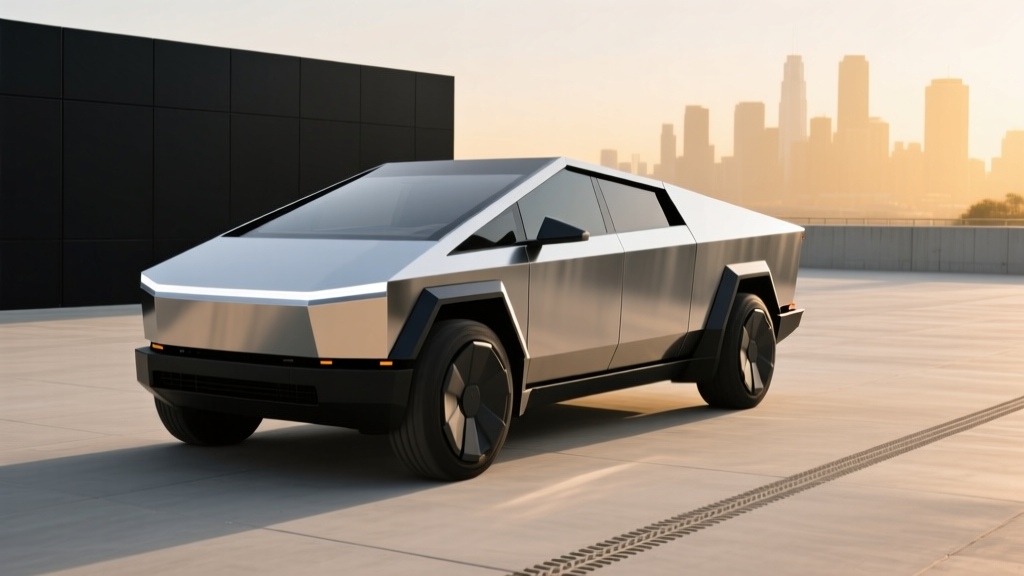
The Cybertruck's angular stainless-steel exoskeleton creates a drag coefficient that works against highway efficiency. Unlike sleeker sedans, the truck pushes a wall of air at speed, and that physics penalty shows up in the efficiency numbers. At around 48–54 kWh per 100 miles depending on trim, the Cybertruck consumes more energy per mile than nearly every other EV on the market. For comparison, a Tesla Model Y Long Range uses roughly 28 kWh/100mi.
City and suburban driving with frequent regenerative-braking opportunities narrows the gap between EPA and real-world figures. Stop-and-go traffic lets the Cybertruck recapture energy that highway driving cannot. If your daily routine is a 40-mile round-trip commute at sub-55 mph speeds, the AWD model will comfortably deliver close to its 340-mile sticker over multiple days. The RWD model's smaller battery and 250-mile EPA estimate make it best suited for urban and suburban use where daily mileage stays under 100 miles.
For detailed efficiency data, consult the EPA's official figures at fueleconomy.gov.
Charging Speed: DC Fast Charging and Home Level 2 Setup
Tesla equips the Cybertruck with a maximum DC fast-charge acceptance rate of 250 kW on the Tesla Supercharger network. In practice, the charge curve is not flat — peak draw of 250 kW is available only at lower states of charge (roughly 10–30%), after which the rate tapers progressively. By 60% SoC, you are likely seeing 150–170 kW; by 80%, the rate drops to under 80 kW. This is standard lithium-ion battery management to protect cell longevity, and it means the advertised 10–80% time of approximately 30 minutes is realistic only under ideal conditions (warm battery, preconditioned via navigation routing to a Supercharger).
| Level | Power | Miles Added Per Hour | Use Case |
|---|---|---|---|
| Level 1 (120V outlet) | ~1.4 kW | ~3–4 mi/hr | Emergency/overnight trickle |
| Level 2 (240V, 48A) | 11.5 kW | ~34 mi/hr | Home daily charging |
| DC Fast (Supercharger) | Up to 250 kW | ~150+ mi in 15 min | Road trips, rapid top-ups |
Home Level 2 charging requires a 240V circuit rated for at least 60 amps to deliver the full 48 amps (11.5 kW) the Cybertruck can accept. Installation costs vary widely — expect $500–$1,500 if your electrical panel has sufficient capacity, or $2,000–$4,500+ if a panel upgrade to 200A service is needed. A licensed electrician should evaluate your panel before purchase. Tesla's Wall Connector retails for approximately $400 and is the recommended home unit for seamless integration with the Tesla app.
With the Cybertruck's NACS (North American Charging Standard) port, you have native access to the Tesla Supercharger network — the most extensive and reliable DC fast-charging infrastructure in the US as of 2026. Third-party networks like Electrify America and EVgo increasingly support NACS as well, though adapter availability and reliability vary by station.
Performance, Towing, and Practical Utility
The Cyberbeast's 2.6-second 0–60 mph time makes it one of the quickest production vehicles ever sold, let alone a truck. But straight-line acceleration is only part of the utility picture. The dual-motor AWD and Cyberbeast trims offer an 11,000-pound towing capacity, placing the Cybertruck in the same territory as heavy-duty gas pickups — though with a critical caveat: towing at or near max capacity can reduce range by 40–50%. A 340-mile EPA truck pulling 10,000 pounds up a grade may deliver under 180 miles before needing a charge.
The 6-foot composite bed (marketed as the "vault") offers roughly 67 cubic feet of enclosed cargo space with the tonneau cover closed. The powered cover retracts into the bed walls, and the stainless-steel ramp tailgate supports loading ATVs or motorcycles. Interior space is generous for front occupants — 41.5 inches of legroom — though the rear seat's 38.4 inches of legroom is tighter than a Ford F-150 Lightning's back row. The angular roofline also cuts into rear headroom for taller passengers.
Storage solutions include a front trunk (frunk) with approximately 7 cubic feet of lockable space — enough for charging cables, groceries, or a weekend bag. The vault's width between wheel wells is roughly 50 inches, accommodating standard 4×8 sheets of plywood flat, which is a practical benchmark for truck buyers.
Pricing, Trims, and Federal Tax Credit Eligibility
| Trim | Base MSRP | Federal §30D Credit Eligible? | Effective Price (if eligible) |
|---|---|---|---|
| Rear-Wheel Drive | $60,990 | Yes (meets <$80K truck cap) | ~$53,490 |
| Dual Motor AWD | $79,990 | Yes (meets <$80K truck cap) | ~$72,490 |
| Cyberbeast | $99,990 | No (exceeds $80K truck MSRP cap) | $99,990 |
Under IRS §30D rules, the Cybertruck qualifies as a light truck, meaning the MSRP cap is $80,000 (compared to $55,000 for sedans). The RWD and AWD trims fall under this ceiling and may qualify for the full $7,500 federal tax credit — provided the buyer meets income limits ($150,000 single / $300,000 joint modified AGI) and the vehicle satisfies critical-mineral and battery-component sourcing requirements, which Tesla has been actively localizing. The Cyberbeast at $99,990 exceeds the MSRP cap and does not qualify.
As of 2026, the §30D credit can be transferred to the dealer at point of sale, effectively reducing your purchase price on day one rather than waiting for a tax refund. Verify current eligibility on the IRS's official EV credit page at irs.gov, as sourcing requirements and eligible vehicle lists are updated periodically.
Destination fees, paint options (the Cybertruck currently offers limited color wraps at $1,500–$3,000), and accessory packages push as-tested prices higher. A fully optioned Dual Motor AWD with Foundation Series–style packages has been known to land in the $85,000–$88,000 range before any credit application.
Technology, Driver Assistance, and Notable Drawbacks
The Cybertruck runs Tesla's current-generation infotainment on an 18.5-inch center touchscreen with a secondary 9.4-inch rear-seat display. The interface handles navigation, media, climate, and vehicle settings with the responsiveness Tesla owners expect, and over-the-air updates continue to add features post-purchase. The steer-by-wire system — a first for a mass-market US vehicle — eliminates the mechanical connection between the yoke-style steering control and the front wheels, enabling variable steering ratios that require less than a full turn from lock to lock.
Tesla's Autopilot comes standard, offering adaptive cruise control and lane-keeping as an SAE Level 2 driver-assist system. Full Self-Driving (Supervised) remains an optional upgrade (~$8,000 or $99/month subscription in 2026) and, despite its name, still requires active driver supervision at all times. It is not autonomous driving.
Notable drawbacks include the polarizing angular design (which limits rear visibility), the yoke steering's learning curve in low-speed parking situations, the high energy consumption that makes long road trips more charger-dependent than lighter EVs, and the stainless-steel body panels' susceptibility to fingerprint smudging. Service center wait times for body-related repairs have also been a recurring owner complaint, as stainless-steel panel replacement requires specialized facilities.
Who Should Buy the Cybertruck — And Who Shouldn't
Choose the Cybertruck if: You want a distinctive electric truck with serious towing capacity, Supercharger network access, best-in-class acceleration, and you primarily drive in metro areas with home charging access.
Look elsewhere if: You need maximum range for frequent 400+ mile road trips without charging stops, prioritize rear-seat passenger comfort, want a traditional steering wheel, or need proven long-term reliability data before committing to a first-generation platform.
The Cybertruck makes the most sense for tech-forward truck buyers who value performance and design differentiation over conventional pickup practicality. It is a capable work truck within its range envelope, a stunning attention-getter, and a daily driver that costs significantly less per mile to fuel than any gas truck — provided you can charge at home.
Key competitors include the Ford F-150 Lightning (lower starting price, more conventional design, slightly lower range), the Rivian R1T (adventure-focused, quad-motor option, higher starting price), and the Chevrolet Silverado EV (competitive range, GM's Ultium platform, growing dealer network). Each has trade-offs in charging network access, design, and price positioning.
Pros and Cons
- Class-leading 0–60 mph times (Cyberbeast: 2.6 sec)
- Native Tesla Supercharger network access (NACS)
- 11,000-lb towing capacity on AWD/Cyberbeast
- Stainless-steel exoskeleton — no paint to chip or fade
- Steer-by-wire enables tight turning radius for its size
- OTA updates continuously add features
- 8-year/120,000-mile battery warranty
- High energy consumption (48–54 kWh/100mi)
- Real-world highway range significantly below EPA sticker
- Cyberbeast exceeds $80K MSRP cap — no federal tax credit
- Yoke steering has a steep learning curve
- Limited rear-seat headroom due to angular roofline
- Stainless panels show fingerprints and are costly to repair
- First-generation platform — limited long-term reliability data
Frequently Asked Questions
Is Tesla discontinuing the Cybertruck in 2026?
No. Tesla continues to produce and sell the Cybertruck in all three trims at Gigafactory Texas. Production volumes have normalized from initial ramp-up targets, but the model has not been canceled or placed on hiatus. There is no official statement from Tesla suggesting a discontinuation timeline.
What is the real-world range of the Cybertruck?
The AWD model's 340-mile EPA estimate translates to roughly 270–290 miles on the highway at 70 mph in moderate temperatures. Cold weather (below 30°F) can reduce that to 210–245 miles. The RWD model's 250-mile EPA figure yields approximately 190–210 miles in real-world highway driving.
How fast does the Cybertruck charge?
On a Tesla Supercharger, the Cybertruck peaks at 250 kW and charges from 10–80% in approximately 30 minutes under ideal conditions (preconditioned battery). At home on a Level 2 (240V/48A) charger, it adds about 34 miles of range per hour, fully replenishing the AWD's ~123 kWh battery in roughly 11–12 hours.
Does the Cybertruck qualify for the $7,500 federal EV tax credit?
The RWD ($60,990) and AWD ($79,990) trims fall under the $80,000 MSRP cap for trucks under IRS §30D and may qualify, subject to buyer income limits and battery-sourcing requirements. The Cyberbeast ($99,990) exceeds the MSRP cap and does not qualify. Always verify current eligibility at irs.gov.
Is the Cybertruck worth buying over the F-150 Lightning or Rivian R1T?
It depends on priorities. The Cybertruck offers the best Supercharger access, the quickest acceleration, and the most distinctive design. The F-150 Lightning provides a more conventional truck experience at a lower starting price. The Rivian R1T excels in off-road capability and adventure use cases. Choose based on which trade-offs — range efficiency, price, design, charging network — matter most to you.
What is the Cybertruck's battery warranty?
Tesla provides an 8-year or 120,000-mile battery and drive unit warranty (whichever comes first) with a minimum 70% capacity retention threshold. If the battery degrades below 70% of its original capacity within that window, Tesla will repair or replace it at no cost.