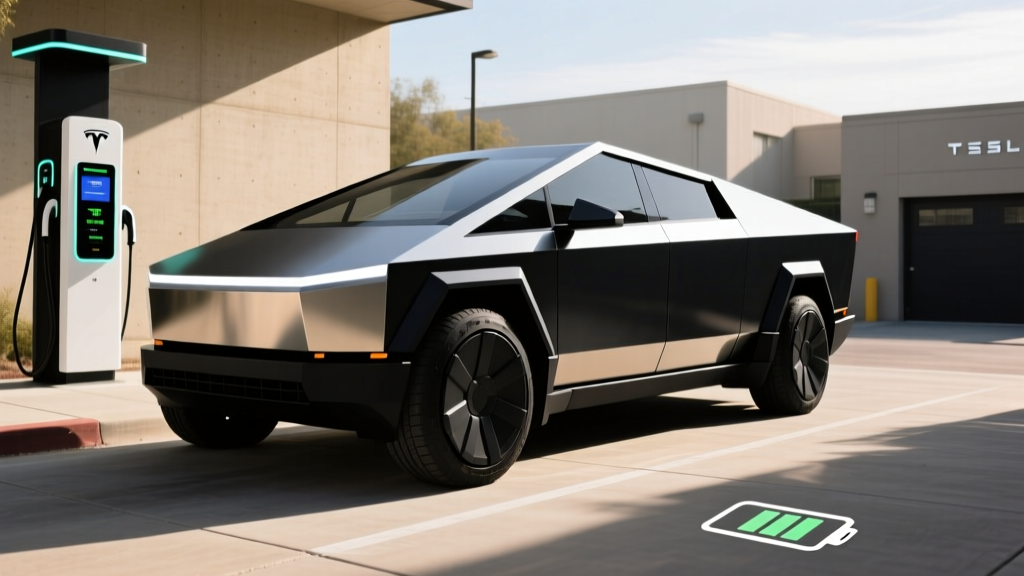
The Tesla Cybertruck entered the market with unprecedented hype and pricing volatility, but by 2026, the resale-value picture has sharpened considerably. For buyers and current owners alike, understanding Cybertruck depreciation is critical — this is a vehicle whose used-market behavior has been shaped by production ramp-ups, shifting trim availability, and evolving federal tax-credit rules. Below, we break down every ownership metric that feeds into long-term value retention: real-world range, charging infrastructure reality, total cost of ownership, and how the Cybertruck stacks up against the Ford F-150 Lightning and Rivian R1T when it comes time to sell or trade in.
Cybertruck Depreciation: What 2026 Data Shows
After two full years on the road, the Cybertruck's depreciation curve has settled into a pattern that diverges sharply from both traditional pickups and Tesla's own sedan/SUV lineup. Early 2024 models that launched at inflated "Foundation Series" prices (often exceeding $100,000 out the door) saw brutal first-year losses — some listings dropped 35–45% from original transaction price. However, 2025 and 2026 models purchased at normalized MSRP tell a different story.
Based on current used-market data from major listing platforms, a 2025 Cybertruck Dual Motor AWD (original MSRP ~$79,990) retains approximately 62–68% of its value after 12 months and 12,000–15,000 miles. That translates to a first-year depreciation of roughly $25,000–$30,000. The Cyberbeast trim ($99,990 MSRP) depreciates slightly faster in percentage terms — around 35–40% in year one — largely because luxury-truck buyers are less price-sensitive on the used market and the trim carries a premium that doesn't fully carry over.
For comparison, the Ford F-150 Lightning loses roughly 40–48% in year one, while the Rivian R1T holds slightly better at 55–62% retention. The Cybertruck's polarizing design and stainless-steel exoskeleton create a narrower buyer pool on the used market, which suppresses resale demand relative to more conventional trucks.
- Production volume: Tesla has scaled Cybertruck production significantly, eliminating the scarcity premium that inflated early used prices.
- MSRP normalization: With Foundation Series markups gone, used prices now track against realistic new-car pricing.
- Tax credit impact: Buyers who claimed the §30D credit effectively lowered their cost basis, meaning they can absorb more depreciation before going underwater.
- Stainless steel body: Resists dents and minor cosmetic damage, which helps long-term condition — but repair costs for major damage remain high due to specialized panel work.
Specs That Drive Long-Term Value
Depreciation doesn't happen in a vacuum — it's tied directly to the vehicle's hardware, efficiency, and capability. Here's the complete spec profile for the 2026 Tesla Cybertruck lineup.
| Spec | Dual Motor AWD | Cyberbeast (Tri-Motor) |
|---|---|---|
| EPA Range | 340 miles | 320 miles |
| Battery Capacity (usable) | ~123 kWh | ~123 kWh |
| Battery Chemistry | NMC (Nickel Manganese Cobalt) | NMC |
| Horsepower | 600 hp | 845 hp |
| 0–60 mph | 4.1 seconds | 2.6 seconds |
| Drivetrain | Dual-motor AWD | Tri-motor AWD |
| Max DC Fast Charge | 250 kW | 250 kW |
| 10–80% DC Charge Time | ~28 minutes | ~28 minutes |
| Level 2 Home Charge Rate | 11.5 kW (~37 mi/hr) | 11.5 kW (~37 mi/hr) |
| MPGe (combined) | 70 MPGe | 68 MPGe |
| Efficiency (kWh/100 mi) | 48 kWh/100 mi | 50 kWh/100 mi |
| Towing Capacity | 11,000 lbs | 11,000 lbs |
| Payload Capacity | 2,500 lbs | 2,500 lbs |
| Bed Length | 6 ft (72 in) | 6 ft (72 in) |
| Cargo Volume (bed) | ~67 cu ft | ~67 cu ft |
| Front Trunk (Frunk) | 7.1 cu ft | 7.1 cu ft |
| Base MSRP (2026) | $79,990 | $99,990 |
| Battery/Drive Unit Warranty | 8 yr / 120,000 mi | 8 yr / 120,000 mi |
| Basic Vehicle Warranty | 4 yr / 50,000 mi | 4 yr / 50,000 mi |
Real-World Range: What the EPA Number Doesn't Tell You
Dual Motor AWD: EPA 340 mi → Expect ~285–310 mi on mixed highway/city driving; ~240–265 mi at sustained 75+ mph highway speeds; ~220–250 mi in cold weather (below 32°F) with cabin heating.
Cyberbeast: EPA 320 mi → Expect ~265–290 mi mixed; ~225–250 mi highway; ~200–230 mi in cold conditions.
The Cybertruck's angular stainless-steel body creates a drag coefficient that, while improved over initial prototypes, still penalizes highway efficiency more than a conventional truck shape. At 70 mph on flat terrain in moderate temperatures (60–75°F), owners consistently report achieving 85–92% of EPA range. Push to 80 mph or face headwinds and elevation changes, and that drops to 70–78%.
Cold weather is the Cybertruck's Achilles heel for range. The large battery pack (~123 kWh usable) helps buffer losses, but NMC chemistry combined with the energy demands of heating a stainless-steel cabin means winter range loss of 25–35% is typical. Tesla's heat pump system mitigates this somewhat compared to resistive heating, but physics wins in sub-freezing temperatures.
Towing is where range expectations need the most recalibration. Pulling a 7,000–8,000 lb trailer at highway speeds will cut range roughly in half — expect 150–180 miles before needing to charge. This is consistent with the F-150 Lightning and Rivian R1T under similar loads and remains a fundamental limitation of electric pickups for long-distance towing.
Charging Speed and Infrastructure Reality
The Cybertruck uses the NACS (North American Charging Standard) connector natively — it's a Tesla, so it has full access to the Supercharger network without adapters. This remains a significant ownership advantage, as the Supercharger network consistently delivers the highest reliability rates among public charging providers.
| Charging Level | Power (kW) | Miles Added per Hour | Typical Use Case |
|---|---|---|---|
| Level 1 (120V household) | ~1.4 kW | ~3–4 mi/hr | Emergency/trickle only |
| Level 2 (240V home, 48A) | 11.5 kW | ~37 mi/hr | Daily home charging (full charge in ~11 hrs) |
| Level 2 (240V home, 32A) | 7.7 kW | ~25 mi/hr | Common home setup (full charge in ~16 hrs) |
| DC Fast Charge (peak) | 250 kW | ~150+ mi in 15 min | Road trips; 10–80% in ~28 min |
| DC Fast Charge (sustained avg) | ~120–150 kW avg | Varies by SoC | Real-world average across 10–80% session |
The 250 kW peak charge rate is competitive but not class-leading — the F-150 Lightning Extended Range peaks around 150 kW (slower), while some newer 800V-architecture vehicles push 300+ kW. The Cybertruck's charge curve is the important detail: it holds strong power from roughly 10–50% State of Charge (SoC), then tapers progressively. Above 80% SoC, charge speed drops dramatically to protect the NMC battery, adding only a few kW. This is why Tesla (and all EV best practices) recommends charging to 80% for daily use and only charging to 100% when you need the full range for a trip.
For home charging, a Level 2 wall connector on a 60A circuit (48A continuous) is the practical minimum for Cybertruck ownership. Given the ~123 kWh battery, a full Level 2 charge from near-empty takes roughly 11 hours. Most owners who drive 40–60 miles per day will replenish that in 1.5–2 hours overnight — perfectly adequate. However, if your home electrical panel is maxed out at 100A service, you may need a panel upgrade ($1,500–$3,000) to support a dedicated 60A circuit. Always consult a licensed electrician for your specific installation.
Pricing, Tax Credits, and True Cost of Ownership
The 2026 Cybertruck is available in two trims. Tesla discontinued the single-motor RWD variant that was initially announced at a lower price point; the current lineup starts with the Dual Motor AWD.
| Item | Dual Motor AWD | Cyberbeast |
|---|---|---|
| Base MSRP | $79,990 | $99,990 |
| Destination Fee | $1,995 | $1,995 |
| Federal §30D Tax Credit | Up to $7,500* | Up to $7,500* |
| Effective Price (with max credit) | ~$74,485 | ~$94,485 |
*Critical tax credit caveats: The IRS §30D Clean Vehicle Credit has strict eligibility requirements that apply to the Cybertruck in 2026:
- MSRP cap: Trucks/vans/SUVs must have an MSRP at or below $80,000 to qualify. The Dual Motor AWD at $79,990 clears this threshold; the Cyberbeast at $99,990 does not qualify for the federal credit.
- Income caps: Modified adjusted gross income must not exceed $150,000 (single), $225,000 (head of household), or $300,000 (joint filing).
- Battery sourcing: Critical minerals and battery component requirements phase in stricter thresholds each year. Tesla's supply chain has adapted, but always verify current-year compliance on the IRS eligible vehicles list before purchase.
- Point-of-sale transfer: As of 2024, buyers can transfer the credit to the dealer at purchase, reducing the upfront price rather than waiting for a tax refund. This is available for the Dual Motor AWD if you meet all requirements.
This MSRP-cap situation is a significant factor in Cybertruck depreciation dynamics. The Dual Motor AWD effectively costs ~$74,500 after the credit, while the Cyberbeast costs the full ~$102,000. This $27,500 gap in real acquisition cost explains why the Dual Motor holds its value proportionally better — used-market buyers are comparing against a lower effective new-car price.
5-Year Cost of Ownership Estimate
| Category | Estimated Cost | Notes |
|---|---|---|
| Purchase Price (after credit) | $74,485 | With max §30D credit applied |
| Estimated Depreciation (5 yr) | $33,000–$38,000 | ~45–50% of effective purchase price |
| Electricity (home charging) | $5,200–$6,800 | At $0.14/kWh avg; varies by region |
| Public DC Fast Charging | $1,800–$2,500 | Assumes 20% of charging on road trips |
| Insurance (5 yr total) | $12,000–$16,000 | Cybertruck premiums run 20–40% above F-150 Lightning |
| Maintenance | $1,500–$2,500 | Tires, cabin filter, wiper fluid, brake fluid check |
| Estimated 5-Year Total Cost | $53,500–$65,800 | Depreciation + energy + insurance + maintenance |
Insurance is a standout cost for the Cybertruck. Its stainless-steel body panels require specialized repair, and Tesla's limited authorized body-shop network means claims often result in higher payouts. According to industry data, average annual Cybertruck insurance premiums range from $2,400 to $3,200 depending on state, driving record, and coverage level — significantly higher than a comparably priced F-150 Lightning.
Tech, Interior, and Daily Livability
The Cybertruck's interior is distinctly Tesla-minimalist: a single 18.5-inch touchscreen dominates the dash, with no physical buttons, no instrument cluster, and no traditional stalks (turn signals are on the steering wheel rim, and gear selection is via the touchscreen or overhead console). This is the most polarizing aspect of the truck and a genuine factor in resale value — some used buyers love it, others walk away.
Driver Assistance: The Cybertruck ships with Tesla's Basic Autopilot (lane centering + adaptive cruise). Enhanced Autopilot ($6,000) adds auto lane change, autosteer on city streets, and summon. Full Self-Driving (Supervised) at $8,000 adds traffic light/stop sign recognition and more assertive city navigation. Crucially, all of these are SAE Level 2 systems — the driver must remain fully attentive with hands on the wheel. This is not autonomous driving.
Notable Tech Features:
- 48-volt electrical architecture (a first for a production vehicle) — reduces wiring weight and enables higher-power accessories
- Steer-by-wire with rear-wheel steering (up to 10°) — gives the 20-foot truck a surprisingly tight 37-foot turning circle
- Adaptive air suspension with 12 inches of travel and up to 17 inches of ground clearance in Off-Road mode
- Bioweapon Defense Mode (HEPA filtration)
- Powered tonneau cover that supports 300 lbs of static weight
- 120V and 240V bed outlets for powering tools or appliances (up to 9.6 kW export)
Cabin Space: The Cybertruck seats five (a six-seat front bench option was initially announced but has not materialized as of 2026). Rear-seat legroom measures approximately 38 inches — adequate but not generous for a truck this size, as the sloping roofline and under-seat battery packaging compromise space. The rear seat is best for children or shorter adults on longer trips.
Pros
- Class-leading Supercharger network access (NACS native)
- Stainless-steel body resists dents and corrosion
- Steer-by-wire + rear steering = exceptional maneuverability
- 48V architecture enables powerful bed outlets (240V/9.6 kW)
- Tri-motor Cyberbeast performance is supercar-rivaling (2.6s 0–60)
- 11,000-lb towing capacity matches gas heavy-duty half-tons
- Over-the-air updates continuously add features
Cons
- Polarizing design limits used-market buyer pool (hurts depreciation)
- High insurance premiums ($2,400–$3,200/yr average)
- Highway range loss is significant (25–30% below EPA at 75+ mph)
- Cold-weather range loss of 25–35% without preconditioning
- Stainless-steel body repair costs are high; limited body shop network
- Rear seat legroom is modest for a full-size truck
- No Apple CarPlay or Android Auto (Tesla-only ecosystem)
- Cyberbeast does not qualify for §30D federal tax credit
Cybertruck vs. Competitors: Value Retention Comparison
Understanding Cybertruck depreciation requires context. Here's how it stacks up against the two most direct electric-pickup competitors after approximately 12 months / 12,000–15,000 miles:
| Vehicle | Approx. New MSRP | 1-Year Retention | Key Depreciation Driver |
|---|---|---|---|
| Tesla Cybertruck Dual Motor | $79,990 | 62–68% | High insurance, polarizing design, normalized production |
| Ford F-150 Lightning (Lariat) | $69,995 | 52–60% | High production volume, fleet-lease returns flooding market |
| Rivian R1T Dual-Motor | $75,900 | 55–62% | Strong brand loyalty but limited service network concerns |
| Chevrolet Silverado EV (4WT) | $74,800 | 50–58% | Fleet-oriented; limited retail demand on used market |
The Cybertruck retains value better than the F-150 Lightning in percentage terms, but this is partly because its starting price is higher. In absolute dollar depreciation, the Cybertruck loses more dollars than the Lightning in year one (~$25,000–$30,000 vs. ~$28,000–$34,000 for the Lightning, which starts cheaper). The Rivian R1T, with its strong adventure-community following and lower production volume, holds value comparably to the Cybertruck.
For buyers prioritizing value retention, the key takeaway is that the Dual Motor AWD at $79,990 (effectively ~$74,500 after the tax credit) represents the best depreciation-adjusted value in the lineup. The Cyberbeast's $99,990 price tag with no tax credit means you're absorbing the full depreciation hit on a $100K+ vehicle.
Who Should Buy the Cybertruck (and Who Shouldn't)
Choose the Cybertruck if:
- You want NACS-native Supercharger access for road-trip charging reliability
- You need 11,000-lb towing and 2,500-lb payload with electric drivetrain benefits
- You value the 240V/9.6 kW power export for job-site or camping use
- You want a distinctive, conversation-starting vehicle and accept the resale trade-off
- You can charge at home with a Level 2 setup and your daily driving is under 200 miles
Look elsewhere if:
- Maximizing resale value is your top priority (consider a Toyota Tacoma hybrid or a used F-150 Lightning)
- You regularly tow long distances (>150 miles one way) — range cuts in half under load
- You need generous rear-seat space for adult passengers regularly
- You want Apple CarPlay/Android Auto integration
- You live in an area with limited Tesla service center access
Frequently Asked Questions
How much does the Tesla Cybertruck depreciate in the first year?
A 2025–2026 Cybertruck Dual Motor AWD purchased at MSRP ($79,990) typically retains 62–68% of its value after one year and 12,000–15,000 miles, meaning a loss of roughly $25,000–$30,000. The Cyberbeast depreciates faster at 35–40% in year one. Early Foundation Series models purchased at inflated prices saw much steeper losses (35–45%) because their acquisition cost far exceeded normalized MSRP.
Does the Cybertruck qualify for the $7,500 federal EV tax credit?
The Dual Motor AWD ($79,990 MSRP) qualifies for up to $7,500 under the IRS §30D Clean Vehicle Credit, as it falls under the $80,000 MSRP cap for trucks/SUVs. The Cyberbeast ($99,990) does not qualify due to the MSRP cap. All buyers must also meet income limits ($150K single / $300K joint) and the vehicle must meet battery-sourcing requirements. Always verify eligibility on the IRS website and consult a tax professional before purchasing.
What is the real-world range of the Cybertruck?
The EPA rates the Dual Motor at 340 miles and the Cyberbeast at 320 miles. In real-world mixed driving at moderate speeds (60–70 mph, 55–75°F), expect 285–310 miles (Dual Motor) and 265–290 miles (Cyberbeast). Sustained highway driving at 75+ mph drops this to 240–265 miles. In freezing temperatures, plan for 220–250 miles. Towing a heavy trailer cuts range roughly in half.
How fast does the Cybertruck charge at home and on the road?
On a Level 2 home charger (11.5 kW / 48A), the Cybertruck adds roughly 37 miles of range per hour, with a full charge from near-empty taking about 11 hours. On a DC fast charger, it peaks at 250 kW and can add ~150 miles in 15 minutes under ideal conditions. A 10–80% DC fast-charge session takes approximately 28 minutes, though actual time varies based on battery temperature and starting SoC. The charge curve tapers significantly above 80%.
Is the Cybertruck worth buying over the F-150 Lightning or Rivian R1T?
It depends on your priorities. The Cybertruck offers the best charging network access (native NACS/Supercharger), the most powerful performance (Cyberbeast at 845 hp), and unique features like 240V bed power and steer-by-wire. The F-150 Lightning is more conventional, cheaper to insure, and better for fleet/commercial buyers. The Rivian R1T offers a more refined interior, a growing adventure-owner community, and slightly better rear-seat space. For pure depreciation protection, none of these electric pickups match a well-maintained gas truck — but the Cybertruck Dual Motor with the tax credit offers competitive value retention within the EV truck segment.
What are the biggest risks to Cybertruck resale value?
The primary risks are: (1) Tesla further cutting new-vehicle prices, which instantly drags down used values; (2) rising insurance costs if repair-cost data continues to trend negative; (3) battery degradation concerns as the fleet ages past the 8-year/120,000-mile warranty window; and (4) the polarizing design limiting the used-buyer pool compared to conventional truck styling. On the positive side, the stainless-steel body resists cosmetic aging, and Tesla's OTA update history suggests continued feature additions that support long-term desirability.
Sources: EPA Fuel Economy – Tesla Cybertruck, IRS §30D Clean Vehicle Credit, Tesla Cybertruck Specifications.