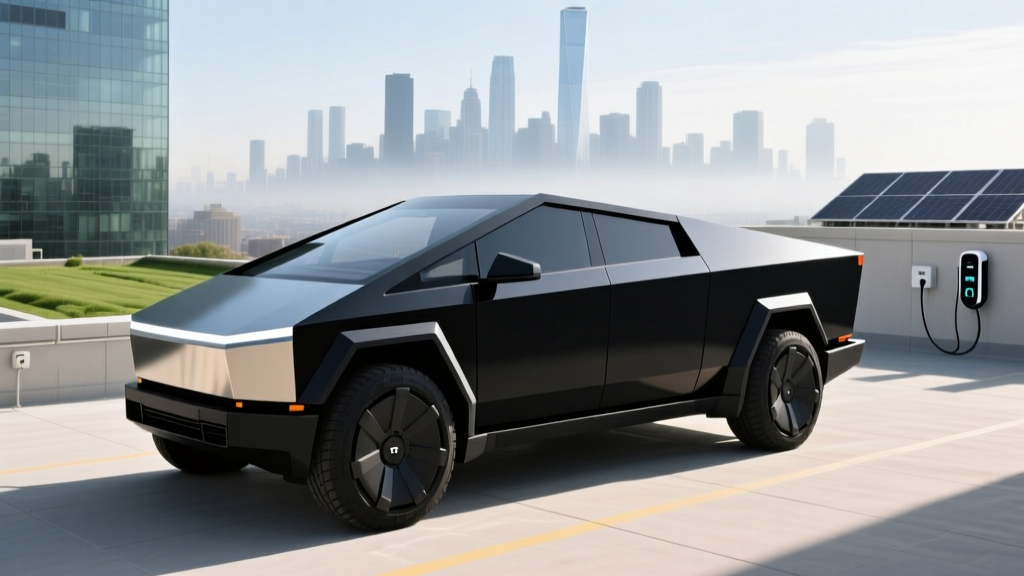
Since its polarizing debut, the Tesla Cybertruck has settled into its role as the most talked-about electric pickup on the road. But for buyers in 2026, the conversation has shifted from stainless-steel styling to a more pragmatic question: what does a Cybertruck actually cost once you factor in incentives, charging infrastructure, and real-world efficiency? If you're hunting for Tesla Cybertruck deals, understanding the interplay between trim-level pricing, federal tax credit eligibility, and total cost of ownership is essential before you place an order.
This review dissects the 2026 Cybertruck lineup — the Long Range AWD, the tri-motor Cyberbeast, and the newly accessible Rear-Wheel Drive model — with exact EPA figures, charging data, and a clear-eyed look at who this truck actually serves well.
2026 Cybertruck Lineup: Pricing and Trim Breakdown
Tesla streamlined the Cybertruck lineup for the 2026 model year after the initial Foundation Series run ended. Here is where each trim stands on MSRP before any incentives or dealer additions:
| Trim | Drivetrain | Base MSRP | Est. Destination | Est. Total |
|---|---|---|---|---|
| Rear-Wheel Drive (RWD) | Single Motor / RWD | $60,990 | $1,390 | $62,380 |
| Long Range AWD | Dual Motor / AWD | $79,990 | $1,390 | $81,380 |
| Cyberbeast | Tri-Motor / AWD | $99,990 | $1,390 | $101,380 |
The RWD model, originally announced at a lower price point during the 2023 reveal, finally reached production in late 2025 and represents the most attainable entry into the Cybertruck platform. However, it comes with trade-offs: lower range, a single motor, and a reduced tow rating compared to the dual- and tri-motor variants.
A critical note on finding actual Cybertruck deals: Tesla does not use traditional dealership negotiation. Pricing is fixed on Tesla.com. The only "deals" come from federal or state incentives, inventory vehicles with reduced mileage, or Tesla's occasional referral credit programs. There are no dealer markups in the traditional sense, but Tesla has historically added mandatory option bundles on early-production units — a practice that has largely normalized by 2026.
Federal Tax Credit: Does the Cybertruck Qualify?
The IRS §30D Clean Vehicle Credit can reduce your federal tax liability by up to $7,500 — and as of 2024, it can be transferred to the dealer at point of sale, effectively reducing your purchase price upfront. But eligibility is anything but simple.
§30D Eligibility Checklist for 2026 Cybertruck
- MSRP Cap: Pickup trucks must have an MSRP at or below $80,000. The Long Range AWD at $79,990 qualifies; the Cyberbeast at $99,990 does not.
- Buyer Income Cap: Modified Adjusted Gross Income (MAGI) must not exceed $150,000 (single), $225,000 (head of household), or $300,000 (joint filers).
- Battery Sourcing: At least 60% of critical minerals must be sourced from the US or a free-trade-agreement country, and at least 75% of battery components must be manufactured or assembled in North America. Tesla's use of Panasonic cells at the Nevada Gigafactory generally satisfies component requirements, but critical-mineral sourcing can shift by model year.
- Transfer Option: You can elect to transfer the credit to Tesla at purchase, reducing your out-of-pocket cost immediately — but you must still meet income requirements when filing taxes, or the IRS will claw it back.
| Trim | MSRP | §30D Credit Eligible? | Effective Price (w/ Credit) |
|---|---|---|---|
| RWD | $60,990 | Yes (under $80K cap) | $53,490* |
| Long Range AWD | $79,990 | Yes (at $80K cap) | $72,490* |
| Cyberbeast | $99,990 | No (exceeds $80K cap) | $99,990 |
*Effective price assumes full $7,500 credit. Actual credit may be $3,750 if battery sourcing requirements are only partially met. Verify current sourcing percentages on the IRS qualified vehicles list before purchasing. Consult a tax professional for personal eligibility.
Range, Battery, and Real-World Efficiency
The Cybertruck's angular, stainless-steel exoskeleton is heavy — curb weights range from roughly 6,600 lbs (RWD) to over 6,800 lbs (Cyberbeast). That mass, combined with the brick-like aerodynamics, makes efficiency a critical conversation.
| Trim | Battery (Usable kWh) | Chemistry | EPA Range | MPGe (Combined) | kWh/100mi |
|---|---|---|---|---|---|
| RWD | ~100 kWh | NMC (4680 cells) | 250 mi | 68 MPGe | ~48 |
| Long Range AWD | ~123 kWh | NMC (4680 cells) | 340 mi | 70 MPGe | ~46 |
| Cyberbeast | ~123 kWh | NMC (4680 cells) | 320 mi | 65 MPGe | ~50 |
All Cybertruck trims use Tesla's proprietary 4680-format cells with NMC (nickel-manganese-cobalt) chemistry, manufactured by Panasonic at Gigafactory Nevada. There is no LFP (lithium iron phosphate) option in the Cybertruck lineup — LFP's lower energy density would further compromise range in a vehicle this heavy.
Real-World Range Reality Check
EPA Sticker: 340 miles (Long Range AWD)
Expect in Practice:
- Highway driving (70-75 mph): ~270–290 miles. The Cybertruck's flat frontal area and lack of a traditional tonneau cover (unless equipped with the optional power-retractable version) create substantial aero drag at speed.
- City / mixed suburban: ~310–330 miles. Regenerative braking recovers energy effectively in stop-and-go traffic.
- Cold weather (below 32°F): ~220–260 miles. NMC chemistry suffers noticeable capacity reduction in freezing temps, and cabin heating draws heavily from the pack. The Cybertruck's heat pump helps, but physics wins.
- Towing (5,000+ lb trailer): ~150–180 miles. Towing effectively halves your range. Plan charging stops accordingly.
Efficiency of 46–50 kWh/100 miles puts the Cybertruck behind the EPA's most efficient EVs but is comparable to the Rivian R1T and Ford F-150 Lightning in the electric-truck segment. For context, a well-driven Tesla Model Y uses roughly 28 kWh/100mi.
Charging Speed: DC Fast Charge and Home Level 2
The Cybertruck's 800-volt architecture (a first for Tesla's consumer lineup, previously limited to the Semi prototype) enables impressive peak charge rates — but as always, peak kW is not sustained kW.
| Charging Method | Max Rate | 10–80% Time | Miles Added per Hour |
|---|---|---|---|
| Level 1 (120V household) | ~1.4 kW | N/A (days) | ~3–4 mi/hr |
| Level 2 (240V / 48A Wall Connector) | 11.5 kW | ~10–12 hours (full) | ~34 mi/hr |
| DC Fast Charge (Tesla Supercharger V4) | Peak 350 kW | ~15 minutes (10–80%) | ~200+ mi in 15 min |
| DC Fast Charge (CCS adapter, Electrify America) | Peak 250 kW | ~22 minutes (10–80%) | ~140+ mi in 15 min |
The 350 kW peak on Tesla's V4 Supercharger cabinets is genuinely fast, but the charge curve tapers significantly above 60% State of Charge. Expect to sustain 300+ kW only between roughly 10–40% SoC, after which the rate drops to protect the NMC cells. The 10–80% time of ~15 minutes is competitive with the best in the segment — Hyundai's Ioniq 5 and Kia EV9 achieve similar times on 350 kW infrastructure.
For home charging, Tesla's Wall Connector at 11.5 kW (48 amps on a 60-amp circuit) adds about 34 miles of range per hour. A full overnight charge from 10% to 100% takes roughly 10–12 hours. Most owners who charge nightly from 30% to 80% will top off in about 5 hours — perfectly manageable.
Important installation note: The Cybertruck's large battery means you'll want a dedicated 60-amp circuit minimum. If your home's electrical panel is already near capacity (common in older homes with 100-amp service), a panel upgrade to 200 amps may be required, adding $1,500–$3,500 to your installation cost. Always have a licensed electrician assess your panel before ordering a Wall Connector.
Performance, Capability, and Dimensions
The Cybertruck's performance figures remain startling for a vehicle with a 6,800-pound curb weight. The tri-motor Cyberbeast delivers 845 horsepower and a claimed 0–60 mph time of 2.6 seconds — supercar territory in a pickup. The Long Range AWD produces 600 hp and hits 60 in 3.9 seconds. The RWD model, with a single rear motor, produces approximately 340 hp and reaches 60 in roughly 5.8 seconds.
| Spec | RWD | Long Range AWD | Cyberbeast |
|---|---|---|---|
| Horsepower | ~340 hp | 600 hp | 845 hp |
| 0–60 mph | ~5.8 sec | 3.9 sec | 2.6 sec |
| Top Speed | 112 mph | 130 mph | 130 mph |
| Max Towing | 7,500 lbs | 11,000 lbs | 11,000 lbs |
| Payload Capacity | ~2,500 lbs | ~2,500 lbs | ~2,500 lbs |
| Bed Length | 6 ft (72 in) | ||
| Cargo Volume (bed) | ~67 cu ft | ||
| Front Trunk (Frunk) | ~7 cu ft | ||
| Rear Legroom | ~36.0 in | ||
| Ground Clearance (max) | 16 in (adaptive air suspension) | ||
The adaptive air suspension is standard across all trims, offering up to 12 inches of travel and a maximum ground clearance of 16 inches — competitive with body-on-frame off-road trucks. The 35-degree approach angle and stainless-steel underbody armor make the Cybertruck genuinely capable off-road, though its 6,800-pound weight means it sinks in soft sand and mud more readily than lighter competitors.
Towing capacity of 11,000 lbs (AWD trims) is class-competitive, but as noted above, expect range to drop to 150–180 miles when towing near maximum capacity. The integrated trailer brake controller and Tesla's trailer-assist camera system are standard on AWD trims.
Technology, Driver Assistance, and Interior
The Cybertruck's interior is minimalist even by Tesla standards. A single 18.5-inch front touchscreen handles all infotainment, climate, and vehicle controls. A rear 9.4-inch screen serves second-row passengers. There are no physical buttons for climate or audio — everything routes through the touchscreen, which some buyers love and others find distracting while driving.
The yoke-style steering wheel is standard (a conventional round wheel is not available), and rear-wheel steering with up to 10 degrees of articulation gives the 20-foot-long truck a surprisingly tight turning radius of 34 feet — comparable to a midsize sedan.
Driver Assistance (SAE Level 2):
Important: Tesla's Autopilot and Full Self-Driving (Supervised) are SAE Level 2 driver-assistance systems. The driver must remain fully engaged, hands on the yoke, eyes on the road at all times. These are NOT self-driving systems. Only Level 4 services like Waymo operate without a human driver, and those are limited to geofenced urban areas.
Autopilot (basic adaptive cruise + lane centering) is standard. Full Self-Driving (Supervised), which adds automated lane changes, traffic-light recognition, and city-street navigation, remains a $8,000 add-on or $99/month subscription as of 2026. FSD has improved substantially but still requires active supervision and occasional intervention, particularly in construction zones and unmapped areas.
Notable tech features include:
- Vehicle-to-load (V2L) capability — power tools, camping gear, or a home circuit during outages via the 240V bed outlet (Powershare)
- Bioweapon Defense Mode (HEPA cabin filtration)
- Sentry Mode with cameras recording surroundings while parked
- Over-the-air software updates that add features post-purchase
Notable drawbacks:
- No Apple CarPlay or Android Auto — Tesla's proprietary system only
- Rear visibility is compromised by the sloping bed cover and small rear window; you rely heavily on the backup camera
- The yoke steering wheel requires an adjustment period, especially during low-speed parking maneuvers
- Panel-gap consistency and early-build quality issues have improved but remain a discussion point in owner forums
Warranty and Long-Term Battery Outlook
Tesla provides the following warranty coverage for the 2026 Cybertruck:
- Basic Vehicle: 4 years / 50,000 miles
- Battery & Drive Unit: 8 years / 120,000 miles (whichever comes first), with a minimum 70% capacity retention guarantee over the warranty period
- Restraint System: 5 years / 60,000 miles
The 120,000-mile battery warranty is slightly more generous than Tesla's standard 100,000-mile coverage on Model 3/Y, reflecting the heavier-duty use case expected of a pickup. Based on Tesla's historical NMC degradation data from Model S and Model X fleets, owners can expect roughly 8–12% capacity loss over the first 100,000 miles, with the curve flattening significantly after the initial break-in period.
A full battery replacement outside of warranty for a 123 kWh Cybertruck pack would likely cost $15,000–$22,000 based on current 4680-cell pricing, though this figure is expected to decline as cell manufacturing scales. The structural battery pack design, where cells are bonded into the vehicle frame, makes third-party replacement impractical — you're locked into Tesla's service network for major battery work.
Who Should Buy the Cybertruck — And Who Shouldn't
Choose the Cybertruck if:
- You need a full-size electric pickup with 11,000-lb towing and genuine off-road capability
- You want access to Tesla's Supercharger network (the most extensive and reliable DC fast-charging network in North America)
- You value V2L (Powershare) capability for job-site power or emergency home backup
- You prioritize acceleration and performance in a utility vehicle
Look elsewhere if:
- Maximum efficiency and range per dollar are your top priorities (a Model Y or even an F-150 Lightning may serve you better)
- You need a conventional bed for fifth-wheel or gooseneck towing (the Cybertruck's bed design and sloping tailgate don't accommodate these)
- You prefer physical controls and Apple CarPlay integration
- You need proven long-term reliability data — the Cybertruck is still early in its production lifecycle
Pros and Cons at a Glance
Pros
- 340-mile EPA range (Long Range) is best-in-class for electric pickups
- 350 kW V4 Supercharger support delivers ~15-minute 10–80% fills
- Adaptive air suspension with 16 inches of ground clearance
- Stainless-steel body is dent- and corrosion-resistant
- V2L Powershare for job-site and emergency power
- Rear-wheel steering gives a remarkably tight turning radius
- Access to Tesla Supercharger network (no adapter needed)
Cons
- Efficiency of 46–50 kWh/100mi is poor; high charging costs on road trips
- Real-world highway range drops to ~270–290 mi; towing cuts it nearly in half
- No Apple CarPlay or Android Auto
- Yoke steering is polarizing and not optional
- Cyberbeast exceeds $80K MSRP cap — no federal tax credit
- Rear visibility is severely limited; heavy reliance on cameras
- Early build-quality concerns; still maturing on the production line
Frequently Asked Questions
What is the real-world range of the Tesla Cybertruck?
The EPA rates the Long Range AWD at 340 miles, but in real-world highway driving at 70–75 mph, expect 270–290 miles. In cold weather below freezing, that drops further to roughly 220–260 miles. If you're towing a 5,000+ lb trailer, plan for 150–180 miles between charges.
How fast does the Cybertruck charge at home and on the road?
At home on a Level 2 Tesla Wall Connector (11.5 kW), you'll add about 34 miles of range per hour — a full overnight charge from 30% to 80% takes about 5 hours. On a V4 Supercharger, the Cybertruck peaks at 350 kW and charges from 10% to 80% in approximately 15 minutes, though the rate tapers significantly above 60% SoC.
How much does the Cybertruck cost after the federal tax credit?
The Long Range AWD at $79,990 MSRP qualifies for the full $7,500 §30D credit (assuming you meet income and battery-sourcing requirements), bringing the effective price to roughly $72,490. The RWD model drops from $60,990 to about $53,490 with the credit. The Cyberbeast at $99,990 does not qualify because it exceeds the $80,000 MSRP cap for trucks.
Is the Cybertruck worth buying over the Rivian R1T or Ford F-150 Lightning?
It depends on your priorities. The Cybertruck Long Range offers the best EPA range in the segment (340 mi vs. R1T's ~352 mi on the Max Pack at a higher price, and the Lightning's ~320 mi). The Supercharger network advantage is significant for road-trippers. However, the R1T offers a more conventional truck layout with a front trunk that's far larger, better rear-seat comfort, and available quad-motor performance. The F-150 Lightning is more affordable and has a traditional pickup form factor that accommodates fifth-wheel towing. Test-drive all three before committing.
Does the Tesla Cybertruck qualify for the federal EV tax credit?
The RWD and Long Range AWD trims qualify for the §30D credit (up to $7,500) because their MSRPs fall at or below the $80,000 truck cap. The Cyberbeast does not qualify. All buyers must also meet IRS income limits ($150K single / $300K joint) and the vehicle must satisfy battery critical-mineral and component sourcing thresholds, which the IRS updates periodically. Always verify eligibility on the IRS list before purchasing.
Can I use non-Tesla chargers with the Cybertruck?
Yes. The Cybertruck uses Tesla's NACS connector natively, which is the Supercharger standard. For CCS-based networks like Electrify America, you'll need Tesla's CCS adapter (sold separately, ~$250), which enables charging at up to 250 kW on compatible stations. As more networks adopt NACS-native cables through 2026, adapter reliance will decrease.