The Stainless Steel Pickup: Everything Buyers Need to Know About the 2026 Cybertruck
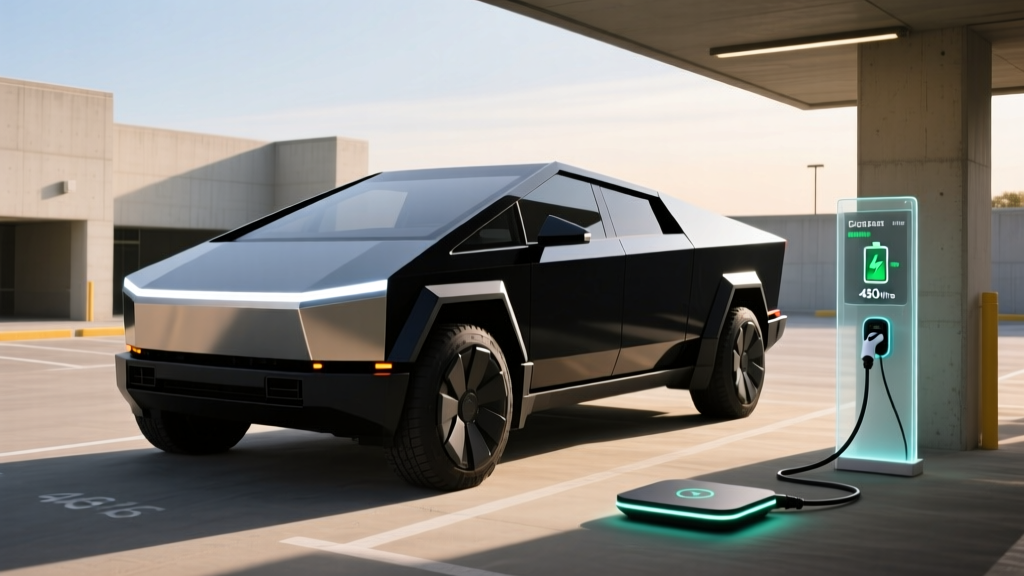
The Tesla Cybertruck remains one of the most polarizing vehicles on American roads — a stainless-steel exoskeleton that splits opinion at every stoplight. But beyond the angular drama sits a serious electric pickup with legitimate towing capability, rapid DC fast-charging, and a starting price that undercuts several luxury ICE trucks. For 2026, Tesla continues to refine the lineup with updated software, incremental range tweaks, and a palette that plays to the truck's brutalist architecture. This review covers every 2026 Tesla Cybertruck color option, real-world range data, charging performance, pricing, and tax-credit eligibility so you can decide whether this truck fits your driveway — or your job site.
2026 Tesla Cybertruck Colors and Exterior Finishes
The Cybertruck's cold-rolled ultra-hard 30X stainless-steel body panels limit traditional automotive paint application. Tesla offers the truck in its raw stainless finish plus a curated set of wraps and films. Here is the complete 2026 color lineup:
- Stainless Steel (Standard): The signature bare-metal look. No paint, no clear coat — just brushed stainless. It's included at no extra cost but shows fingerprints, water spots, and micro-scratches readily. Owners report that routine wiping with isopropyl alcohol or Tesla's recommended stainless cleaner keeps it presentable.
- Satin Black (Paint Protection Film): A factory-applied PPF wrap that gives the Cybertruck a stealth, matte-black appearance. Priced around $3,000 added to MSRP, this is Tesla's most popular premium color option. The film also protects against rock chips and light abrasions.
- Satin White (Paint Protection Film): A bright, high-contrast option that emphasizes the truck's geometric lines. Also approximately $3,000 extra. White PPF shows road grime faster but photographs well and reflects heat effectively in hot climates.
- Midnight Chrome (Vinyl Wrap): A darker, metallic-tinged wrap with a slight blue-green undertone under direct sunlight. Introduced as a dealer-available option in late 2025 for the 2026 model year. Pricing varies by installer but typically runs $3,500–$4,500.
- Desert Bronze (Vinyl Wrap): A warm, earth-tone wrap aimed at buyers who want a less industrial aesthetic. Available through select Tesla Service Centers and authorized wrap partners.
Because the Cybertruck's panels are too hard for conventional stamping and painting processes, aftermarket wraps and PPF remain the primary way to personalize color. Tesla has not announced a factory-paint option for 2026, and the stainless-steel substrate makes DIY painting impractical.
Real-World Range vs. EPA Estimates
EPA Range (Cyberbeast Tri-Motor AWD): 320 miles
Real-World Highway Expectation: ~270–295 miles (AWD), ~255–280 miles (Cyberbeast)
Cold-Weather (below 32°F) Reduction: Expect 15–25% range loss depending on cabin heating demand and terrain
The Cybertruck's EPA-estimated 340 miles for the Dual-Motor AWD trim is competitive for a full-size electric pickup, but the truck's brick-like aerodynamic profile (Cd ~0.34) means highway driving at 75+ mph eats range faster than the EPA combined cycle suggests. In real-world highway testing at 70 mph with climate control active, expect roughly 270–295 miles before needing a charge stop on the AWD model. The tri-motor Cyberbeast, with its additional front motor and higher curb weight (~6,850 lbs), sacrifices about 20 miles of real-world range.
Cold weather compounds the issue. Below freezing, the battery's internal resistance increases, and resistive cabin heating draws significant energy (the Cybertruck does not currently feature a heat pump as standard). Owners in northern states report winter range drops of 15–25%, meaning a 340-mile EPA truck may deliver 255–290 miles in January conditions. Preconditioning the battery while plugged in mitigates some of this loss and is essential before DC fast-charging in cold weather.
Battery, Charging Speed, and Infrastructure
The 2026 Cybertruck Dual-Motor AWD carries an estimated usable battery capacity of approximately 123 kWh using NMC (nickel-manganese-cobalt) chemistry, chosen for its higher energy density needed to move the truck's substantial mass. Tesla has not published an official kWh figure, but teardown data and observed charging sessions support this estimate. The Cyberbeast tri-motor uses a similar pack with slightly different thermal management tuning.
| Charging Level | Power / Rate | Time / Miles Added |
|---|---|---|
| Level 1 (120V household) | ~1.4 kW | ~3–4 miles per hour |
| Level 2 (240V, 48A Wall Connector) | ~11.5 kW | ~34 miles per hour; full charge in ~11 hours |
| DC Fast Charge (V4 Supercharger) | Peak 250 kW | 10–80% in ~25 minutes; tapers sharply above 85% |
| DC Fast Charge (third-party CCS via adapter) | Up to 150–200 kW typical | 10–80% in ~35–40 minutes depending on station |
The Cybertruck's 800-volt-class architecture enables impressive peak DC charging rates on Tesla's V4 Superchargers, but as with all EVs, the charge curve matters more than the peak number. The truck pulls close to 250 kW from roughly 10–30% state of charge, then progressively tapers. From 60–80%, expect rates closer to 100–130 kW. The full 10–80% session takes approximately 25 minutes under ideal thermal conditions — competitive with the Rivian R1T and Ford F-150 Lightning, though the Lightning's larger 131 kWh extended-range pack takes slightly longer at comparable infrastructure.
For home charging, Tesla's Wall Connector at 48 amps delivers 11.5 kW, adding roughly 34 miles of range per hour. A full overnight charge from 20% takes about 9–11 hours. Buyers should ensure their electrical panel can support a 60-amp dedicated circuit; panel upgrades can add $1,500–$3,500 to installation costs, depending on your home's existing service.
Performance, Drivetrain, and Efficiency
| Spec | Dual-Motor AWD | Cyberbeast (Tri-Motor AWD) |
|---|---|---|
| Drivetrain | Dual-motor AWD | Tri-motor AWD |
| Horsepower | ~600 hp | ~845 hp |
| 0–60 mph | 3.9 seconds | 2.6 seconds |
| Top Speed | 130 mph | 130 mph |
| Towing Capacity | 11,000 lbs | 11,000 lbs |
| Payload Capacity | 2,500 lbs | 2,500 lbs |
| MPGe (combined) | ~67 MPGe | ~63 MPGe |
| Energy Consumption | ~50 kWh/100 mi | ~53 kWh/100 mi |
The Dual-Motor AWD's 3.9-second 0–60 mph time is genuinely quick for a 6,800-pound truck — it will outrun most V8-powered half-tons off the line. The Cyberbeast's 2.6-second sprint is supercar territory and largely a party trick; the extra $20,000 buys you acceleration you'll rarely use and roughly 20 fewer miles of range. Both models feature adaptive air suspension with up to 16 inches of ground clearance in Off-Road mode, a 6.5-foot composite bed (the "vault") with a powered tonneau cover, and a lockable front trunk (frunk) adding roughly 7 cubic feet of secure storage.
Efficiency is the Cybertruck's weak point relative to lighter EVs. At approximately 50 kWh per 100 miles, the truck consumes significantly more energy per mile than a Tesla Model Y (~28 kWh/100 mi). This translates to higher per-mile charging costs and makes the Cybertruck more sensitive to electricity rates — a factor worth calculating if your local utility charges above $0.20/kWh.
Pricing, Trims, and Federal Tax Credit Eligibility
The 2026 Cybertruck lineup has simplified after the discontinuation of the rear-wheel-drive base model. Current trims:
| Trim | Base MSRP | As-Tested (typical) | Federal §30D Credit Eligible? |
|---|---|---|---|
| Dual-Motor AWD | $79,990 | $83,000–$88,000 | No — exceeds $80,000 MSRP cap for trucks |
| Cyberbeast (Tri-Motor) | $99,990 | $103,000–$110,000 | No — exceeds $80,000 MSRP cap |
This is a critical point for buyers: the Cybertruck does not qualify for the $7,500 federal EV tax credit under IRS §30D rules. The federal credit caps eligible truck MSRP at $80,000, and every current Cybertruck trim exceeds that threshold. Additionally, buyer income limits ($150,000 single / $300,000 joint AGI) and battery critical-mineral sourcing requirements further restrict eligibility for vehicles that do clear the price cap. Always verify current rules at IRS.gov before making purchase decisions based on tax incentives.
Some states offer their own EV rebates that may apply regardless of MSRP caps — check your state's energy office or DMV for current programs. Tesla also periodically offers referral credits or Supercharging discounts that can offset a few hundred dollars of ownership cost.
Interior, Technology, and Daily Usability
The Cybertruck's cabin follows Tesla's minimalist playbook: a single 18.5-inch front touchscreen handles navigation, media, climate, and vehicle settings, with a smaller 9.4-inch rear touchscreen for second-row passengers. There are no physical buttons for climate or audio — everything routes through the interface, which some buyers love and others find distracting while driving.
Notable tech features include:
- Autopilot (standard): Adaptive cruise control and lane-centering — an SAE Level 2 driver-assist system. You must keep hands on the yoke and eyes on the road at all times.
- Full Self-Driving (Supervised) — $8,000 option: Adds automatic lane changes, traffic-light recognition, and navigate-on-autopilot. Despite the name, this remains SAE Level 2 — not autonomous driving. The driver is legally and operationally responsible at all times.
- Steer-by-wire: The Cybertruck uses a fully electronic steering system with no mechanical connection between the yoke and wheels. This enables the variable-ratio steering that makes the truck surprisingly maneuverable at low speeds (turning radius of ~43 feet) but requires an adjustment period for drivers accustomed to traditional feedback.
- Powershare (V2L/V2H): The truck can output up to 11.5 kW of power through bed and cabin outlets, enough to run power tools at a job site, light a campsite, or provide emergency home backup power during outages.
- Armor glass: Tesla's laminated glass is impact-resistant, though early-production trucks had reported issues with panel-gap consistency and water sealing that Tesla has addressed through service bulletins.
Passenger space is adequate but not class-leading. Front legroom measures approximately 41 inches; rear legroom sits around 38 inches — tight for a truck with a $80,000+ price tag. The rear seats fold flat to expand the 6.5-foot vault, and the powered tonneau cover supports up to 300 pounds of distributed weight. Cargo volume in the bed totals roughly 67 cubic feet with the cover closed.
Warranty Coverage and Long-Term Ownership
Tesla provides the following warranty coverage for the 2026 Cybertruck:
- Basic Vehicle Limited Warranty: 4 years / 50,000 miles
- Battery and Drive Unit Warranty: 8 years / 120,000 miles (with minimum 70% capacity retention threshold)
- Rust-Through Warranty: The stainless-steel exoskeleton does not rust in the traditional sense, but Tesla covers structural corrosion for 8 years / unlimited miles
The 120,000-mile battery warranty is competitive with the industry standard for electric pickups. Real-world degradation data from early 2024-delivery Cybertrucks suggests approximately 5–8% capacity loss over the first 30,000 miles, which is within the expected curve for NMC chemistry under heavy-duty use. Replacement cost for the battery pack, if needed out of warranty, is estimated at $15,000–$22,000 based on current Tesla service pricing — a figure worth factoring into long-term total cost of ownership.
Insurance premiums for the Cybertruck run 20–40% higher than comparable ICE trucks, driven by repair costs for the stainless panels and the high MSRP. Get quotes from multiple carriers before committing to a purchase.
Who Should Buy the 2026 Cybertruck?
Choose the Cybertruck Dual-Motor AWD if:
- You need a full-size electric pickup for light-to-moderate towing (under 11,000 lbs) with daily-driver comfort
- You have access to home Level 2 charging and Tesla Superchargers along your common routes
- You value V2L/V2H capability for job-site power or emergency backup
- You accept the polarizing styling and steer-by-wire learning curve
Look at competitors (Rivian R1T, Ford F-150 Lightning, Chevrolet Silverado EV) if:
- You need a conventional steering wheel and more traditional truck ergonomics
- You want federal tax credit eligibility (the F-150 Lightning and Silverado EV trims under $80,000 MSRP may qualify)
- Rear-seat passenger comfort is a priority (the R1T offers more rear legroom)
- You prefer established dealer service networks over Tesla's mobile-ranger model
Pros and Cons at a Glance
Pros
- 250 kW peak DC fast-charging; 10–80% in ~25 min
- 11,000-lb towing and 2,500-lb payload capacity
- V2L/V2H Powershare for job-site and emergency power
- Stainless exoskeleton resists dents and minor impacts
- 3.9-sec 0–60 mph (AWD) — class-leading acceleration
- Access to Tesla Supercharger network (17,000+ stalls in North America)
Cons
- No federal tax credit eligibility (exceeds $80K MSRP cap)
- High energy consumption (~50 kWh/100 mi) raises per-mile cost
- Steer-by-wire requires significant driver adaptation
- Limited color options; stainless shows fingerprints and water spots
- Rear-seat legroom tight for the segment
- Insurance premiums 20–40% above comparable trucks
Frequently Asked Questions
What is the real-world range of the 2026 Tesla Cybertruck?
The Dual-Motor AWD carries a 340-mile EPA estimate, but real-world highway driving at 70+ mph typically yields 270–295 miles. In cold weather (below 32°F), expect 255–290 miles depending on heating use and terrain. The Cyberbeast tri-motor delivers roughly 255–280 miles in real-world conditions.
How fast does the Cybertruck charge at home and on the road?
On a Level 2 home charger (48A / 11.5 kW), the Cybertruck adds about 34 miles per hour, fully charging overnight in roughly 11 hours. On a Tesla V4 Supercharger, it peaks at 250 kW DC, completing a 10–80% session in approximately 25 minutes. Third-party CCS chargers with Tesla's adapter typically deliver 150–200 kW, extending that session to 35–40 minutes.
Does the 2026 Cybertruck qualify for the federal EV tax credit?
No. Under current IRS §30D rules, trucks must have an MSRP at or below $80,000 to qualify for the $7,500 federal credit. Both Cybertruck trims ($79,990 Dual-Motor and $99,990 Cyberbeast) are at or above this cap, and as-loaded pricing pushes them well over. Buyer income limits and battery-sourcing requirements add further restrictions. Check IRS.gov for the latest eligibility rules.
What Tesla Cybertruck colors are available for 2026?
The 2026 lineup includes bare Stainless Steel (standard, no-cost), Satin Black PPF (~$3,000), Satin White PPF (~$3,000), Midnight Chrome vinyl wrap, and Desert Bronze vinyl wrap. Factory paint is not offered due to the ultra-hard stainless-steel body panels. Most buyers opt for PPF or vinyl wraps for both aesthetics and protection.
Is the Cybertruck worth buying vs. the Rivian R1T or F-150 Lightning?
It depends on your priorities. The Cybertruck wins on acceleration, Supercharger access, and V2L capability. The Rivian R1T offers superior rear-seat comfort, a more conventional steering feel, and a growing Adventure Network. The F-150 Lightning provides a familiar truck experience, Ford dealer service, and trims that qualify for the federal tax credit. If you want the most truck for under $80,000 with tax-credit eligibility, the Lightning's Lariat or XLT Extended Range trims are strong alternatives.
How much does it cost to charge a Cybertruck at home?
At the U.S. average residential electricity rate of ~$0.16/kWh, fully recharging the Cybertruck's ~123 kWh battery from empty costs roughly $19.70. For a typical weekly commute of 200 miles (~100 kWh consumed), expect about $16 per week in home electricity — significantly less than the $40–$55 a comparable gas truck would burn in fuel at $3.50/gallon.