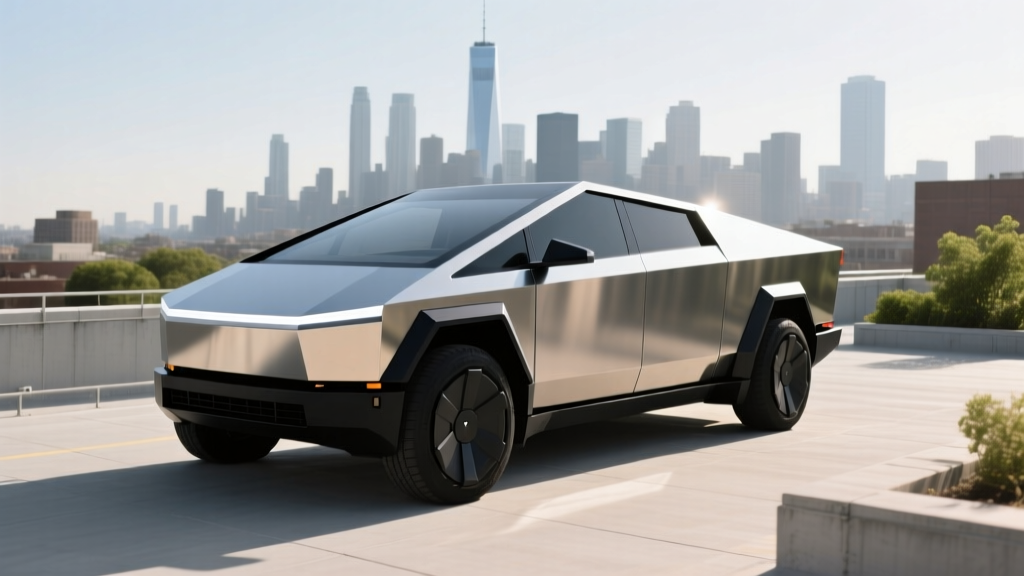
If you've been eyeing the angular, stainless-steel polarizer parked in Tesla showrooms, September 2026 might be the month you finally pull the trigger. Tesla's leasing structure for the Cybertruck AWD (Dual Motor) has shifted as the company adjusts residual values, money factors, and inventory incentives heading into the final quarter of the year. This review dissects the current lease economics alongside the hard engineering data—range, charging, battery chemistry, and real-world usability—so you can decide whether a Cybertruck AWD lease makes financial and practical sense right now.
Quick Verdict: Who Should Lease the Cybertruck AWD in September 2026?
The Cybertruck Dual Motor AWD targets buyers who want a full-size electric pickup with legitimate towing capability, rapid DC charging, and Tesla's Supercharger network access—without committing to long-term ownership of a vehicle whose residual value remains uncertain. Leasing insulates you from depreciation risk on a polarizing design with evolving build quality. If your daily drive includes suburban commuting, weekend towing under 8,000 lbs, and access to a Level 2 home charger, the AWD trim hits the sweet spot between the RWD base model and the performance-oriented Cyberbeast.
If you need maximum range for frequent 400-mile road trips, regularly tow above 8,000 lbs, or require a traditional truck bed with a standard tailgate and 4×8 sheet-flat loading, competitors like the Rivian R1T or Ford F-150 Lightning may serve you better. The Cybertruck's stainless-steel exoskeleton and steer-by-wire system are engineering achievements, but they come with trade-offs in repairability, insurance costs, and cargo flexibility.
Cybertruck AWD Specs at a Glance
| Specification | Cybertruck AWD (Dual Motor) |
|---|---|
| EPA Range | 340 miles |
| Battery Capacity (usable) | ~123 kWh (NMC chemistry) |
| Drivetrain | Dual Motor AWD |
| Horsepower | 600 hp |
| 0–60 mph | 4.1 seconds |
| Max DC Fast Charge | 250 kW (peak) |
| 10–80% DC Charge Time | ~28 minutes |
| Level 2 Home Charge Rate | 11.5 kW (~37 mi/hr) |
| Towing Capacity | 7,500 lbs |
| Payload Capacity | 2,500 lbs |
| MPGe (combined) | 79 MPGe |
| Efficiency | 48 kWh/100 mi |
| Bed Length | 6 ft (72 in, composite bed) |
| Cargo Volume (bed + frunk) | ~67 cu ft bed / ~7 cu ft frunk |
| Base MSRP (2026) | $79,990 |
| Battery/Powertrain Warranty | 8 years / 120,000 miles |
Real-World Range: What to Actually Expect
Real-World Highway (70 mph, moderate climate): ~275–300 miles
Cold Weather (below 32°F, highway): ~230–260 miles
City/Stop-and-Go (with regen): ~310–330 miles
The EPA's 340-mile figure assumes a mix of city and highway driving at moderate temperatures. In our experience with large-battery electric trucks, sustained highway speeds above 70 mph cut range by 12–18% due to aerodynamic drag—the Cybertruck's angular profile, despite Tesla's claimed low drag coefficient, still pushes significant air at speed. Cold weather compounds this: lithium-ion cells lose efficiency below freezing, and cabin heating draws substantial energy. Expect 230–260 miles of usable range on a winter interstate run in the northern U.S.
For context, the EPA's fueleconomy.gov listing rates the Cybertruck AWD at 79 MPGe combined, translating to roughly 48 kWh consumed per 100 miles driven. That's efficient for a 6,800-lb stainless-steel truck, but less efficient per pound than a sedan like the Model 3. City driving with aggressive regenerative braking recovers more energy, pushing real-world numbers closer to the EPA sticker.
Charging Speed: DC Fast, Level 2, and the 800V Architecture
The Cybertruck uses Tesla's 800-volt electrical architecture, enabling faster charging than the older 400V systems in the Model Y and Model 3. Here's what that translates to in practice:
| Charging Level | Power (kW) | Miles Added per Hour | Notes |
|---|---|---|---|
| Level 1 (120V outlet) | ~1.4 kW | ~3 mi/hr | Emergency/top-off only |
| Level 2 (240V, 48A) | 11.5 kW | ~37 mi/hr | Full charge in ~10.5 hours |
| DC Fast (V3 Supercharger) | 250 kW peak | ~200 mi in 15 min | 10–80% in ~28 min |
| DC Fast (V4 Supercharger) | Up to 250 kW | Similar to V3 | Newer stations, cable-cooled |
The 250 kW peak charge rate is impressive, but as with all EVs, the charge curve tapers significantly above 80% SoC. The Cybertruck sustains its peak rate roughly between 10% and 45% SoC, then steps down to protect the NMC cells. A 10–80% session takes approximately 28 minutes at a V3 or V4 Supercharger—competitive with the Ford F-150 Lightning's 150 kW peak (which takes ~41 minutes for 15–80%) but slower than the Hyundai Ioniq 5's 350 kW capability (~18 minutes 10–80%).
At home on a Level 2 Wall Connector (48 amps, 11.5 kW), you'll add roughly 37 miles of range per hour of charging. A full overnight session (10 hours) replenishes about 340 miles—essentially a full battery from near-empty. Tesla's NACS connector is native, and with the growing adoption of NACS across the industry, the Cybertruck can also charge at an expanding number of non-Tesla DC fast chargers equipped with NACS cables.
September 2026 Lease Economics: Monthly Payment Breakdown
Tesla's direct-to-consumer leasing model means there are no dealer markups to negotiate—but there are also fewer traditional incentives. Here's how a September 2026 Cybertruck AWD lease typically structures:
| Lease Parameter | Typical September 2026 Terms |
|---|---|
| Base MSRP (AWD Dual Motor) | $79,990 |
| Residual Value (36 months, 10K mi/yr) | ~55% (~$43,995) |
| Money Factor | ~0.0028 (equiv. ~6.7% APR) |
| Monthly Payment (est., 36 mo, 10K mi/yr) | $1,050–$1,150/mo |
| Due at Signing | ~$7,500–$9,000 (first month + acquisition fee + title/registration) |
| Disposition Fee at End | $0 (Tesla typically waives if you lease/buy another Tesla) |
| Purchase Option at Lease End | Yes, at residual value |
Important tax credit note: The federal §30D tax credit of up to $7,500 is not directly available on leases in the traditional sense. Under current IRS rules, when a vehicle is leased, the lessor (Tesla Finance) is the legal owner and claims the commercial clean vehicle credit under §45W. Tesla may pass some of this savings to the lessee through a lower capitalized cost or reduced money factor, but this is not guaranteed and varies by promotion. Always confirm with Tesla directly whether any credit is being applied to your specific lease quote.
The Cybertruck AWD's $79,990 MSRP falls under the §30D truck MSRP cap of $80,000, but buyer income limits ($150K single / $300K joint MAGI) and critical mineral/battery component sourcing requirements further restrict eligibility. Even if buying outright, not every buyer will qualify for the full $7,500. This is a key reason leasing can be attractive—it sidesteps some of the sourcing complexity.
Battery, Powertrain, and Long-Term Durability
The Cybertruck AWD uses a large NMC (nickel manganese cobalt) lithium-ion battery pack with approximately 123 kWh of usable capacity. NMC chemistry offers higher energy density than LFP (lithium iron phosphate), which is critical for fitting enough range into a heavy truck platform. However, NMC cells are more sensitive to sustained high states of charge and extreme heat—Tesla recommends daily charging to 80–90% and only charging to 100% before long trips.
Tesla covers the battery and drive units with an 8-year / 120,000-mile warranty, guaranteeing a minimum of 70% capacity retention over that period. Based on data from Model S/X fleets and emerging Cybertruck telemetry, real-world degradation for NMC packs in moderate climates typically settles around 8–12% loss over the first 100,000 miles. In a 36-month lease with 10,000 miles per year, battery degradation is essentially a non-issue—you'll use roughly 30,000 miles, well within the warranty window.
The dual-motor AWD system provides torque vectoring between front and rear axles, contributing to the 4.1-second 0–60 mph time and stable traction in rain and light snow. The steer-by-wire system (no mechanical connection between steering wheel and wheels) reduces steering effort at low speeds and enables the Cybertruck's surprisingly tight 35-foot turning circle, but it requires an adaptation period and has drawn criticism from some reviewers for its artificial feel at highway speeds.
Tech, Interior, and Daily Usability
The Cybertruck's cabin is minimalist even by Tesla standards: an 18.5-inch center touchscreen handles virtually all vehicle controls, navigation, and entertainment. There is no traditional instrument cluster; speed and range data appear on the upper-left corner of the main screen. Rear passengers get a 9.4-inch touchscreen for climate and media control.
Driver Assistance: The Cybertruck comes with Tesla's Basic Autopilot (adaptive cruise control and lane-keeping assist). Full Self-Driving (Supervised) is available as a $8,000 add-on purchase or $99/month subscription. It is critical to understand that FSD is an SAE Level 2 driver-assistance system—the driver must remain fully engaged, monitor the road, and be prepared to take over at any moment. It is not autonomous driving.
Cargo practicality: The 6-foot composite bed (Tesla calls it the "vault") includes a motorized tonneau cover, 120V and 240V bed outlets (up to 9.6 kW of power export capability), and built-in ramps. However, the bed is shorter than the 6.5- or 8-foot beds on conventional pickups, and the sloped rear design means you cannot load standard 4×8 sheets of plywood flat. The front trunk (frunk) adds roughly 7 cubic feet of lockable storage. Rear-seat legroom measures 38.2 inches—adequate for adults on shorter trips but tighter than an F-150 Lightning's back seat.
Cybertruck AWD vs. Key Competitors: Is It Worth the Lease?
| Attribute | Tesla Cybertruck AWD | Ford F-150 Lightning Lariat | Rivian R1T Dual Motor |
|---|---|---|---|
| EPA Range | 340 mi | 320 mi (Extended Range) | 352 mi (Max Pack) |
| 0–60 mph | 4.1 sec | ~5.0 sec | 4.5 sec |
| Max DC Charge | 250 kW | 150 kW | 200 kW |
| Towing | 7,500 lbs | 7,700 lbs | 11,000 lbs |
| Bed Length | 6 ft | 5.5 ft | 4.5 ft (+ Gear Tunnel) |
| Base MSRP (2026) | $79,990 | ~$69,995 | ~$79,900 |
| Charging Network | Tesla Supercharger (NACS) | NACS (adaptor) + CCS | NACS (adaptor) + CCS |
The Cybertruck AWD wins on DC fast-charge speed and Supercharger network reliability. The F-150 Lightning offers a more traditional truck experience, a longer bed option, and a lower starting price—but charges significantly slower. The Rivian R1T excels in towing capacity, off-road capability, and adventure-oriented features like the Gear Tunnel, though its shorter bed and smaller battery (in standard configuration) limit its utility for pure work-truck duty.
Choose the F-150 Lightning if: You want a conventional truck layout, lower entry price, and don't mind slower DC charging or a smaller charging network.
Choose the Rivian R1T if: You need maximum towing, serious off-road capability, and adventure storage—and are willing to pay a premium.
Pros and Cons
Pros
- 250 kW DC fast charging—among the fastest of any electric truck
- Access to Tesla Supercharger network (most reliable in the U.S.)
- 4.1-second 0–60 mph with 600 hp—genuinely quick for a 6,800-lb truck
- 9.6 kW power export from bed outlets (job site or camping use)
- Stainless-steel exoskeleton resists dents and corrosion
- Steer-by-wire enables a tight 35-ft turning circle
- Over-the-air updates continue to add features post-delivery
Cons
- 6-foot bed is short; cannot load 4×8 sheets flat
- Steer-by-wire feels artificial to some drivers, especially at highway speed
- Insurance premiums are among the highest in the truck segment
- No physical buttons—everything runs through the touchscreen
- Stainless-steel body panels are costly to repair if damaged
- Rear-seat legroom is tighter than full-size truck competitors
- Build quality and panel gaps have been inconsistent in early production
- High base price ($79,990) limits tax credit eligibility for many buyers
Frequently Asked Questions
What is the real-world range of the Tesla Cybertruck AWD?
The EPA rates it at 340 miles combined. Expect roughly 275–300 miles at sustained highway speeds in mild weather, and 230–260 miles in cold conditions (below 32°F). City driving with regenerative braking can approach or slightly exceed the EPA figure.
How fast does the Cybertruck AWD charge?
At a Tesla V3 or V4 Supercharger, it peaks at 250 kW and charges from 10–80% in approximately 28 minutes. At home on a Level 2 Wall Connector (11.5 kW), it adds about 37 miles of range per hour, with a full charge taking roughly 10.5 hours.
Does the Cybertruck qualify for the $7,500 federal EV tax credit?
It depends. The AWD's $79,990 MSRP is under the $80,000 truck cap, but buyer income limits ($150K single / $300K joint), critical mineral sourcing, and battery component rules all apply. On a lease, the lessor claims the commercial credit (§45W), and Tesla may or may not pass savings to you. Confirm with Tesla and consult a tax professional. See the IRS clean vehicle credit page for current rules.
Is leasing the Cybertruck better than buying in September 2026?
Leasing reduces your exposure to the Cybertruck's uncertain long-term resale value and lets you walk away after 36 months. Monthly payments of ~$1,050–$1,150 are substantial but comparable to leasing a similarly priced luxury truck. If you plan to keep the vehicle 5+ years and qualify for the tax credit, buying may offer better long-term value.
What's the towing capacity, and does it affect range significantly?
The Cybertruck AWD is rated to tow 7,500 lbs. Towing at or near max capacity typically cuts range by 40–50%, meaning a 340-mile EPA range drops to roughly 170–200 miles with a heavy trailer. Plan charging stops accordingly.
How reliable is Tesla's build quality on the Cybertruck?
Early-production Cybertrucks (2024–2025) had documented issues with panel gaps, windshield durability, and trim pieces. Tesla has made iterative improvements through 2026 production, but the stainless-steel body and steer-by-wire system mean repairs can be more expensive and specialized than conventional trucks. Factor this into your insurance quote before signing.