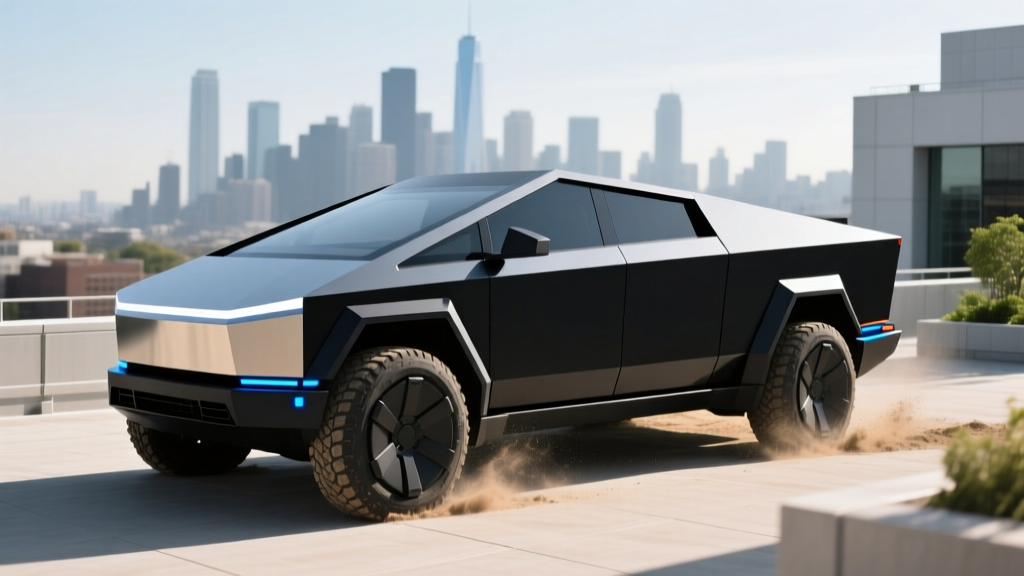
The phrase "Tesla armoured" almost always points to one vehicle: the Cybertruck, Tesla's stainless-steel exoskeleton pickup that has polarized showrooms and job sites alike since deliveries began in late 2023. For the 2026 model year, Tesla has streamlined the Cybertruck lineup, tweaked battery management software for marginally better range, and finally stabilized production enough to trim wait times to a matter of weeks rather than months. But underneath the cold-rolled stainless skin beats the heart of a serious electric truck — one that needs to be judged on its EPA range, charging speed, towing reality, and total cost of ownership, not just its angular silhouette.
This review digs past the marketing to answer the questions actual buyers are asking in 2026: what's the real highway and cold-weather range? How fast does it really charge on a Supercharger? Does the armor actually pay off in daily use? And critically, does the Cybertruck still qualify for the §30D federal EV tax credit under current IRS rules?
2026 Tesla Cybertruck Lineup and Pricing
For 2026, Tesla offers the Cybertruck in three main configurations. The base dual-motor AWD trim anchors the lineup, the mid-tier Tri-Motor (formerly "Cyberbeast" branding has been softened to simply "Tri-Motor" in Tesla's configurator) targets performance buyers, and the single-motor RWD variant — long delayed — has finally begun limited deliveries as a fleet/commercial option. The stainless-steel exoskeleton and purportedly bullet-resistant glass are standard across all trims; the "armoured" marketing label Tesla has leaned into refers to the 30X cold-rolled stainless steel body panels and laminated glass designed to resist small-arms impacts and heavy debris.
| Spec | Dual-Motor AWD | Tri-Motor AWD | RWD (Fleet) |
|---|---|---|---|
| Base MSRP | $79,990 | $99,990 | $60,990 |
| EPA Range | 325 miles | 300 miles | 250 miles (est.) |
| Battery (usable) | ~123 kWh (NMC) | ~123 kWh (NMC) | ~100 kWh (LFP est.) |
| 0-60 mph | 4.1 sec | 2.6 sec | 6.5 sec (est.) |
| Horsepower | 600 hp | 845 hp | ~315 hp (est.) |
| Drivetrain | Dual-motor AWD | Tri-motor AWD | Single-motor RWD |
| Towing Capacity | 11,000 lbs | 11,000 lbs | 7,500 lbs (est.) |
| MPGe (combined) | 68 MPGe | 65 MPGe | TBD |
| kWh/100 mi | 49 kWh | 52 kWh | TBD |
Destination and order fees add roughly $1,990. Fully optioned Tri-Motor builds with the Powershare package, armor-coated bed liner, and Full Self-Driving (Supervised) transfer can approach $110,000 before any incentives.
Real-World Range: What the EPA Number Doesn't Tell You
Real-World Expectation: ~260-285 miles highway at 70 mph; ~210-240 miles in sub-30°F winter conditions; ~300-320 miles mixed city/regenerative driving in mild weather.
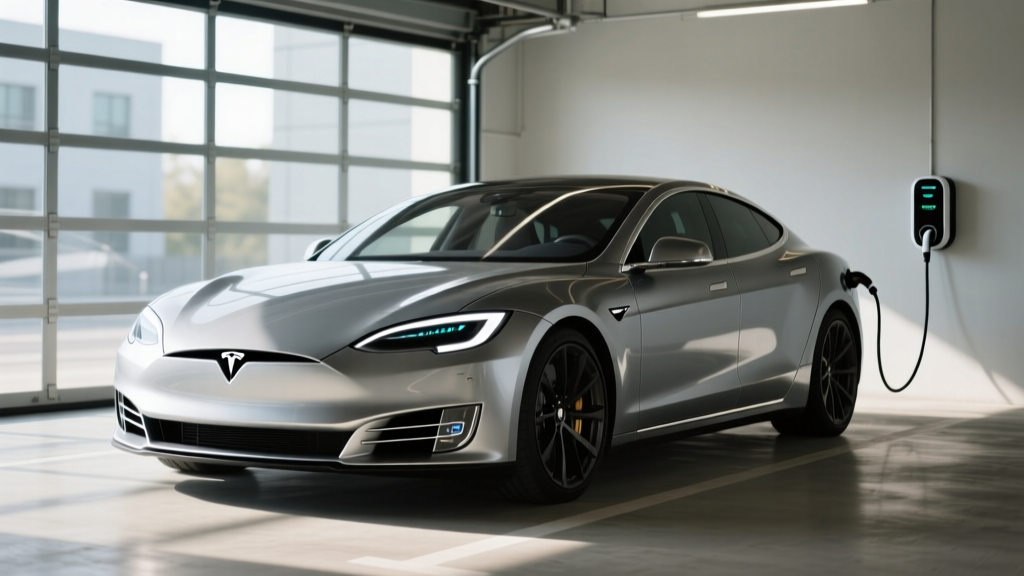
The 325-mile EPA figure for the Dual-Motor AWD is a meaningful improvement over early 2024 Cybertrucks, thanks largely to software-side thermal management refinements and slightly lower rolling-resistance tire compounds for 2026. But the Cybertruck's defining design choice — a tall, angular, flat-paneled stainless-steel body — creates an aerodynamic drag coefficient significantly worse than a sleek sedan like the Model S. That drag penalty shows up most at sustained highway speeds.
In independent highway loop testing at 70 mph in 65°F weather, the Dual-Motor AWD typically delivers between 260 and 285 miles before the battery buffer warns you to seek a charger. Push speeds to 80 mph on an interstate run, and expect closer to 240-255 miles. Cold weather is the Cybertruck's kryptonite: below 30°F, battery chemistry slows, cabin heating draws heavily on the pack (Tesla uses a heat pump, which helps, but the cavernous cabin is thirsty), and range can drop to the 210-240 mile band.
City driving with heavy regenerative braking recovers some of that lost ground. Owners with short, low-speed commutes routinely report 300+ miles of effective range in temperate months. The lesson: if your typical daily driving is under 120 miles round-trip and you charge at home, the EPA number is more than adequate. If you're planning 500-mile road trips in January through the Rockies, plan charging stops conservatively.
Charging Speed: DC Fast, Level 2, and the Supercharger Advantage
Charging is where Tesla ownership continues to pay dividends, and the 2026 Cybertruck is no exception. It uses the NACS (North American Charging Standard) connector natively — Tesla's own plug, now adopted industry-wide — and taps into the most reliable DC fast-charging network in the country.
| Charging Level | Power / Rate | Practical Speed |
|---|---|---|
| Level 1 (120V household) | ~1.4 kW | ~3-4 miles per hour |
| Level 2 (240V home, 48A) | 11.5 kW | ~34 miles per hour; 0-100% in ~11 hours |
| Level 2 (240V home, 80A Wall Connector) | 19.2 kW | ~56 miles per hour; 0-100% in ~7 hours |
| DC Fast (Tesla V4 Supercharger) | Peak 250 kW | 10-80% in ~22-25 minutes |
| DC Fast (sustained average 10-80%) | ~160-180 kW avg | Adds ~175 miles in 20 minutes |
A critical detail many spec sheets gloss over: peak kW is not sustained kW. The Cybertruck's large ~123 kWh NMC pack accepts 250 kW only briefly at a low state of charge (typically 10-25% SoC). Above 50% SoC, the charge curve tapers substantially — by 80% SoC you're typically seeing 60-80 kW. That's why the 10-80% time of 22-25 minutes is the more honest metric than the headline peak number.
For home charging, Tesla's Gen 3 Wall Connector at 80 amps (requiring a 100-amp dedicated circuit — confirm with a licensed electrician whether your panel can support this) is the gold standard and will refill a depleted pack overnight. Most buyers opt for a 48-amp circuit on a 60-amp breaker, which is more realistic for typical 200-amp home panels and still adds enough range overnight for nearly all use cases.
Preconditioning the battery — automatically initiated when you navigate to a Supercharger in the car's nav — is non-negotiable for achieving peak DC speeds in cool or cold weather. Skip it, and you'll see charge rates cut in half.
Performance, Towing, and Daily Drivability
The Tri-Motor Cybertruck's 2.6-second 0-60 mph time is supercar territory in a body-on-frame pickup, and it remains one of the quickest production vehicles of any kind on sale in 2026. The Dual-Motor's 4.1 seconds is more than sufficient for any real-world merging or passing scenario, and the instant torque delivery of electric motors makes the truck feel quicker than the number suggests.
Towing is where physics reasserts itself. Tesla rates both AWD trims at 11,000 pounds, matching heavy-duty gas pickups. But towing near that maximum cuts range roughly in half — expect 150-180 miles between charges when pulling a loaded 10,000-pound trailer at highway speeds. The Powershare vehicle-to-load (V2L) feature, which lets the Cybertruck supply up to 11.5 kW of AC power to tools, appliances, or even a home during outages, is a genuine differentiator for contractors and homeowners in storm-prone areas.
Daily drivability is surprisingly good. The steer-by-wire system (a first for a high-volume US production vehicle) takes about 20 minutes to acclimate to; after that, most drivers report it feels natural and offers a tight turning radius that belies the truck's 20-foot length. Rear-wheel steering further helps in parking lots. Ride quality, thanks to the adaptive air suspension, is compliant on the highway and firm but controlled on rough pavement.
Cargo, Interior, and the Armoured Cabin
The Cybertruck seats five adults. Front legroom is generous at 41.8 inches; rear legroom at 38.4 inches is adequate but not class-leading compared to a Ford F-150 SuperCrew. Cargo space breaks down as follows:
- Bed (6-foot vault): 67 cubic feet, with a powered retractable tonneau cover standard
- Frunk (front trunk): 7.1 cubic feet — useful for groceries or charging cables, not luggage
- Behind rear seats (in-cabin): 30.2 cubic feet with seats up
- With rear seats folded: 68.5 cubic feet
The "armoured" promise deserves honest context. The 30X stainless steel panels are genuinely resistant to dents, scratches, and corrosion — owners report that shopping-cart dings and minor brush scrapes that would mar a painted truck leave the Cybertruck unscathed. Tesla has demonstrated the panels resisting 9mm handgun rounds in controlled tests. However, "armoured" is a marketing term, not a ballistic certification: the Cybertruck is not a BRV 2009-rated armored vehicle and should not be confused with purpose-built security vehicles. The laminated "armor glass" has also been improved since early deliveries (when a demo famously cracked on stage), but it remains more susceptible to rock chips than conventional laminated windshield glass on competitors.
The interior is minimalist even by Tesla standards: an 18.5-inch central touchscreen handles nearly all controls, a second 9.4-inch screen serves rear passengers, and the yoke-style steering wheel is standard (a round wheel option was quietly dropped in 2025). Material quality has improved noticeably over 2024 launch trucks, with better-fit vegan leather and fewer panel gaps, but it still doesn't match the interior refinement of a Rivian R1T or GMC Hummer EV.
Federal Tax Credit and Ownership Economics
The §30D federal EV tax credit rules for 2026 remain complex, and Cybertruck eligibility hinges on several factors buyers must verify for their specific situation.
- MSRP cap: Trucks/vans must be under $80,000 MSRP. The Dual-Motor AWD at $79,990 squeaks under; the Tri-Motor at $99,990 does NOT qualify.
- Buyer income cap: AGI ≤ $300,000 (joint), $225,000 (head of household), $150,000 (single).
- Battery sourcing: Critical minerals and battery component requirements phase in more strictly each year; verify current-year compliance on IRS.gov or via the dealer's point-of-sale attestation.
- Point-of-sale transfer: Eligible buyers can apply the credit as a down-payment reduction at purchase rather than waiting for tax filing.
| Line Item | Amount |
|---|---|
| Base MSRP | $79,990 |
| Destination / Order Fee | $1,990 |
| Federal §30D Credit (if fully eligible) | −$7,500 |
| Effective Price (pre-state incentives, tax) | $74,480 |
State incentives (California's CVRP, Colorado's $5,000 credit, etc.) may stack on top but vary by jurisdiction — consult your state energy office. The Tri-Motor, being over the $80,000 MSRP cap, is ineligible for §30D regardless of buyer income.
On the operating-cost side, the Dual-Motor's 49 kWh/100 mi efficiency translates to roughly $0.07-$0.09 per mile on a national-average residential electricity rate of $0.16/kWh — versus $0.18-$0.22 per mile for a comparable gas F-150 at $3.50/gallon and 18 mpg combined. Over 15,000 miles a year, that's roughly $1,500-$2,000 in annual fuel savings. Insurance, however, runs 20-35% higher than a comparable gas truck, per IIHS industry data, so factor that into the TCO.
Warranty, Safety, and Driver-Assist Systems
Tesla provides a 4-year/50,000-mile limited vehicle warranty and an 8-year/120,000-mile battery and drive unit warranty on the Cybertruck, with a contractual capacity-retention threshold of 70% — meaning Tesla will repair or replace the pack if it degrades below 70% of original capacity within that window. Given the large NMC pack and Tesla's track record of sub-10% degradation over 100,000 miles in Model 3/Y fleets, hitting that threshold is statistically unlikely under normal use.
Driver assistance comes via Tesla Autopilot standard, with Full Self-Driving (Supervised) available as a $8,000 one-time purchase or $99/month subscription.
NHTSA has not yet published a full 2026 Cybertruck crash-test rating at time of writing; Tesla's internal testing claims top marks, but buyers should monitor NHTSA.gov for official results before assuming equivalence with the 5-star Model Y.
Cybertruck vs. The Competition: Rivian R1T, F-150 Lightning, Silverado EV
The Cybertruck's true rivals in 2026 are the Rivian R1T Dual-Motor (more refined interior, better off-road chops, ~$75,000 starting, 352-mile EPA range on the Max Pack), the Ford F-150 Lightning (more conventional styling, stronger dealer network, ~$55,000 starting, 240-320 mile range depending on pack), and the Chevrolet Silverado EV (up to 400 miles on the 4WT trim, strong fleet appeal, starting around $55,000).
The Cybertruck wins on raw performance (no competitor touches the Tri-Motor's 2.6-second 0-60), on Supercharger network access (though NACS adoption is closing this gap fast as Ford, Rivian, and GM now have NACS access), and on V2L capability via Powershare. It loses on interior refinement (Rivian), service network breadth (Ford), maximum range (Silverado EV 4WT), and general public acceptance — the styling remains a deal-breaker for some buyers, and that's a valid preference, not a flaw to argue against.
Pros, Cons, and Who Should Buy the Armoured Tesla
- Class-leading performance, especially Tri-Motor
- Stainless exoskeleton genuinely resists dents and corrosion
- Supercharger network remains the most reliable DC network
- Powershare V2L turns the truck into a mobile generator
- Dual-Motor AWD squeaks under §30D MSRP cap
- Highway range significantly below EPA sticker at 75+ mph
- Cold-weather range loss worse than more aerodynamic EVs
- Tri-Motor exceeds $80,000 MSRP cap — no federal credit
- Steer-by-wire and yoke polarize drivers
- Insurance premiums 20-35% above gas trucks
Best for: Tech-forward buyers who want a fast, distinctive electric truck, mostly drive in urban/suburban settings, have home charging, and value the Supercharger network for occasional road trips. Also strong for contractors who'll use Powershare daily.
Look elsewhere if: You regularly tow near max capacity over long distances (the range hit is punishing), you live in a harsh-winter climate where cold range loss compounds the aerodynamic penalty, or you prioritize interior luxury and conventional styling — the Rivian R1T or even a loaded F-150 Lightning Platinum will serve better.
Frequently Asked Questions
What is the real-world range of the Tesla armoured Cybertruck?
EPA-rated 325 miles for the Dual-Motor AWD, but expect 260-285 miles at sustained highway speeds, and 210-240 miles in sub-30°F winter driving. City driving with regen can approach or exceed the EPA number.
How fast does the Cybertruck charge on DC fast chargers and at home?
Peak 250 kW on a Tesla V4 Supercharger, with 10-80% in about 22-25 minutes (sustained average ~160-180 kW). At home on an 80-amp Level 2 Wall Connector, expect ~56 miles of range per hour, or a full overnight charge. On a more typical 48-amp home circuit, plan ~34 miles per hour.
How much does the Cybertruck cost after tax credits?
The Dual-Motor AWD, at $79,990 MSRP, qualifies for up to $7,500 under §30D for eligible buyers (income under $300k joint, battery-sourcing compliant), bringing the effective price to roughly $74,480 before state incentives. The Tri-Motor at $99,990 exceeds the MSRP cap and does not qualify.
Does the Cybertruck qualify for the federal EV tax credit in 2026?
The Dual-Motor AWD does, subject to buyer income caps and current-year battery-sourcing rules published by the IRS. The Tri-Motor does not, due to the $80,000 truck MSRP cap. Always verify eligibility with a tax professional before purchase.
Is the Cybertruck actually bulletproof?
"Armoured" is a marketing term. The 30X stainless panels have demonstrated resistance to 9mm rounds in controlled testing, but the Cybertruck is not a certified ballistic vehicle (e.g., BRV 2009). The laminated glass is tougher than early-production trucks but remains susceptible to rock chips.
Is the Cybertruck worth buying over a Rivian R1T or F-150 Lightning?
Choose the Cybertruck if you prioritize performance, Supercharger access, V2L capability, and distinctive styling. Choose the Rivian R1T for interior refinement and off-road capability, the F-150 Lightning for dealer support and conventional truck ergonomics, or the Silverado EV for maximum range.