Quick Verdict: The 2027 Cybertruck Evolves the Formula
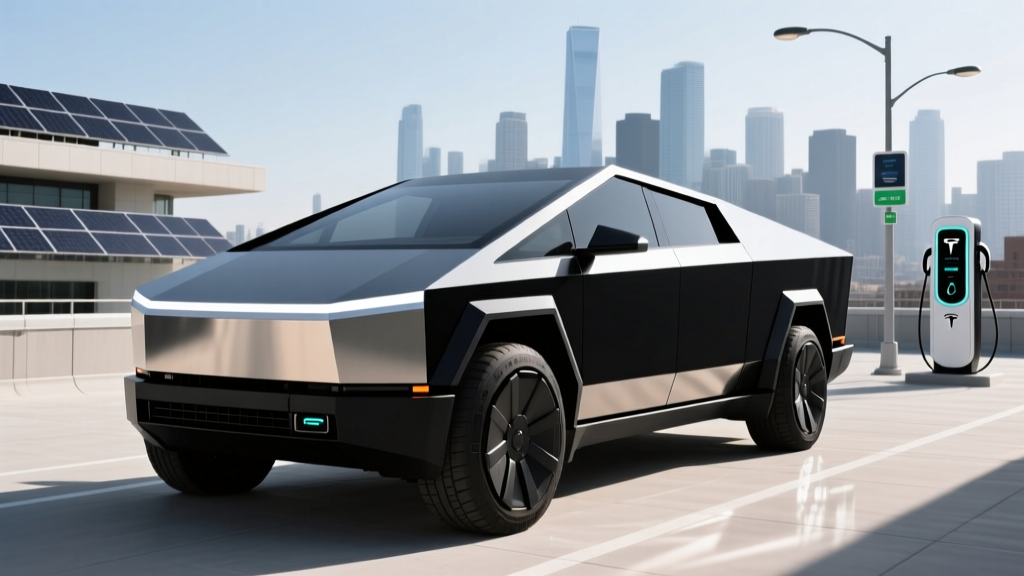
Tesla's stainless-steel pickup has been one of the most polarizing vehicles on the road since deliveries began in late 2023. Now, with the Cybertruck 2027 model year approaching, Tesla is expected to refine the platform with updated battery chemistry options, improved panel-gap consistency, and potentially a more accessible single-motor variant. While official specs remain under wraps, enough information from Tesla's regulatory filings, supply-chain signals, and production patterns has emerged to build a credible picture of what buyers can expect.
This preview covers the anticipated 2027 lineup — the Dual Motor AWD, the Tri-Motor Cyberbeast, and the rumored base RWD model — with hard numbers wherever available and clearly labeled estimates where Tesla has not yet confirmed details.
Cybertruck 2027 Estimated Specifications at a Glance
| Spec | Base RWD (Est.) | Dual Motor AWD | Cyberbeast (Tri-Motor) |
|---|---|---|---|
| EPA Range (est.) | ~250 mi | 340 mi | 320 mi |
| Battery Capacity (usable) | ~100 kWh (est.) | ~123 kWh | ~123 kWh |
| Battery Chemistry | LFP (rumored) | NMC | NMC |
| Max DC Fast Charge | ~170 kW (est.) | 250 kW | 250 kW |
| 10–80% DC Charge | ~35 min (est.) | ~28 min | ~28 min |
| Level 2 Home Charge | 11.5 kW / ~34 mi/hr | 11.5 kW / ~34 mi/hr | 11.5 kW / ~34 mi/hr |
| 0–60 mph | ~6.5 sec (est.) | 3.9 sec | 2.6 sec |
| Horsepower | ~315 hp (est.) | 600 hp | 845 hp |
| Drivetrain | RWD (single motor) | AWD (dual motor) | AWD (tri-motor) |
| Efficiency (MPGe) | ~67 MPGe (est.) | 58 MPGe | 54 MPGe |
| Base MSRP (est.) | ~$60,990 | $79,990 | $99,990 |
Sources: EPA fueleconomy.gov (2024–2025 Cybertruck data), Tesla Cybertruck official page.
Real-World Range: What the EPA Sticker Doesn't Tell You
The Dual Motor Cybertruck carries an EPA-estimated 340 miles of range, while the Cyberbeast sits at 320 miles. For the anticipated base RWD model, industry estimates place range around 250 miles, though Tesla has not confirmed this figure.
The Cybertruck's blunt aerodynamic profile (drag coefficient ~0.38) punishes highway efficiency more than sedans or crossovers. In real-world testing by multiple outlets, the Dual Motor delivers approximately 270–290 miles on the highway at 70 mph. In cold weather (below 30°F), expect a further 15–25% reduction, bringing effective range down to 230–250 miles for the AWD model. City driving with regenerative braking recovers energy more effectively, often matching or exceeding EPA estimates in stop-and-go traffic.
For context, the Cybertruck's 123 kWh usable battery is one of the largest in any production EV. That massive capacity compensates for the truck's weight (~6,600 lbs for the Dual Motor) and poor aero, but it also means charging sessions take longer in absolute terms even at high power levels.
Charging Speed: DC Fast, Level 2, and the Curve Reality
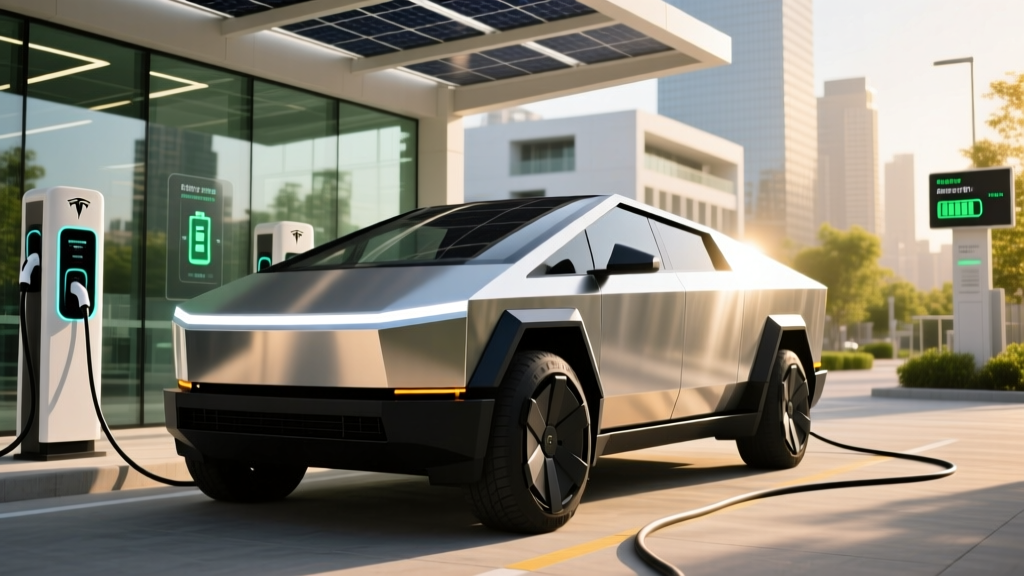
The Cybertruck supports the North American Charging Standard (NACS) natively — no adapter needed at Tesla Superchargers. With the broader industry adopting NACS, the 2027 Cybertruck will also access Electrify America, ChargePoint, and other networks via their NACS-equipped stations.
| Charging Level | Power (kW) | Miles Added per Hour | Full Charge Time |
|---|---|---|---|
| Level 1 (120V outlet) | ~1.4 kW | ~3–4 mi/hr | ~90+ hours |
| Level 2 (240V, 48A) | 11.5 kW | ~34 mi/hr | ~10–12 hours |
| DC Fast (V3 Supercharger) | 250 kW peak | ~190 mi in 15 min | 10–80% in ~28 min |
| DC Fast (V4 Supercharger) | Up to 350 kW | TBD (faster than V3) | Est. 10–80% in ~22 min |
Charging curve reality: The Cybertruck's 250 kW peak rate is not sustained. Like all EVs, the charge rate tapers as the battery fills. You'll see peak speeds between roughly 10–30% state of charge (SoC), after which the rate drops progressively. The 10–80% time of approximately 28 minutes reflects this taper. Charging from 80–100% can add another 20–25 minutes due to cell-balancing at the top of the pack.
At home on a Level 2 Wall Connector, overnight charging from 20–80% takes roughly 6–7 hours, which is practical for daily use. The key insight: with a 123 kWh pack, most owners should charge to 80% daily (per Tesla's recommendation for NMC batteries) and only charge to 100% before long trips. This preserves long-term battery health.
Performance: From Practical Commuter to 2.6-Second Beast
The Cybertruck lineup spans a remarkable performance envelope. The Cyberbeast tri-motor produces 845 horsepower and rockets to 60 mph in 2.6 seconds — faster than most supercars, in a 6,600-pound truck. The Dual Motor AWD delivers 600 hp and a 3.9-second 0–60, which is already sports-sedan territory.
The rumored base RWD single-motor variant, if Tesla brings it to market for 2027, would likely produce around 315 hp with a 0–60 time near 6.5 seconds — adequate for commuting and merging, though it won't win drag races.
All trims feature steer-by-wire steering, a first for a production vehicle at this scale. The 48-volt electrical architecture enables this and the rear-wheel steering system, which gives the Cybertruck a tighter turning circle than its 231-inch length suggests. Towing capacity is rated at 11,000 lbs for the AWD and Cyberbeast trims, competitive with full-size ICE pickups in the half-ton segment.
Pricing, Trims, and Federal Tax Credit Eligibility
| Trim | Est. MSRP | §30D Credit Eligible? | Est. Net Price |
|---|---|---|---|
| Base RWD (if offered) | ~$60,990 | Potentially (under $80K cap) | ~$53,490* |
| Dual Motor AWD | $79,990 | Yes (under $80K cap) | ~$72,490* |
| Cyberbeast Tri-Motor | $99,990 | No (exceeds $80K MSRP cap) | $99,990 |
*Net price assumes full $7,500 §30D credit. Actual eligibility depends on buyer income, battery sourcing, and point-of-sale transfer rules.
- MSRP Cap: Pickup trucks qualify up to $80,000 MSRP. The Dual Motor AWD ($79,990) qualifies; the Cyberbeast ($99,990) does not.
- Buyer Income Cap: AGI must not exceed $150,000 (single), $225,000 (head of household), or $300,000 (joint filing).
- Battery Sourcing: Critical minerals and battery components must meet escalating domestic-content thresholds per IRS §30D rules. Tesla's vertical integration and Nevada Gigafactory production improve compliance odds, but exact percentages vary by model year.
- Point-of-Sale Transfer: Eligible buyers can transfer the credit to the dealer at purchase, reducing the out-of-pocket cost immediately rather than waiting for a tax refund.
- Assembly: Must be assembled in North America. All Cybertrucks are built at Giga Texas — this requirement is satisfied.
Consult a tax professional and verify current-year rules at irs.gov before purchasing.
Interior, Cargo, and Daily Practicality
The Cybertruck seats five with a rear bench that offers approximately 38 inches of rear legroom — adequate for adults but tighter than a Ford F-150 or Rivian R1T. The front features a minimalist cabin dominated by an 18.5-inch central touchscreen that handles virtually all vehicle controls, including climate, mirrors, and glove box release.
Cargo capacity includes a 6.5-foot bed (roughly 67 cubic feet with the tonneau cover closed) and a front trunk (frunk) offering approximately 7 cubic feet of lockable storage. The bed features a powered retractable tonneau cover that Tesla rates to support 300 lbs of distributed weight.
Notable practicality concerns: the stainless steel exoskeleton is fingerprint-prone and requires specific cleaning products. The angular design limits rearward visibility, mitigated somewhat by the standard rearview camera displayed on the center screen. The steer-by-wire system takes adjustment — there's no mechanical connection between the yoke (or optional round wheel) and the road, which some drivers find disconcerting initially.
Technology, Driver Assistance, and Safety
The Cybertruck ships with Tesla's latest hardware suite (HW4 cameras and sensors) supporting Autopilot as standard. Full Self-Driving (Supervised) remains an optional add-on at approximately $8,000 (or $99/month subscription as of current pricing).
Both Autopilot and FSD (Supervised) are SAE Level 2 driver-assistance systems. The driver must remain fully engaged, hands on the steering device, and eyes on the road at all times. These systems do not make the Cybertruck autonomous. Only Level 4 services like Waymo operate without a human driver, and those are geofenced robotaxis — not consumer vehicles.
The infotainment system supports streaming (Netflix, YouTube, Spotify), gaming, and over-the-air updates that periodically add features. However, the Cybertruck does not support Apple CarPlay or Android Auto — a dealbreaker for some buyers accustomed to phone-mirroring interfaces.
As of this writing, the Cybertruck has not received full IIHS crash-test ratings. Tesla has stated the stainless-steel exoskeleton and large crumple zones provide exceptional passive safety, but independent verification from IIHS and NHTSA remains pending.
Warranty and Battery Longevity
Tesla's warranty coverage for the Cybertruck includes:
- Basic Vehicle: 4 years / 50,000 miles
- Battery & Drive Unit: 8 years / 120,000 miles (with minimum 70% capacity retention)
The 8-year/120,000-mile battery warranty is standard for Tesla's premium vehicles. The 70% retention threshold means Tesla will repair or replace the battery if it degrades below that level within the warranty period. Based on data from Model S and Model 3 fleets, most Tesla NMC batteries retain 85–92% capacity at 100,000 miles when charged primarily to 80% — well within the warranty threshold.
If Tesla introduces an LFP (lithium iron phosphate) battery for the base RWD model, expect even better cycle life. LFP chemistry tolerates 100% daily charging without significant degradation and typically offers 3,000+ charge cycles before meaningful capacity loss — enough for 500,000+ miles in theory. The trade-off is lower energy density, which is why the base model would carry less range.
Who Should Buy the 2027 Cybertruck?
✅ Pros
- Tri-motor Cyberbeast offers supercar acceleration in a pickup
- Native NACS connector — widest fast-charging network access
- 11,000-lb towing capacity rivals ICE half-tons
- Stainless-steel exoskeleton is dent-resistant
- Strong OTA update track record adds features over time
- 48V architecture enables advanced steer-by-wire and rear steering
❌ Cons
- Highway range significantly below EPA due to poor aerodynamics
- Cold-weather range loss of 15–25% is substantial
- Cyberbeast exceeds $80K MSRP cap — no federal tax credit
- No Apple CarPlay / Android Auto
- Steer-by-wire requires acclimation; not all drivers prefer it
- Rear seat legroom trails F-150 Lightning and Rivian R1T
- Stainless steel panels show fingerprints and require maintenance
- IIHS/NHTSA safety ratings still pending as of writing
- Choose the Dual Motor AWD if: You want the best balance of range (340 mi EPA), AWD capability, performance (3.9s 0–60), and potential §30D credit eligibility at $79,990 MSRP.
- Choose the Cyberbeast if: Performance is the priority, budget is flexible, and you accept no federal credit due to the $99,990 price.
- Wait for the Base RWD if: You need a lower entry price (~$61K), mostly drive in fair weather, and don't need AWD. This would be the credit-optimized choice.
- Look at the F-150 Lightning or Rivian R1T instead if: Rear-seat space, conventional steering, CarPlay, or proven IIHS safety ratings are non-negotiable.
Frequently Asked Questions
What is the real-world range of the 2027 Cybertruck?
The Dual Motor AWD carries a 340-mile EPA estimate. In real-world highway driving at 70 mph, expect approximately 270–290 miles. Cold weather (below 30°F) reduces this further to roughly 230–250 miles. City driving with regen braking can match or slightly exceed the EPA figure.
How fast does the Cybertruck charge at home and on the road?
On a Level 2 home charger (11.5 kW), the Cybertruck adds about 34 miles per hour, taking roughly 6–7 hours for a 20–80% charge. On a V3 Supercharger, it peaks at 250 kW and charges from 10–80% in approximately 28 minutes, though the rate tapers significantly above 60% SoC.
How much does the 2027 Cybertruck cost after tax credits?
The Dual Motor AWD at $79,990 MSRP may qualify for the full $7,500 §30D federal credit, bringing the net price to approximately $72,490 for eligible buyers (income and sourcing requirements apply). The Cyberbeast at $99,990 exceeds the $80,000 truck MSRP cap and does not qualify. The rumored base RWD at ~$61,000 would also qualify.
Does the Cybertruck qualify for the federal EV tax credit?
The Dual Motor AWD and potential base RWD are expected to qualify under the $80,000 MSRP cap for trucks. The Cyberbeast does not. All buyers must meet IRS income caps ($150K single / $300K joint), and the vehicle's battery must meet critical-mineral and component sourcing thresholds. Verify at irs.gov.
Is the 2027 Cybertruck worth buying vs. the F-150 Lightning or Rivian R1T?
It depends on priorities. The Cybertruck wins on acceleration, stainless-steel durability, and native Supercharger access. The F-150 Lightning offers more rear-seat space, a lower starting price, CarPlay, and established fleet-service infrastructure. The Rivian R1T delivers superior off-road capability, better rear-seat comfort, and a quad-motor option. If the Cybertruck's design and performance appeal to you and you accept the trade-offs (no CarPlay, tighter rear seat, pending safety ratings), it remains a compelling choice.
What battery chemistry does the Cybertruck use?
The Dual Motor and Cyberbeast use NMC (nickel manganese cobalt) chemistry in a ~123 kWh usable pack. If Tesla introduces a base RWD variant, it may use LFP (lithium iron phosphate), which offers longer cycle life and tolerance for 100% daily charging, at the cost of lower energy density and reduced range.